


Scottish Cattle Painting
These scottish cattle painting pieces capture the rugged majesty of the Highlands through masterly brushwork.
Scottish Cattle Painting
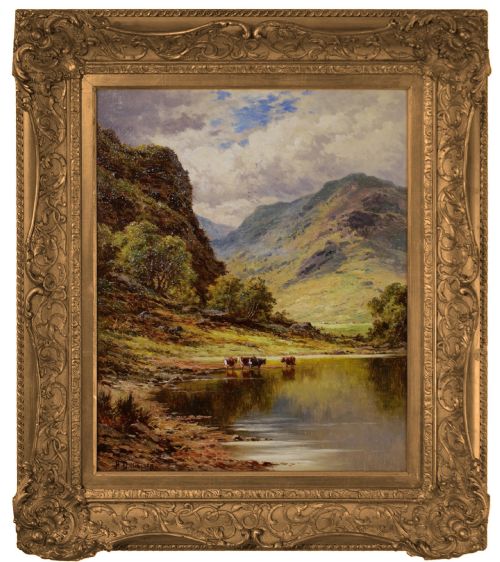
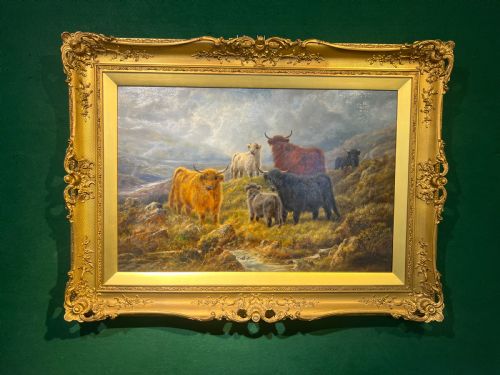
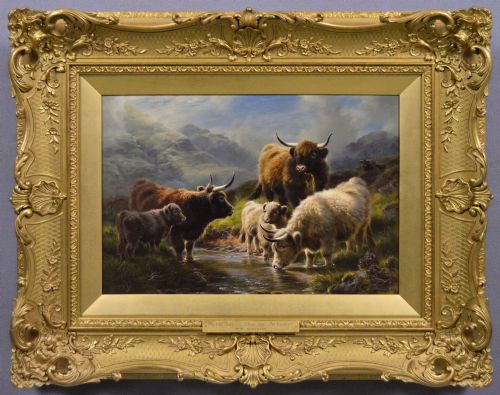
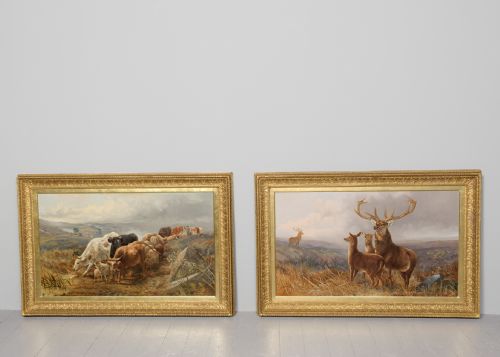
When you search for a scottish cattle painting, you enter a rich visual tradition celebrating the dramatic landscapes and iconic livestock of the Scottish Highlands. The works on this page span the Victorian era, the Edwardian period, and the early twentieth century, capturing misty lochs, sweeping glens, and mountainous horizons. While many examples are substantial oil paintings on canvas, you will also discover delicate porcelain spill vases adorned with hand-painted pastoral scenes.
The enduring appeal of these items lies in their romantic portrayal of rural life and untamed wilderness, often featuring longhorn or Highland cattle standing resiliently against stormy skies or tranquil sunset waters. Canvas works frequently arrive in their original giltwood and gesso frames, maintaining a complete period presentation that speaks directly to nineteenth-century and early twentieth-century artistic tastes.
How They Were Made
Artists relied primarily on oil paint applied to woven canvas or wood boards, building depth through layered pigments that rendered the texture of cattle hides and the atmospheric moisture of Scottish mists. Painters worked en plein air or in studios using detailed field sketches, capturing the play of light across Highland lochs and upland moors.
Porcelain items incorporated meticulous overglaze enamel painting on fine ceramic bodies, requiring precise kiln firings to fix the delicate tones of the cattle and landscape backgrounds. Frames were constructed from carved wood finished with applied gesso and heavy gold leaf gilding, providing an opulent architectural boundary for the canvases.
Several canvases manage to make Highland cattle look remarkably stoic while standing ankle-deep in freezing Scottish snowdrifts.
What Varies In Quality
The distinction between standard works and exceptional pieces rests upon the artist's ability to render the anatomy and texture of the cattle with anatomical precision while orchestrating light across the wider landscape. Superior examples command attention through confident, expressive brushwork that breathes life into the Highland scene rather than relying on stiff or formulaic compositions.
Frame craftsmanship also plays a significant role in overall distinction, where original period giltwood mouldings with intact, high-relief gesso ornamentation elevate the presentation significantly above later or stripped replacements.
Henry H. Parker·Robert Watson·William Watson Jnr·Robert Cleminson·Henry Robinson Hall·Charles Jones·George Turner·John W Morris·Daniel Sherrin·Alfred de Breanski Snr·George Smith·Louis Bosworth Hurt·Sidney Richard Percy·James Kay·Harry Stinton·Royal Worcester
The Scottish Cattle Painting Glossary
- Giltwood
- Wood carved and coated with a thin layer of gold leaf. This finish provided a reflective, luminous border popular for framing nineteenth-century fine art.
- Gesso
- A plaster-like mixture applied to wooden frames as a smooth base for gilding. It was often moulded into elaborate decorative motifs.
- Spill Vase
- A small vessel designed to hold thin wooden spills used for lighting candles or fires. Porcelain examples frequently featured hand-painted pastoral scenes.
- Highland School
- A regional artistic movement focusing on the dramatic scenery and livestock of Scotland. Artists within this group emphasised naturalism and atmospheric weather effects.
- Impressionism
- A style of painting emphasising light and its changing qualities rather than minute detail. Scottish practitioners captured the fleeting moods of northern landscapes.
Scottish Cattle Painting: Frequently Asked Questions
What are these scottish cattle painting works?
These pieces are nineteenth and early twentieth-century fine art works depicting Highland scenery and cattle. They document the romantic artistic vision of rural Scotland during the Victorian and Edwardian eras.
Most examples utilise oil on canvas, though porcelain vases featuring painted livestock are also present. They reflect a period of intense fascination with the British wilderness.
How were these paintings displayed originally?
Works of this scale and subject matter were framed in heavy, ornate giltwood settings designed to command attention in substantial drawing rooms and country houses. The generous framing added grandeur and reflected interior lighting.
Porcelain spill vases served both a decorative and practical function on mantelpieces before the widespread adoption of matches. They brought miniature pastoral scenes into daily domestic routines.
How do I live with an antique oil painting?
Position your canvas away from direct sunlight and excessive humidity fluctuations to protect the oil paint and underlying organic canvas fibres. Stable indoor environments prevent the wood stretcher and gesso frame from warping.
Dust the canvas and ornate frame gently with a soft, dry brush without applying commercial cleaning liquids. Professional conservation ensures the paint layer remains secure over decades.
How can I tell the Victorian pieces apart?
Victorian examples frequently display darker, highly dramatic palettes with intense focus on stormy weather and moody skies over lochs. Brushwork tends toward meticulous realism, highlighting the texture of cattle hair and rugged terrain.
Later Edwardian and early twentieth-century works often introduce looser impressionistic touches and lighter tonal ranges. Comparing framing styles and recorded artist active dates helps confirm specific periods.