


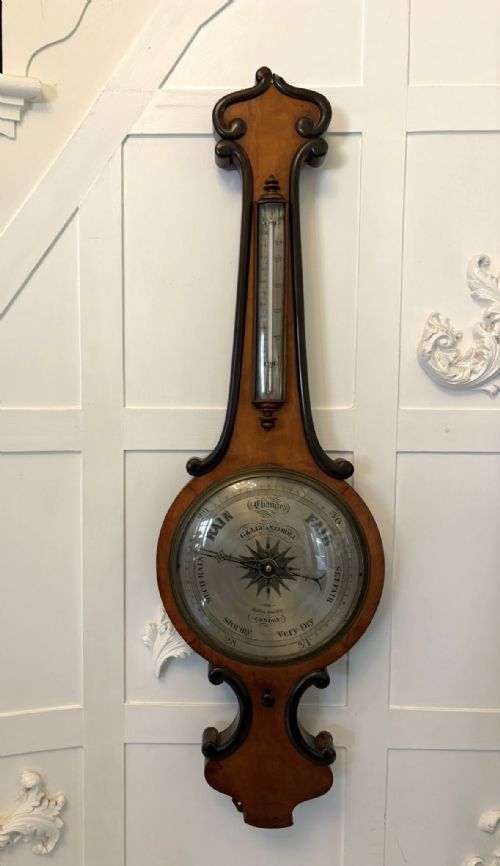


Scientific Weather Glass
A scientific weather glass measures atmospheric pressure fluctuations to indicate impending meteorological changes.
Scientific Weather Glass
A scientific weather glass encompasses barometers and barographs spanning Georgian, Victorian and Edwardian periods.
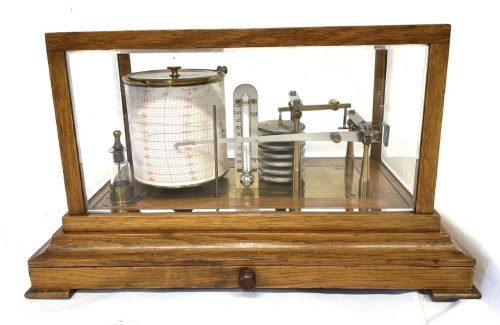
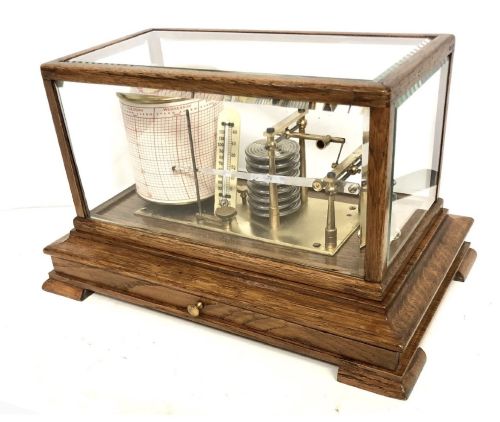
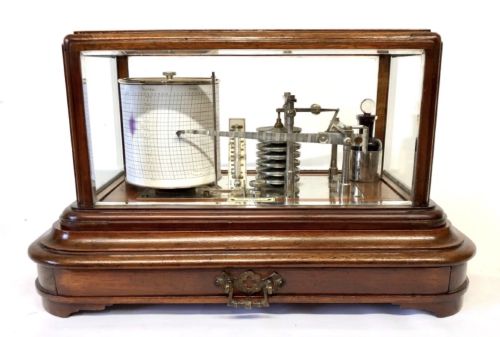
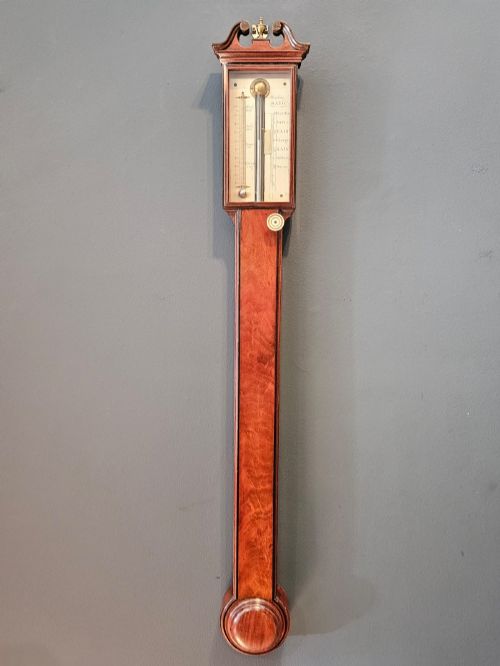
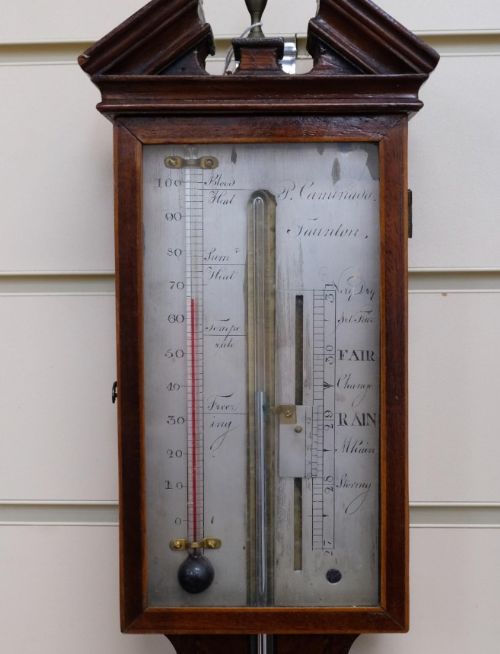
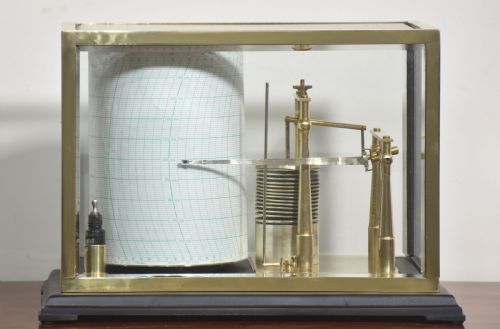
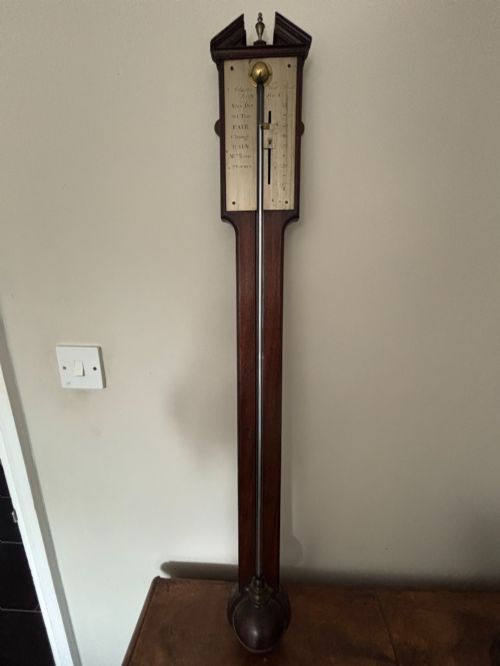
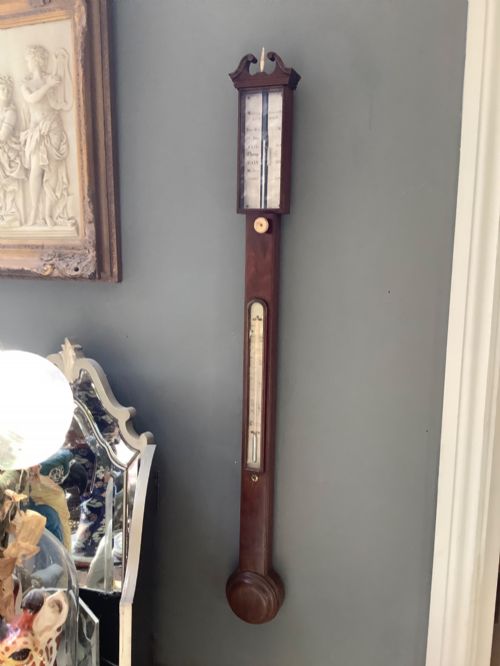
The most frequent examples seen here are stick barometers and mahogany or oak cased barographs featuring thermometers and glass panels.
Makers from London and the provinces signed these scientific instruments, which combine utility with domestic display.
Materials and construction methods
Casings utilise dense cabinet timbers such as mahogany, rosewood, oak and walnut, often finished with inlaid details or bevelled glass.
Internal mechanical assemblies incorporate brass fittings, paper recording charts, bone scales and mercury columns housed securely within glass tubes.
Distinguishing the finer examples
Quality rests upon the crispness of the maker's signature engraving, the precision of the scale calibration and the selection of cabinet veneers.
Superior models exhibit substantial timber frames, intact paper chart drawers and well-proportioned brass levers that demonstrate careful workshop assembly.
GAUPP & CO HONGKONG & SINGAPORE·George Adams London·G & L Guanziroli London·Negretti & Zambra·Short & Mason·Baines Harrogate·Ronchetti Of Holborn·J Hughes London
The Scientific Weather Glass Glossary
- Barograph
- A self-recording barometer that traces barometric pressure onto a rotating paper chart using a mechanical arm. These usually sit inside glass and timber covers.
- Stick barometer
- A vertical instrument containing a mercury column that rises or falls against a calibrated scale. These are housed in slender wooden cases.
- Wheel barometer
- A domestic mercury barometer where a float in the tube turns a pulley and pointer across a dial face. They often appear in banjo shaped rosewood or mahogany frames.
- Aneroid barometer
- A barometer that measures pressure using a flexible metal box without liquid. This invention replaced mercury in many later domestic models.
- Vernier scale
- A subsidiary sliding scale that allows precise readings of fractional units on the main barometer plate. It assists in noting minute pressure shifts.
Scientific Weather Glass: Frequently Asked Questions
How do I read a stick barometer?
Observe the top meniscus of the mercury column against the engraved scale to determine current atmospheric pressure. The sliding vernier allows for finer measurement.
Rising columns generally indicate improving weather conditions, while falling mercury points toward approaching storms or rain.
What is a barograph chart?
A barograph chart is a graduated paper sheet wrapped around a clockwork drum that records a continuous weekly line of pressure. A pen linked to vacuum chambers marks the paper.
These charts offer a visual history of meteorological trends over several days at a glance.
Where should I place a weather glass?
Position the instrument on an interior wall away from direct sunlight, radiators, or heavy vibrations that might disrupt the delicate internal mechanism or mercury.
Stable indoor temperatures ensure the most accurate mechanical response to external barometric pressure shifts.