




Scarborough Maritime Art
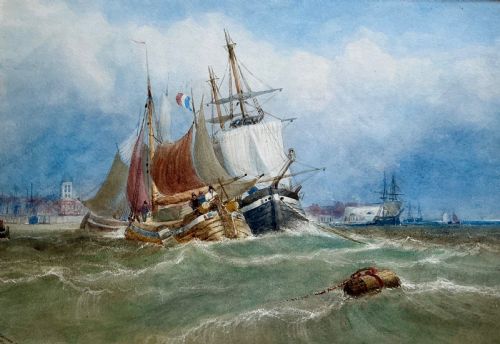
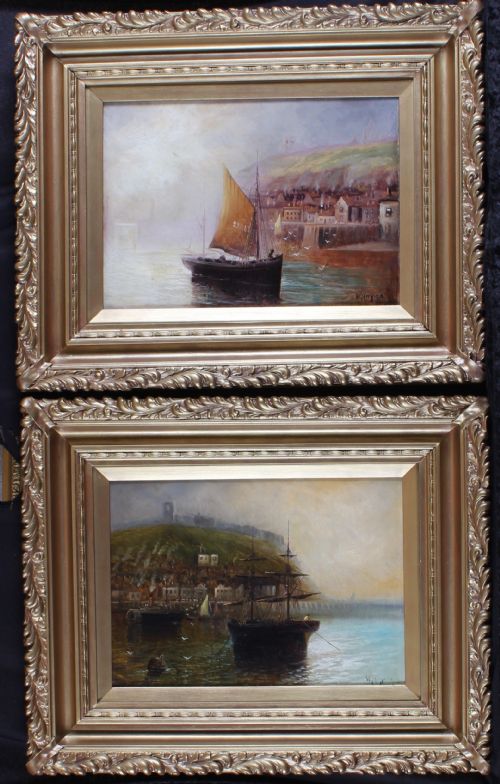
These Scarborough maritime art pieces capture coastal vessels and Yorkshire harbours, offering a direct view into nineteenth and early twentieth-century marine life.
Scarborough Maritime Art
Scarborough maritime art encompasses framed watercolours and oil on canvas paintings depicting coastal scenes, shipping and Yorkshire harbours. When searching for Scarborough maritime art, buyers meet nineteenth-century and Edwardian works portraying local waters, fishing boats and coastal views.
The objects take the form of paintings, wall art and fine art paintings created during the Victorian and Edwardian periods. Many pieces focus specifically on Scarborough Bay, the harbour and nearby coastal locations along the Yorkshire coast.
Makers and artists working in these styles documented maritime subjects through detailed watercolours and oils. The selection spans works from the mid-nineteenth century through to the early twentieth century, reflecting the busy maritime trade and fishing industry of the era.
How they were made
Artists utilised watercolour pigment on paper and oil paint on canvas to capture coastal light and movement. These traditional materials allowed painters to depict choppy waters, shipping and moody harbour atmospheres with distinct textures.
Many pieces retain their original wood and giltwood frames, which complement the painted scenes. The combination of pigment, paper, canvas and gilt framing defines the physical construction of these marine works.
Listings feature works from the Victorian and Edwardian periods, utilising paper, oil on canvas, wood and gilt.
What varies in quality
The distinction between works rests upon the artist's handling of light, atmosphere and maritime detail within the composition. Stronger examples demonstrate a confident control of watercolour washes or oil brushwork to convey the motion of water and skies.
Condition and provenance further differentiate the pieces, particularly the preservation of the paper or canvas and the integrity of any original giltwood framing. Works signed by known regional practitioners generally hold greater distinction among collectors.
Henry Barlow Carter·F A Roylance·Ernest Dade·Frank W Scarborough·Joseph Newington Carter·Harry Wanless·Frederick William Booty·John James Wilson·Walter Meegan·Fred Dade·Frank William Scarbrough
The Scarborough Maritime Art Glossary
- Watercolour
- A painting method where fine pigment is suspended in a water-based solution on paper. This medium allows for transparent washes that capture coastal skies and sea spray.
- Oil on Canvas
- A technique utilising pigments bound in drying oil applied to a stretched cloth surface. This method offers rich textures and deep tones suitable for dramatic marine scenes.
- Giltwood
- Wood carved and covered with a thin layer of gold leaf or gilt finish. Frames of this material frequently accompany nineteenth-century paintings.
- Victorian
- The period of British history spanning the reign of Queen Victoria. Works from this era often display detailed realism in marine subjects.
- Edwardian
- The period relating to the reign of King Edward VII during the early twentieth century. Art from this time often shows lighter palettes and broader brushwork.
Scarborough Maritime Art: Frequently Asked Questions
What subjects appear in Scarborough maritime art?
These paintings depict coastal views, harbour scenes, fishing boats and shipping off the Yorkshire coast. Many works focus specifically on Scarborough Bay and surrounding waters.
Artists also recorded nearby locations such as Whitby, Cayton Bay and Portsmouth Harbour alongside local marine activity.
Which materials were used for these paintings?
Makers worked primarily with watercolour pigment on paper and oil paint on canvas. These mediums allowed them to capture the varied moods of the sea and sky.
Many pieces are housed in their original wood and giltwood frames, preserving the complete appearance of the period.
How do I identify Victorian pieces?
Victorian works date from the nineteenth century and often exhibit precise detail in the depiction of shipping and coastal architecture. Artists from this era focused on realistic representations of maritime life.
Signatures, framing styles and archival records help confirm the nineteenth-century origin of individual watercolours and oil paintings.
How should I care for these watercolours?
Watercolour paintings on paper require protection from direct sunlight to prevent fading of the pigments. Keeping them in stable environmental conditions preserves the paper and mount.
Displaying them away from excessive moisture ensures the longevity of both the artwork and its wooden frame.