





Scandinavian Folk Art Storage
Scandinavian folk art storage brings robust historic utility into modern spaces through hand painted pine chests, cupboards and boxes.
Scandinavian Folk Art Storage
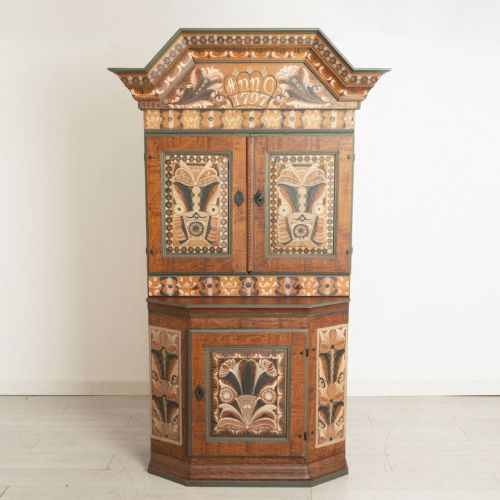
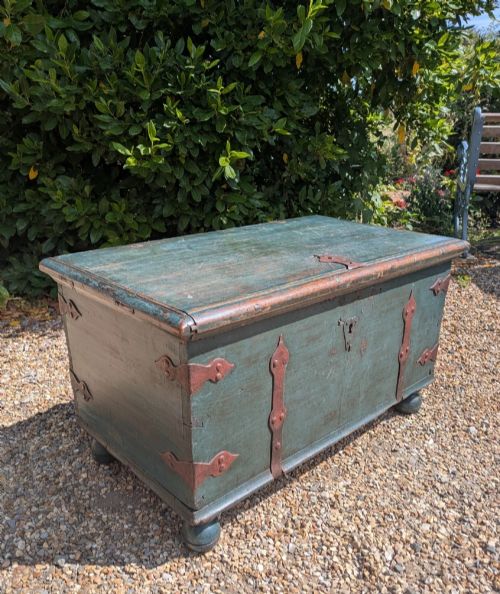
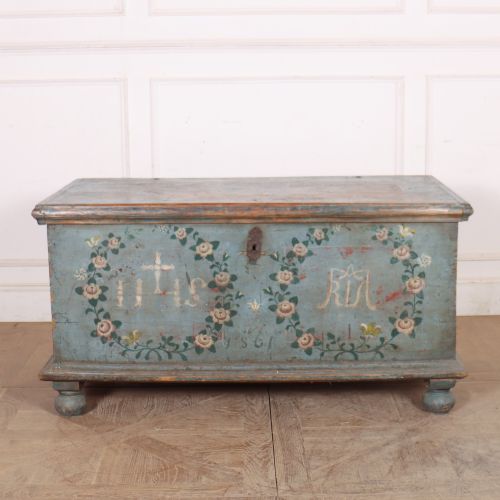
When you search for scandinavian folk art storage, you encounter practical wooden vessels created for domestic use across rural northern Europe during the eighteenth and nineteenth centuries. These pieces encompass sturdy trunks, marriage chests, dome top coffers, storage boxes, barrels and cupboards designed to hold textiles, provisions and personal belongings.
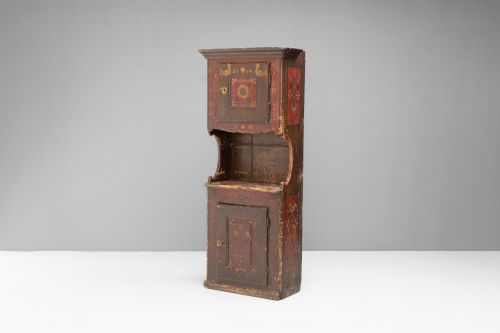
The most common forms on this page are nineteenth century pine chests and painted boxes, alongside larger cupboards and dressers originating from Sweden. Many items bear original surface decoration, ranging from simple colour washes to elaborate folk motifs applied by local makers.
Materials and construction methods
Carpenters relied predominantly on native pine, building strong carcases joined with dovetails or pegged joints to withstand daily household demands. Surfaces were frequently coated in oil or water based paints, often derived from local pigments, preserving the timber and providing a canvas for decorative painting.
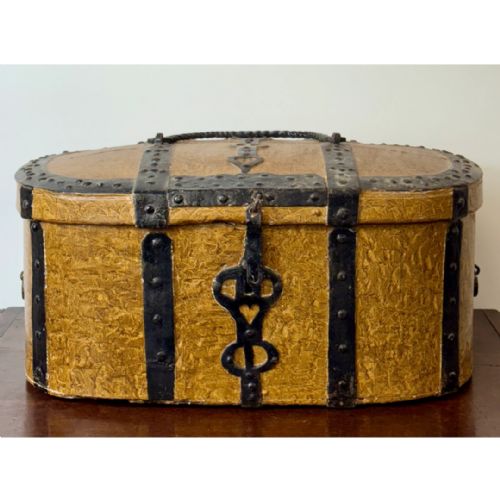
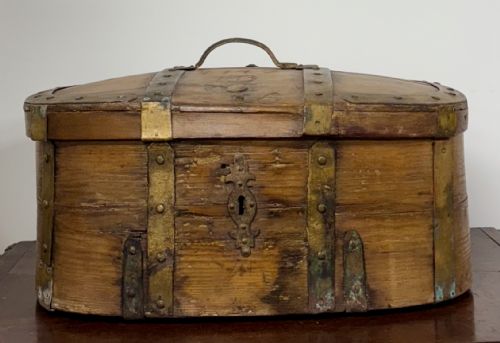
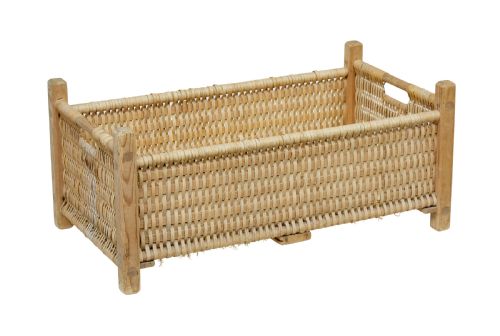
Iron and wrought iron hardware played a vital structural role, appearing as heavy strapwork, hinges, corner brackets and strong box locks hand forged by local blacksmiths. Some storage forms additionally utilise wood splint and woven pine construction, particularly in baskets, barrels and stands.
Scandinavian Folk Art Storage Retail Price Guide 2026
Typical asking prices for scandinavian folk art storage among the pieces listed under this phrase on Sellingantiques today, from the lower quarter to the upper quarter. They describe what is for sale here now, not the wider market.
Listings span the eighteenth, nineteenth and early twentieth centuries, featuring pine as the primary material alongside iron, brass and woven wood splint.
Distinguishing quality in rustic pieces
Quality in these items rests upon the integrity of the original paint surface and the balance of the proportions rather than pristine preservation. Pieces retaining their early or original decorative scheme command greater appreciation than those stripped or repainted later.
The sophistication of the hand painted details and the skill of the blacksmith who fashioned the strapwork and hinges elevate individual items. Heavier construction standards, such as robust dovetailing and substantial timber thickness, separate superior strong boxes and coffers from simpler utility wares.
The Scandinavian Folk Art Storage Glossary
- Coffer
- A heavy wooden chest with a lid, traditionally used for storing valuables or household goods. Many examples feature flat or dome tops reinforced with iron bands.
- Marriage chest
- A celebratory storage box commissioned for a wedding, often inscribed with initials and dates. These pieces frequently display the most elaborate painted decoration in rural households.
- Strapwork
- Ornamental bands of iron or other metal fixed across the exterior of a chest or box for reinforcement. Blacksmiths hand forged these straps to secure corners and lids.
- Tine
- A traditional Scandinavian wooden box featuring bentwood construction with interlocking fingers. They were historically utilised for storing food or small personal items.
Scandinavian Folk Art Storage: Frequently Asked Questions
How do I clean a painted pine chest?
Dust the exterior gently with a dry, soft cloth to remove surface particles.
Avoid liquid cleaners, modern detergents or abrasive pads, as these can strip or damage the historic paint surface.
Were these pieces used for clothes storage?
Rural families utilised large coffers, chests and cupboards to store garments, linens and blankets.
Their enclosed design protected textiles from dust, dampness and pests in unheated homes.
What is Gustavian style?
Gustavian design is a Swedish neoclassical style promoted by King Gustav III during the late eighteenth century.
It lighter proportions and muted paint colours distinguished it from heavier baroque and rococo aesthetics.
How can I tell the age of a painted box?
Examine the timber preparation, nail types and the composition of the paint layers under magnification.
Hand forged ironwork, pegged joints and natural wear patterns help indicate eighteenth or nineteenth century origin.