




Scandinavian Country Seating
Scandinavian country seating brings robust vernacular character into a room through honest pine construction and time-worn painted surfaces.
Scandinavian Country Seating
Scandinavian country seating encompasses benches, settles, armchairs, and dining chairs originating from northern European traditions. These pieces reflect practical domestic needs through sturdy forms and straightforward construction methods.
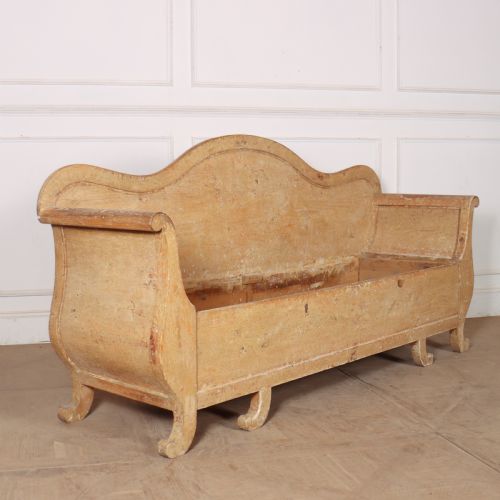
The selections available here lean heavily towards Swedish pieces dating from the eighteenth century through to the early twentieth century. Settles and benches frequently feature integrated storage, while armchairs and dug-out chairs display individual rustic shaping.
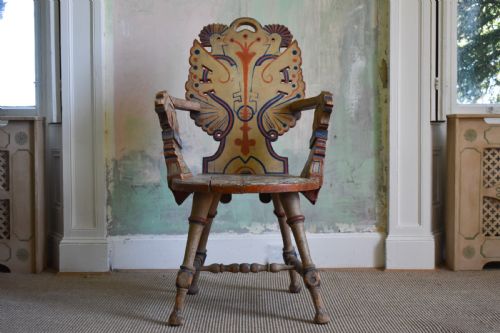
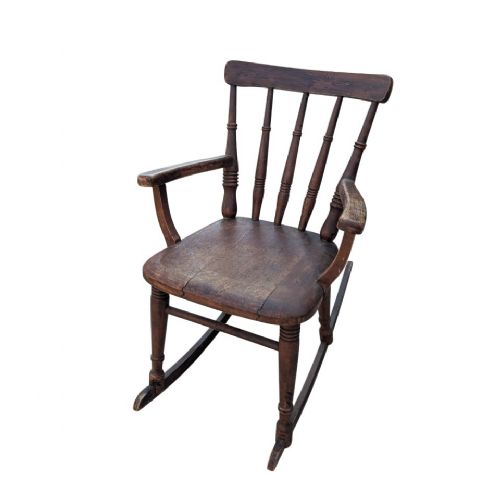
Buyers encounter everything from utilitarian highchairs and nursing chairs to matching sets of dining chairs and grander painted throne armchairs. Painted pine and birch dominate the offerings, showing both simple folk art motifs and Gustavian-inspired lines.
Materials and Construction Methods
Makers relied primarily on native softwoods and hardwoods like pine and birch, selecting timber for strength and availability. Joinery was kept functional, often utilising pegged joints, solid panels, and dug-out sections hewn directly from single logs.
Surfaces were frequently finished with layers of oil-based paint, sometimes applied over older coats to yield deep patinas through decades of wear. Iron fastenings and fabric upholstery appear selectively on specific armchairs and benches to add structural reinforcement or comfort.
The listings span the eighteenth, nineteenth, and early twentieth centuries, featuring pine, birch, iron, and fabric.
Distinctions in Quality and Craft
Quality rests upon the integrity of the original construction and the preservation of authentic surface finishes. Pieces retaining their early paint layers without excessive later intervention command stronger visual appeal.
Proportion and execution distinguish standard vernacular workshop output from finer regionally styled items. Well-balanced seating retains its structural rigidity while displaying the tool marks characteristic of traditional hand-working methods.
The Scandinavian Country Seating Glossary
- Settle bench
- A high-backed wooden bench with solid sides designed to block draughts in traditional interiors. Many examples include a hinged seat opening to storage space beneath.
- Gustavian
- The Swedish interpretation of neoclassical design championed under King Gustav III during the late eighteenth century. This style combines French influence with restrained Nordic simplicity.
- Dug-out chair
- A primitive seat formed by hollowing out a single thick log to create the seat and back in one continuous block. These pieces showcase early wood-sculpting techniques.
- Bobbin turning
- A form of furniture decoration where wood is latched into repetitive spherical or cylindrical shapes resembling spools of thread. This detail appears frequently on nineteenth-century frame elements.
Scandinavian Country Seating: Frequently Asked Questions
How do I clean a painted pine bench?
Dust the surface regularly with a dry, soft cloth to prevent particle buildup. Avoid harsh chemical cleaners that can strip away historic paint layers.
Apply a neutral beeswax sparingly if the wood appears dry, buffing gently after application. Protect the finish from direct sunlight and excessive moisture fluctuations.
Were these benches used outdoors?
Most traditional Scandinavian seating was built strictly for indoor domestic use around farmhouses and homes. Pine and painted finishes react poorly to prolonged exposure to rain and frost.
Keep these pieces inside climate-controlled rooms to preserve the structural timber and surface paint. Using them on covered porches requires careful monitoring of humidity levels.
What is a Gustavian style chair?
Gustavian pieces draw on lighter neoclassical proportions inspired by French Louis XVI design adapted by Swedish craftsmen. They often feature tapered legs, fluted details, and pale painted finishes.
These items balance formal elegance with the understated practicality typical of Nordic furniture making. They fit comfortably alongside rustic country pieces as well as modern interiors.
How do I identify a dug-out chair?
A dug-out chair is constructed by scooping the seat and lower back directly out of a solid tree trunk rather than assembling planks. This method produces heavy, organic forms with thick sections of pine or birch.
Tool marks left by adzes or gouges remain visible across the wood surface. Their chunky proportions make them distinct from standard framed armchairs.