
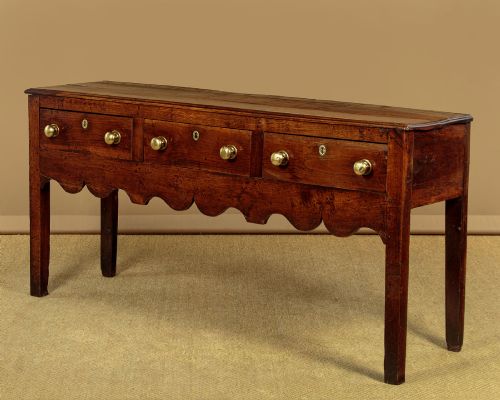
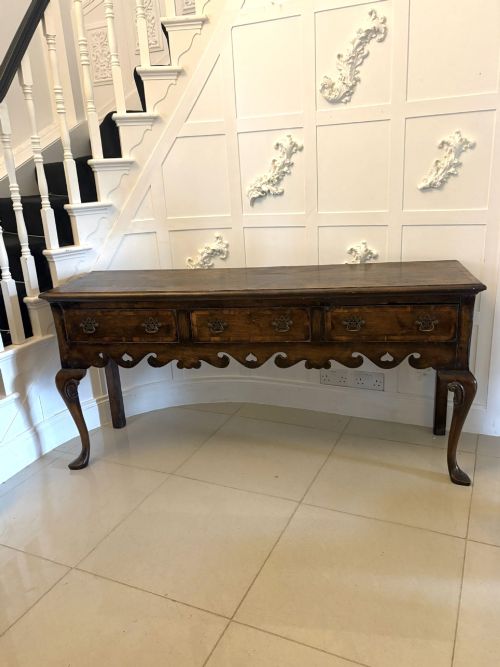
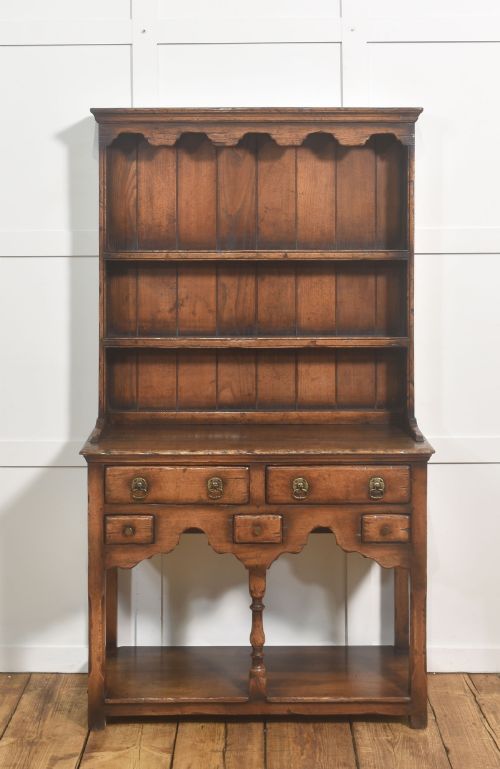
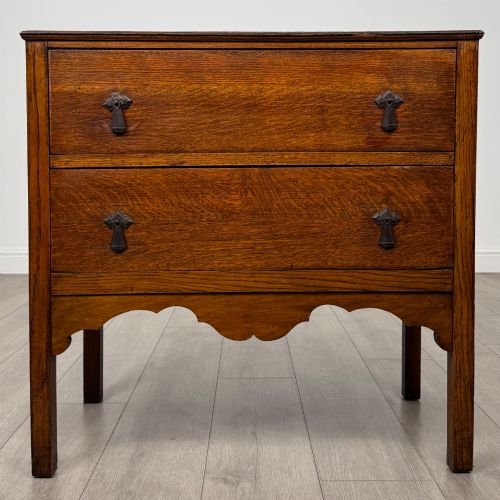




Scalloped Oak Dresser
A scalloped oak dresser brings working country warmth into a room, combining deep timber storage with open display shelves for pottery.
Scalloped Oak Dresser
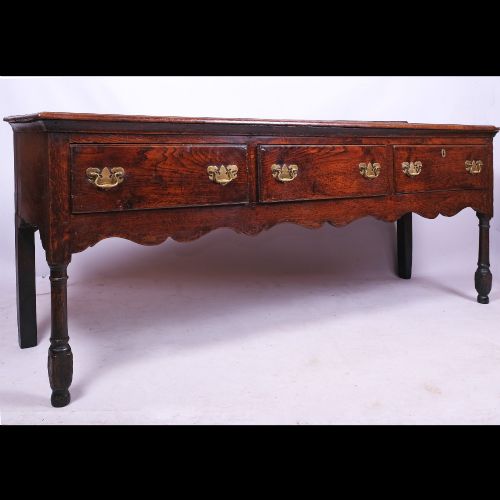
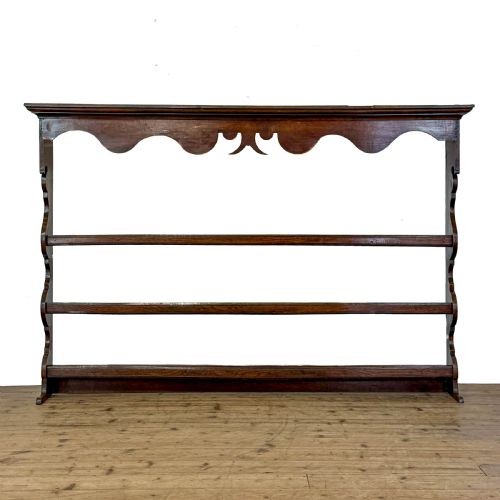
A scalloped oak dresser is a substantial dining or kitchen piece designed for utility and display, usually uniting a lower base fitted with drawers and cupboards with an upper plate rack.
The version most commonly met on this page is the Georgian or 18th century oak base, often originating from Wales or English country workshops, sometimes paired with fruitwood elements.
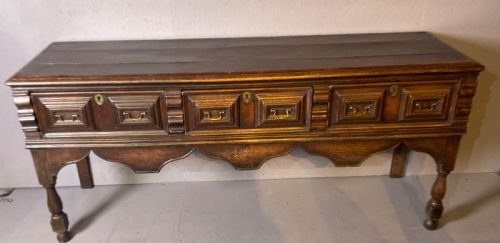
Makers shaped the woodwork with characteristic curves along the frieze or apron, giving the sturdy timber a softer outline than standard rectilinear furniture.
How they were made
Joiners built these pieces primarily from solid oak, sometimes utilising fruitwood for drawer linings or contrasting details, working with hand tools to joint the heavy planks.
Hardware typically consists of brass drop handles or brass plates secured to dovetailed drawer boxes, while potboards and open shelves rely on pegged mortise and tenon joints.
Surfaces developed their character through centuries of dry rubbing and wax polishing, occasionally showing lime washing or bleached tones applied in later periods.
Listings span periods from the 17th century through the Georgian era to Edwardian revivals, predominantly constructed in solid oak.
What varies in quality
The distinction between ordinary and exceptional examples rests on the crispness of the timber figuring, the integrity of the original potboard base, and whether the plate rack belongs to the lower cabinet from the beginning.
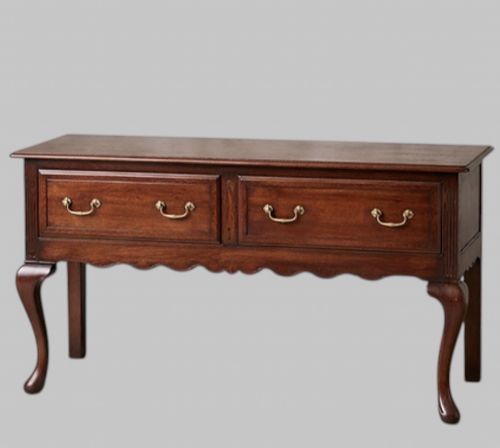
Proportion and stance dictate visual success, where well-turned legs or elegant cabriole supports elevate a piece above heavy, utilitarian equivalents.
Surviving original brasses and untouched surface patination separate untouched country pieces from heavily restored or later revivals.
The Scalloped Oak Dresser Glossary
- Dresser base
- The lower section of a kitchen or dining dresser, functioning as a sideboard or serving table with drawers and cupboards. It provides heavy timber surface space and enclosed storage.
- Plate rack
- The upper shelving unit attached to or hung above a dresser, featuring vertical slats or plate grooves. It allows decorative ceramics to stand safely upright.
- Potboard
- An open lower shelf built near the floor between the legs of a dresser. Historically, it held heavy metal pots and earthenware vessels off cold flagstone floors.
- Fruitwood
- Dense timber derived from fruit-bearing trees such as pear or apple, utilised by country joiners for secondary woods or contrasting details. It takes a fine finish and mellows richly over time.
- Cabriole leg
- A furniture leg that curves outward in a convex arc and tapers inward in a concave arc, ending in a pad or foot. This stylistic flourish lightens the appearance of heavy oak furniture.
Scalloped Oak Dresser: Frequently Asked Questions
How do I care for antique oak?
Keep timber furniture away from direct heat sources and sudden humidity changes to prevent the solid oak boards from splitting. Feed the dry wood periodically with a traditional beeswax polish.
Avoid modern liquid cleaners or silicone sprays, which sink into the grain and ruin the historic patina accumulated over centuries.
Are the plate racks original?
Many upper plate racks became separated from their lower bases during centuries of domestic use, leading to married pairs appearing on the market. Check the timber colour, wear patterns, and fixing marks where the rack meets the base.
Matching species of oak and consistent ageing across both sections indicate whether the combination has stayed together since manufacture.
Where were these dressers made?
Country workshops across England and Wales produced the majority of these pieces, adapting regional vernacular designs to local domestic needs. Welsh iterations frequently incorporated potboards and fruitwood stringing.
Provincial cabinetmakers constructed them to serve as the hardworking hub of farmhouse kitchens before they moved into dining rooms.