

Scalloped Mahogany Side Tables
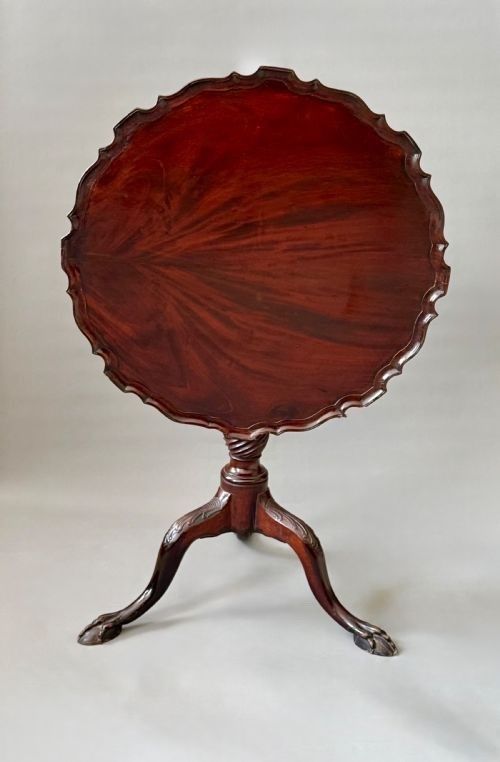
These scalloped mahogany side tables bring together rich timber and deft cabinet-making from the eighteenth century onwards.
Scalloped Mahogany Side Tables
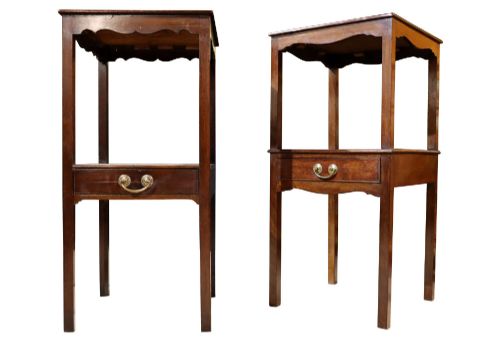
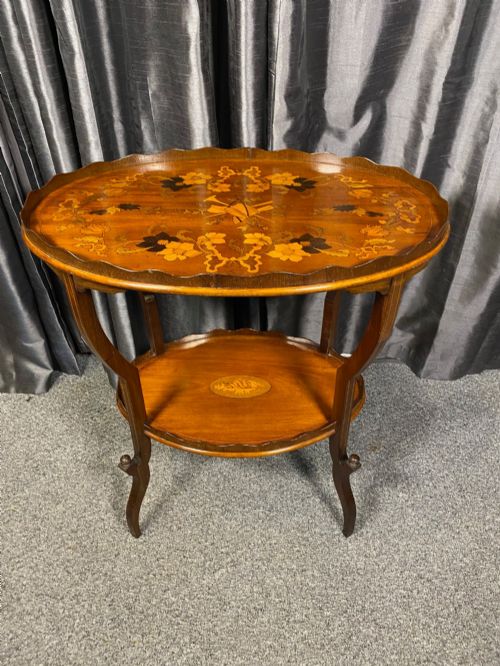
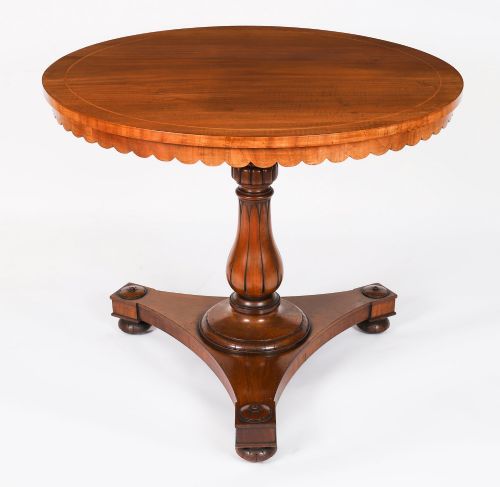
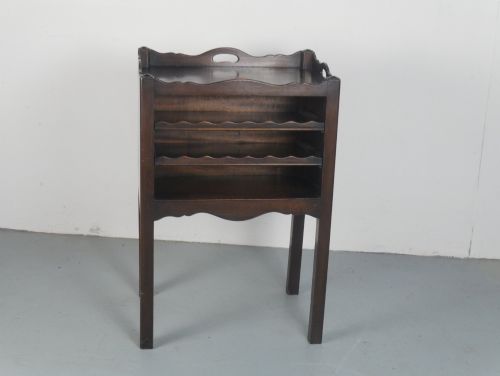
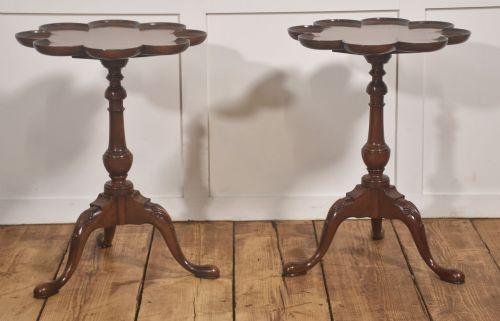
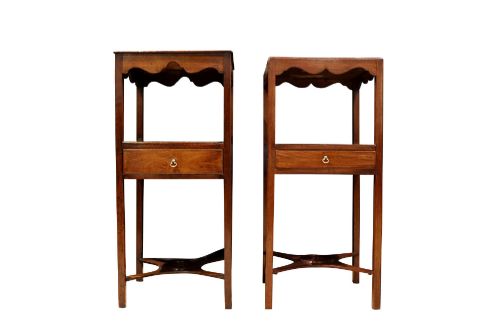
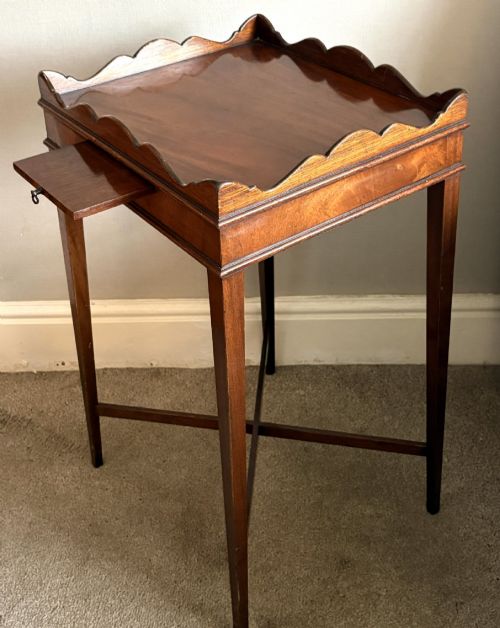
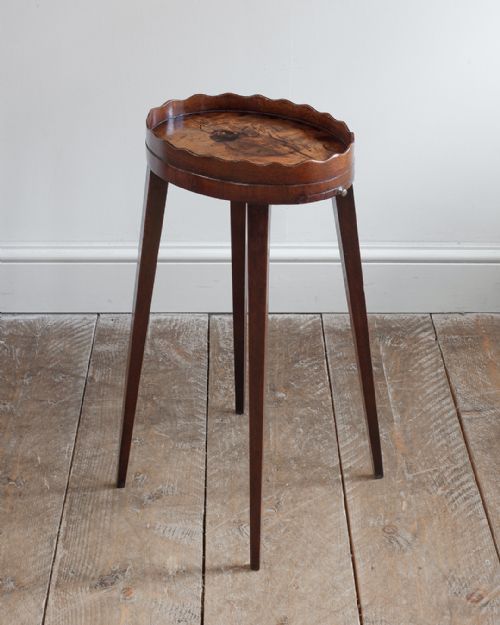
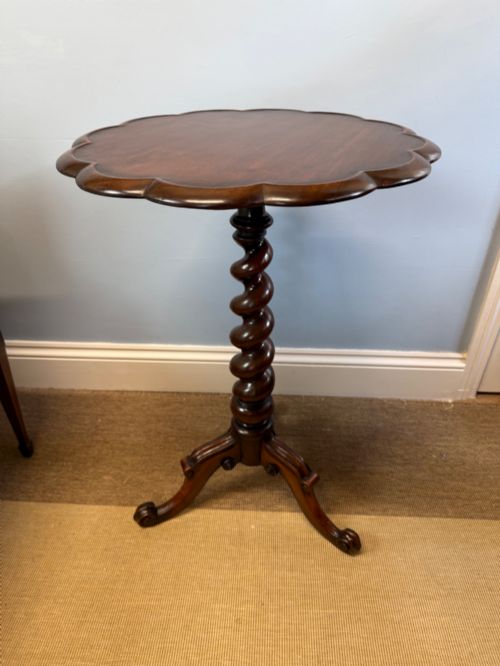
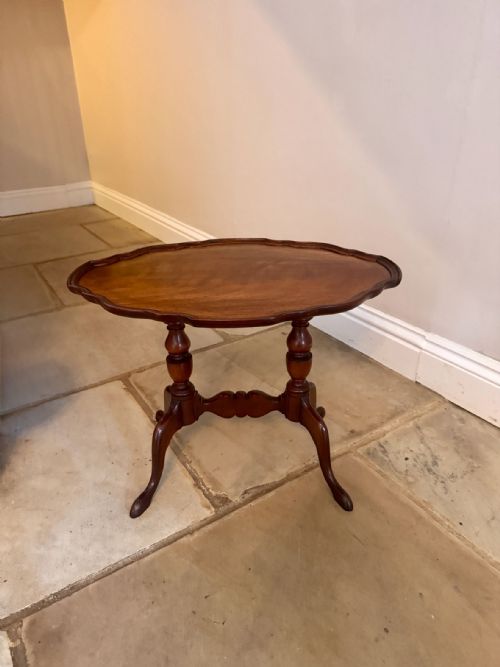
These scalloped mahogany side tables span multiple centuries, taking forms such as tripod tables, bedside pieces, and urn stands. Buyers frequently encounter examples from the Georgian period alongside later revivals from the Victorian and Edwardian eras.
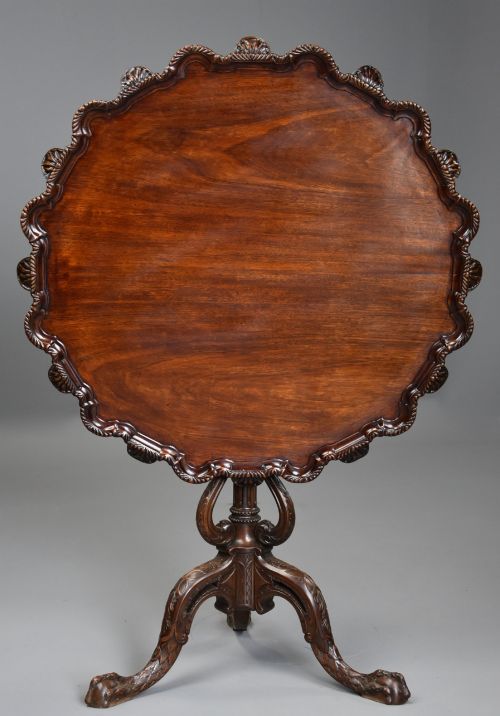
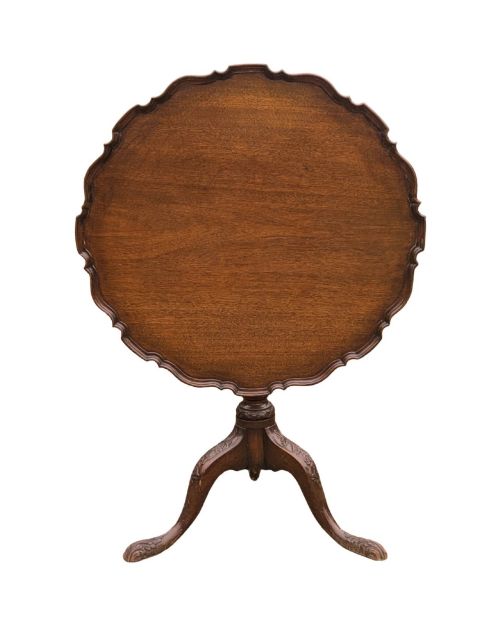
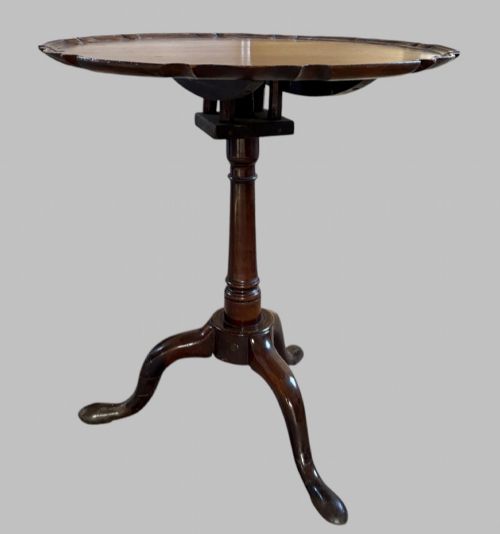
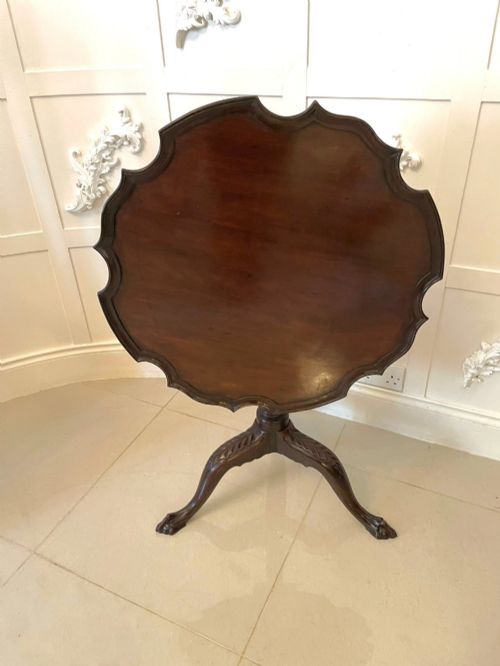
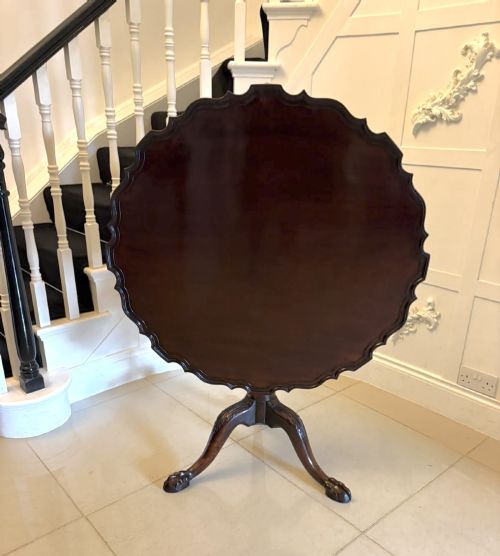
The defining characteristic across these pieces is the shaped or raised edge, often styled as a pie-crust, which frames the timber top. Makers paired this decorative border with various bases, ranging from central pedestals with tripod legs to slender four-legged side tables.
Materials and construction methods
Makers relied primarily on mahogany, occasionally selecting figured timber or Cuban mahogany for prominent surfaces, and sometimes enhancing the design with satinwood inlay or parcel gilt accents. The scalloped edges were carved directly from solid timber blanks rather than applied separately, demanding considerable skill with gouges to achieve an even profile.
Tripod tables frequently employ a birdcage mechanism beneath the top, allowing the surface to tilt and rotate when not in use. Joinery on the frames and pedestals utilises traditional pegged or dovetailed joints to ensure stability without modern adhesives.
Scalloped Mahogany Side Tables Retail Price Guide 2026
Typical asking prices for scalloped mahogany side tables among the pieces listed under this phrase on Sellingantiques today, from the lower quarter to the upper quarter. They describe what is for sale here now, not the wider market.
Tilt-top tables were once folded flat and parked quietly against parlour walls like obedient wooden sentries waiting for tea time.
Judging the standard of execution
Quality rests heavily on the crispness of the carved scalloping and the selection of the mahogany itself. Superior pieces display deep, natural figuring in the wood and precise, fluent carving along the raised rim rather than soft or repetitive mechanical shaping.
Proportion and balance also distinguish the work, particularly on tripod bases where the sweep of the legs must complement the diameter of the top. Finer examples show careful attention to secondary timbers and hidden construction details that support longevity.
Gillows·Shapland and Petter
The Scalloped Mahogany Side Tables Glossary
- Pie-crust
- A raised, scalloped edge carved around the perimeter of a circular table top. This decorative border resembles the fluted crust of a pastry pie.
- Tilt-top
- A table mechanism featuring a hinged block that allows the top to pivot vertically. This design enabled tables to be stored flat against a wall when not in use.
- Birdcage
- A wooden framework beneath a table top that permits both tilting and revolving movements. It consists of small turned columns connecting two parallel platforms.
- Tripod table
- A small occasional table supported by a central pillar resting on three legs. The base provides stability on uneven floors.
- Urn stand
- A tall, slender table designed to hold a tea urn or kettle. These pieces often feature pull-out slides and delicate proportions.
Scalloped Mahogany Side Tables: Frequently Asked Questions
How do I use a tilt-top table?
A tilt-top table uses a pivoting mechanism beneath the surface that allows the top to be turned upright. Historically, this permitted the table to stand flat against a wall to save space in smaller rooms.
Today, you can utilise this feature to display the decorative timber top when the table is not required for holding objects.
How can I tell a Georgian table from a revival piece?
Georgian tables generally display the natural signs of age, hand-cut joinery, and specific timber characteristics associated with eighteenth-century workshops. Revival pieces, produced during the Victorian and Edwardian periods, often exhibit different secondary woods and machine assistance in the turning.
Examining the underside and the construction of the pedestal reveals clues about the era of manufacture.
What rooms suit a mahogany side table?
These compact tables function effectively beside seating in a drawing room or as a bedside surface in a bedroom. Their modest footprints allow them to fit into corners and narrow spaces where larger furniture proves impractical.
The rich tones of the mahogany timber also provide a warm contrast against both neutral and patterned interior walls.