

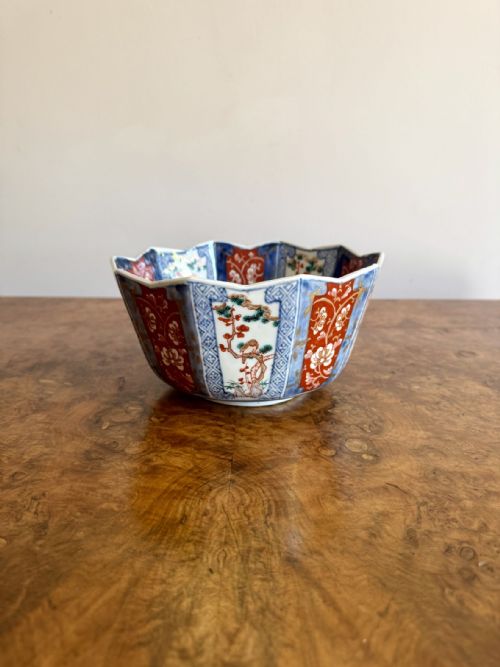

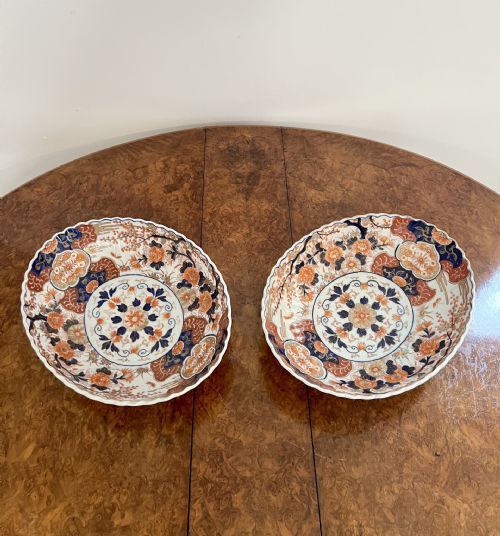


Scalloped Edge Imari Bowl
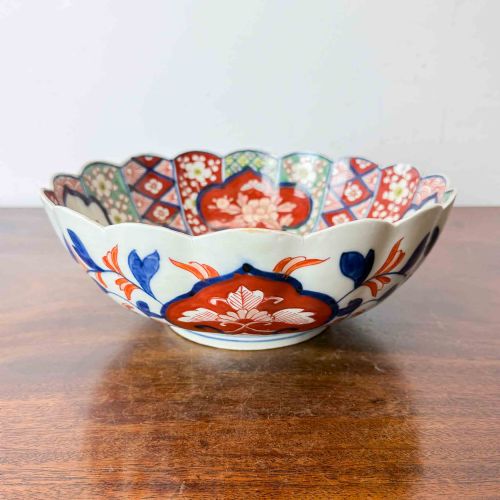
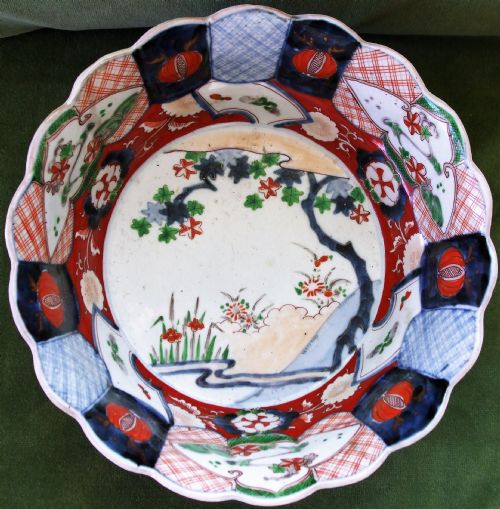
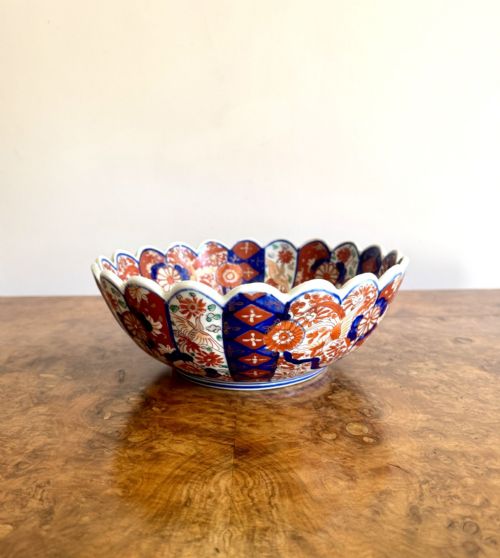
A scalloped edge imari bowl brings rich palette work and distinct form to a room.
Scalloped Edge Imari Bowl
A scalloped edge imari bowl is a decorative ceramic piece originating from Japan, typically taking the form of a bowl or plate with a shaped rim.
The pieces available here span the nineteenth century, including the Meiji period and the year nineteen hundred.
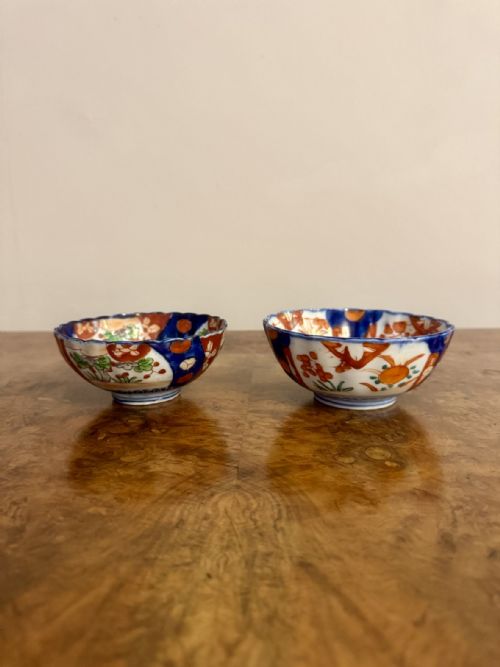
Buyers will most frequently meet nineteenth century porcelain examples and items dated around nineteen hundred, ranging from small bowls to large decorative display dishes.

How they were made
These items are formed from porcelain and ceramic, shaped with distinctive scalloped or scallop-shaped edges along the rim.
Makers decorated the surfaces using enamel and glaze, often accented with gold leaf and gilding to catch the light.
Periods represented include eighteen eighty, the nineteenth century, the Meiji period, and nineteen hundred.
What varies in quality
Quality rests in the precision of the form and the crispness of the scalloped edge.
The application of enamel, glaze, and gilding determines the visual depth of each piece.
The Scalloped Edge Imari Bowl Glossary
- Imari
- A style of Japanese porcelain decorated in underglaze blue and overglaze colours such as iron red and gold. This palette creates a vibrant appearance.
- Meiji Period
- A period of Japanese history spanning from eighteen sixty-eight to nineteen twelve. Pieces from this era often show high technical skill.
- Porcelain
- A ceramic material made by heating materials in a kiln. It provides a hard and white body for decorative painting.
- Gilding
- The application of gold leaf or gold powder onto a surface. It adds metallic highlights to the ceramic design.
Scalloped Edge Imari Bowl: Frequently Asked Questions
What is an imari bowl?
An imari bowl is a Japanese ceramic vessel characterised by distinct painted decoration in blue, red, and gold. These pieces were made for both utility and display.
They function well as centrepieces on a table or as decorative display dishes in a cabinet.
How old are these bowls?
The pieces listed date from the nineteenth century and around nineteen hundred, including the Meiji period in Japan.
Such dating is determined by the materials, styles, and manufacturing techniques recorded in the evidence.
How do I style a scalloped bowl?
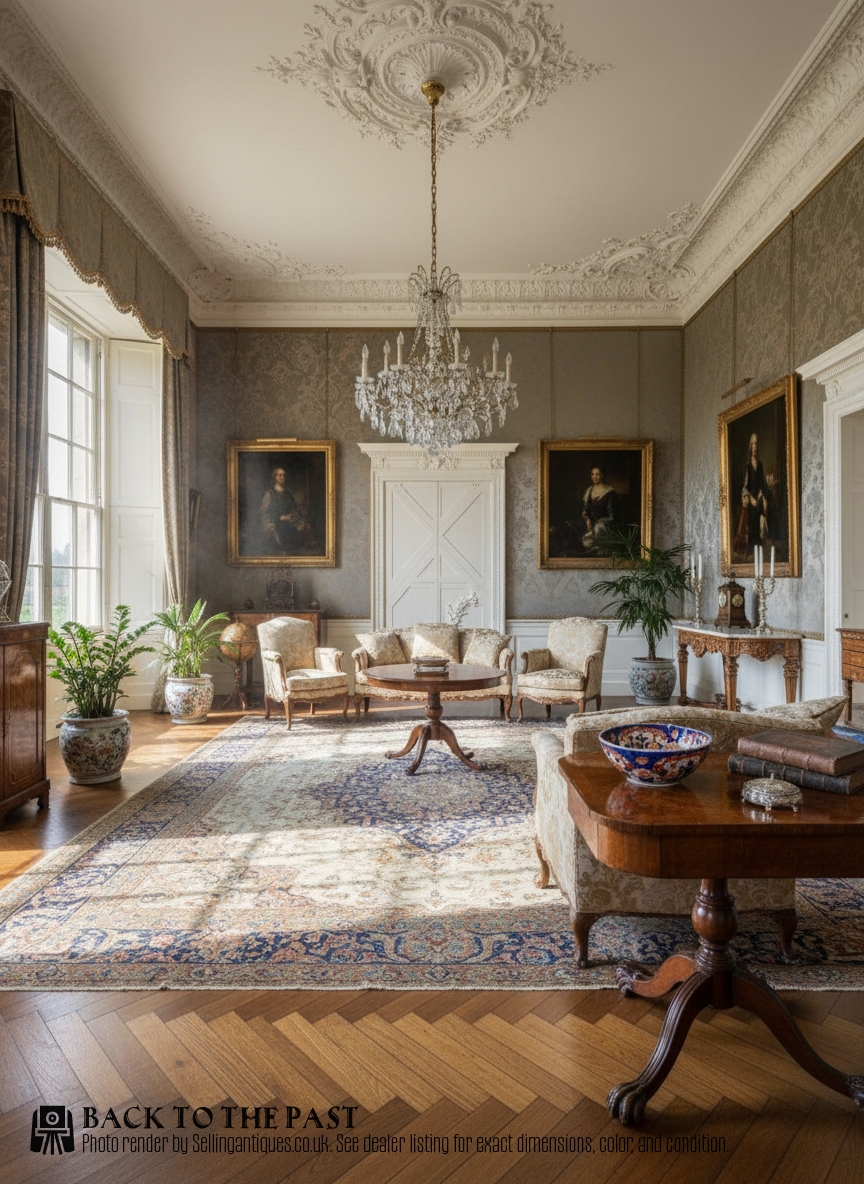
The shaped rim and painted surface allow these bowls to stand alone on a sideboard or table. Pairing them with neutral surroundings lets the colours and gilding stand out.
They integrate easily into traditional and eclectic interiors alike.
What materials are used?
These items are constructed from porcelain and ceramic as the base body. Enamel and glaze finish the surface, often accompanied by gold leaf and gilding.
These combined materials create the characteristic texture and sheen associated with the style.