



Arita Porcelain Centerpiece
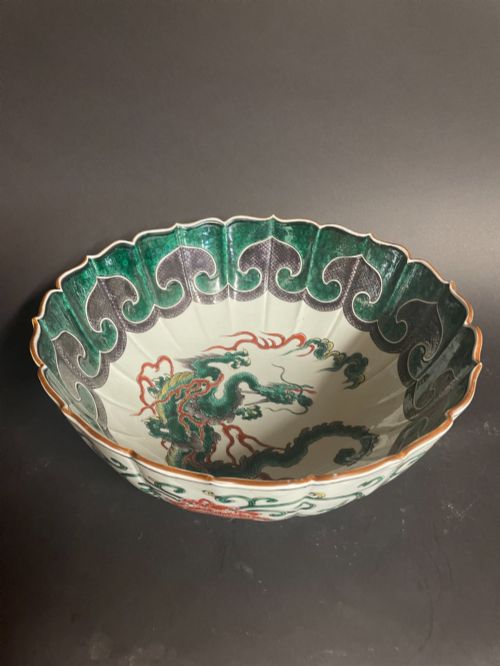
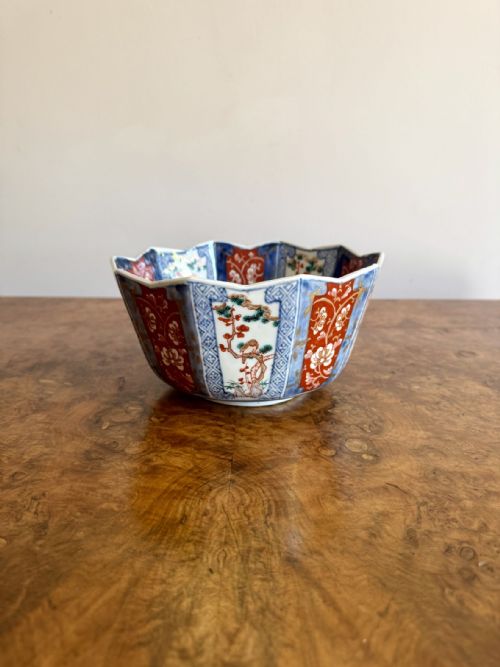
An arita porcelain centerpiece brings bold Japanese Imari palette work and scallop edge forms directly to a grand dining table.
Arita Porcelain Centerpiece
When you search for an arita porcelain centerpiece, you are looking at substantial Japanese decorative bowls created for export and domestic display during the nineteenth century, nineteen hundred, and eighteen ninety. These large antique vessels often take the form of scallop edge bowls designed to command attention in a room.
The versions you are most likely to meet on this page belong to the Japanese Meiji period and Japanese Edo traditions. They arrive as decorative bowls displaying the classic Japanese Imari aesthetic, which combines rich cobalt blue and enamel decoration.
Makers shaped these heavy porcelain bodies to serve as centrepieces for formal rooms, relying on traditional Japanese Arita kiln techniques. Each piece reflects the output of craftsmen working within recognised nineteenth century periods of production.
How they were made
Potters formed these bowls from fine porcelain clay before applying cobalt underglaze pigments directly to the surface. Artisans then layered enamel and gold leaf accents over the fired glaze to create the dense patterns characteristic of Japanese Imari ware.
Firing took place in traditional kilns during the Meiji period and nineteenth century, fixing the cobalt blue and polychrome enamels permanently into the glaze. Scallop edge contours were shaped by hand before glazing, requiring skilled manipulation of the wet porcelain.
Listings feature nineteenth century and nineteen hundred pieces utilising porcelain, enamel, glaze, gold leaf, and cobalt blue.
What varies in quality
Quality rests upon the precision of the cobalt underglaze work and the crispness of the enamel and gold leaf application. Finer examples display deeper cobalt tones and carefully controlled brushwork across the entire decorative bowl.
The weight and presence of the porcelain body also distinguish superior items, particularly within larger nineteenth century scallop edge bowls. Pieces bearing the distinct hallmarks of the Japanese Meiji period demonstrate greater artistic ambition in their surface design.
The Arita Porcelain Centerpiece Glossary
- Arita porcelain
- Japanese ceramic ware produced in the town of Arita, known for durable bodies and fine painted decoration. It forms the foundation of traditional Japanese export ceramics.
- Imari
- A style of Japanese porcelain featuring a distinct palette of cobalt blue, iron red, and gold leaf. These colours are applied over a white glazed ground.
- Meiji period
- The era of Japanese history lasting from eighteen sixty-eight to nineteen twelve, associated with increased export of decorative arts to Europe. Objects from this time often show exceptional technical skill.
- Cobalt underglaze
- A blue pigment applied to pottery before the final glaze and firing, ensuring permanence and depth. It remains a primary decorative element in traditional Arita wares.
- Scallop edge
- A decorative border formed of curved indentations resembling a scallop shell. This shaping is common on large nineteenth century presentation bowls.
Arita Porcelain Centerpiece: Frequently Asked Questions
What is an arita porcelain centerpiece?
An arita porcelain centerpiece is a large decorative bowl created in Japan during the nineteenth century or around nineteen hundred. These pieces typically feature Japanese Imari designs with cobalt blue and enamel.
They were produced for export and display, utilising traditional Arita kiln methods and heavy porcelain bodies. Their notable size allows them to function as focal points in period interiors.
How were these bowls used?
These large bowls served primarily as decorative table centrepieces in formal nineteenth century and Edwardian interiors. Their striking Imari palette made them natural display objects for dining rooms and entrance halls.
Collectors today continue to use them for display on large tables, sideboards, or open shelving. They require stable surfaces due to their substantial porcelain weight and historical value.
How do I identify a Meiji period piece?
Meiji period porcelain is identified through its characteristic Japanese Imari decoration, combining cobalt underglaze, enamel, and gold leaf. The era spans from eighteen sixty-eight to nineteen twelve, aligning with many nineteenth century listings.
Look for the dense patterns and confident brushwork typical of this productive phase in Japanese ceramics. The presence of scallop edge forms and deep cobalt tones also points toward this era.
How do I care for antique porcelain?
Care for antique porcelain involves gentle dusting with a soft, dry cloth to protect the delicate enamel and gold leaf surfaces. Avoid using chemical cleaners or immersing historic pieces in water.
Display them away from direct sunlight and high traffic areas to prevent accidental impact. Proper placement ensures the nineteenth century glaze and cobalt underglaze remain undamaged.