
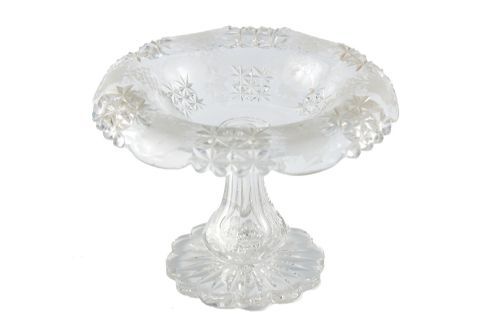


Scalloped Cut Glass
Scalloped cut glass brings brilliant light and crisp, faceted edges to a room, offering the refined weight of historical crystal and mirror work.
Scalloped Cut Glass
When you search for scalloped cut glass, you encounter functional and decorative items shaped with distinctive edge work that catches the light from every angle. These pieces span several distinct historical eras, including Regency, Victorian, Edwardian, and Art Deco periods, showcasing how craftsmen applied deep facets to glass over decades.
The objects on this page include table centrepieces, serving dishes, celery vases, candlesticks, jardinieres, plates, and wall mirrors. You are most likely to meet Victorian and Edwardian table centrepieces and dishes, alongside mirrors and candlesticks featuring bevelled glass and red colouration.
Materials and construction
Makers utilised lead crystal, crystal, and standard glass to form heavy, clear bodies capable of holding deep wheel-engraved cuts and polished facets. Metal mountings and original fittings appear alongside mirror plates and silvered glass to complete items such as jardinieres and wall mirrors.
Craftsmen shaped the rims into characteristic scalloped contours before applying precise cutting techniques to the body. This combination of heavy glass casting and careful surface grinding produced the sharp refraction seen across the pieces.
Listings span the nineteenth and twentieth centuries, featuring materials from standard glass and lead crystal to mirror plate and gilt bronze.
Assessing quality and craftsmanship
The distinction between ordinary and superior pieces rests on the crispness of the cutting and the weight of the material. Better examples display deep, sharp facets that maintain geometric precision around every curve of the scalloped rim.
Superior items also benefit from clear, heavy metal crystal and intact original fittings, such as the bronze mounts on jardinieres or secure mirror backings. The depth of the polish within the cut channels reveals the skill applied by the glass cutter.
The Scalloped Cut Glass Glossary
- Celery vase
- A tall vessel historically used on dining tables to hold celery stalks upright in water or vinegar. These pieces feature deep bowls and sturdy stems.
- Jardiniere
- An ornamental pot or stand designed to hold indoor plants or floral arrangements. They frequently incorporate metal stands or silvered glass.
- Centrepiece
- A large decorative object placed in the middle of a dining table, such as a bowl or dish. They anchor the table setting during formal meals.
- Bevelled glass
- Glass with an angled edge cut and polished to a specific acute angle. This technique creates a prismatic border effect around mirrors and plates.
Scalloped Cut Glass: Frequently Asked Questions
What is scalloped cut glass?
Scalloped cut glass refers to decorative and functional glassware featuring rims shaped into a series of rounded curves, combined with faceted surface cutting. These items reflect light brilliantly and showcase historical manufacturing techniques.
Such pieces range from Regency celery vases to Victorian dishes and Edwardian plates, offering both utility and ornamental value for a room.
How were these glass items used?
Historical households utilised these objects for dining, illumination, and interior decoration. Centrepieces and serving dishes held food at the table, while candlesticks provided lighting.
Mirrors and jardinieres served to brighten dark corners and display plants, functioning as both practical tools and status symbols in period homes.
How do I date cut glass?
Dating relies on observing the weight, the style of the cutting, and the accompanying materials such as metal mounts or original mirror fittings. Regency and Victorian pieces often feature heavier lead crystal and deeper wheel-engraved patterns.
Later Edwardian and Art Deco items introduce cleaner geometric lines or integrated metal frames, aligning with the design sensibilities of the twentieth century.
How should I care for antique glass?
Antique glass requires gentle cleaning with warm water and mild soap, avoiding harsh scrubbing that might damage delicate rims or polished surfaces. Hand drying with a lint-free cloth preserves the clarity of the material.
Placement should avoid areas subject to sudden temperature changes or unstable surfaces where heavy crystal might tip over.