
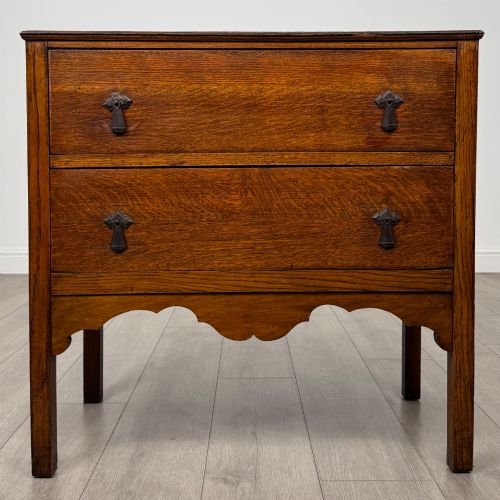
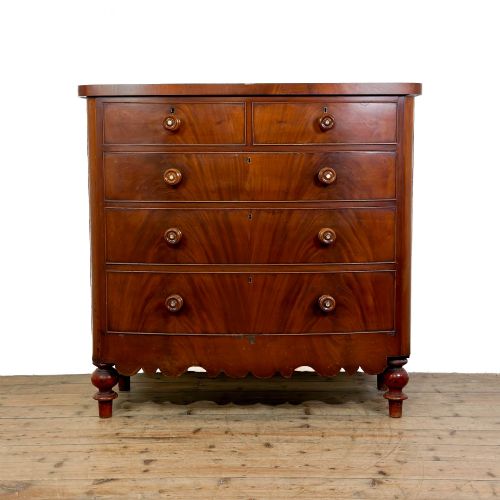
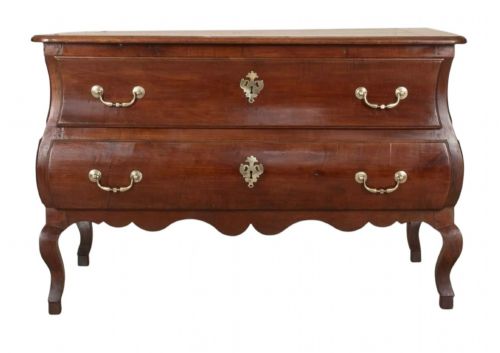


Scalloped Apron Chest
A scalloped apron chest brings together practical storage and distinct lower woodwork, offering collectors a traditional piece with shaped detailing along the base.
Scalloped Apron Chest
When buyers search for a scalloped apron chest, they encounter a variety of drawer units and commodes featuring shaped lower rails. The pieces on this page span several centuries, originating from English and continental European traditions.
Forms include standard chests of drawers, miniature furniture, and French commodes. These items serve as functional storage while displaying distinct joinery and timber grain across the front and base.
How they were made
Cabinetmakers utilised timbers such as oak, mahogany, walnut, cherrywood, and pine to construct these drawer chests. Carpenters shaped the lower aprons by hand, cutting curves and contours to transition smoothly from the legs to the underside of the cabinet.
Surface treatments range from natural waxed finishes to painted wood surfaces and limed treatments. Metal fittings like brass handles and escutcheons were fastened to secure the drawers.
Some miniature chests were originally built by apprentices to demonstrate their mastery of complex joinery techniques to guild masters.
What varies in quality
The sophistication of the apron cutout distinguishes standard joinery from finer cabinet work. Clean, balanced curves along the lower rail indicate skilled hand tool use by the maker.
Selection of timber grain and the condition of the original wood surfaces determine the overall visual strength of the piece. Uniform patination across the drawers and frame adds depth to older examples.
The Scalloped Apron Chest Glossary
- Commode
- A European term for a low chest of drawers or cabinet. These units often display polished timber or painted finishes.
- Escutcheon
- A protective metal plate surrounding a keyhole. Brass is the most common metal used for these fittings.
- Limed oak
- Timber treated with a specialised finish that leaves white pigment in the open pores of the grain. This technique highlights the natural texture of the wood.
Scalloped Apron Chest: Frequently Asked Questions
What is a scalloped apron chest?
A scalloped apron chest is a storage unit featuring a decorative, curved lower rail beneath the drawers. These pieces incorporate traditional cabinetmaking techniques from various centuries.
Design variations include French commodes and English drawer units in woods like oak and mahogany.
How do I date an antique chest?
Dating relies on examining the timber species, construction methods, and hardware. Earlier pieces often utilise oak or walnut, while later examples frequently feature mahogany.
Tool marks and the style of the lower apron also provide strong indicators of the period of manufacture.
Where were these chests made?
These items originate from various regions including England and France. Continental examples often use terms like commode.
Regional workshops utilised local timbers such as cherrywood, walnut, and pine for their regional furniture styles.
How do I care for wooden chests?
Maintain wooden chests by keeping them away from direct heat sources and fluctuating humidity. Regular dusting with a dry cloth protects the wax and polish.
Avoid chemical polishes that can degrade the historic finish on older timber surfaces.