




Satinwood Undertier Table
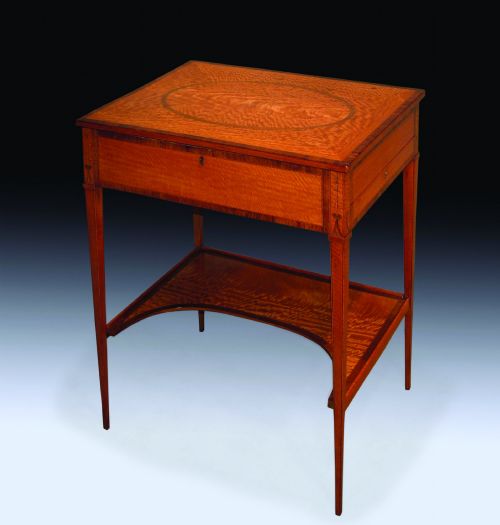
A satinwood undertier table brings a luminous, figured timber and a useful lower shelf into a room.
Satinwood Undertier Table
A satinwood undertier table is primarily encountered as an occasional table, side table, or console table dating from the eighteenth century to the early twentieth century. These pieces frequently appear in Edwardian interpretations of the Sheraton style, alongside occasional Victorian and nineteenth century examples.
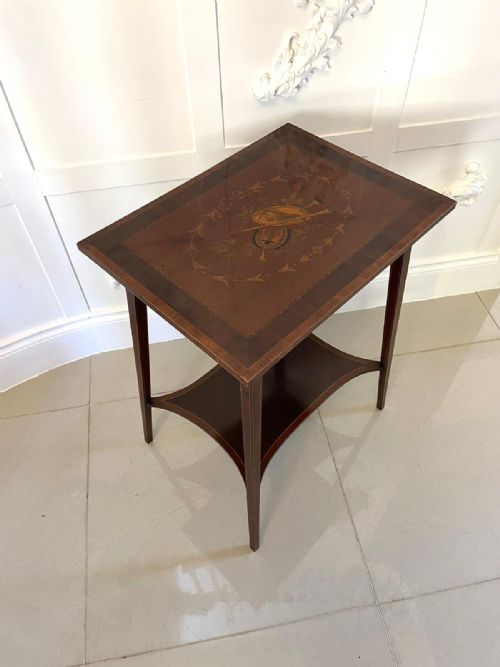
Buyers seeking a satinwood undertier table will find pieces utilising timber such as satinwood, mahogany, rosewood, and satin walnut, often decorated with inlay, boxwood stringing, and painted details. Forms vary from oval and kidney shapes to drop leaf and octagonal formats, incorporating an undertier shelf beneath the main surface.
The selection ranges from eighteenth century Sheraton period pieces to Charles X console tables and Edwardian Sheraton Revival designs. Most examples on this page reflect the Edwardian period and the revival of eighteenth century classical lines.
How they were made
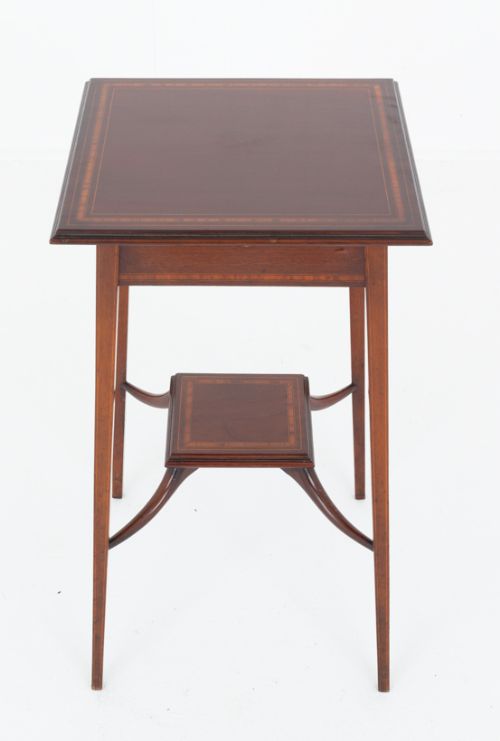
Cabinet makers constructed these tables using a carcase of solid mahogany or walnut veneered with figured satinwood to create a smooth, reflective surface. Contrast was introduced through boxwood inlay, stringing, and banded borders that framed the geometric or curved tops.
Secondary timbers provided structural stability for the legs and internal framing, while applied brass mounts or painted decoration finished the detailing. Tables often featured a lower undertier shelf fixed between the legs to provide extra stability and surface space.
Listings span from the 18th century through the Victorian and Edwardian eras, featuring occasional, side, and console tables in satinwood, mahogany, and rosewood.
What varies in quality
The quality of a satinwood undertier table is determined by the selection of the timber veneer and the precision of the inlay work. Highly figured satinwood paired with crisp boxwood stringing represents finer craftsmanship than plain timber surfaces with minimal decoration.
Structural harmony also separates standard production from superior pieces, particularly in the joinery of the undertier shelf and the grace of the leg tapering. Tables carrying attribution to established makers like Howard & Son's demonstrate a higher standard of overall execution.
Howard & Son's
The Satinwood Undertier Table Glossary
- Undertier
- A secondary lower shelf fitted between the legs of a table, offering additional display or storage space. It is frequently seen on occasional and lamp tables of the Edwardian period.
- Satinwood
- A hard, durable timber native to Ceylon and the West Indies, prized for its golden yellow colour and natural sheen. It was widely used as a veneer on high-status furniture.
- Sheraton Revival
- A late nineteenth and early twentieth century design movement that reinterpreted the lighter, neoclassical furniture forms of the eighteenth century designer Thomas Sheraton. Pieces often featured painted decoration and delicate inlay.
- Stringing
- A narrow strip of contrasting wood inlaid into the surface of a piece to create a fine border line. It is commonly executed in boxwood or ebony on mahogany and satinwood carcases.
- Console table
- A table designed to stand against a wall, frequently supported by brackets or legs at the front. Larger nineteenth century examples in satinwood often served this function.
Satinwood Undertier Table: Frequently Asked Questions
What is a satinwood undertier table used for?
These pieces served as light display or occasional tables in nineteenth and early twentieth century reception rooms. The lower undertier provided a convenient place for books or small decorative objects.
Today they function effectively as lamp tables, bedside stands, or accent pieces in living spaces where surface area is required without heavy proportions.
How do I identify an Edwardian satinwood table?
Edwardian examples often display Sheraton Revival characteristics such as painted floral motifs, boxwood stringing, and lighter framing timbers. The use of satin walnut alongside true satinwood is also common in this period.
Construction details, such as machine-sawn internal timbers and lighter secondary woods, help distinguish Edwardian pieces from earlier eighteenth century production.
What woods are used besides satinwood?
While satinwood provides the primary decorative veneer, makers frequently combined it with mahogany, rosewood, and satin walnut. Boxwood is regularly used for contrasting inlay and stringing.
Brass fittings and painted details also appear on specific revival pieces, adding further contrast to the primary timber surfaces.
Are these tables solid satinwood?
Most tables utilise satinwood as a veneer applied over a stable secondary timber carcase such as mahogany or pine. This technique prevented the expensive satinwood from warping while providing a smooth decorative surface.
Solid construction was generally reserved for smaller decorative elements, legs, or framework components.