

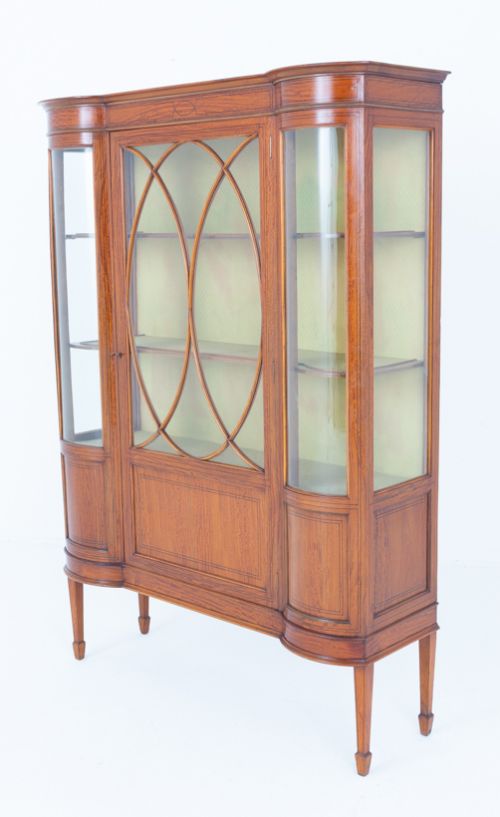


Satinwood Standing Cabinet
Satinwood standing cabinets bring warm timbers and fine inlay into a room, serving as display pieces or storage.
Satinwood Standing Cabinet
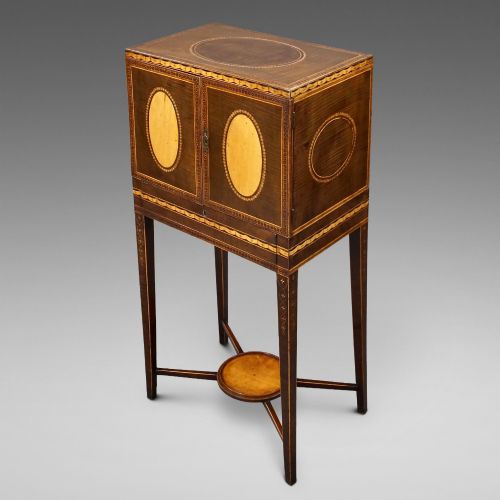
A satinwood standing cabinet brings together upright storage and display with the distinctive grain of its primary timber. When buyers search for a satinwood standing cabinet, they encounter pieces originating from the Georgian, Victorian, and Edwardian periods.
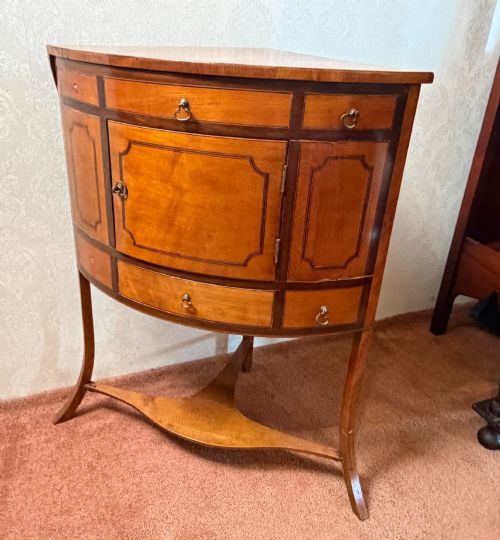
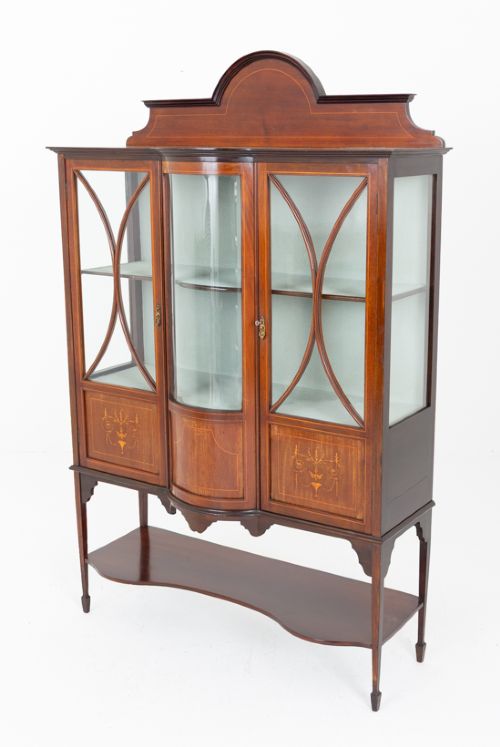
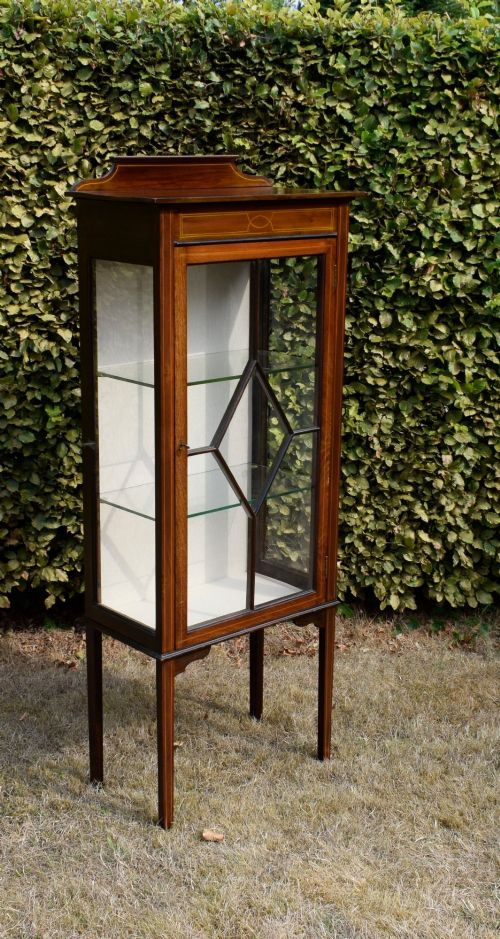
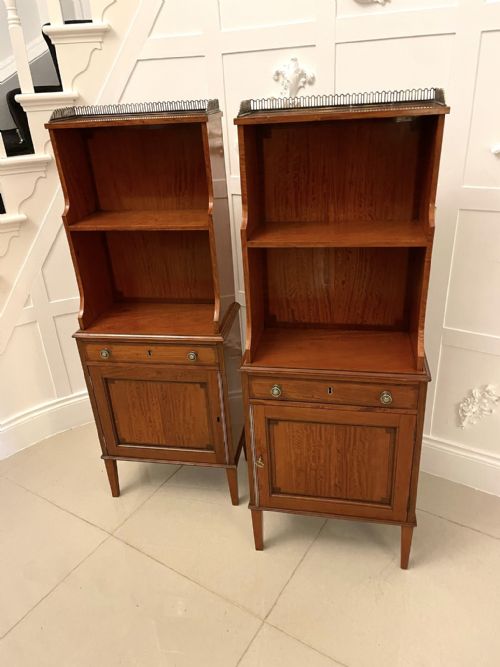
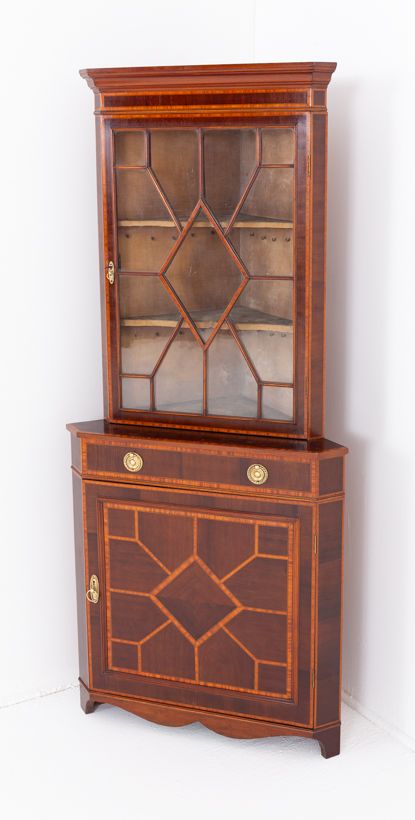
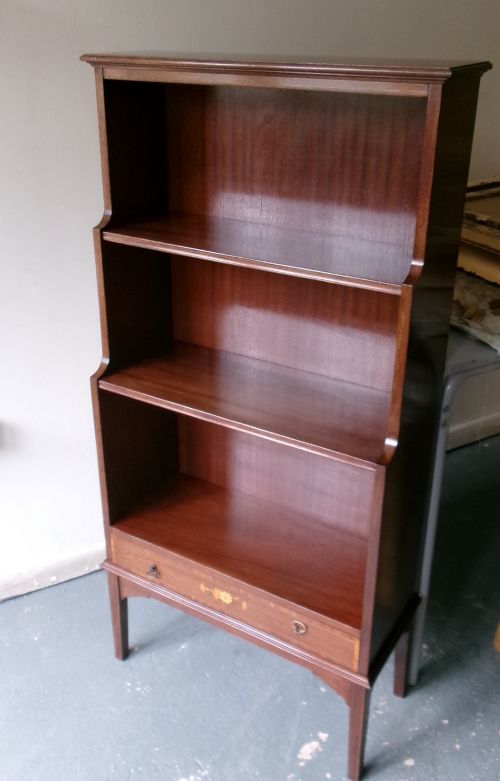
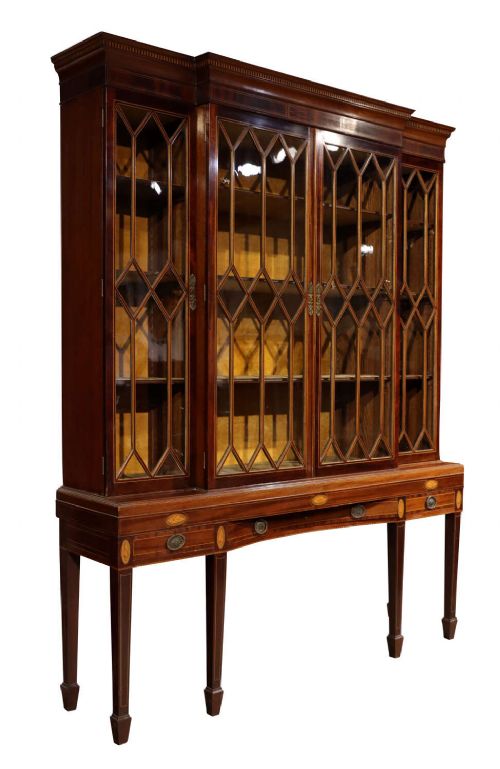
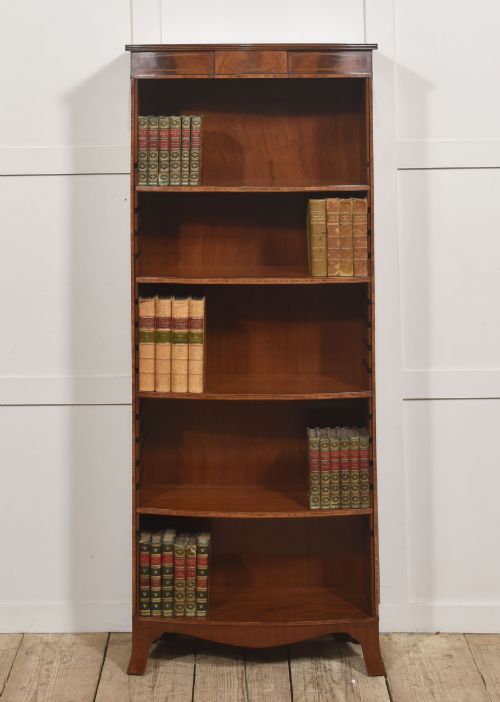
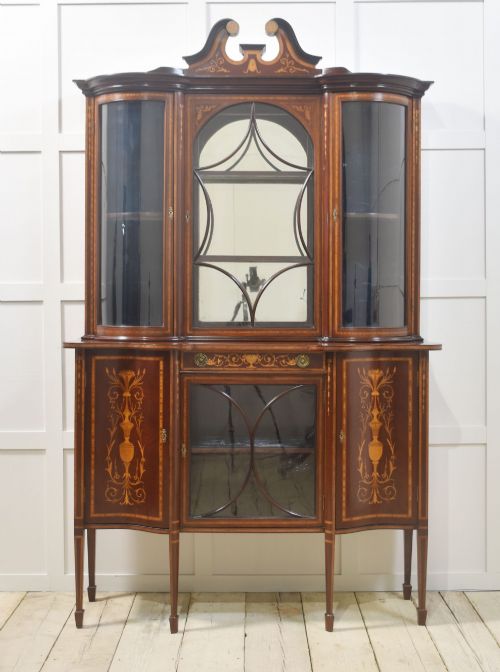
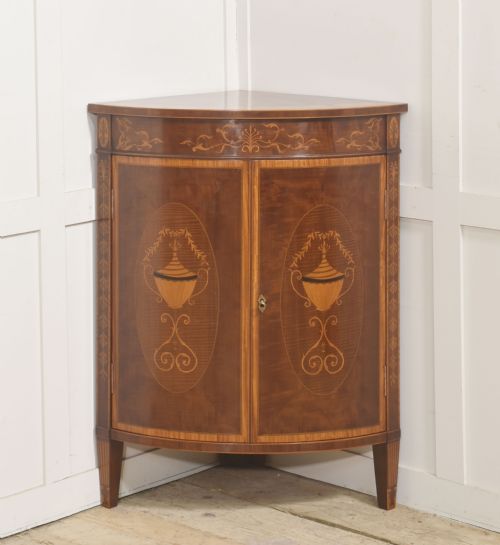
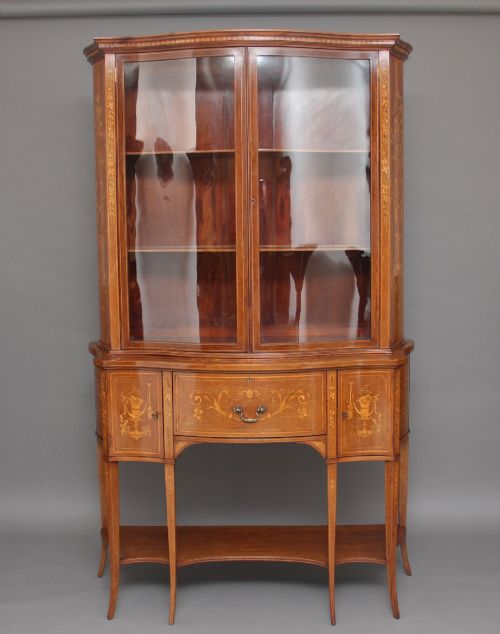
The selection on this page ranges widely in form. Display cabinets, corner cabinets, bookcases, and music cabinets appear alongside washstands and cabinets on stand, spanning styles from Sheraton Revival to George III.
Most items meeting this description date from the Edwardian era and the late nineteenth century. These pieces employ upright formats designed to house books, sheet music, or decorative objects while occupying a modest footprint on the floor.
Materials and construction methods
Makers built these cabinets using structural carcasses of mahogany or other hardwoods faced with satinwood veneers. Artisans applied contrasting boxwood and mahogany stringing to define panels, drawers, and doors.
Glazing appears frequently in the upper sections of display cabinets and bookcases, supported by delicate timber framing. Brass hardware, including hinges, locks, and handles, completes the construction of opening doors and drawers.
Materials appearing across the current selection include solid mahogany, satinwood veneers, boxwood stringing, and glazed panels.
Assessing cabinet quality
Quality rests upon the crispness of the inlay and the selection of figured timber veneers. Finer examples display meticulous matching of satinwood grains across door panels and drawer fronts, whereas simpler items rely on plain surfaces.
Construction detail distinguishes workshop output. Superior pieces show precise joinery in the internal shelving, well-fitted drawers with traditional linings, and balanced proportions that reflect the Sheraton or Georgian design traditions.
Gillows·Waring and Gillow·Collinson and Lock·Edwards and Roberts
The Satinwood Standing Cabinet Glossary
- Satinwood
- A lustrous tropical hardwood known for its golden colour and reflective sheen. It was frequently used as a veneer on high-status furniture during the eighteenth and nineteenth centuries.
- Sheraton Revival
- A late nineteenth and early twentieth century design movement that drew inspiration from the neoclassical furniture of George Sheraton. These pieces often incorporate delicate stringing, painted motifs, and satinwood inlay.
- Inlay
- A decorative technique where pieces of contrasting wood, such as boxwood or mahogany, are set into recesses flush with the surface of the main timber.
- Crossbanding
- A border veneer applied around the edges of a panel or drawer front with the wood grain running perpendicular to the centre section.
- Bijouterie cabinet
- A glazed display table or cabinet designed specifically for showing small valuable objects and jewellery.
Satinwood Standing Cabinet: Frequently Asked Questions
What rooms suit a satinwood standing cabinet?
These cabinets suit drawing rooms, studies, and hallways where their upright proportions add vertical interest. Their glass doors and display shelves allow them to hold collections without overwhelming the floor space.
Smaller corner cabinets and music cabinets fit neatly into compact areas, while larger breakfront bookcases require more expansive wall space to sit comfortably.
How do I distinguish Edwardian pieces from Georgian ones?
Georgian pieces date from the eighteenth century and tend to exhibit heavier structural timber framing alongside restrained, classical proportions. Edwardian items from the early twentieth century often show revival styles with lighter satinwood veneers and more delicate stringing.
Examining the internal drawer construction and secondary timbers helps clarify the period of manufacture when stylistic cues overlap.
Were these cabinets used for books or display?
Makers produced both glazed display cabinets for ornaments and shelving cabinets intended for books or sheet music. Many variants include lockable doors to protect collections.
Some specialist forms, such as music cabinets, feature internal drop-front drawers specifically dimensioned for sheet music storage.
How should I care for satinwood veneer?
Satinwood benefits from placement away from direct sunlight and heat sources to prevent the timber from fading and the veneer from drying. Regular dusting with a soft, dry cloth maintains the surface sheen.
Application of mild furniture wax preserves the finish without building up heavy residues on the delicate inlay.