



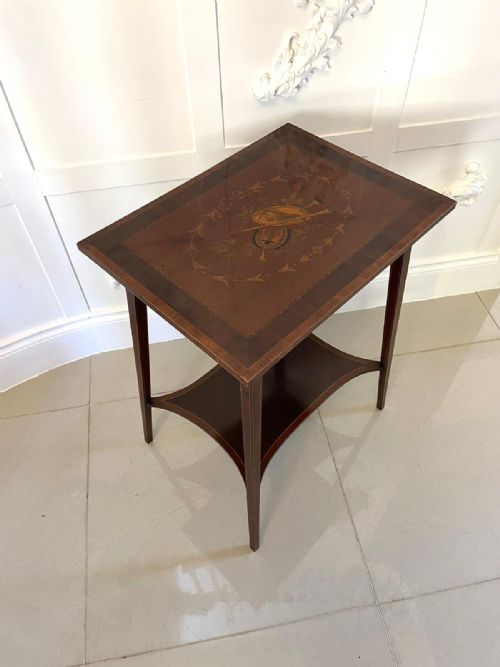
Satinwood Marquetry Table
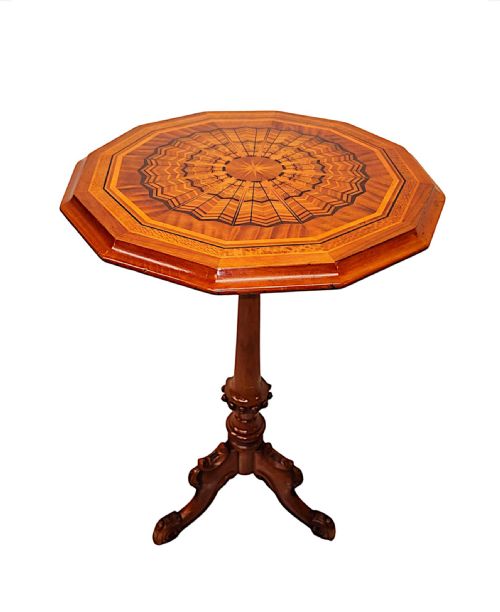
When choosing a satinwood marquetry table, you acquire a finely figured piece defined by contrasting timber veneers and detailed floral or classical inlay.
Satinwood Marquetry Table
A satinwood marquetry table spans several distinct centuries, crossing George III, Regency, Victorian, and Edwardian periods as cabinetmakers revived classical tastes.
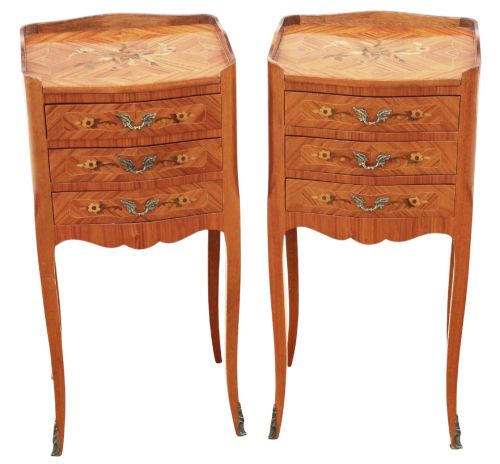
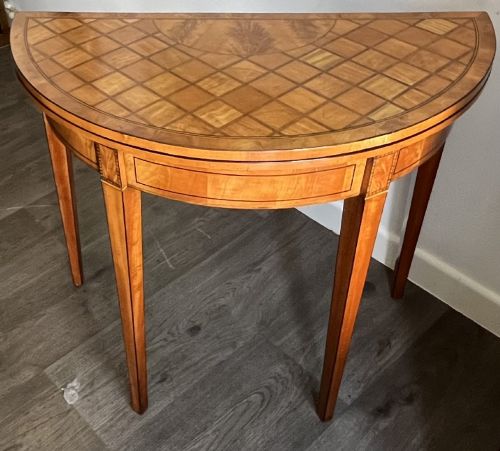
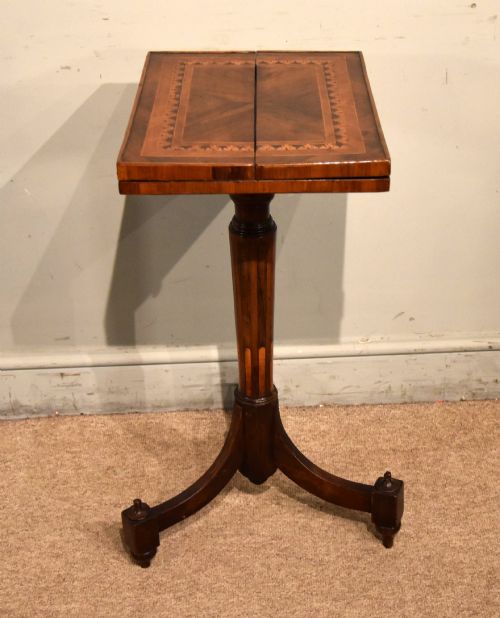
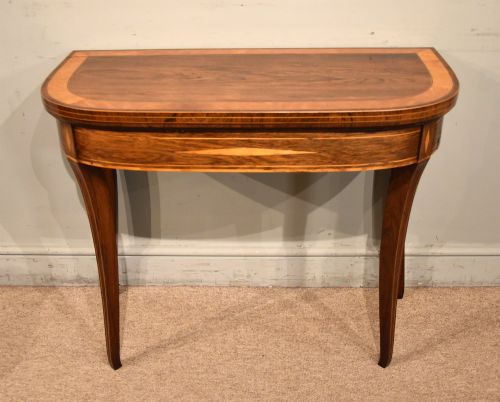
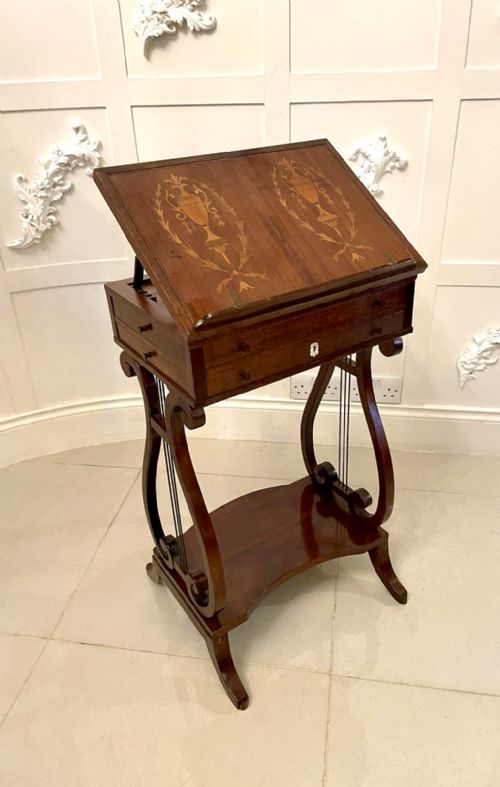
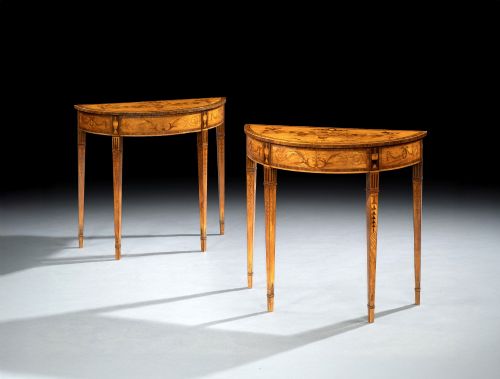
The form adapts to many household functions, appearing in records as Pembroke tables, card tables, writing desks, and demi-lune side tables.
Edwardian interpretations and Sheraton Revival pieces dominate current selections, alongside eighteenth-century examples showing more restrained geometric or botanical motifs.
How They Were Made
Craftsmen built these items using dense native and exotic timbers, laying satinwood veneers over secondary woods such as mahogany or pine.
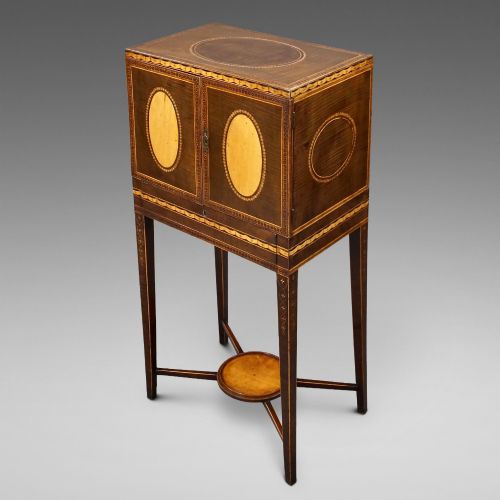
Marquetry panels combine contrasting slips of boxwood, rosewood, and harewood, cut carefully to form pictorial or scrollwork designs set flush into the surface.
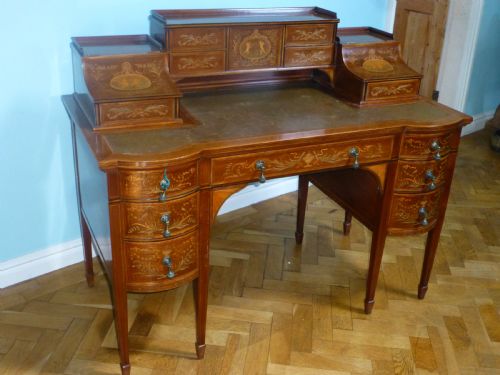
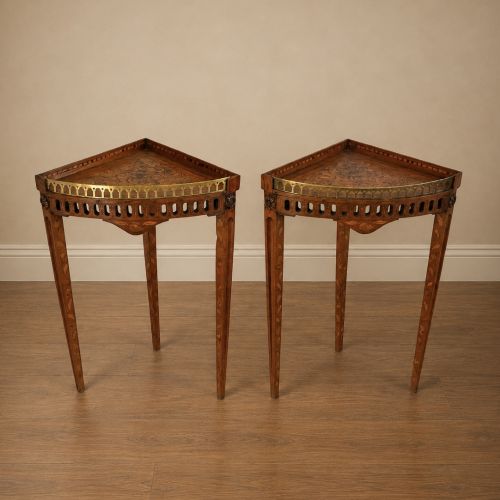
Makers occasionally integrated brass galleries, leather inserts, and glass panels into the framing to complete functional surfaces for writing or display.
Listings feature satinwood, mahogany, and rosewood alongside specialised forms like Carlton House desks and Pembroke tables.
What Varies in Quality
Construction standards emerge in the precision of the veneer work and the crispness of the timber matching across shaped tops and curved aprons.
Superior examples demonstrate meticulous control in cutting and fitting fine hardwoods, ensuring individual inlay elements sit seamlessly without heavy filler.
The refinement of internal framing, drawer linings, and structural timber selection separates standard commercial production from workshop pieces bearing attribution.
Edwards and Roberts·Waring and Gillow·Maple and Co·Hampton and Sons
The Satinwood Marquetry Table Glossary
- Satinwood
- A lustrous tropical hardwood native to Ceylon and India, prized for its golden sheen and smooth grain. It forms the primary visual field for decorative veneered furniture.
- Marquetry
- The art of applying thin decorative veneers to a structural base in intricate patterns. Artisans assemble various tinted woods to create pictures or symmetrical motifs.
- Pembroke table
- A small rectangular drop-leaf table with hinged flaps on two opposite sides. Designed for versatility, it served as a breakfast or occasional tea table in formal rooms.
- Demi-lune
- A half-moon shape used frequently for console and side tables placed flat against a wall. This profile accommodated elaborate fan and urn marquetry designs on the top.
- Carlton House desk
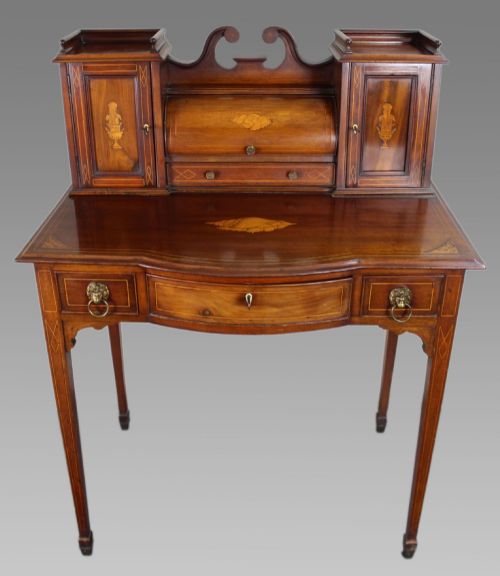
- A distinctive writing table fitted with a tiered superstructure of small drawers and compartments curving around the back. These desks often showcase fine satinwood and marquetry.
Satinwood Marquetry Table: Frequently Asked Questions
What is a satinwood marquetry table?
These items are decorative domestic furnishings surfaced with pale golden satinwood veneer and ornamented with contrasting inlaid timber patterns. They were designed primarily for light household duties, reading, and display.
Over successive generations, cabinetmakers adapted the form from eighteenth-century classical proportions into later revival styles. Today they remain valued for their timber grain and intricate surface decoration.
How were these tables used originally?
Georgian and Regency households utilised these pieces as Pembroke tables for breakfast, card tables for evening games, or side tables for lamps. Edwardian iterations served similar domestic roles in drawing rooms and boudoirs.
Many incorporated specialised compartments, such as drawers for writing materials or folding leaves for letter-writing and needlework. Their mobility allowed them to move easily around panelled rooms.
How do I care for a satinwood table?
Protect the polished veneer surfaces from direct sunlight to prevent the golden satinwood tones from darkening or fading unevenly. Maintain a stable indoor humidity to keep the underlying timber stable and prevent veneer lifting.
Dust gently with a dry, soft cloth and avoid chemical polishes or excessive moisture. Careful placement away from direct heat sources preserves both the polish and the delicate marquetry inlay.
How can I tell the period?
Examine the construction methods, secondary framing timbers, and stylistic motifs to distinguish eighteenth-century originals from later Edwardian Sheraton Revival pieces. Earlier examples often rely on hand-cut dovetails and solid secondary woods.
Revival furniture from the late nineteenth and twentieth centuries frequently displays standardised machine-cut elements alongside deliberate recreations of earlier classical forms. Comparing the character of the marquetry and overall proportions clarifies the date of manufacture.