

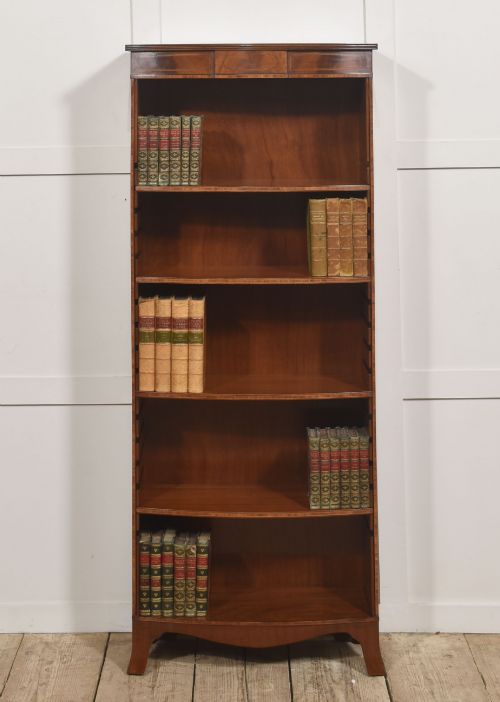


Satinwood Library Cabinet
A satinwood library cabinet brings together fine timber and functional book storage, offering a refined focal point for any study.
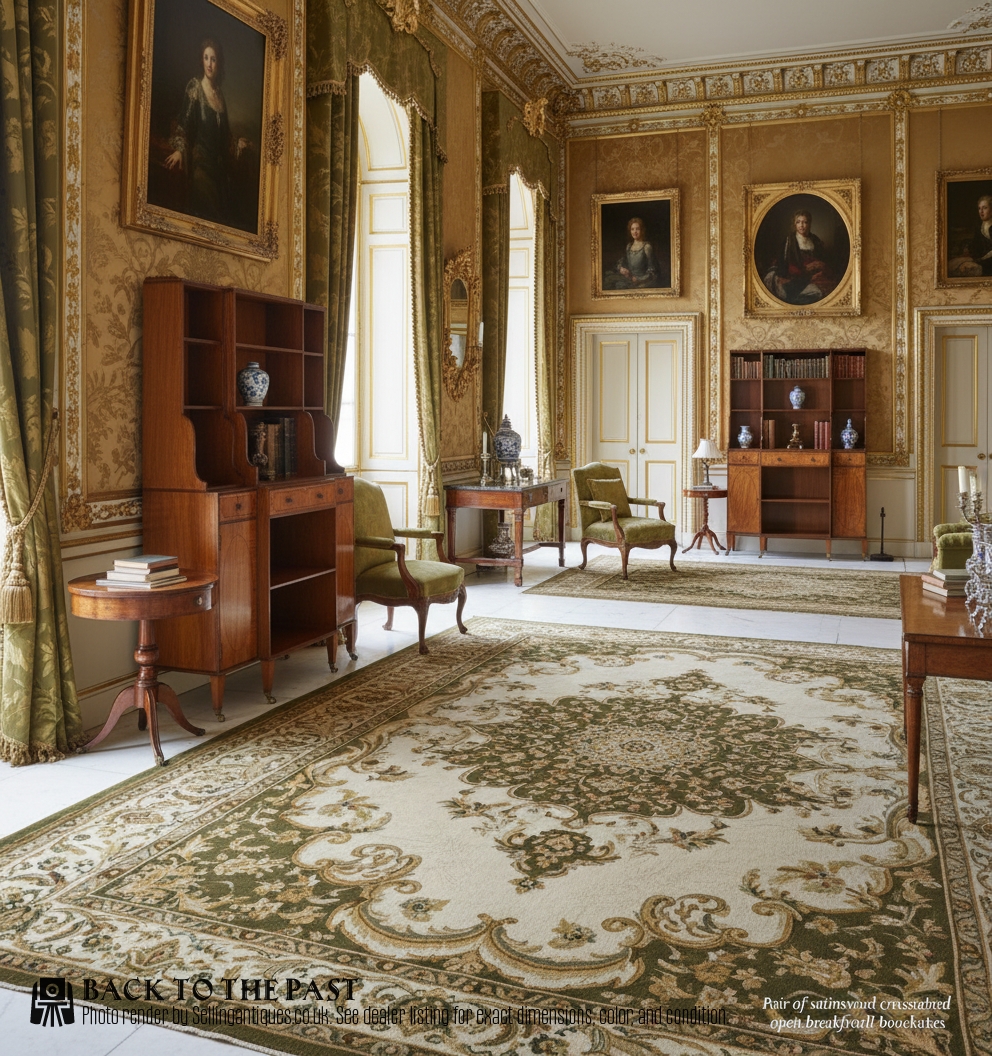
Satinwood Library Cabinet
When you search for a satinwood library cabinet, you are looking at substantial pieces designed to house books and papers while displaying the luminous qualities of satinwood. These cabinets appear across several distinct periods, including the Georgian era, the nineteenth century, and the Edwardian period.
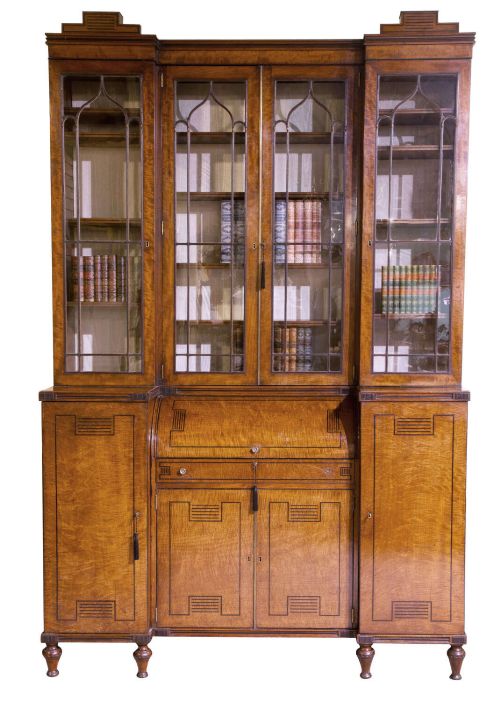
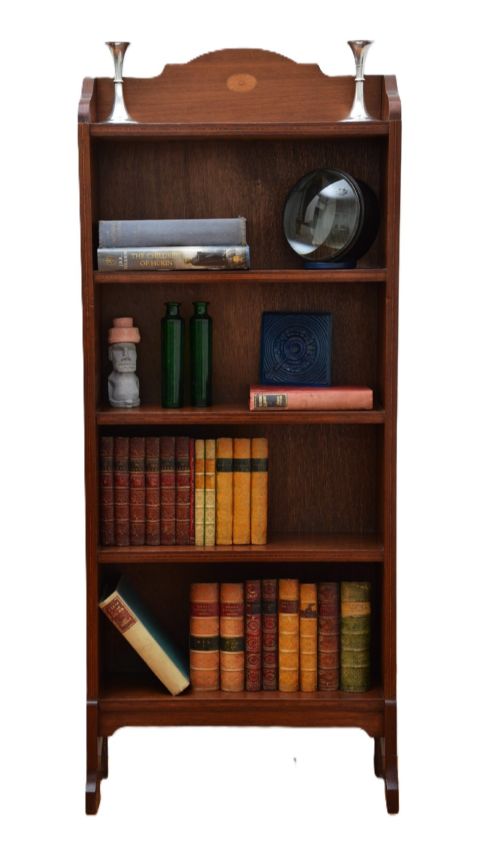
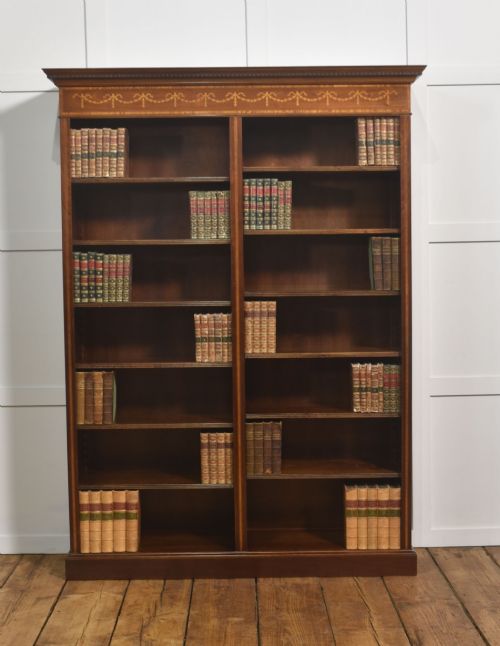
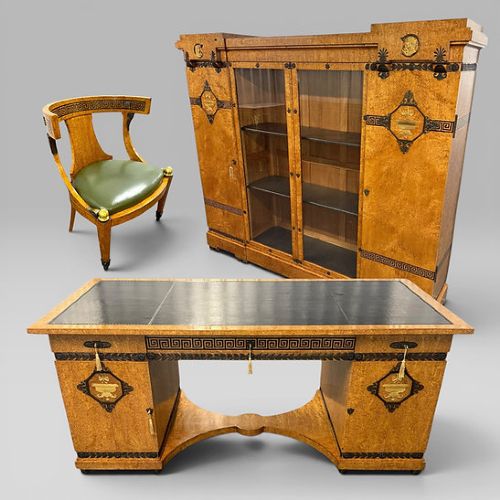
The pieces on this page span various styles, from Sheraton Revival and Regency to Gothic Revival and French Neoclassical. You will find breakfront designs, open waterfall bookcases, and comprehensive office sets complete with desks and chairs.
Makers such as Gillows, Mercier Frères, and S and H Jewell London contribute to the higher end of the inventory. These works often feature crossbanding, boxwood inlay, and original painted decoration alongside mahogany and bronze elements.
How they were made
Cabinetmakers constructed these pieces primarily from satinwood and mahogany, frequently employing boxwood for delicate stringing and inlay work. Glass panels protect the upper shelves in glazed bookcase variants, while brass handles and bronze mounts furnish the hardware.
Craftsmen utilised crossbanding to frame the grain of the satinwood, creating subtle contrasts across the doors and drawer fronts. Painted decoration appears on select later pieces, applied directly to the timber surface to add intricate floral or neoclassical motifs.
Satinwood Library Cabinet Retail Price Guide 2026
Typical asking prices for satinwood library cabinet among the pieces listed under this phrase on Sellingantiques today, from the lower quarter to the upper quarter. They describe what is for sale here now, not the wider market.
Folio cabinets were specifically built to store oversized art folios, proving that historical book collectors also struggled with coffee table book sizes.
What varies in quality
The standard of timber selection largely dictates the visual impact of each piece, with finely figured satinwood grain commanding greater attention. The precision of the inlay work and the presence of documented workshop signatures also elevate the standing of a cabinet.
Structural complexity, such as breakfront configurations or two-part construction, reflects the ambition of the original design. Original painted decoration and well-preserved brass hardware further distinguish superior examples from simpler utilitarian shelving.
Gillows·Mercier Frères·S and H Jewell London
The Satinwood Library Cabinet Glossary
- Satinwood
- A durable, lustrous timber native to tropical regions, prized for its golden sheen and smooth finish. It forms the primary surface veneer on fine eighteenth and nineteenth-century cabinet work.
- Crossbanding
- A decorative border technique where veneer strips are laid perpendicular to the main grain of the furniture. This frames panels and highlights the edges of doors and shelves.
- Breakfront
- A cabinet design where the central section projects forward from the flanking wings. This architectural arrangement creates depth and visual balance across large bookcases.
- Sheraton Revival
- A late nineteenth and early twentieth-century design movement inspired by the neoclassical work of Thomas Sheraton. It relies on symmetrical forms, delicate inlay, and classical proportions.
Satinwood Library Cabinet: Frequently Asked Questions
What periods do these cabinets come from?
The pieces span from the Georgian period around eighteen hundred through the nineteenth century and into the Edwardian era up to nineteen thirty. Revival styles also draw heavily on earlier neoclassical designs.
Most items seen here date from the late Victorian and Edwardian periods, reflecting the revival of satinwood in high-end domestic interiors.
How do I care for satinwood?
Keep wooden cabinets away from direct sunlight and steady heat sources to prevent the satinwood veneer from drying out or fading. Dust gently with a dry, soft cloth and avoid chemical polishes.
Maintaining a stable room temperature helps preserve the integrity of both the timber and any delicate boxwood inlay.
Are these cabinets adjustable?
Certain open and glazed library bookcases feature adjustable shelving to accommodate varying book sizes. Others rely on fixed wooden shelves set within the cabinet carcass.
Check individual descriptions to confirm whether the shelving mechanism allows for movement.
What is the difference between a bookcase and a library cabinet?
Library cabinets often include enclosed lower cupboards, drawers, or folio storage alongside open or glazed shelving for books. Standard bookcases focus primarily on vertical display and open shelf storage.
Both forms served similar domestic and institutional purposes for housing bound volumes.