
Waterfall Open Shelving
These waterfall open shelving pieces combine tiered display tiers with timber construction, offering collectors an elegant way to store books and display objects.

Waterfall Open Shelving
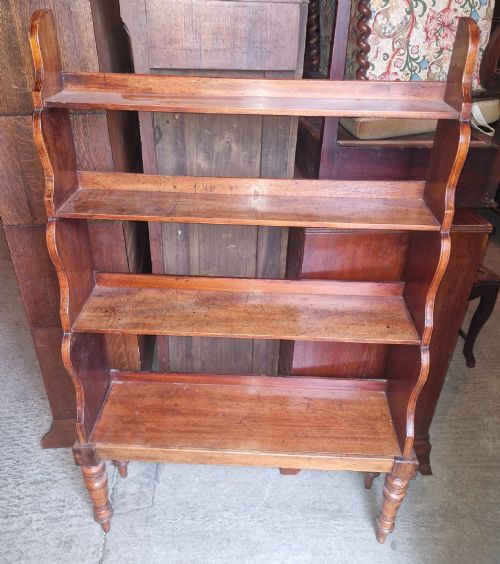
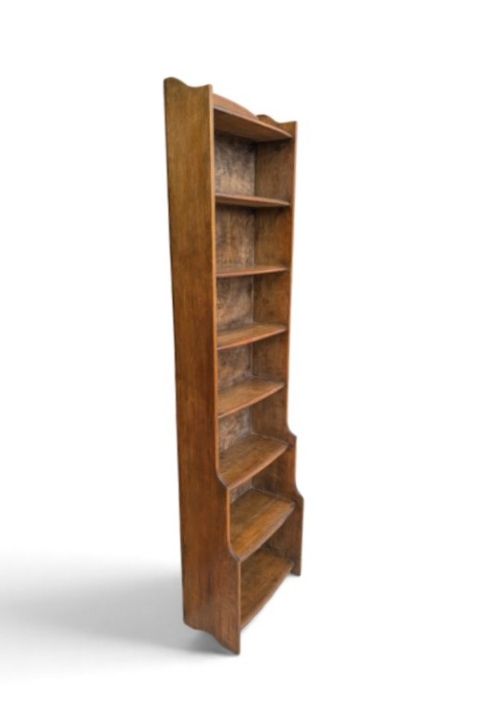
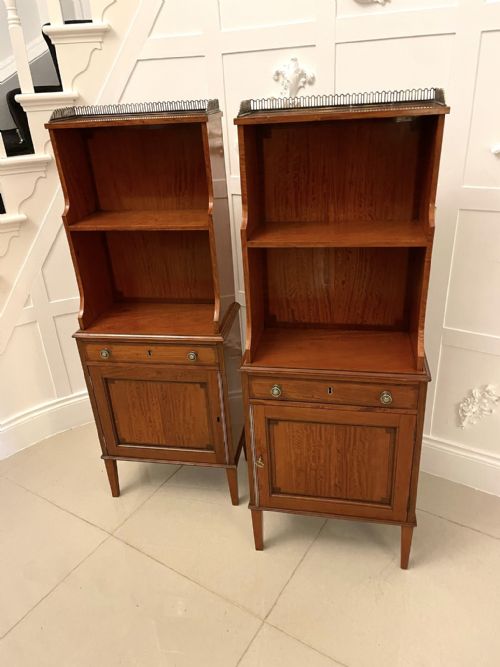
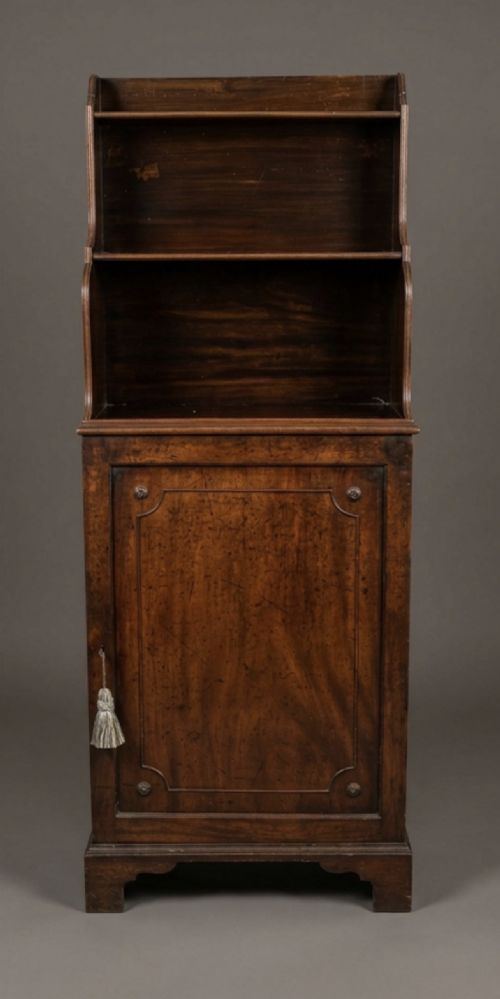
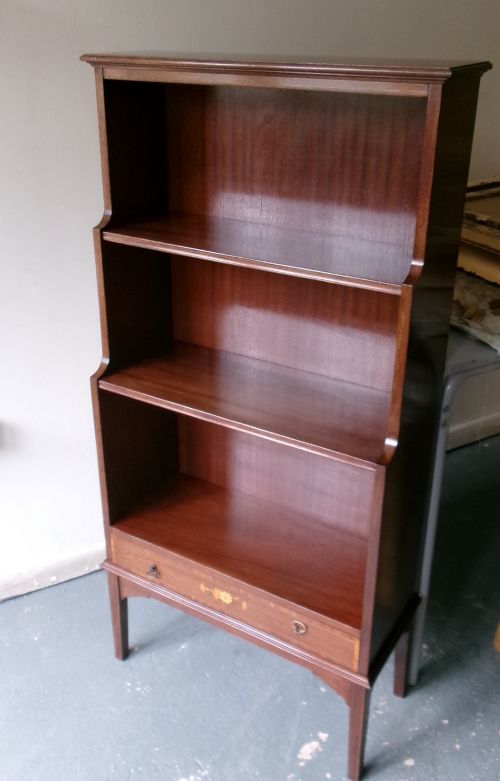
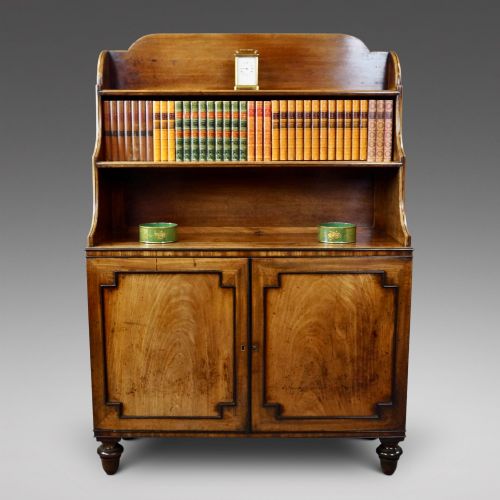
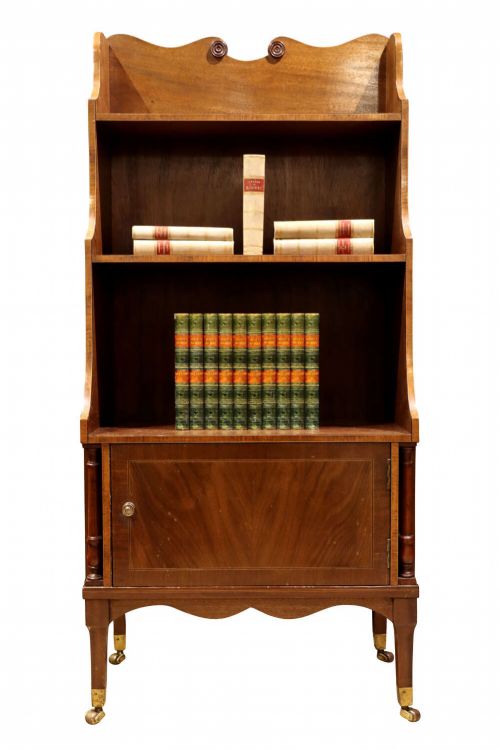
Waterfall open shelving comprises tiered bookcases, wall shelves, and etageres designed with receding shelves that step back progressively from bottom to top. These pieces appear across multiple historical periods, including Georgian, Regency, Victorian, and Edwardian eras.
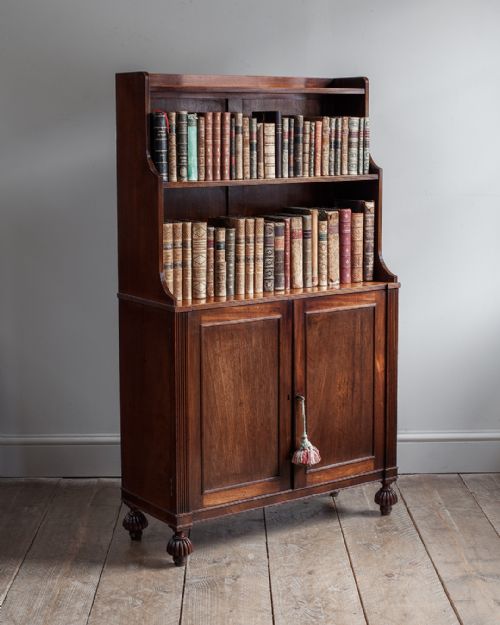
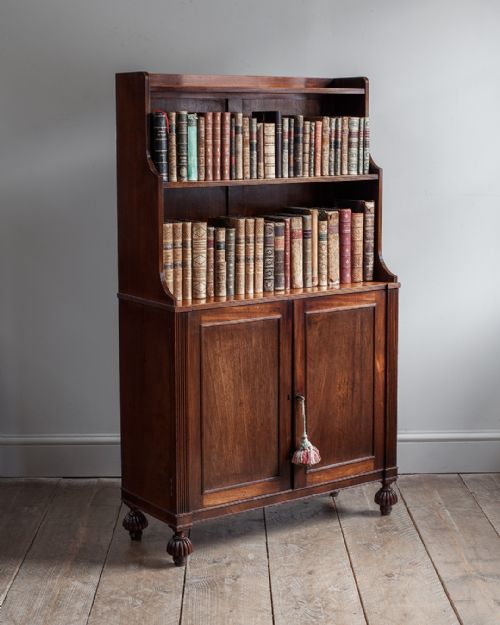
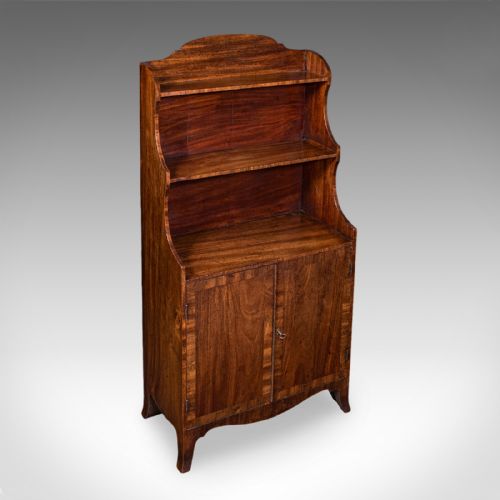
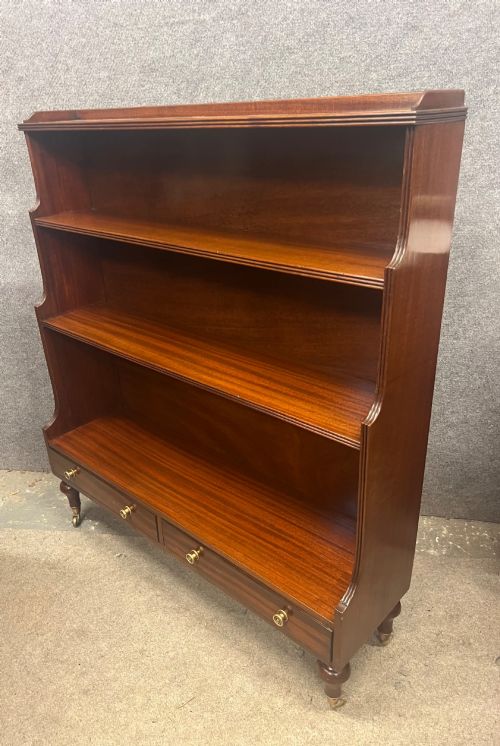
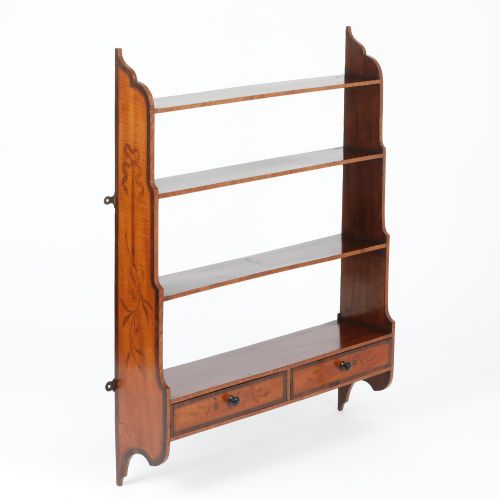
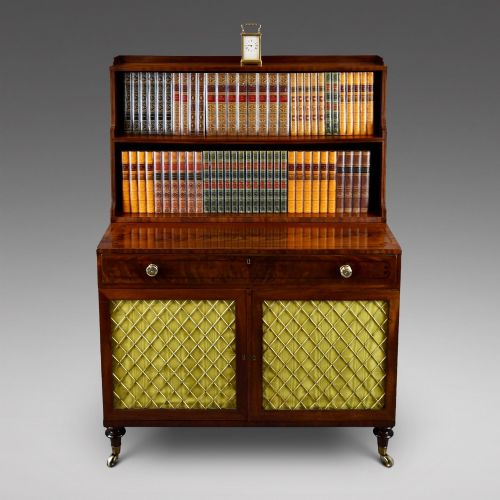
The version most commonly met on this page is the freestanding mahogany waterfall bookcase, often featuring graduated open shelves above a lower cabinet or drawer base. Variations range from petite chiffoniers and hanging bookshelves to grand library bookcases and paired breakfront units.
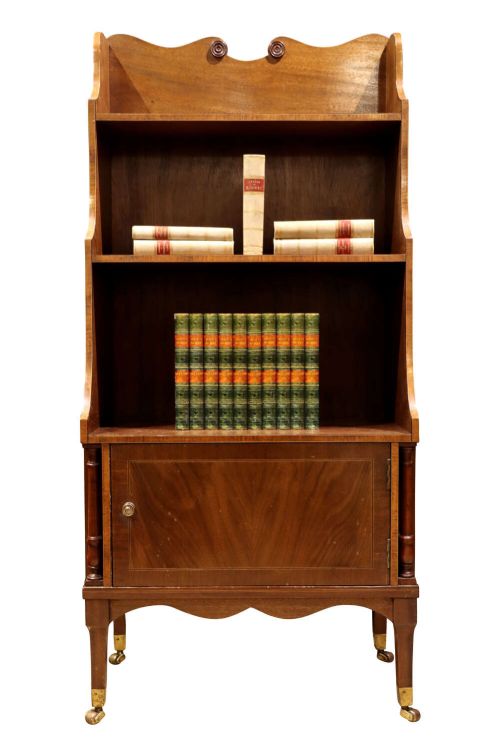
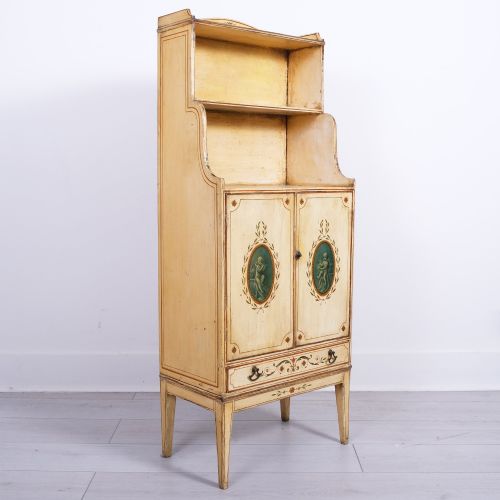
Origins span standard domestic furnishings to pieces showing specific revival styles, alongside painted finishes, fret-cut oak details, and rich woods such as satinwood, rosewood, and burr walnut.
Materials and construction
Cabinetmakers constructed these tiered units primarily using solid and veneered timbers, selecting mahogany, oak, satinwood, rosewood, and pine. Craftspeople applied cross-banding and boxwood stringing to accent the graduating shelves and cabinet doors.
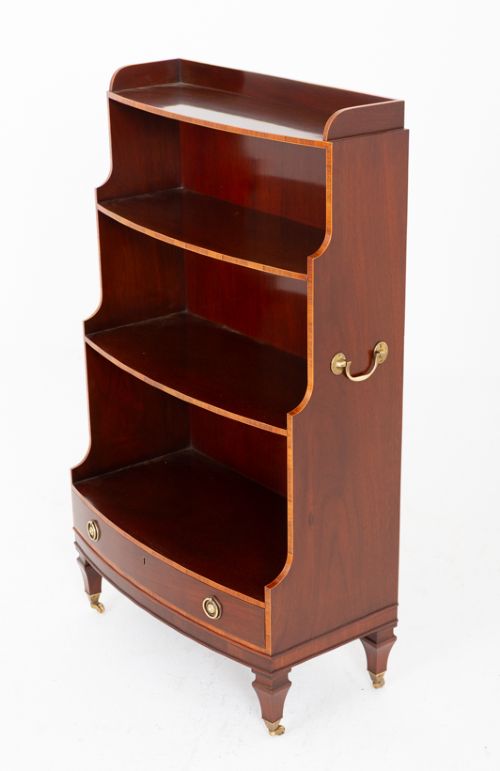
Structural elements incorporated brass castors on larger floor-standing cabinets for mobility, alongside fret-cut timber panels and inlaid motifs. Painted finishes also appear on select Georgian and 19th-century examples.
Some Victorian and Edwardian waterfall units roll easily across the carpet on original brass castors.
Factors of quality
Quality rests upon the selection of timber figures, such as flame mahogany or burr walnut, and the precision of the cross-banding and stringing details on the graduated tiers. Superior pieces exhibit harmonious proportions where each receding shelf steps back with balanced geometry.
Makers' marks, integrated lower cupboards, and substantial brass hardware elevate a piece from a utilitarian shelf to a refined cabinet. The integration of fine inlays and structural stability on freestanding and hanging formats distinguishes top-tier examples.
Gillows·Shapland & Petter
The Waterfall Open Shelving Glossary
- Waterfall bookcase
- A set of open shelves that step back progressively from bottom to top, creating a cascading profile. This form gained popularity during the Georgian and Regency periods.
- Cross-banding
- A strip of veneer applied to the borders of furniture surfaces with the grain running perpendicular to the core timber. It frames the primary wood panels on shelves and cabinet doors.
- Stringing
- Thin inlaid lines of contrasting wood, such as boxwood, used to outline panels and drawers. It highlights the geometric lines of late 18th-century and 19th-century pieces.
- Chiffonier
- A low cabinet with shelves or a superstructure on top, frequently combined with waterfall shelving configurations. These pieces served practical storage and display functions in period rooms.
- Etagere
- A piece of furniture consisting of a set of open shelves for displaying small objects or books. They appear in freestanding formats alongside dedicated bookcase units.
Waterfall Open Shelving: Frequently Asked Questions
What is waterfall open shelving?
Waterfall open shelving consists of tiered bookcases and display units where each shelf steps back progressively from bottom to top. This cascading design provides an open profile for organising books and displaying decorative objects.
Such pieces range from small wall-hanging shelves to large freestanding library bookcases with lower cupboards or drawers. They appear in woods including mahogany, oak, rosewood, and satinwood across the Georgian, Regency, and Victorian eras.
How were these bookcases used?
These units served primarily for housing household libraries and displaying ornaments in principal rooms. The graduating shelves allowed smaller volumes or delicate items to sit at eye level.
Freestanding versions placed against walls provided accessible storage, while hanging shelves utilised vertical wall space in smaller domestic interiors.
How do I style waterfall shelving?
These shelves suit traditional and eclectic interiors, pairing well with antique and vintage furniture collections. Their stepped profiles add architectural interest to plain walls.
Allow the timber grain and inlaid stringing to remain visible by balancing book collections with decorative objects on the open tiers.
How do I date these pieces?
Dating relies on timber selection, construction methods, and stylistic details such as cross-banding and brass hardware. Georgian and Regency pieces often feature solid mahogany with delicate boxwood stringing.
Later Victorian and Edwardian examples incorporate rosewood, oak, or walnut, sometimes alongside inlaid marquetry or fret-cut bracket details characteristic of the 1900s.