

Satinwood Inlay Bookcase
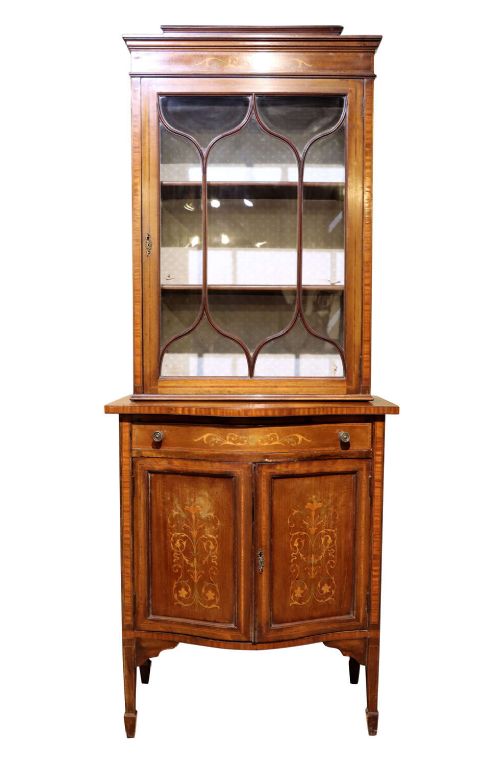
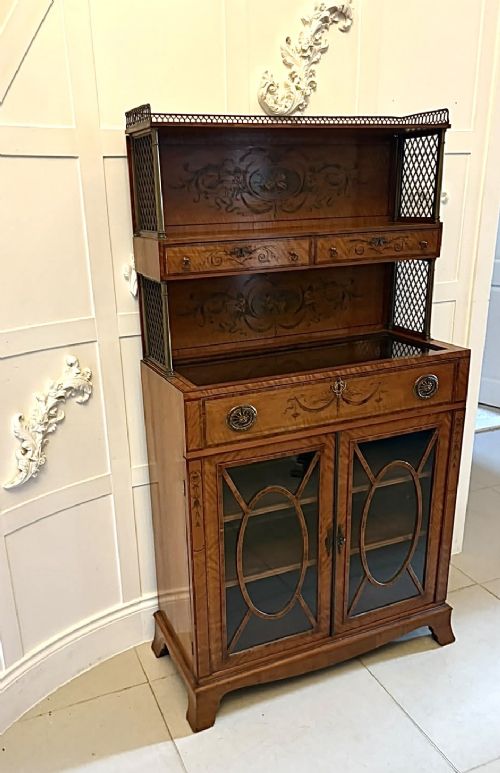
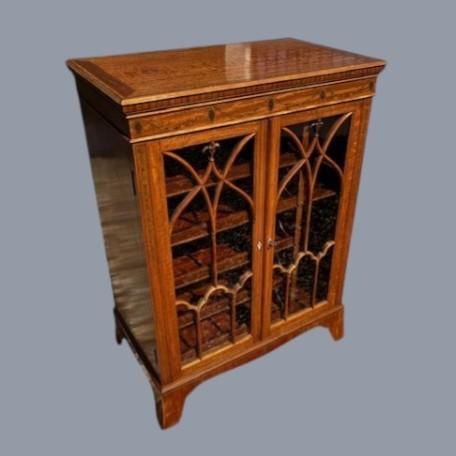
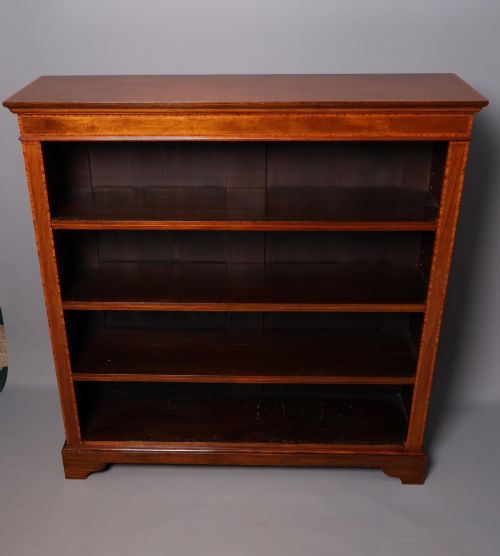
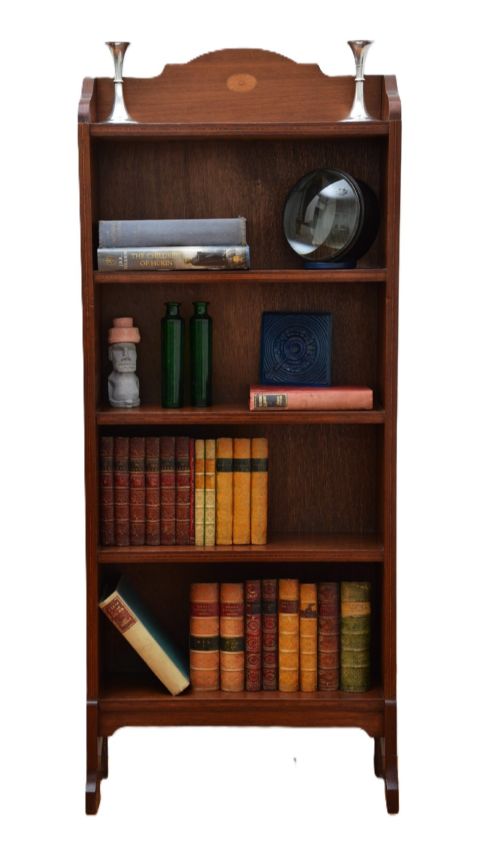
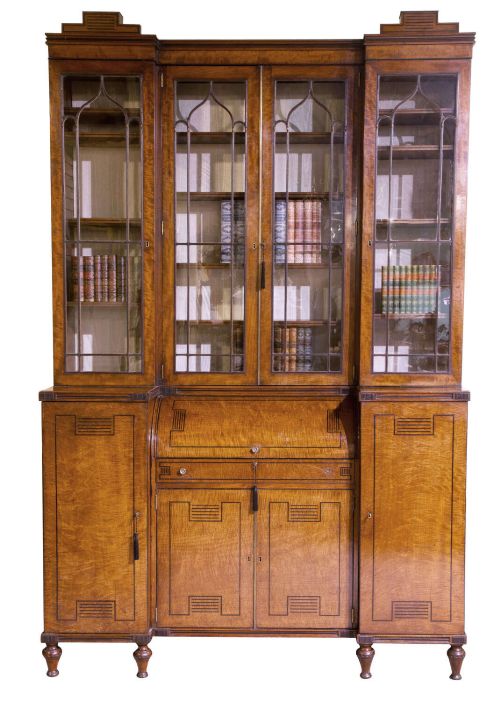
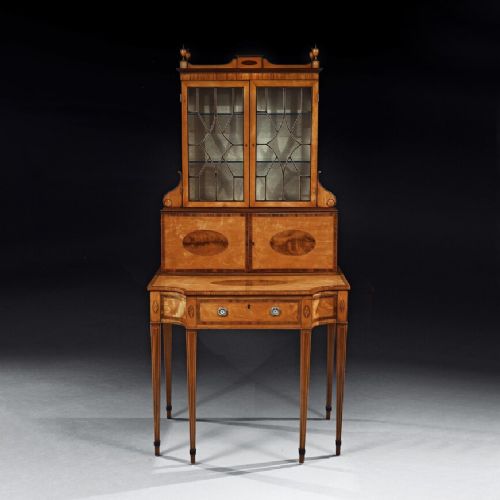
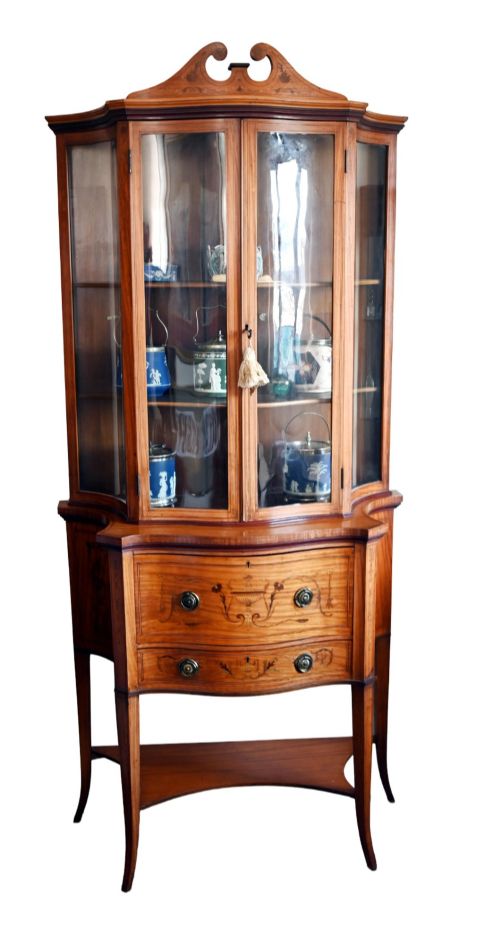
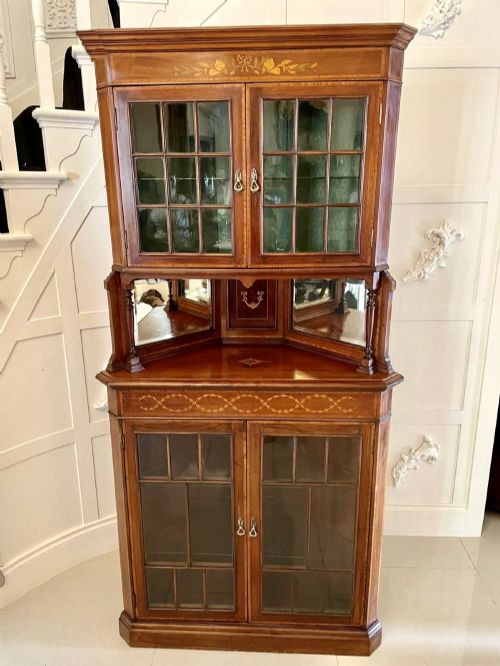
A satinwood inlay bookcase brings brilliant contrasting timber and delicate stringing into a room, combining practical storage with refined cabinet work.
Satinwood Inlay Bookcase
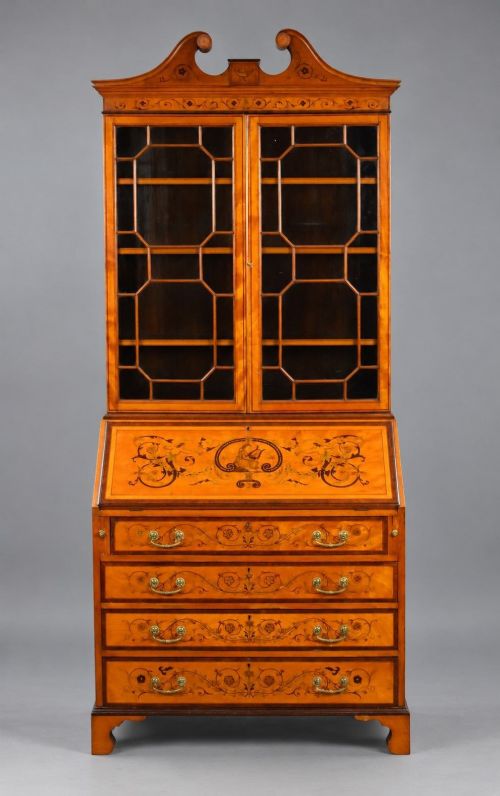
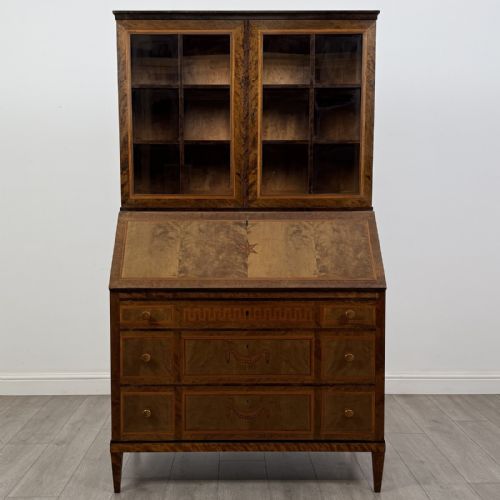
When you search for a satinwood inlay bookcase, you encounter a range of forms spanning open bookshelves, bureau bookcases, and revolving designs. Pieces dating from the Edwardian period and the Sheraton Revival style appear most frequently on this page, alongside 19th Century and Victorian examples.
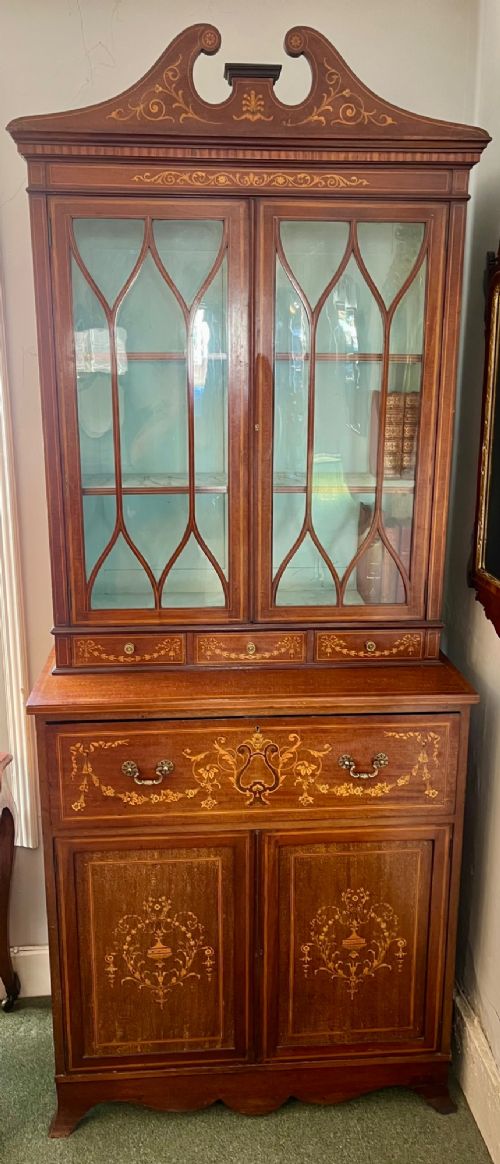
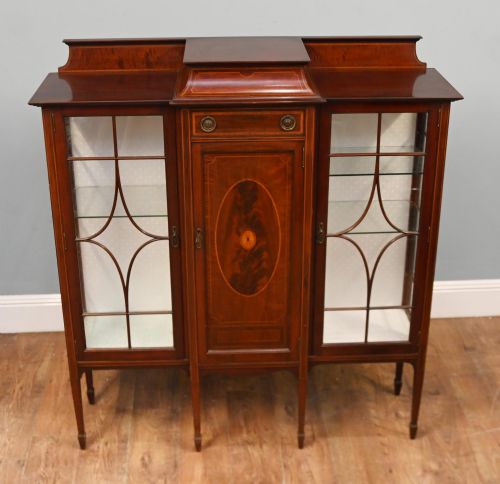
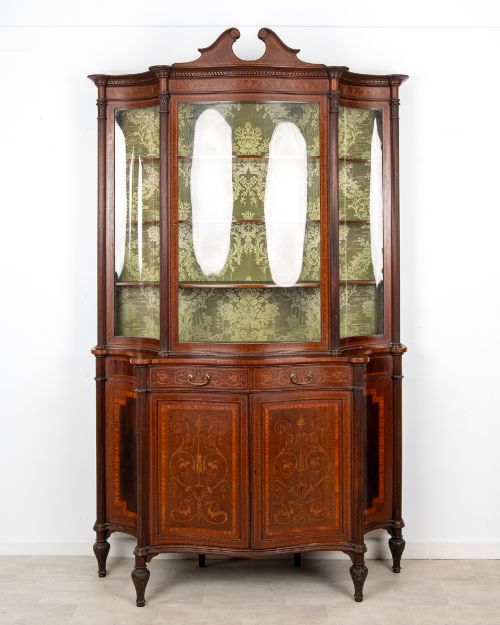
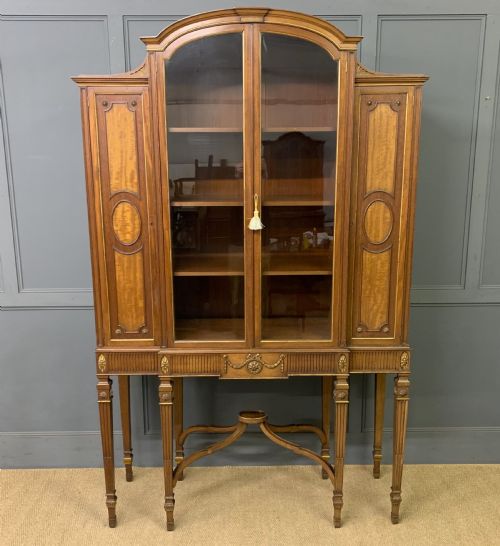
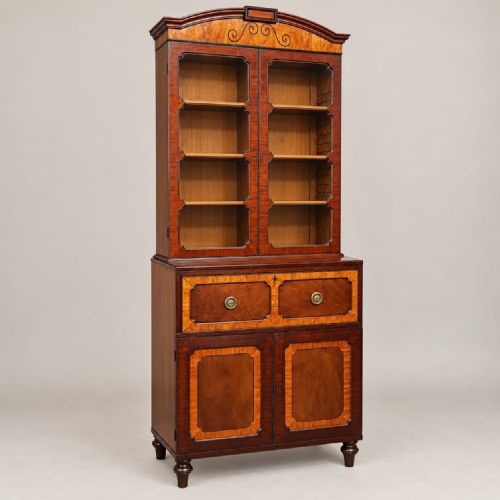
Makers often paired rich mahogany grounds with luminous satinwood panels and banding, creating striking visual depth on display cabinets and secretaire bookcases. Smaller items like revolving bookcases and hanging shelves also demonstrate this decorative technique across late Victorian and Edwardian workshops.
Materials and Construction
Cabinet makers relied on solid mahogany and satinwood timber, frequently enhanced with boxwood and contrasting stringing for detailed borders. Glazed doors, mirrored backs, and brass hardware complete the construction of larger breakfront and display cabinets.
Marquetry and painted panels add further ornamentation to specific Edwardian and Sheraton Revival pieces, integrating botanical motifs or classical urns into the cabinet doors and friezes.
Satinwood Inlay Bookcase Retail Price Guide 2026
Typical asking prices for satinwood inlay bookcase among the pieces listed under this phrase on Sellingantiques today, from the lower quarter to the upper quarter. They describe what is for sale here now, not the wider market.
Revolving bookcases let owners spin their entire library with a gentle push.
Distinctions in Quality
The precision of the cabinet work dictates the standing of each piece, particularly in the crispness of the boxwood and satinwood inlay. Finer examples display meticulous matching of timber grain and elaborate marquetry, whereas simpler pieces rely on basic linear stringing.
The integration of secondary timbers, the quality of the glass in glazed doors, and the delicacy of painted panels distinguish standard workshop production from important signed pieces by makers such as Edwards & Roberts or Maple & Co.
Edwards & Roberts·Maple & Co
The Satinwood Inlay Bookcase Glossary
- Satinwood
- A lustrous, hard timber native to Ceylon and the West Indies, valued for its pale golden colour and smooth grain.
- Inlay
- A decorative technique where contrasting woods or materials are set into recesses flush with the surrounding surface.
- Sheraton Revival
- A late 19th and early 20th century design movement inspired by the neoclassical furniture of George Sheraton.
- Revolving Bookcase
- A compact, rotating tiered bookshelf designed to sit on a floor or tabletop for easy access to volumes.
Satinwood Inlay Bookcase: Frequently Asked Questions
How do I date a satinwood inlay bookcase?
Dating relies on examining the construction methods, secondary woods, and stylistic revival cues. Pieces from the Sheraton Revival typically date from the late 19th century to the Edwardian era.
Earlier examples from around 1800 display genuine George III proportions and hand-cut joinery, whereas Edwardian pieces often incorporate lighter satinwood veneers and machine-processed inlay.
Where were these bookcases placed?
These pieces suited formal drawing rooms, libraries, and parlours where display and storage mattered equally. Revolving bookcases sat beside armchairs for easy access to current reading material.
Larger breakfront cabinets and bureau bookcases stood against main walls to house bound volumes and display collection items behind glass doors.
How do I care for satinwood veneer?
Satinwood veneer requires protection from direct sunlight and excessive humidity to prevent fading and lifting. Regular dusting with a soft, dry cloth preserves the polished finish.
Avoid placing these items near direct heat sources and apply a microcrystalline wax sparingly when the timber appears dry.