

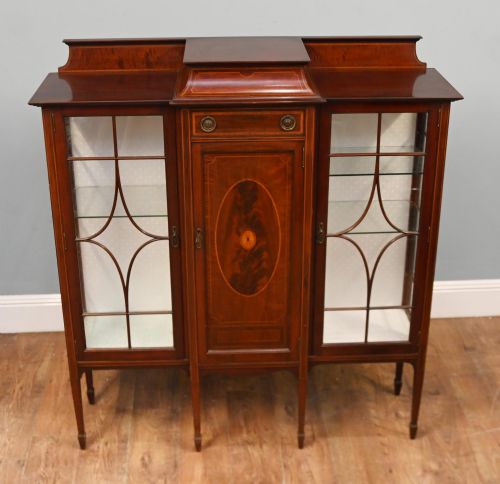
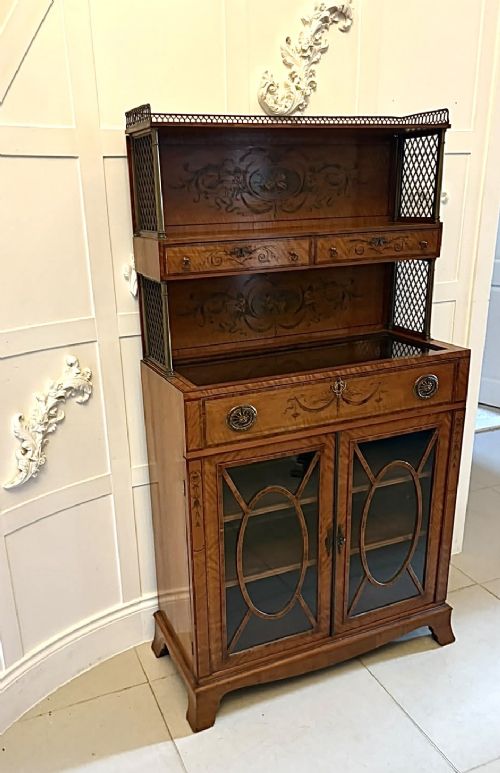
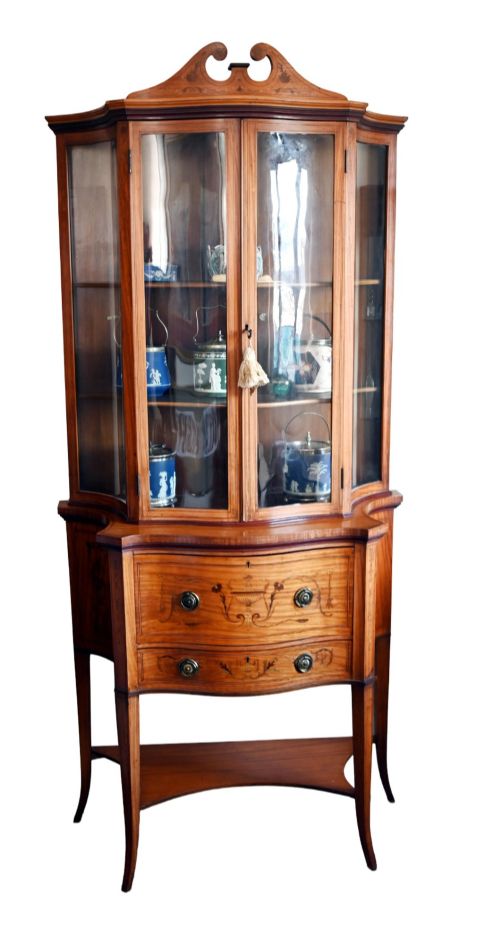
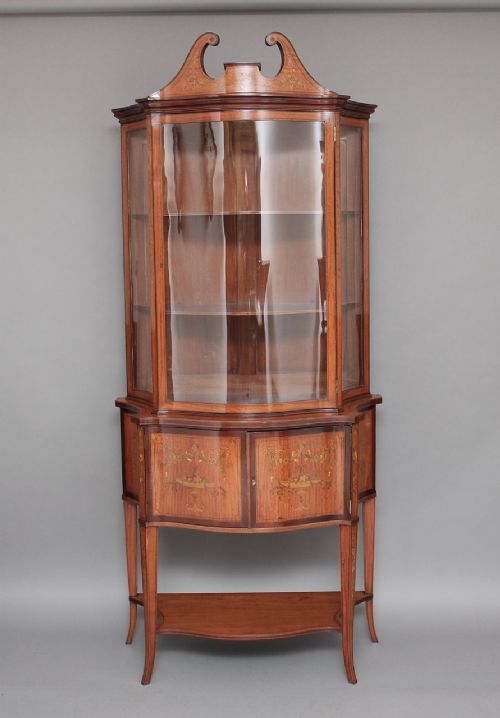



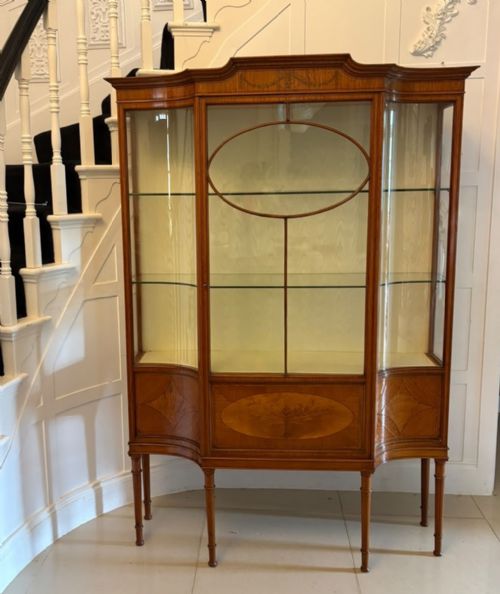
Satinwood Inlaid China Cabinet
A satinwood inlaid china cabinet brings together pale timbers and intricate marquetry to showcase fine porcelain.
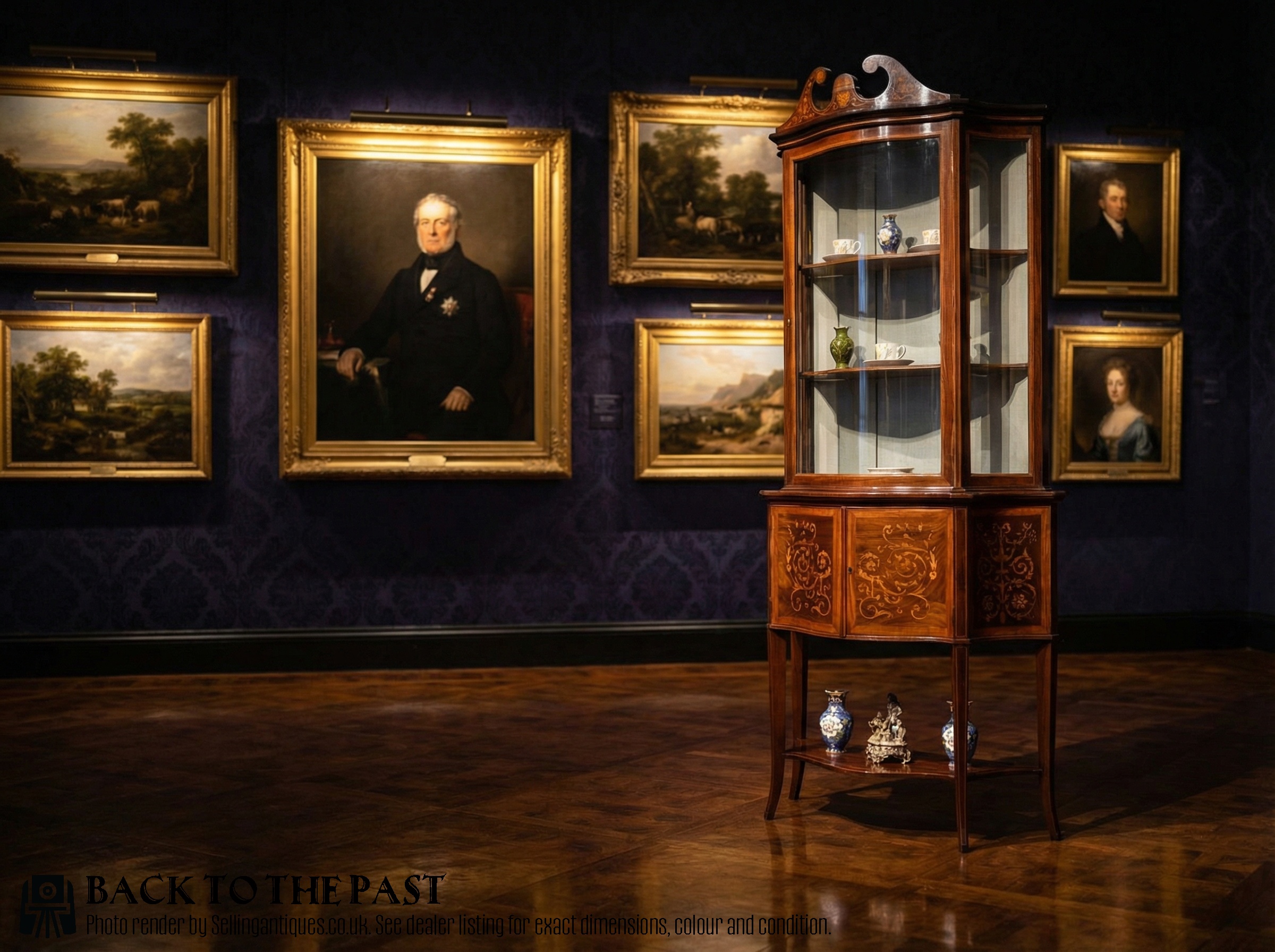
Satinwood Inlaid China Cabinet
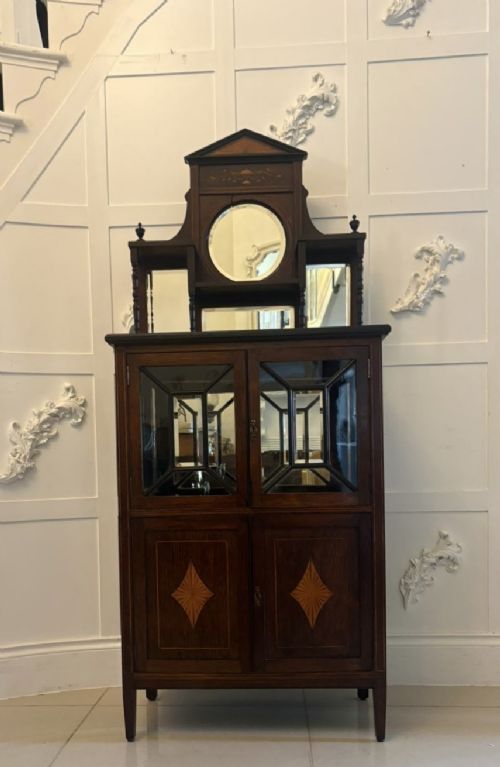
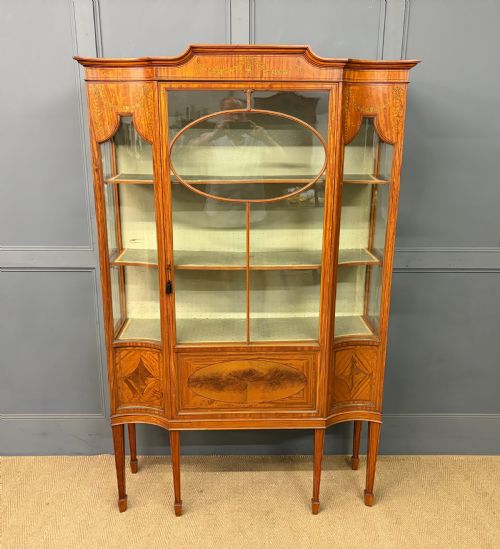
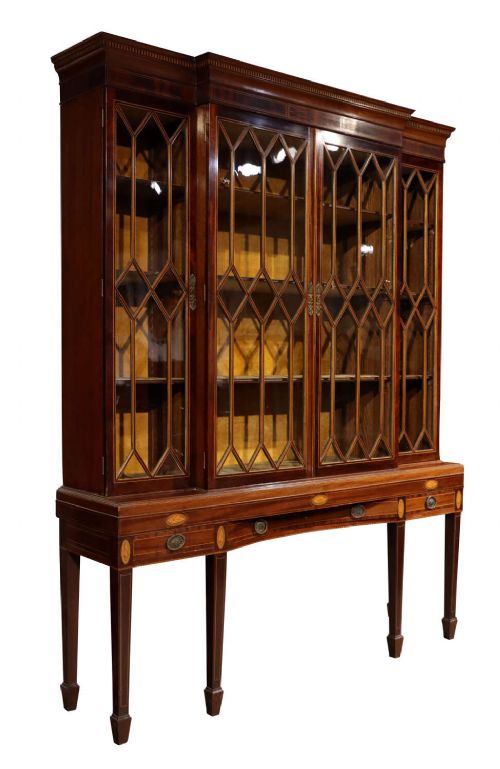
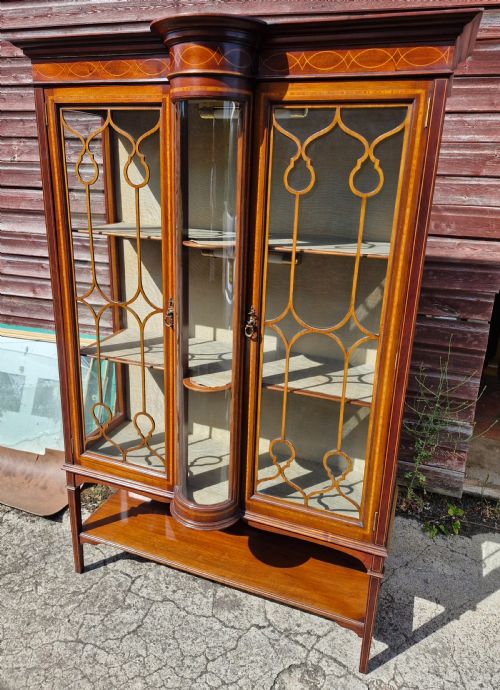
The most common versions on this page date from the late nineteenth century and the early twentieth century. They range from compact single-door vitrines to large breakfront library bookcases designed for drawing rooms.
How they were made
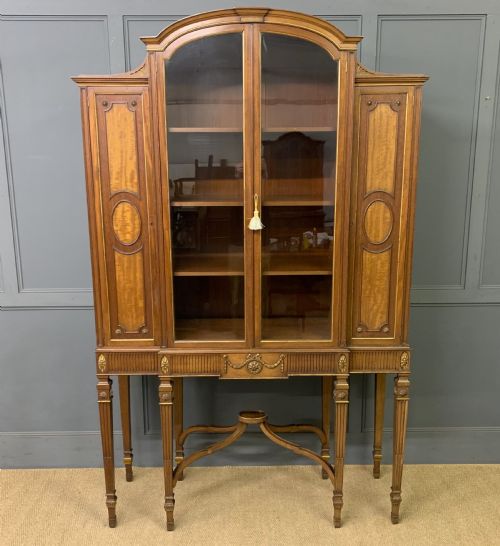
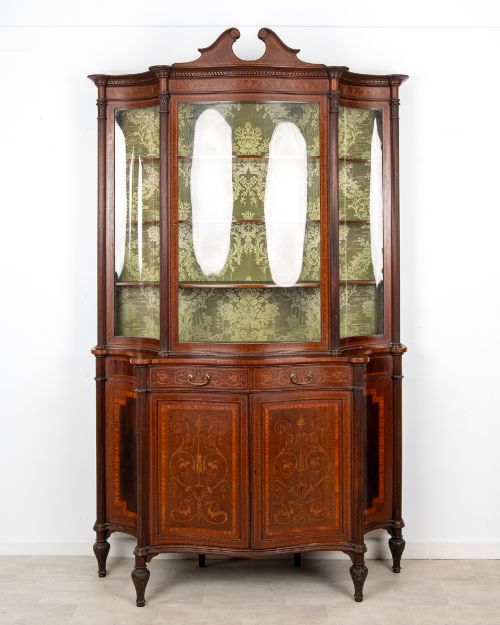
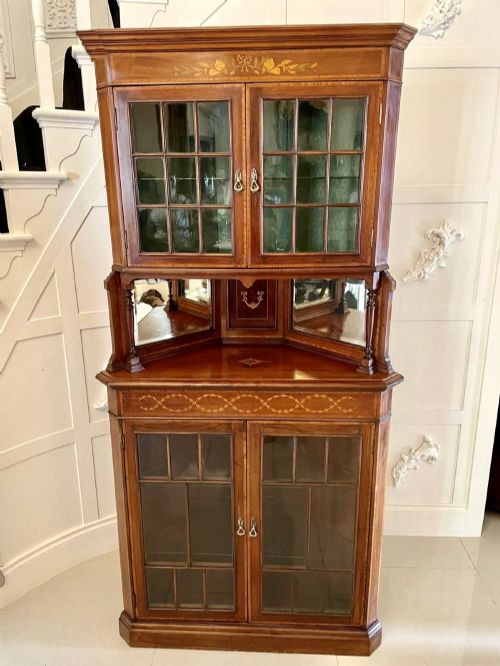
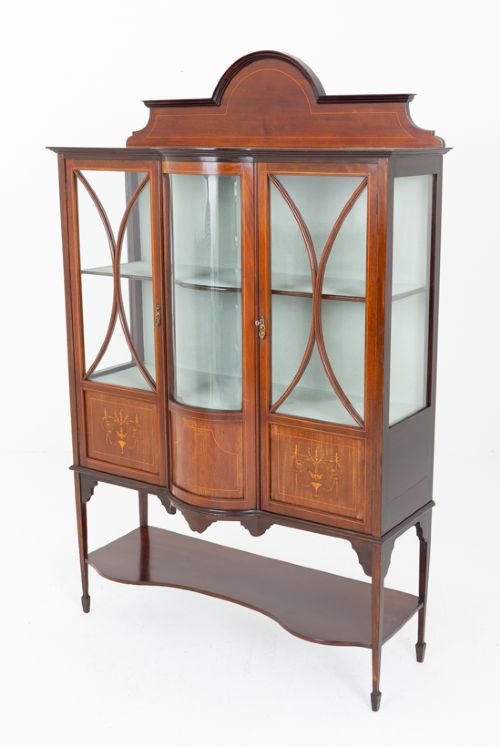
Cabinet makers constructed these pieces using solid and veneered mahogany, satinwood, and harewood, frequently accented with fruitwood and wood inlay. Glazed doors protect the interior, while brass hardware and mirrored backs complete the construction.
Marquetry and detailed wood inlay create intricate decorative patterns across the surfaces, adhering to Sheraton Revival and Louis XVI Revival design traditions.
Satinwood Inlaid China Cabinet Retail Price Guide 2026
Typical asking prices for satinwood inlaid china cabinet among the pieces listed under this phrase on Sellingantiques today, from the lower quarter to the upper quarter. They describe what is for sale here now, not the wider market.
Materials recur across forms, pairing mahogany and satinwood with glass and mirror backs.
What varies in quality
The distinction between standard production and top-tier execution rests on the precision of the marquetry and the choice of timbers. Finer examples display meticulous fruitwood and satinwood inlay with balanced composition across serpentine and bow fronts.
Workshop attribution also influences standing, as pieces bearing signatures from prominent makers command greater interest among collectors.
Edwards & Roberts·Maple & Co.·Waring & Gillow·S and H Jewell
The Satinwood Inlaid China Cabinet Glossary
- Satinwood
- A hard, pale yellow timber with a satin-like lustre, highly prized for fine cabinet making and decorative veneers.
- Marquetry
- The art of applying pieces of veneer to a structure to form decorative patterns and pictorial designs.
- Sheraton Revival
- A late nineteenth-century design movement inspired by the neoclassical furniture of George Sheraton, characterised by refined proportions and delicate inlay.
- Vitrine
- A glass-displayed cabinet specifically designed to exhibit porcelain and objects of vertu.
- Breakfront
- A piece of furniture whose central section projects forward from the flanking sections.
Satinwood Inlaid China Cabinet: Frequently Asked Questions
Where were china cabinets placed?
These cabinets traditionally stood in drawing rooms and reception spaces to display fine porcelain, glassware, and books.
Their glazed doors protected delicate collections from dust while allowing full visibility in formal rooms.
How do I identify a Sheraton Revival piece?
Sheraton Revival cabinets typically feature light satinwood veneers, symmetrical wood inlay, and neoclassical motifs like urns and bellflowers.
They reflect the revival of eighteenth-century elegance popular during the late Victorian and Edwardian periods.
How should I care for satinwood?
Satinwood benefits from minimal exposure to direct sunlight to preserve its pale colour and prevent the timber from darkening unevenly.
Regular dusting with a dry, soft cloth maintains the polished surface without the need for heavy waxes.