



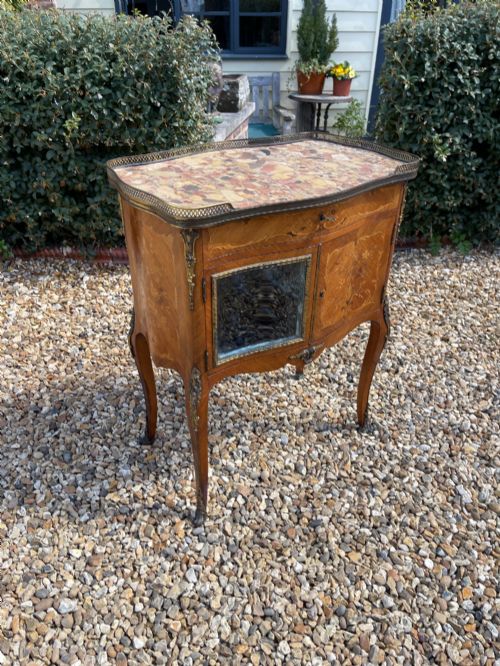


Satinwood French Cabinets
Satinwood french cabinets bring light, figured timber and refined neoclassical revival design into a room, offering both display space and discrete storage.
Satinwood French Cabinets
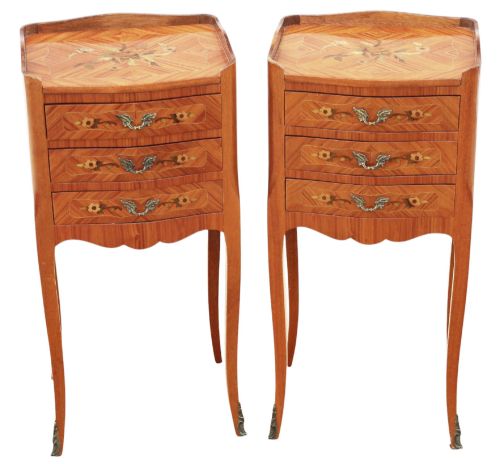
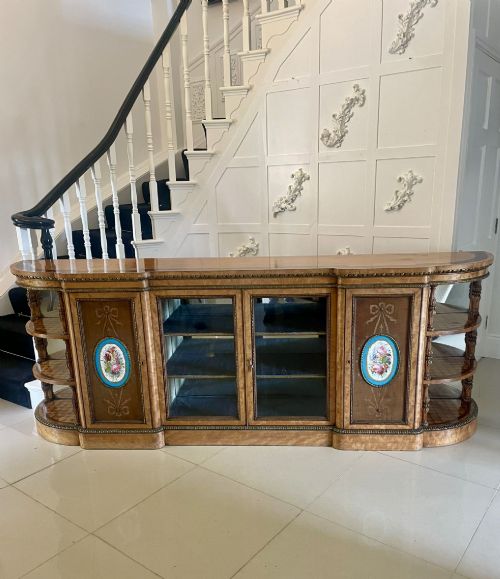
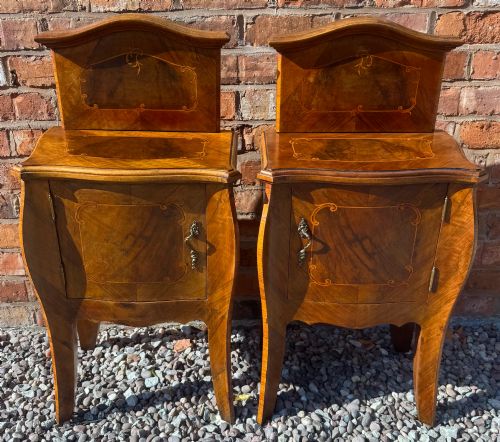
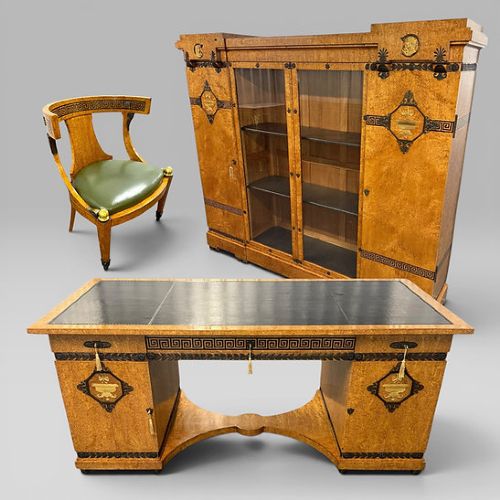
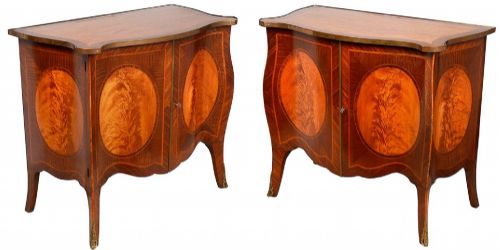
Satinwood french cabinets span a range of forms, from compact bedside tables and pot cupboards to monumental display credenzas and secretaire chests. The selection leans heavily toward pairs of bedside cabinets and smaller commodes, alongside larger glazed vitrines and bookcases.
The periods represented stretch across the nineteenth century into the 1930s, encompassing Victorian, Edwardian, and Art Deco interpretations alongside revivals of the Louis XV and Louis XVI eras. Buyers encounter pieces styled in French neoclassical, transitional, and provincial tastes.
Makers and retailers of the period, including Mercier Frères, Edwards & Roberts, Maple & Co, and H. J. Hatfield & Sons, contributed to this tradition of cabinet-making. Their works utilise the pale, reflective grain of satinwood alongside contrasting exotic timbers.
How They Were Made
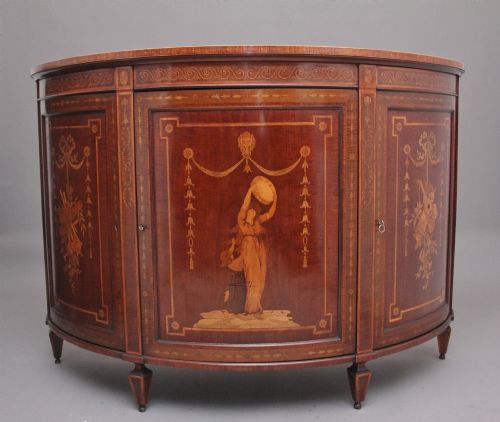
Cabinet-makers built these pieces using carcases of mahogany, walnut, or pine, onto which they applied finely sliced veneers of satinwood, rosewood, kingwood, and tulipwood. Marquetry and parquetry designs created geometric patterns or floral motifs across the drawer fronts and door panels.
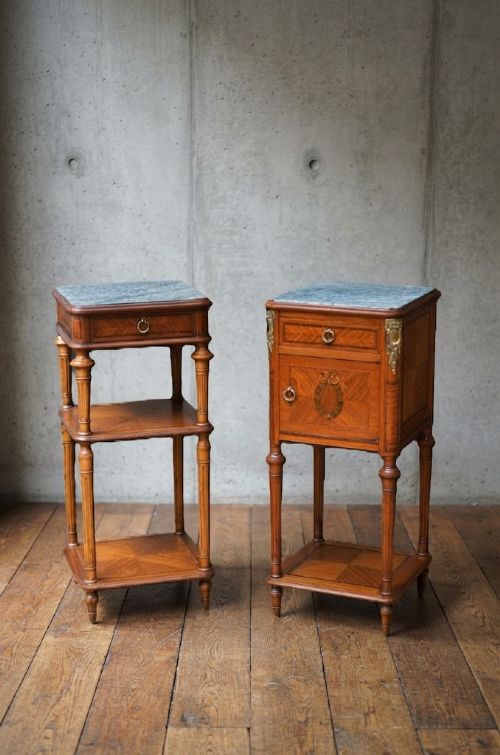
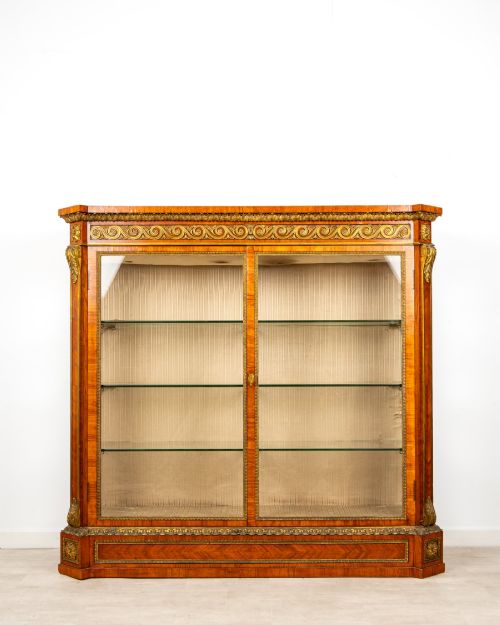
Mounts of cast ormolu, gilt-bronze, and brass accented the corners, legs, and key escutcheons, often paired with marble tops in white or coloured stone. Glazed doors and glass sides transformed larger credenzas and display cabinets into showcases for porcelain and curiosities.
Satinwood French Cabinets Retail Price Guide 2026
Typical asking prices for satinwood french cabinets among the pieces listed under this phrase on Sellingantiques today, from the lower quarter to the upper quarter. They describe what is for sale here now, not the wider market.
Several bedside cabinets hide internal pot cupboard compartments, proving that nineteenth-century elegance still accommodated very practical bedroom needs.
What Varies in Quality
The hierarchy of quality rests on the precision of the marquetry inlay, the choice and matching of timber veneers, and the crispness of the cast ormolu mounts. Finer pieces demonstrate seamless veneer work around curved serpentine fronts and complex commode shapes.
Signed pieces or those bearing the stamp of recognised Parisian and London houses retain greater distinction. The integration of hand-painted panels, Sevres porcelain plaques, or original marble tops elevates certain cabinets above standard production.
Mercier Frères·Edwards & Roberts·Maple & Co·H. J. Hatfield & Sons·Edmond Poteau
The Satinwood French Cabinets Glossary
- Satinwood
- A hard, durable timber with a characteristic golden-yellow sheen that catches the light. It serves as the primary veneer for many nineteenth-century French and English revival cabinets.
- Ormolu
- Gilded bronze mounts applied to furniture corners, feet, and friezes. The quality of the chasing defines the decorative finish.
- Marquetry
- The art of applying pieces of veneer to a structure to form decorative patterns and pictures. Floral motifs and geometric grids dominate these designs.
- Vitrine
- A glass-fronted display cabinet designed for porcelain and small objects. These often feature glazed side panels to maximise light.
- Commode
- A low chest of drawers or cabinet originating in France. They frequently display shaped marble tops and cabriole legs.
Satinwood French Cabinets: Frequently Asked Questions
How do I spot a true Louis XVI style cabinet?
Authentic revival pieces in the Louis XVI taste feature straight tapered legs, fluted columns, and restrained neoclassical symmetry rather than the curved lines of the earlier rococo period.
Look for geometric parquetry, delicate ormolu mounts, and architectural proportions that reflect eighteenth-century French design principles.
What is the best way to clean satinwood veneer?
Dust regularly with a soft, dry cloth and avoid commercial polishes containing silicone or heavy waxes. Satinwood responds best to occasional applications of microcrystalline wax to protect the grain.
Keep these cabinets away from direct sunlight and heat sources to prevent the pale timber from darkening or the veneer from lifting.
Are bedside cabinets always sold as pairs?
Many nineteenth and twentieth-century bedside cabinets and commodes were manufactured as matched pairs to flank a bed. Single cabinets also appear frequently as independent nightstands or pot cupboards.
Matching pairs command distinct interest for symmetrical bedroom layouts.
How do I care for marble-topped commodes?
Marble surfaces require neutral soap and warm water for cleaning, followed by thorough drying. Acidic liquids like wine, citrus, or vinegar will etch the stone if left on the polish.
Applying a specialist stone sealer helps protect the marble top from accidental rings and stains.