




Satinwood Dining Credenza
Satinwood dining credenza examples bring refined timber surfaces and classic revival elegance to formal dining rooms.
Satinwood Dining Credenza
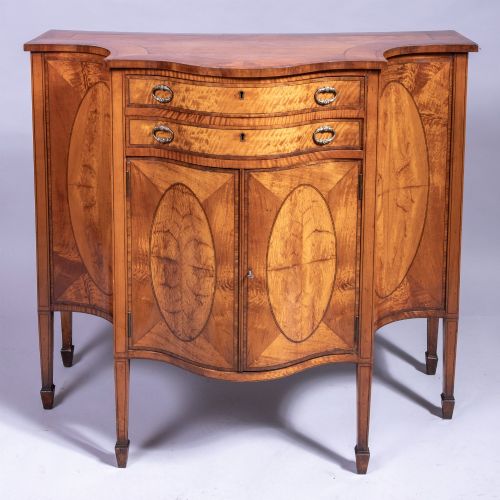
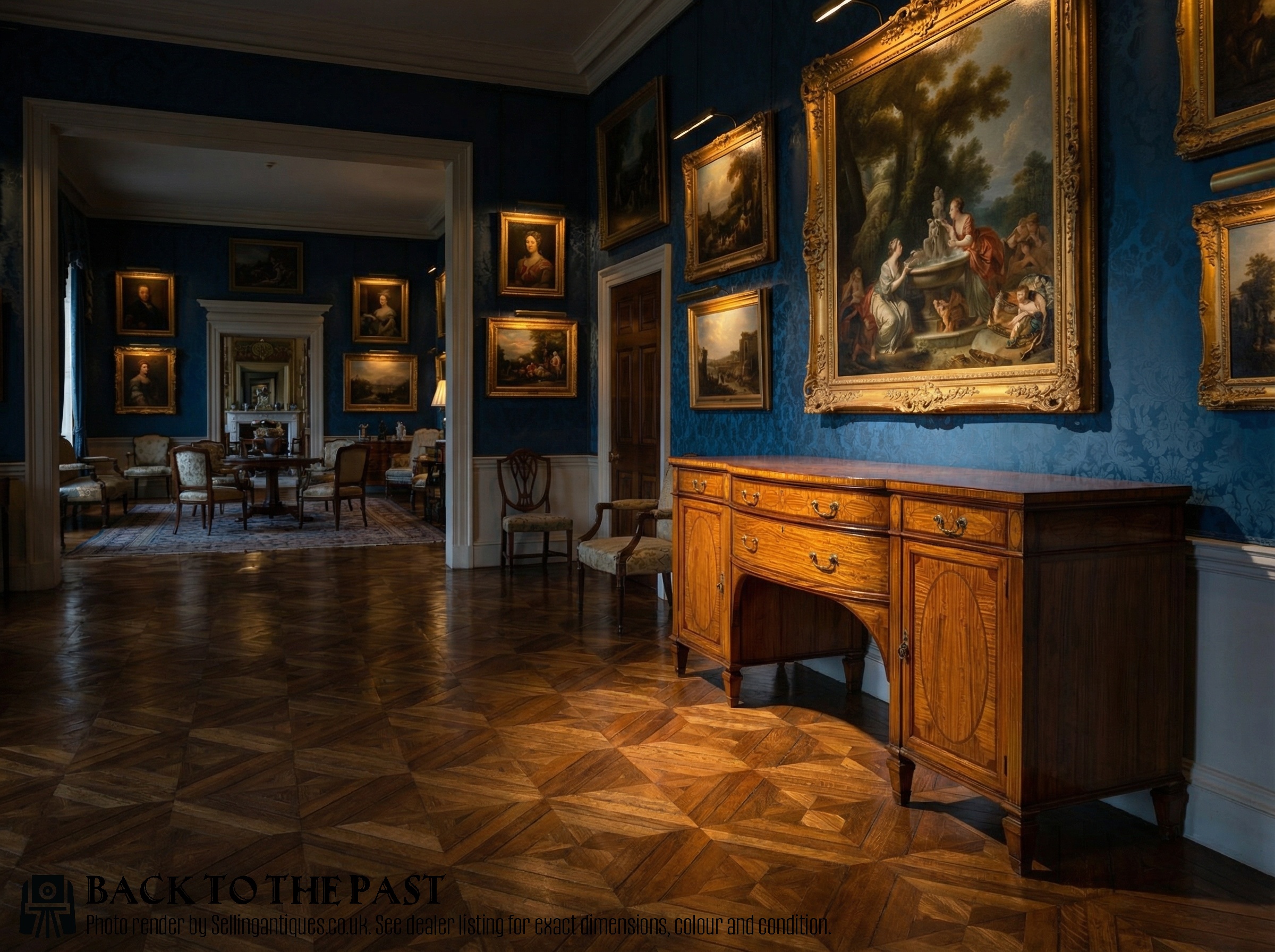
When you search for a satinwood dining credenza, you encounter large serving furniture designed to anchor a dining room and hold tableware. The selection spans several distinct periods, reaching from Georgian origins through Victorian interpretations to Edwardian Sheraton Revival pieces.
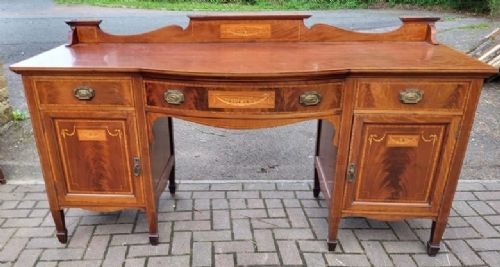
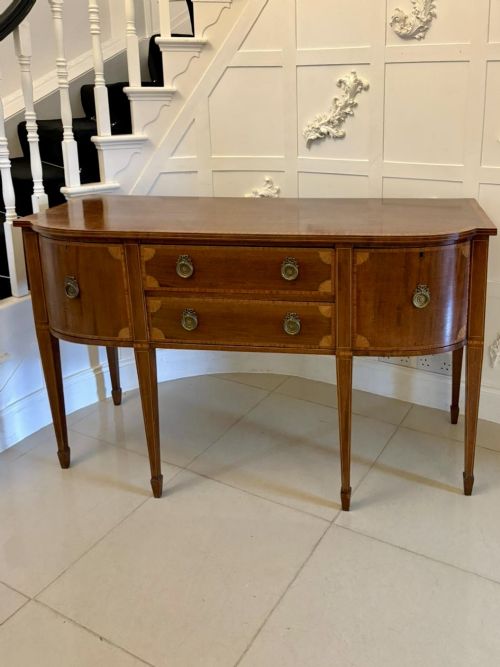
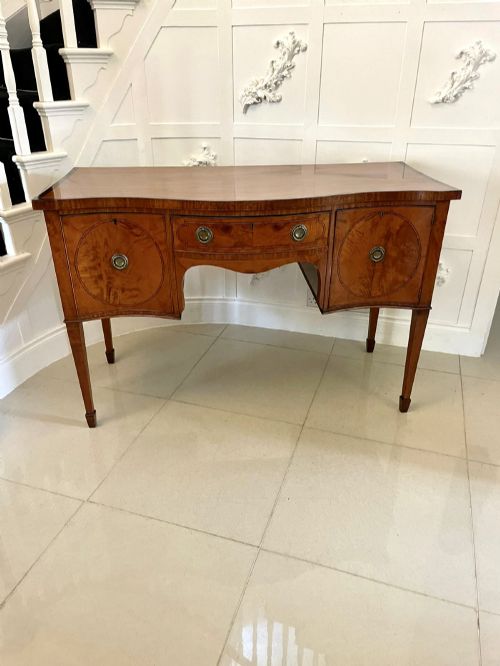
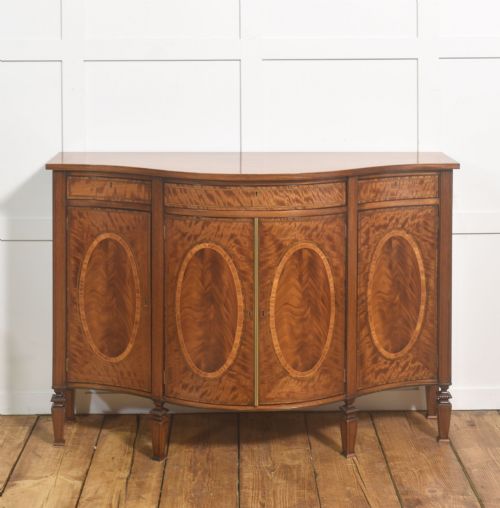
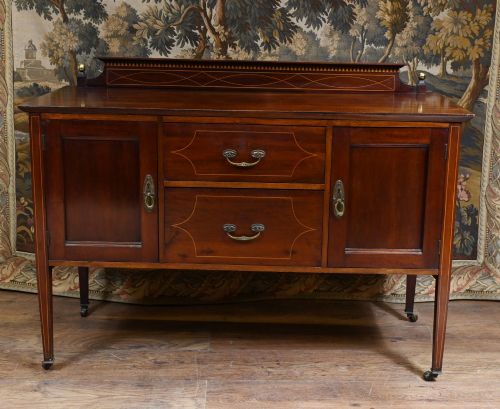
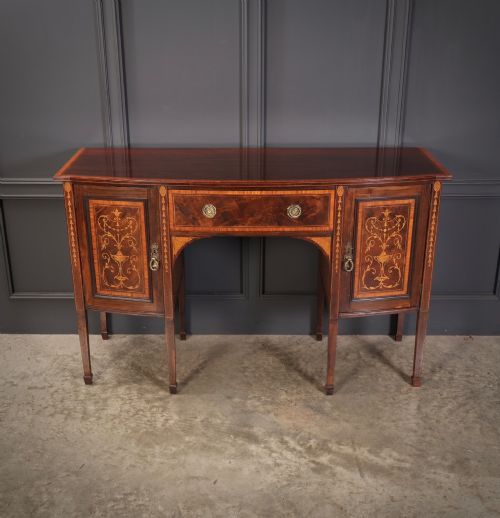
Most examples you meet on this page are Edwardian or Victorian creations utilising satinwood and mahogany. Forms vary between bow-front, serpentine, and breakfront profiles, often accompanied by matching side cabinets and serving tables.
How these pieces were constructed
Carpenters built these dining pieces using solid timbers like mahogany and walnut as carcase foundations, finished with figured satinwood veneers. Artisans employed contrasting wood inlay, boxwood, and ebony lines to trace geometric borders and decorative motifs.
Surfaces frequently feature elaborate marquetry panels and delicate crossbanding executed by hand. Structural hardware typically includes cast brass fittings, handles, and occasional brass galleries mounted along the top edge.
Satinwood Dining Credenza Retail Price Guide 2026
Typical asking prices for satinwood dining credenza among the pieces listed under this phrase on Sellingantiques today, from the lower quarter to the upper quarter. They describe what is for sale here now, not the wider market.
Brass galleries sit atop some serving tables to stop rolling fruit during spirited Victorian banquets.
What separates the best examples
The degree of refinement in the timber selection defines the tier of a piece. Finer examples display richly figured flame mahogany and luminous satinwood matched symmetrically across doors and drawer fronts.
Execution of the marquetry and inlay work dictates the overall standard. Crisp, precise wood inlay and well-balanced proportions separate accomplished cabinet work from simpler vernacular production.
Edwards and Roberts
The Satinwood Dining Credenza Glossary
- Satinwood
- A durable hardwood known for its golden, reflective sheen and smooth grain. It forms the primary decorative veneer on many revival dining cabinets.
- Crossbanding
- A narrow strip of veneer laid perpendicular to the grain of the surrounding surface. This technique creates a neat border around drawer fronts and tabletops.
- Marquetry
- The art of fitting together small pieces of tinted woods and veneers to form pictorial designs. Artisans used this method for floral urns and classical motifs.
- Breakfront
- A cabinet design where the central section projects forward from the flanking cupboards. This arrangement adds architectural depth to large dining sideboards.
- Bow-front
- A curved convex front profile popular in late eighteenth and nineteenth-century case furniture. It softens the room by removing sharp corners from the serving surface.
Satinwood Dining Credenza: Frequently Asked Questions
What is a satinwood dining credenza?
A satinwood dining credenza is a large storage and serving piece designed for formal dining rooms. These cabinets provide surface space for food presentation and interior shelving for tableware.
Craftsmen built them using solid timber foundations faced with decorative satinwood veneer. They appear in styles ranging from Georgian revival to Edwardian production.
How do I date a satinwood sideboard?
Dating relies on examining the timber species, construction methods, and prevailing decorative style. Pieces reflecting George III aesthetics often feature understated stringing and balanced proportions.
Later Edwardian Sheraton Revival examples typically display lighter mahogany carcases with extensive satinwood crossbanding and marquetry. Hardware attachments also offer clues to the manufacturing decade.
Where should I place a credenza in a dining room?
These long serving pieces suit placement against a primary dining wall where they remain easily accessible during meals. Their surface accommodates serving dishes, while cupboards store linen and silver.
Ensure adequate clearance around the doors and drawers for comfortable opening. Pairing the piece with matching side cabinets creates a balanced dining room layout.
How do I care for satinwood surfaces?
Protect the wood finish by avoiding direct sunlight and placing felt pads under heavy serving items. Regular dusting with a soft, dry cloth preserves the natural lustre of the veneer.
Apply traditional beeswax polish occasionally to nourish the timber. Keep the furniture away from excessive moisture and sudden temperature changes.