





Satinwood Center Table
A satinwood centre table brings bright grain and refined marquetry into a room, serving as a striking focal point for any interior.
Satinwood Center Table
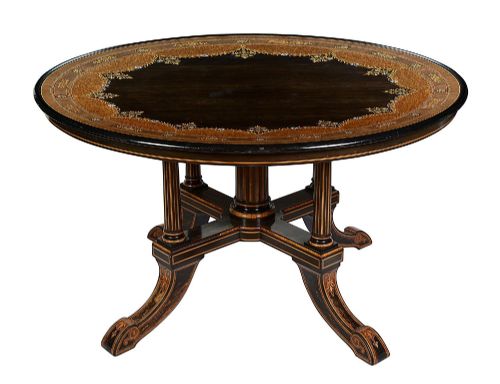
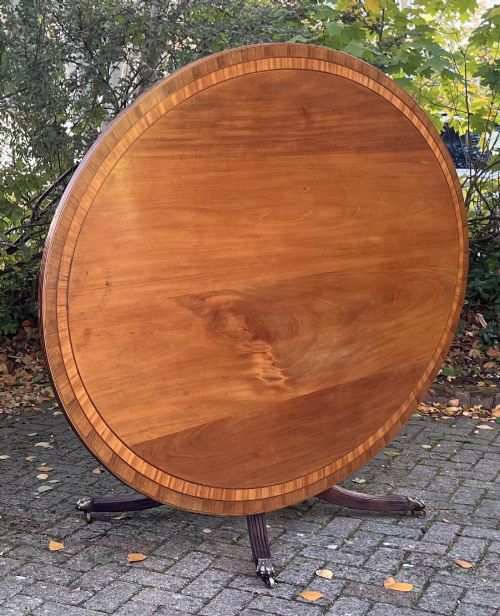
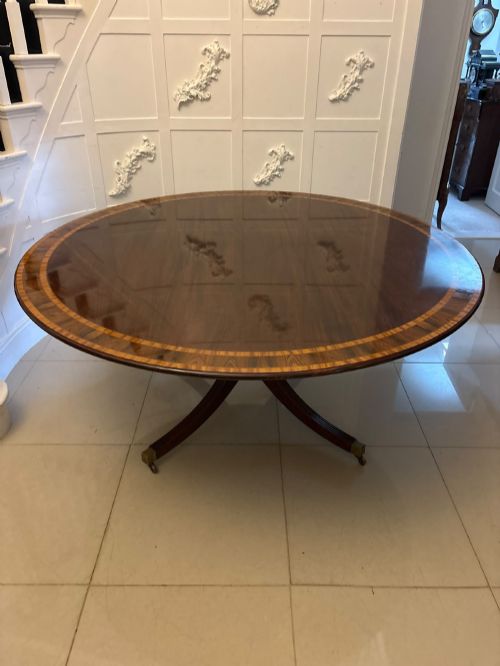
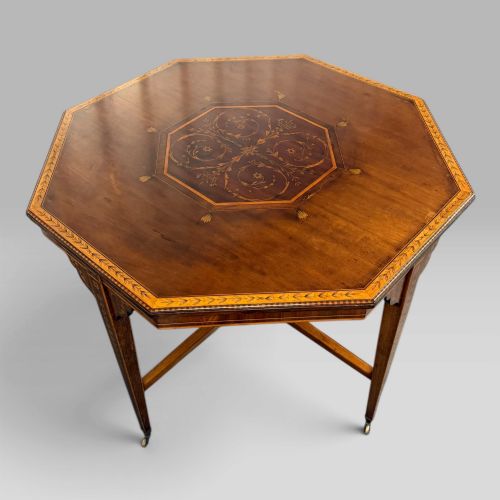
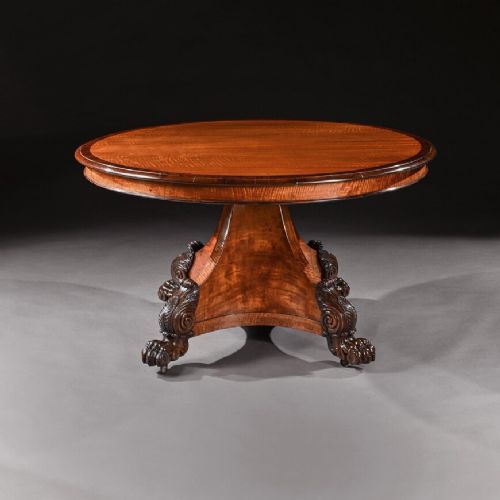
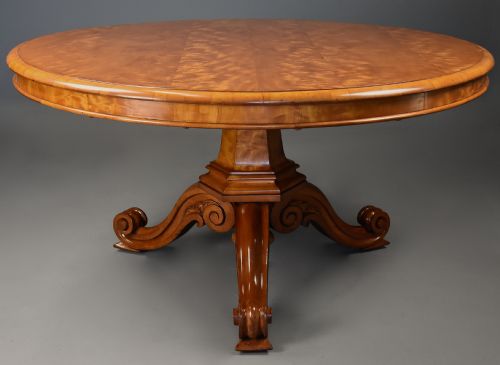
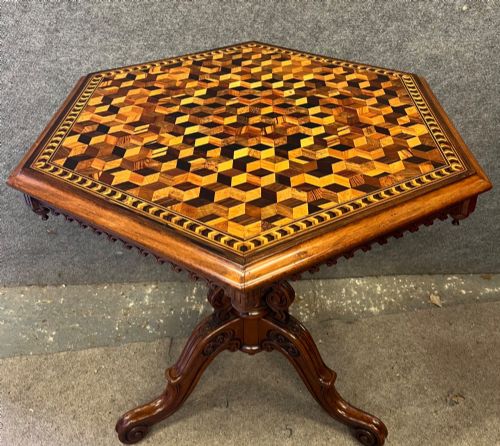
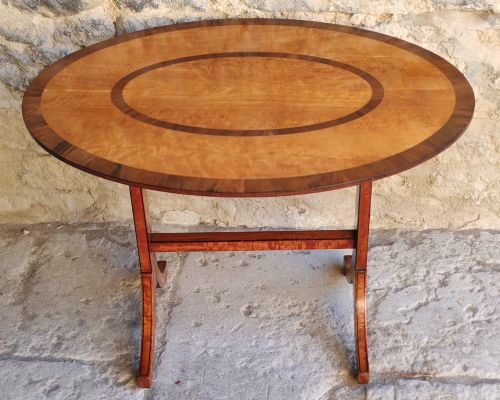
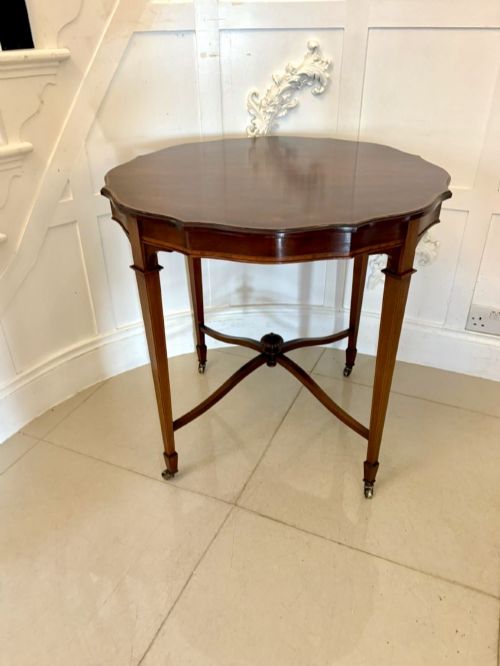
A satinwood centre table stands as a decorative centrepiece designed to be viewed from all sides within a room. The versions appearing most frequently on this page belong to the Edwardian era and the nineteenth century, often taking circular, oval, or octagonal forms.
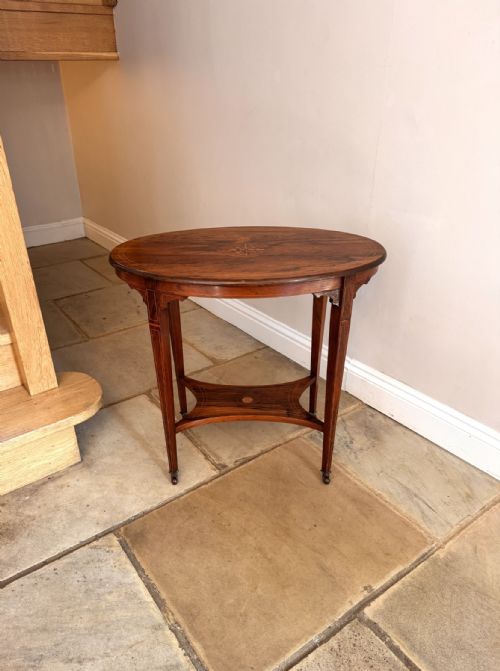
Beyond standard centre tables, the listings include occasional tables, coffee tables, dining tables, and writing desks sharing the same bright timber. Makers utilised these varied formats to showcase intricate marquetry inlay and banded borders in domestic interiors.
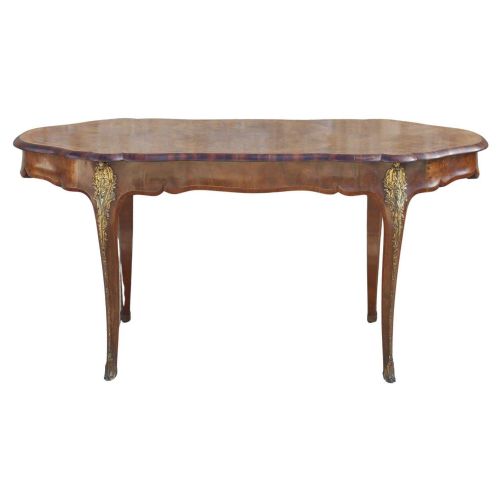
Geographic origins and stylistic revivals span Regency, Sheraton Revival, and French Louis XV styles alongside Ceylonese and Swedish pieces. Each example reflects the prevailing taste for light exotic woods during its respective period.
Materials and Technique
Cabinet makers constructed these tables using solid timber carcases and frames overlaid with finely figured satinwood veneers. Rosewood, mahogany, and walnut frequently appeared alongside the primary timber to create striking contrast through banding and borders.
Marquetry inlay and boxwood stringing demanded immense precision, with artisans cutting delicate floral or geometric motifs by hand. Brass mounts, ormolu details, and tilt-top mechanisms completed the construction of exhibition-quality pieces.
Satinwood Center Table Retail Price Guide 2026
Typical asking prices for satinwood center table among the pieces listed under this phrase on Sellingantiques today, from the lower quarter to the upper quarter. They describe what is for sale here now, not the wider market.
Some nineteenth-century makers travelled as far as Ceylon to source the most brilliantly figured satinwood for their London clientele.
Craftsmanship and Detail
The distinction between standard production and top-tier pieces rests on the complexity of the marquetry and the figuration of the timber grain. Finer examples display meticulous hand-cut inlays and harmonious timber selection across the entire top surface.
Structural refinement also divides the range, visible in the grace of cabriole legs, the crispness of brass mounts, and the integrity of the underlying joinery. Superior cabinet work ensures the table remains stable and visually balanced from every angle.
Peters of Genoa·Ralph Turnbull
The Satinwood Center Table Glossary
- Satinwood
- A hard, lustrous tropical timber with a golden sheen that takes a high polish. It forms the primary surface veneer on these tables.
- Marquetry
- Decorative patterns formed by fitting together small pieces of tinted woods, veneers, and shell. Artisans applied this technique to create elaborate tabletop pictures.
- Banding
- A narrow strip of contrasting wood veneer bordering the edge of a tabletop. This frames the central field of grain.
- Ormolu
- Gilded bronze used for decorative mounts and accents on furniture. It appears on nineteenth-century revival pieces.
- Tilt-top
- A hinged tabletop mechanism allowing the surface to fold vertically when not in use. This saved space in historic rooms.
Satinwood Center Table: Frequently Asked Questions
What is a satinwood centre table used for?
These tables occupy the middle of a room to display decorative objects, lamps, or floral arrangements. Their finished backs and detailed surfaces allow them to be viewed from any angle.
Historically, they served as gathering points for drawing rooms and libraries, combining utility with aesthetic display.
How do I care for satinwood?
Keep the timber away from direct sunlight and excessive heat to prevent the polished veneer from fading or drying out. Dust regularly with a soft, dry cloth.
Avoid liquid polishes and silicone sprays, applying only a traditional microcrystalline wax when the surface requires nourishment.
How do I date a centre table?
Examine the secondary timbers underneath the table, the construction methods of the drawer linings, and the style of the legs. Edwardian pieces often feature lighter frames and machine-cut elements, whereas nineteenth-century versions show entirely hand-wrought joinery.
Stylistic cues such as Sheraton Revival or Regency motifs provide further clues to the manufacturing decade.
Are these tables suitable for everyday use?
While sturdy, antique veneered furniture benefits from gentle treatment and coasters to protect the polished top. Placing them away from heavy traffic areas preserves the delicate marquetry inlay.
With mindful placement, they function well as coffee tables or lamp tables in modern homes.