





Satinwood Bedside Tables
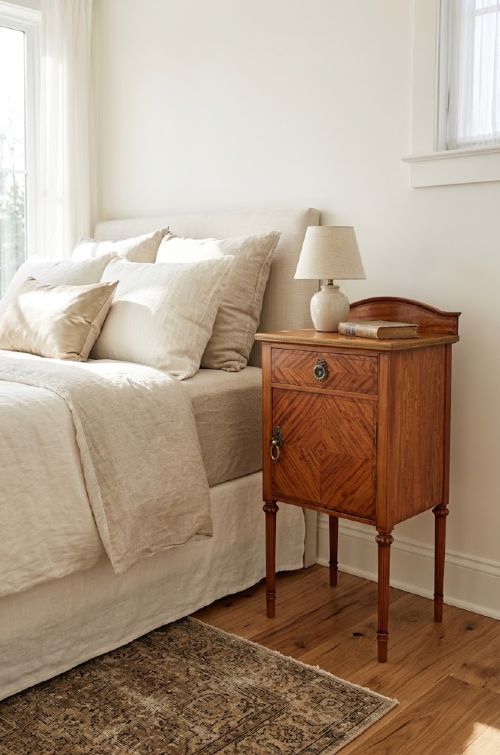
Satinwood bedside tables bring refined timber and warm grain to the bedroom, offering practical surface space alongside classical elegance.

What satinwood bedside tables are
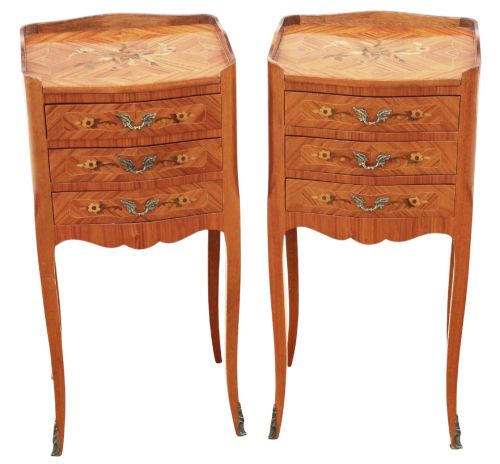
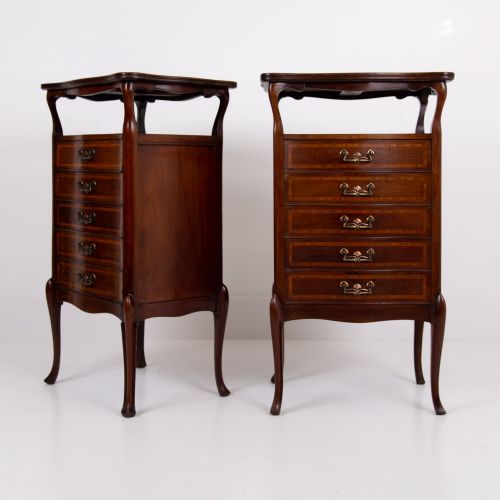
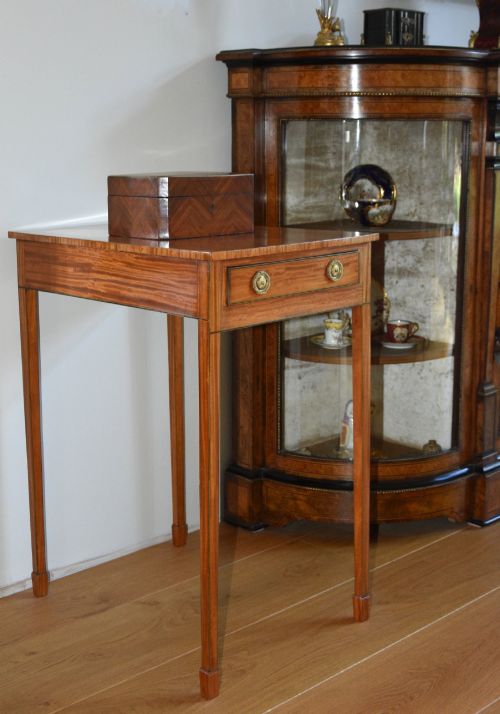
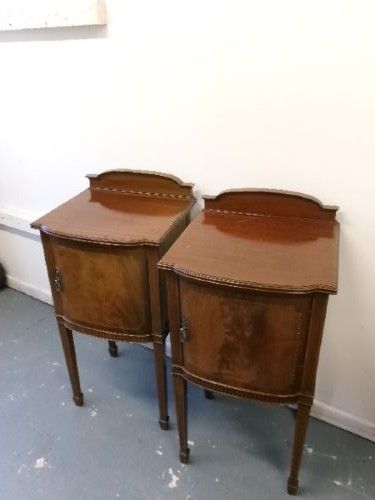
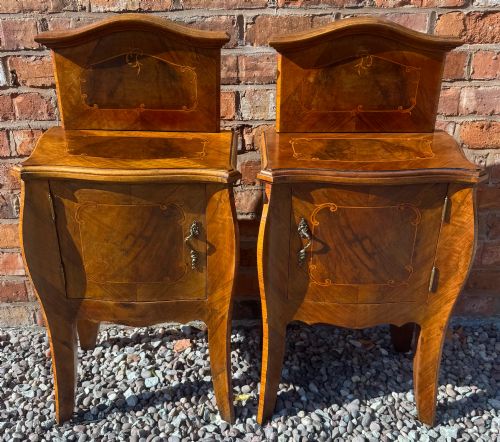
Satinwood bedside tables are bedroom cabinets and night cupboards designed to sit beside a bed for storage and display. The pieces on this page appear predominantly in matched pairs, reflecting the symmetry valued in traditional bedroom layouts.
Most examples date from the nineteenth century and the Edwardian era, spanning the years around nineteen hundred and the nineteen twenties. Forms range from simple French cabinets to elaborate marble-topped pedestals and chests.
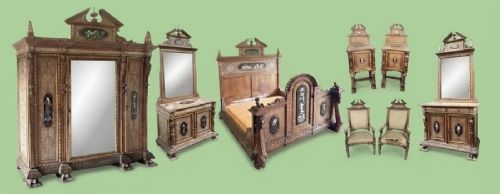
Makers drew on Victorian, Edwardian, and French revival styles, including Louis XV and Louis XVI influences. Buyers encounter both English timber designs and continental French provincial or chateau pieces.
How they were made
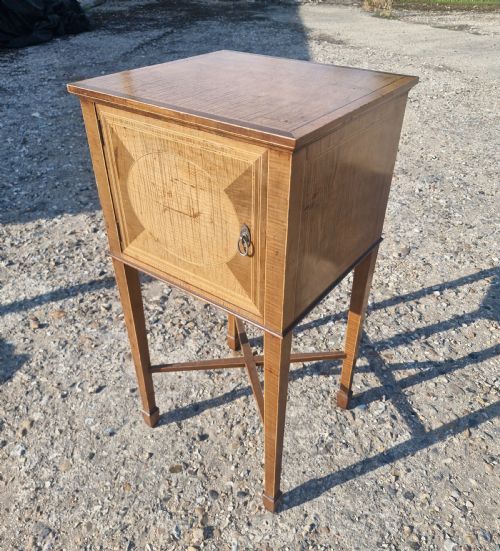
These tables utilise satinwood as the principal timber, often complemented by contrasting woods such as mahogany, kingwood, tulipwood, and satin birch. Inlays of boxwood and timber marquetry provide linear borders and decorative geometric patterns across the surfaces.
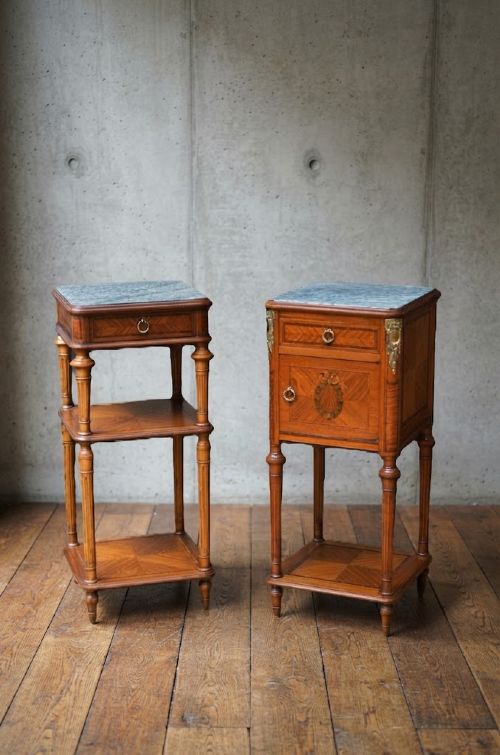
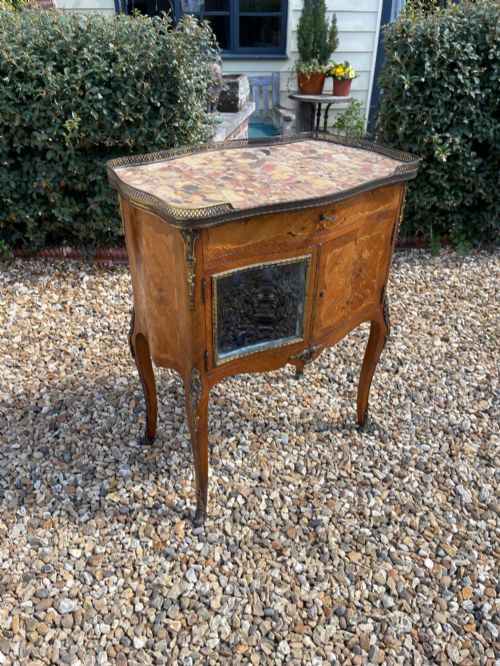
Structural elements frequently incorporate brass mounts and gilt bronze hardware to accent the drawers and doors. Heavier bedside cabinets feature fitted marble tops in white or coloured stone to protect the wooden surfaces from daily use.
Retail Price Guide 2026
Typical UK retail prices for satinwood bedside tables, calculated from the Sellingantiques database of over a million retail prices indexed since 2003. This retail price guide relies exclusively on Sellingantiques data; no external sources or auction records are used, so the figures do not describe the wider market.
Several bedside cabinets incorporate hidden cupboards originally intended to hold chamber pots out of sight.
What varies in quality
Quality rests in the precision of the timber inlay and the symmetry of the wood grain across paired items. Superior examples display carefully selected veneer matching and delicate parquetry rather than printed or painted substitutes.
Hardware weight and stone selection separate standard production from finer workshop output. Heavy cast brass mounts and thick, neatly bevelled marble tops indicate higher tier construction.
The Satinwood Bedside Tables Glossary
- Satinwood
- A lustrous tropical timber known for its golden colour and reflective sheen. It was widely utilised by cabinet makers for high-status eighteenth and nineteenth century furniture.
- Parquetry
- A geometric mosaic of wood pieces used for decorative floors and cabinet surfaces. Makers arranged contrasting veneers in repeating patterns to create visual depth.
- Marquetry
- The art of applying pieces of veneer to a structure to form decorative designs and pictures. Craftspeople cut thin slices of various timbers to fit together precisely.
- Ormolu
- Gilt bronze mounts applied to furniture for decorative enrichment. French cabinet makers favoured this technique to accent corners and drawer pulls.
- Pedestal
- A support or base column that elevates a cabinet or table. In bedroom furniture, pedestal cabinets often house a single cupboard door beneath the top surface.
Frequently Asked Questions
Are satinwood bedside tables sold as pairs?
Many listings feature matched pairs designed to sit symmetrically on either side of a double bed. Single cabinets also appear, reflecting historical bedroom arrangements where furniture matched utility rather than strict symmetry.
Buyers seeking balance find that matched pairs dominate the available selection across nineteenth century and Edwardian periods.
What styles are common in these tables?
The selection includes Victorian, Edwardian, and French revival designs such as Louis XV and Louis XVI. These styles incorporate delicate proportions, curved lines, and classical decorative motifs.
English variants tend towards clean pedestal forms, whilst French pieces frequently feature parquetry and bronze mounts.
How do I care for a marble top?
Marble surfaces require simple dusting and immediate wiping of liquid spills to prevent staining. Avoid acidic cleaners that can etch the polished stone over time.
Using coasters and protective mats preserves the vintage finish of both the marble and the surrounding satinwood frame.
How do I distinguish Edwardian from Victorian pieces?
Victorian furniture often displays heavier proportions, deeper tones, and robust timber construction. Edwardian pieces generally favour lighter satinwood finishes, understated stringing, and slender legs.
Makers in the Edwardian era revived eighteenth century elegance with simplified inlay and brighter timber selections.