


Sarcophagus Shape Box
A sarcophagus shape box brings classical architectural proportion to domestic storage, housing everything from tea and wine to jewellery and letters.
Sarcophagus Shape Box
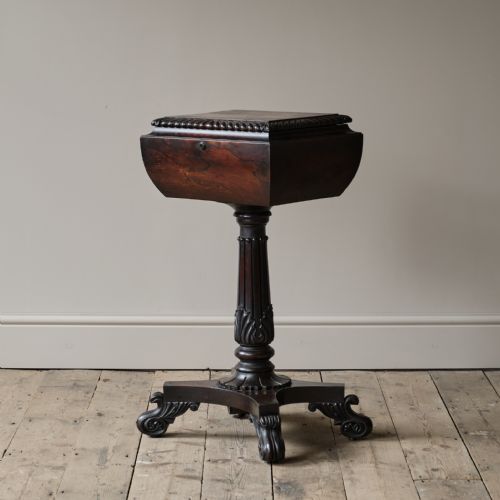
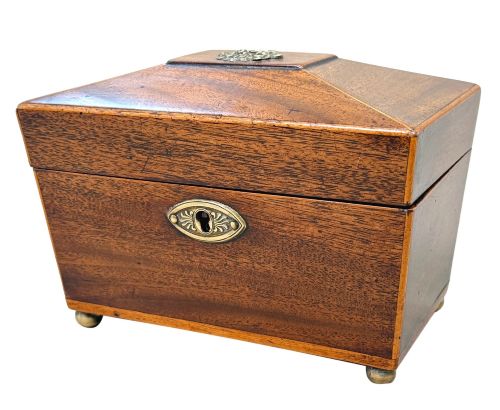
A sarcophagus shape box adopts the sloping, flared lines of ancient monumental tombs, adapted during the Georgian, Regency, and Victorian periods for household use. These pieces appear primarily as tea caddies, cellarettes, wine coolers, and jewellery or sewing boxes, reflecting the formal entertaining habits of their eras.
Makers utilised this bold architectural silhouette for functional objects that held pride of place on sideboards, tables, and tea equipage stands. Whether configured as a grand cellarette on paw feet or a delicate rosewood sewing box, the form commands visual attention through its balanced geometry.
Materials and Construction
Cabinetmakers constructed these vessels using dense timbers such as mahogany, rosewood, and hardwood, often selecting figured veneers like flame mahogany to accentuate the curved planes of the lid and body. Secondary woods provide structural stability inside, while exterior surfaces rely on precise joinery to maintain the crisp, flared angles of the classical silhouette.
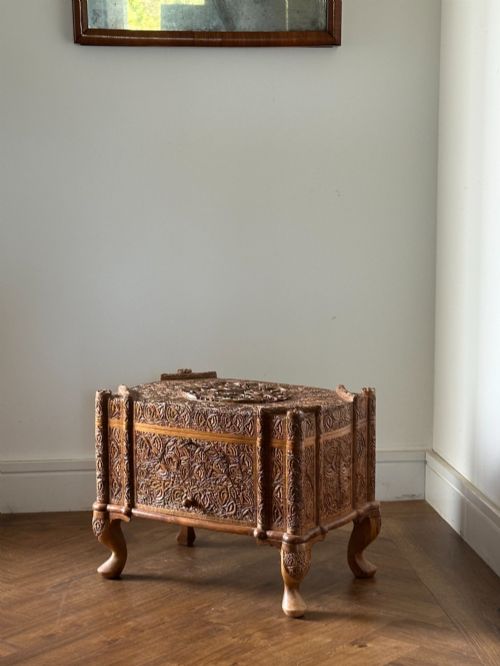
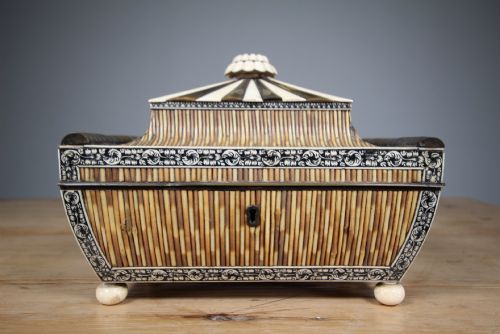
Decoration and hardware played a defining role in construction, incorporating cast brass handles, paw or claw and ball feet, and intricate bone, penwork, or leather inlay. Some specialised pieces feature carved sandalwood or detailed Killarney yew wood work, demonstrating advanced dexterity in relief carving and surface embellishment.
Interior compartments were meticulously fitted out for specific domestic rituals, housing removable tea canisters, glass mixing bowls, pin cushions, or velvet-lined trays for jewellery and stationery. These internal fittings utilise fine woodworking joints and silk or leather linings to complement the substantial exterior carcase.
Factors of Quality
Quality rests upon the selection of timber veneers and the crispness of the architectural moulding, where superior examples exhibit continuous grain patterns and sharp, unblemished profiles. The weight and finish of the brass mounts, handles, and feet also indicate the original maker's investment in materials.
The sophistication of the internal fitments separates utilitarian containers from masterworks, particularly when drawers, removable canisters, and velvet or leather compartments remain intact and operational. Master cabinetmakers ensured that the heavy lid balanced precisely on its hinges without warping the box carcase over time.
Gillows
The Sarcophagus Shape Box Glossary
- Cellarette
- A large, freestanding or table-standing box designed to hold bottles of wine and spirits, frequently lined and insulated to keep contents cool. These pieces often feature sturdy paw feet and secure locks.
- Teapoy
- A pedestal table fitted with a lidded box on top, specifically designed to store multiple varieties of tea leaves. They share the same classical box profiles as table-top caddies.
- Penwork
- A decorative technique using fine ink lines and stippling to create intricate pictorial or geometric designs on wooden surfaces. It appears on portable boxes from the Regency period.
- Flame mahogany
- A highly figured veneer cut from the fork of a mahogany tree where the branch meets the trunk, producing a distinctive flickering flame pattern. Cabinetmakers prized this grain for prominent exterior surfaces.
- Killarney yew wood
- Pale, finely grained timber harvested in Ireland, frequently inlaid with intricate geometric patterns or shamrock motifs. It is characteristic of nineteenth-century decorative boxes.
Sarcophagus Shape Box: Frequently Asked Questions
What were sarcophagus shape boxes used for?
These lidded containers served specific domestic functions in wealthy households, primarily storing precious dry goods like tea, securing wine bottles near the dining table, or holding personal items like jewellery, stationery, and sewing equipment.
Their robust construction and lockable lids protected valuable commodities from dampness and theft, while their imposing classical shapes displayed the owner's taste in fashionable furnishings.
How do I date a mahogany sarcophagus box?
Dating relies on observing the combination of timber selection, foot style, and internal hardware configurations. Earlier Georgian and Regency examples often feature flame mahogany veneers with brass ring handles and paw feet, whereas Victorian pieces frequently utilise rosewood with more elaborate interior lift-out trays.
The evolution of interior fittings and lock mechanisms also provides clear chronological markers, shifting from simple wooden compartments to complex, velvet-lined tiered storage as the nineteenth century progressed.
Are these boxes difficult to maintain?
Maintenance requires standard care for antique polished hardwoods, keeping them away from direct heat sources and sudden humidity changes to prevent the timber and veneer from splitting. Regular dusting with a soft cloth and occasional application of appropriate wax helps preserve the finish.
The original brass mounts and hinges should be left unlacquered, allowing them to age naturally alongside the timber carcase.
Did all of these boxes have feet?
Not all examples feature raised feet; many standard tea caddies and smaller sewing boxes sit flat on a plain moulded plinth or base. Larger cellarettes and wine coolers almost universally incorporate substantial supports such as paw feet, claw and ball feet, or turned pedestals to elevate the heavy container off the floor or sideboard.
The choice of foot typically correlates with the scale of the object and its intended placement within the room.