


Regency Mahogany Tea Box
A regency mahogany tea box brings sophisticated storage to any interior, offering elegant woodwork and period charm for leaf tea preservation.
Regency Mahogany Tea Box
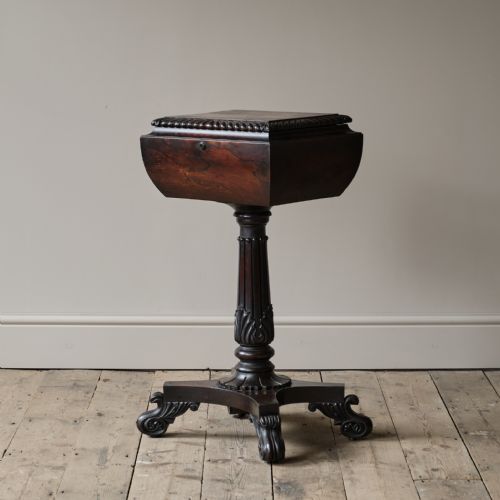
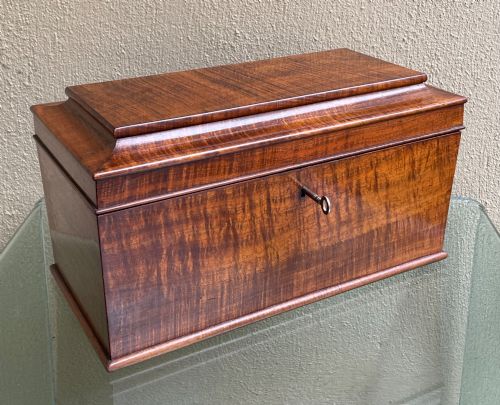
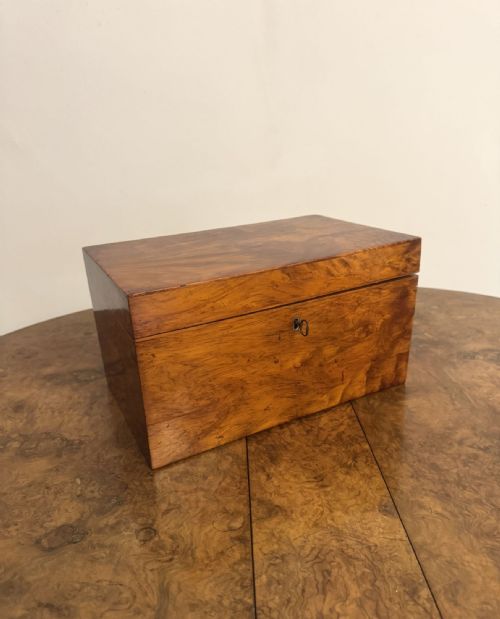
A regency mahogany tea box takes the form of a lidded wooden container designed to safeguard valuable dry leaves during the Georgian and Regency eras. These pieces appear frequently as sarcophagus-shaped boxes, double caddies with internal compartments, and freestanding teapoys resting on stands.
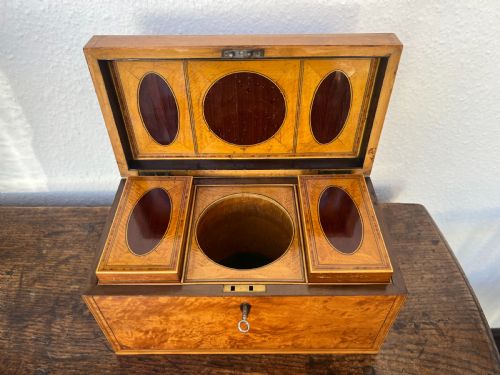
Makers of the period utilised dense tropical timber alongside contrasting veneers like satinwood, ebony, and amboyna to create refined table objects. Surviving examples often incorporate interior mixing bowls made of cut glass alongside fitted canisters for loose leaf storage.
Most selections on this page belong to the nineteenth century, spanning George III, Regency, William IV, and early Victorian periods. Buyers encounter both tabletop caddies and larger pedestal teapoys intended for parlour use.
How they were made
Cabinetmakers constructed these caddies using solid mahogany frameworks embellished with finely figured flame mahogany veneers. Artisans applied contrasting stringing lines in boxwood, ebony, and satinwood to accentuate geometric panel boundaries.
Many examples integrate delicate brass handles, escutcheons, and paw feet cast to complement the polished timber surfaces. Interior compartments frequently feature bone or ivory pulls alongside fitted lids to seal in dry leaf aromas.
Early tea boxes required locks because dried leaves were as valuable as gold sovereigns.
What varies in quality
The choice of timber grain fundamentally distinguishes standard caddies from exceptional ones, with highly figured flame mahogany and burr maple demanding superior craftsmanship. Finer pieces demonstrate precise contrasting stringing and intricate inlays executed without visible gaps.
Original internal furnishings, including intact cut glass mixing bowls and matching lidded canisters, elevate a box's desirability. Structural integrity in the joints and the survival of original brass hardware further separate ordinary containers from museum-grade specimens.
Gillows
The Regency Mahogany Tea Box Glossary
- Teapoy
- A pedestal table or large caddy fitted with internal compartments for storing loose leaf tea. These objects often stand on a central pillar supported by carved feet.
- Sarcophagus
- A burial-vault architectural form adopted by cabinetmakers for tea caddies featuring a stepped, domed lid and inverted sides. This silhouette defined fashionable Regency storage boxes.
- Canister
- A small internal lidded container within a tea box designed to keep specific leaf varieties dry and fresh. Multiple canisters allowed households to blend different teas.
- Stringing
- Thin inlaid lines of contrasting timber such as boxwood or ebony used to border panels on furniture and boxes. This technique added subtle linear detail to mahogany surfaces.
- Mixing glass
- A cut glass bowl fitted inside a tea caddy used for blending leaves or diluting brewed liquor. These vessels sat securely in dedicated central compartments.
Regency Mahogany Tea Box: Frequently Asked Questions
How were regency tea boxes used?
Households stored expensive imported leaves inside these locked containers to protect them from dampness and domestic theft. Servants or the master of the house portioned out daily amounts using the interior mixing bowls and canisters.
Tea remained a luxury commodity throughout the Georgian and Regency periods, making the caddy a prominent fixture in the formal parlour. Guests observed the host prepare infusions directly from the decorative box placed upon a table.
What is the difference between a caddy and a teapoy?
A tea caddy is a portable box designed to sit upon a sideboard or table during tea service. These smaller containers can be lifted easily by their side handles.
A teapoy is a much larger freestanding piece of furniture mounted on a central pillar and pedestal base. Many teapoys incorporate storage boxes combined with work tables or sewing compartments.
How do I care for antique mahogany wood?
Keep wooden tea boxes away from direct sunlight and radiators to prevent the mahogany veneers from drying and splitting. Maintain a stable indoor humidity level to protect the delicate ebony and boxwood stringing.
Apply high-quality beeswax sparingly and buff gently with a soft cloth to preserve the natural lustre. Avoid commercial liquid polishes containing silicones that can penetrate open-grain timbers.