


Salt Glazed Ceramic Jug
A salt glazed ceramic jug brings distinctive texture and weight to a room, ranging from early German stoneware to Victorian art pottery.
Salt Glazed Ceramic Jug
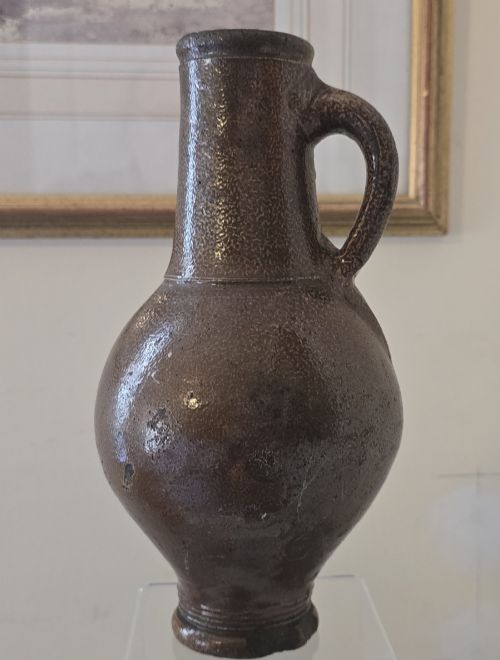
A salt glazed ceramic jug is a heavy vessel formed from clay and finished with the characteristic textured surface created by throwing salt into the kiln during firing. When buyers search for a salt glazed ceramic jug, they encounter robust domestic containers and decorative pieces spanning several centuries.
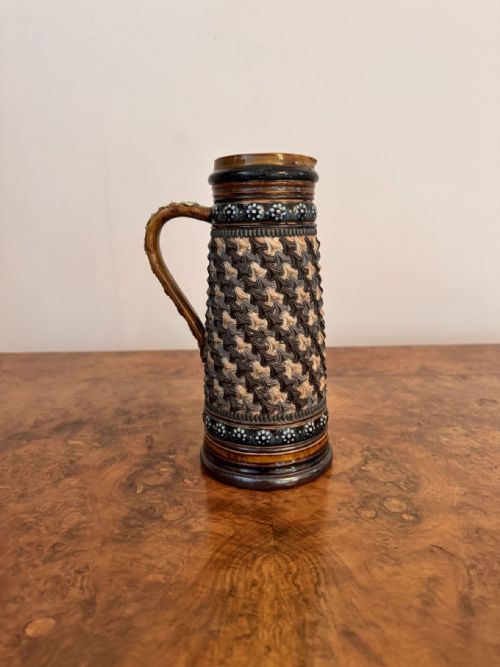
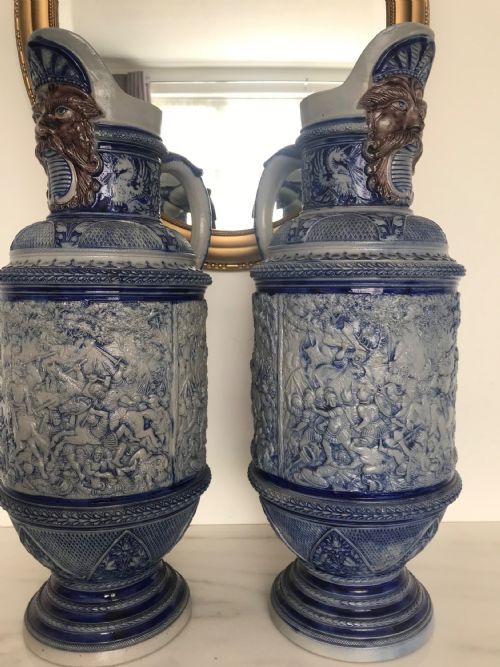
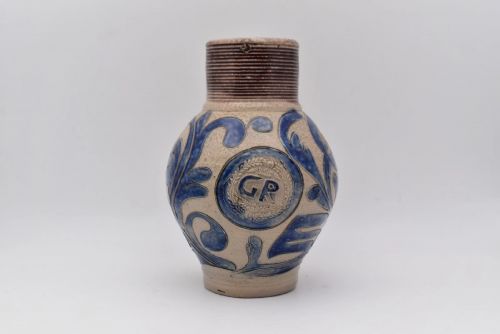
The selection on this page leans heavily towards 19th-century English examples, particularly the detailed stoneware produced by Doulton Lambeth during the Victorian era. Alongside these, earlier continental pieces appear, including German Westerwald flagons and pitchers decorated with cobalt blue.
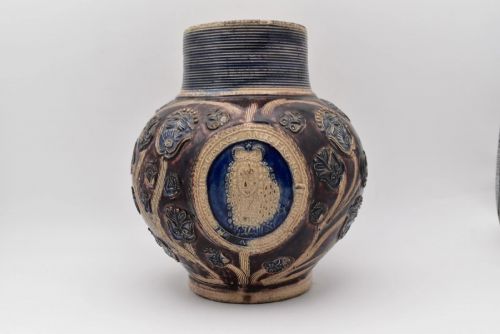
Forms range from large harvest jugs fitted with silver rims to smaller puzzle jugs and ewers. The diversity reflects both everyday utility and commemorative output, such as jubilee pieces and royal portrait vessels.
How They Were Made
Potters built these vessels using dense clay bodies that matured at high temperatures, creating durable stoneware impervious to liquids. Common materials visible across the listings include traditional salt-glazed stoneware, augmented on certain jugs by applied cream sprigging, silver rims, and silver-plated lids.
The signature texture results from hurling common salt into the kiln at the peak of the firing cycle, where the sodium vaporises and reacts with the silica in the clay body. This process forms a thin, glossy, orange-peel glaze that seals the porous body without the need for an applied liquid slip.
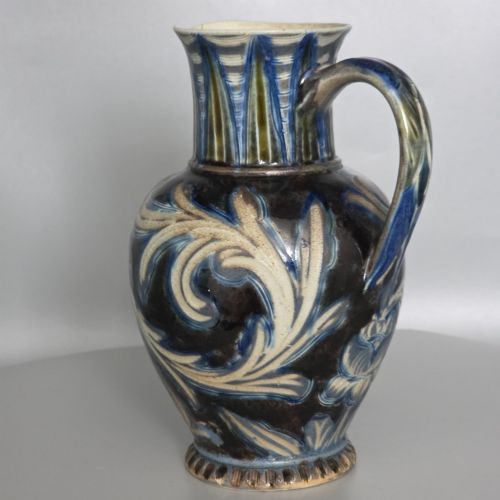
Decoration often involved incising patterns directly into the leather-hard clay, applying cobalt blue pigments before firing, or utilising moulded sprigs such as masks and armorial ciphers. Metal mounts in silver were subsequently added by silversmiths to elevate utility vessels into presentation pieces.
Certain antique jugs feature hidden puzzle spouts designed to surprise unsuspecting drinkers at tavern tables centuries ago.
What Varies in Quality
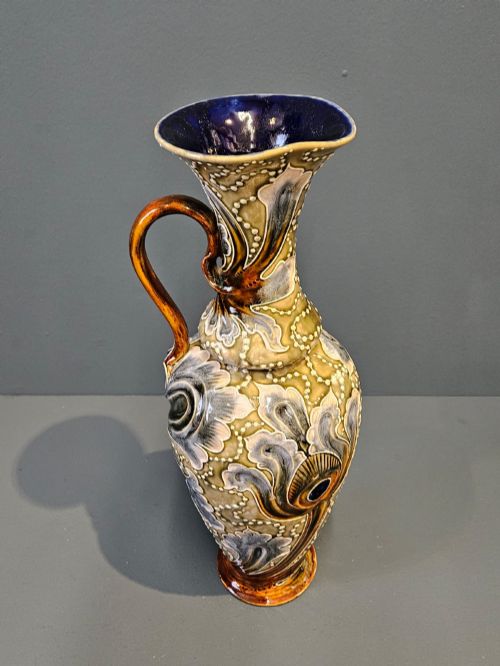
Quality rests significantly upon the crispness of the modelled detail and the control of the kiln atmosphere during the salt-glazing process. Pieces featuring finely incised Art Nouveau foliage or sharp cobalt blue depictions of battle scenes demonstrate superior artistic ambition compared to plain utilitarian containers.
The presence of named artists or specific factory stamps elevates certain examples, particularly where individual modellers executed distinctive surface decoration. Studio marks and commemorative subjects signal workshop distinction and careful hand-finishing.
Proportion and the integrity of supplementary elements, such as fitted silver rims and applied handles, determine the overall harmony of the piece. Well-balanced forms with even salt-glaze pitting represent the finest outputs of both English and continental kilns.
Simon Peter Gerz·Emma Shute
The Salt Glazed Ceramic Jug Glossary
- Salt glaze
- A vitreous coating formed on stoneware by throwing common salt into the kiln during high-temperature firing. This chemical reaction produces a characteristic textured surface resembling orange peel.
- Stoneware
- A robust, vitrified ceramic pottery fired at high temperatures until the clay body becomes dense and non-porous. It provides the heavy foundation for traditional jugs and flagons.
- Cobalt
- A blue metallic oxide pigment used under the glaze to paint detailed scenes, ciphers, and floral motifs onto stoneware bodies. It withstands intense kiln heat without fading.
- Sprigging
- A decorative technique where moulded clay reliefs are applied to the surface of an unfired vessel using slip as an adhesive. Cream-coloured sprigging often contrasts with a darker body.
- Puzzle jug
- An ingenious drinking vessel featuring a perforated neck and multiple spouts that challenge the drinker to consume the contents without spilling. They often include cryptic rhyming verses.
- Ewer
- A large jug with a flared spout and a decorative handle, traditionally used for pouring water. In these listings, the term denotes ornamental vessels designed for display.
Salt Glazed Ceramic Jug: Frequently Asked Questions
What is a salt glazed ceramic jug?
A salt glazed ceramic jug is a sturdy stoneware vessel fired with salt to create a textured, orange-peel surface finish. These pieces range from utilitarian containers to decorative Victorian art pottery.
They were produced across England and continental Europe, serving practical household roles as well as commemorative functions for royal events and jubilees.
How do I identify a Westerwald jug?
Westerwald jugs originate from the German region known for producing salt-glazed stoneware characterised by cobalt blue decoration. They frequently display incised or stamped geometric patterns and historical ciphers.
Earlier examples often feature distinctive mask motifs or roundels set against grey stoneware bodies.
What are Doulton Lambeth jugs?
Doulton Lambeth jugs are Victorian stoneware pieces produced by the famous English pottery, known for intricate incised designs and art pottery styles. Many feature harvest motifs, silver rims, or collaborative work by studio artists.
These pieces represent a high point of 19th-century British ceramic manufacturing and decorative innovation.
How should I display a salt glazed jug?
Display these jugs on sturdy shelving or sideboards where their heavy stoneware bodies and textured surfaces can be appreciated up close. Good lighting helps reveal the subtle variations of the salt glaze and incised details.
Keep them away from areas of heavy foot traffic to protect applied handles and added silver rims from accidental knocks.