





Saint Portrait Painting
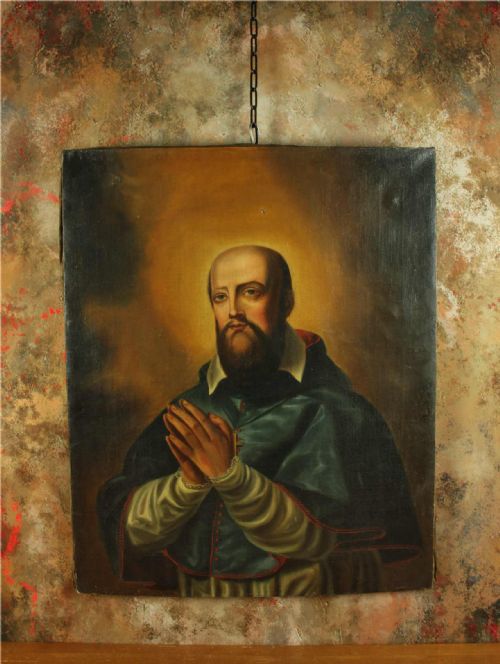
A saint portrait painting brings centuries of European devotion, dramatic lighting and masterly brushwork directly into a room.
Saint Portrait Painting
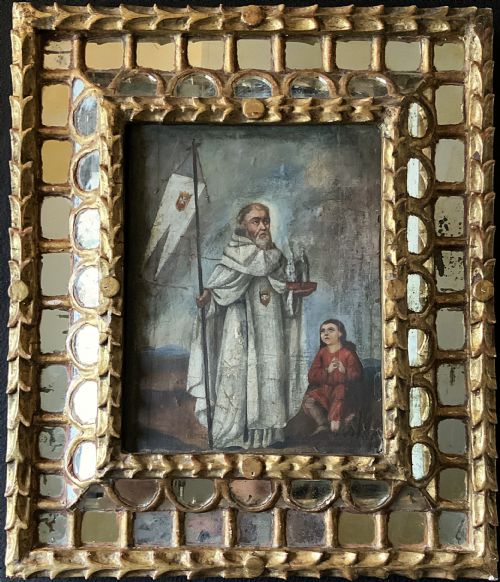
When searching for a saint portrait painting, a buyer looks at centuries-old devotional imagery originating primarily from Italian, Spanish, and French traditions. The pieces span from the seventeenth and eighteenth centuries into the Victorian era, encompassing oil on canvas, wood panels, enamel plaques, and reverse glass pictures.
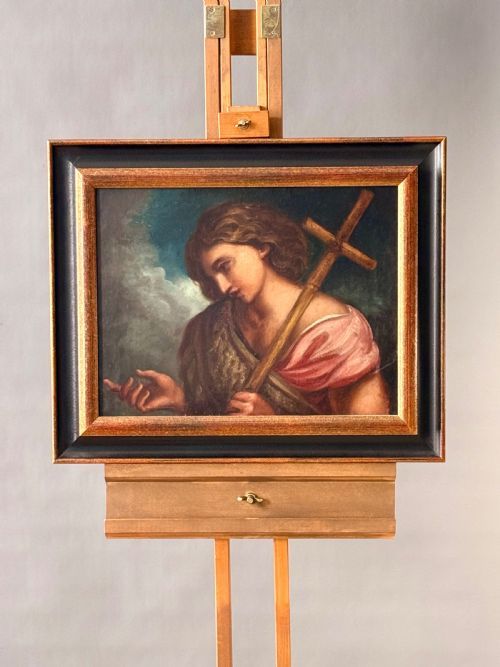
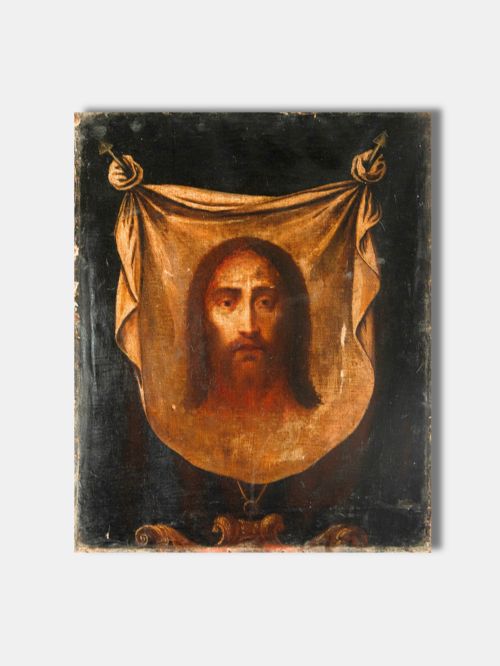
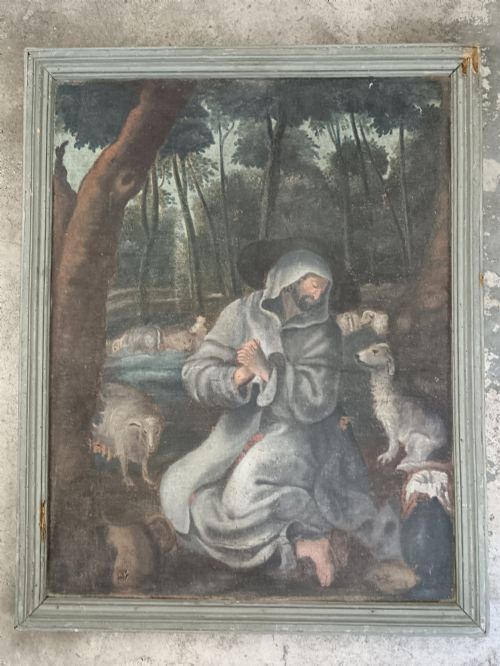
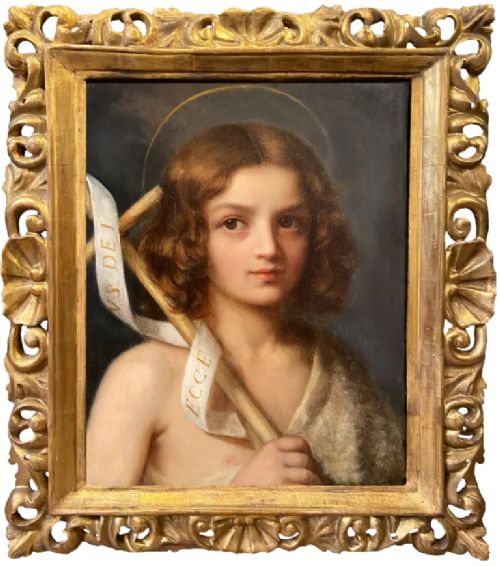
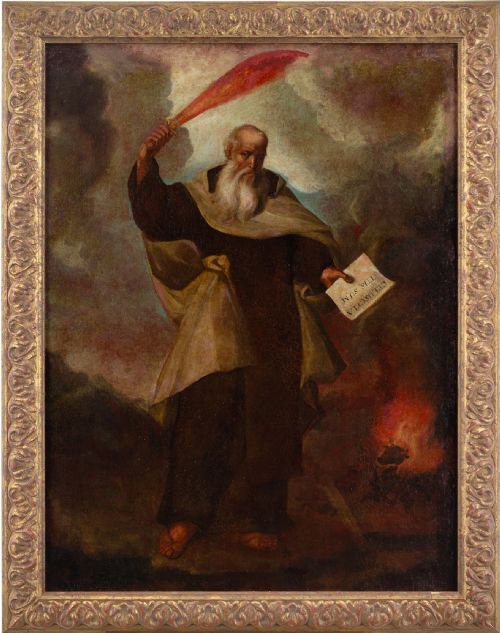
Most commonly, the visitor meets works attributed to various European schools depicting figures such as Saint John the Baptist, Saint Francis, and the Holy Family. These range from large devotional canvases to small Limoges enamel plaques and miniatures.
The subjects draw heavily on Baroque aesthetics, featuring dramatic chiaroscuro and intense religious narrative. Whether rendered by named workshops or regional hands, each saint portrait painting preserves a tangible fragment of historical religious devotion.
How they were made
Artists painted primarily in oil on stretched canvas or prepared wood panels, building up rich compositions through layered glazes and opaque pigments. The characteristic depth of these works relies upon traditional oil paint techniques, sometimes revealing fascinating pentimenti where the painter altered a hand or drapery during execution.
Support materials varied according to scale and medium, with delicate miniatures utilising enamel on metal or reverse painting on glass. Many of these canvases and panels reside within their period giltwood frames, which contribute significantly to the physical survival of the artwork.
Saint Bernard dogs occasionally appear here sharing space with traditional holy figures, thanks to Victorian maritime rescues.
What varies in quality
Quality rests upon the confidence of the draughtsmanship and the expressive power within the saint's face and hands. Superior pieces demonstrate subtle handling of light and shadow, particularly in the rendering of textiles, halo effects, and anatomical detail.
The distinction between a standard regional piece and a higher-tier studio work lies in the handling of psychological depth and atmospheric presence. Original framing, surface stability, and the retention of early varnish layers also separate fine examples from heavily restored instances.
Francesco Solimena Workshop·Gaspar de Figueroa·Pierre Mignard·Francois de Troy·Sir Godfrey Kneller
The Saint Portrait Painting Glossary
- Baroque
- A European artistic style originating around sixteen hundred, characterised by exaggerated motion, dramatic lighting, and deep emotional intensity. It forms the stylistic backbone of many seventeenth-century religious panels.
- Chiaroscuro
- An Italian term describing the stark contrast between light and dark within a painting. Artists utilise this technique to create three-dimensional volume and theatrical drama on the canvas.
- Pentimento
- An alteration in a painting evidenced by visible traces of previous brushstrokes beneath the final layer. This occurrence reveals the artist changing their mind during the creative process.
- Giltwood
- Wood that has been coated with a thin layer of gold leaf or gilt powder. Period frames utilise this finish to complement the warm tones of oil paintings.
- Limoges Enamel
- Vitrified glass fused to a metal base, originating from the French city of Limoges. These small plaques display remarkable durability and fine miniature detail.
Saint Portrait Painting: Frequently Asked Questions
How do I identify a seventeenth-century saint portrait?
Examination of canvas weave, stretcher construction, and pigment composition offers initial clues to age. Stylistic markers such as heavy Baroque drapery and specific devotional iconography also help date the work.
Comparison with documented examples from regional schools confirms the period context. Expert opinions regarding the underlying preparation layers provide further verification.
Where should I hang a religious oil painting?
These works require stable environmental conditions away from direct sunlight and excessive humidity. Wall placement should avoid rapid temperature fluctuations to protect both the canvas and the historic frame.
Proper lighting enhances the dark tones typical of Baroque religious art. Secure picture hooks rated for the combined weight of the painting and frame are essential.
What is an enamel saint plaque?
Enamel plaques involve fusing powdered glass to metal substrates through high-temperature firing. This technique produces vibrant, permanent colours that resist fading over centuries.
Limoges production represents the most famous iteration of this delicate craft. These pieces often function as portable devotional objects or mount into larger decorative settings.
What does after an old master mean?
This label indicates that an artist created the painting by copying an existing composition by a celebrated master. Such works were common as study pieces or to meet demand for popular religious imagery.
These paintings often date from a later century than the original prototype. Quality varies depending on the skill of the subsequent hand.