

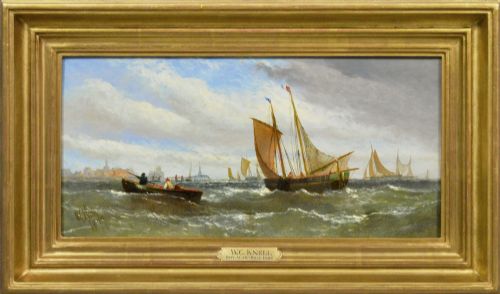
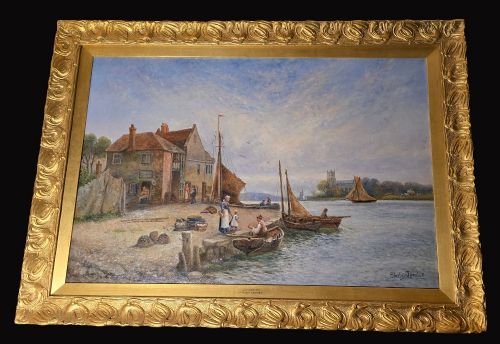
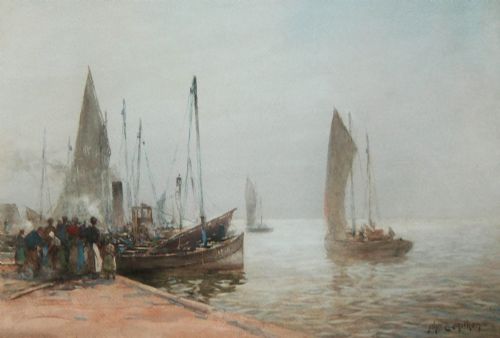
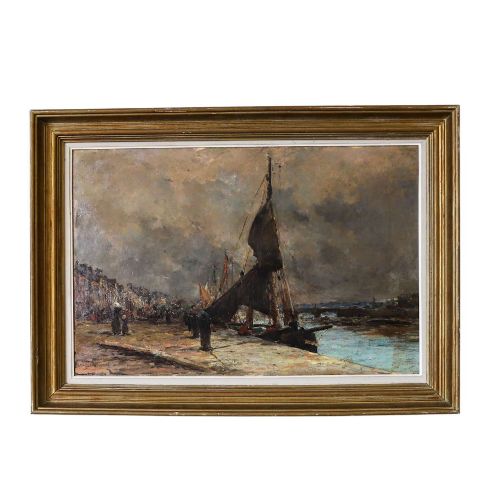




Sailing Boat Harbour Painting
A sailing boat harbour painting captures maritime activity and coastal architecture through the traditional mediums of canvas and paper.
Sailing Boat Harbour Painting
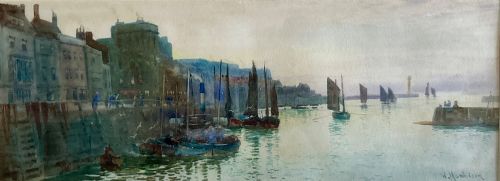
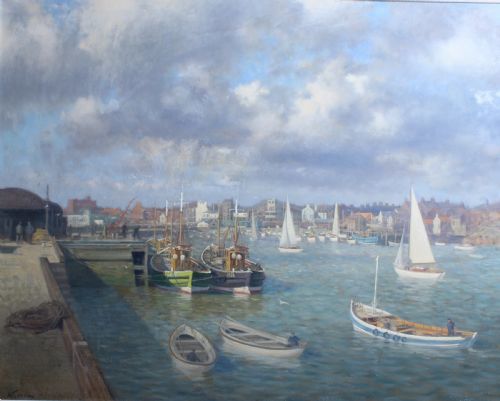
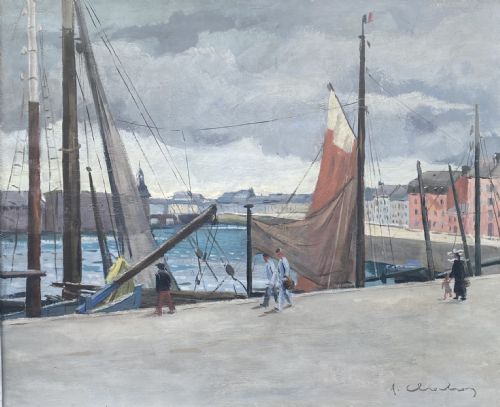
A sailing boat harbour painting depicts coastal scenes, shipping vessels, and maritime activity anchored in ports across Britain and continental Europe. These works capture specific locations ranging from Yorkshire fishing towns and Scottish ports to French coastal communes and Mediterranean harbours.
How they were made
Artists utilise oil paint on stretched canvas or board to build rich textures and deep tones for marine scenes, allowing for layered depictions of water and sky. Watercolour pigments applied to paper create luminous, transparent washes suited to capturing shifting coastal light and atmospheric harbour conditions.
Finished paintings sit within timber frames, frequently decorated with gesso and giltwood to complement the maritime subject matter. Glazing often protects works executed on paper, preserving the delicate watercolours from environmental moisture and fading.
Sailing Boat Harbour Painting Retail Price Guide 2026
Typical asking prices for sailing boat harbour painting among the pieces listed under this phrase on Sellingantiques today, from the lower quarter to the upper quarter. They describe what is for sale here now, not the wider market.
Artists frequently captured bustling quayside gossips alongside moored sailing yachts, immortalising nineteenth-century harbour life down to the last stray fishing net.
What varies in quality
Quality rests upon the artist's command of light, proportion, and atmospheric perspective when rendering water and vessels. Superior compositions demonstrate confident brushwork and precise handling of maritime architecture, whereas lesser examples rely on formulaic repetition.
The preservation of the primary medium dictates the overall standard of a piece, from stable oil canvases free from heavy cracking to watercolours retaining their original pigment vibrancy beneath protective glass.
James E. Aitken·Thomas Bush Hardy·Alfred Henry Vickers·Lennard Lewis·Bertram Priestman
The Sailing Boat Harbour Painting Glossary
- Watercolour
- A paint consisting of soluble pigment suspended in a water-based solution, traditionally applied to paper to create translucent washes.
- Giltwood
- Timber carved and surfaced with a thin layer of gold leaf, commonly utilised for traditional nineteenth-century picture frames.
- Impressionism
- An art movement characterised by relatively small, thin yet visible brush strokes and an accurate depiction of changing light.
- Seascape
- A work of art that depicts the sea, representing a primary genre alongside landscapes and portraits within maritime painting.
Sailing Boat Harbour Painting: Frequently Asked Questions
How do I date a maritime painting?
Dating relies upon stylistic markers, costume details of figures on the promenade, and the riggings of depicted vessels. Framing styles and artist signatures or exhibition labels also provide reliable chronological evidence.
Archival records and period documentation help place undated works within specific artistic movements like British Impressionism or Victorian maritime art.
Where should I hang a coastal painting?
These works suit dining rooms, studies, or hallways where natural light complements the marine palette. Avoid placement in direct sunlight to protect watercolours and oil pigments from fading.
Pairing the artwork with neutral wall colours allows the giltwood frames and maritime tones to stand out effectively.
What is the difference between oil and watercolour?
Oil paintings utilise pigments bound in drying oils applied to canvas or wood panels, offering thick textures and deep colour saturation. Watercolours employ water-soluble pigments on paper, creating bright, luminous compositions.
Oils generally require sturdy wooden frames without glass, while watercolours need glazing to protect the paper surface.
How do I care for antique paintings?
Keep framed artworks away from damp environments and extreme temperature fluctuations to prevent canvas slackening or paper warping. Dust giltwood frames gently with a soft, dry brush.
Consult a professional restorer if cleaning or canvas stabilisation is required rather than attempting amateur repairs.