





Sage Green Painting
These sage green painting examples bring subtle botanical tones and historical depth into interiors through oil, watercolour, and canvas.
Sage Green Painting
When you search for sage green painting, you encounter works spanning the nineteenth and twentieth centuries, including oil paintings and watercolours depicting landscapes and natural scenes. These artworks often feature muted earthy tones that complement period interiors.
The selection here includes landscape watercolours and oil paintings from periods such as the nineteen-fifties and nineteen-sixties, alongside earlier preparatory works. These pieces range from framed views of trees to pastoral watercolours signed by artists.
Buyers are most likely to meet mid-twentieth-century landscape oils and nineteenth-century works on paper on this page. Such paintings suit studies, halls, and sitting rooms where muted green pigments harmonize with traditional furnishings.
How they were made
Artists utilised oil paint on canvas or watercolour applied to paper, capturing natural subjects with layered brushwork. The physical support often consists of stretched canvas over wooden frames or thick artist paper.
Pigments were mixed to achieve earthy tones, relying on natural binders and oils that stabilized over decades. Supporting frames are constructed from wood, occasionally retaining original gilt or painted finishes.
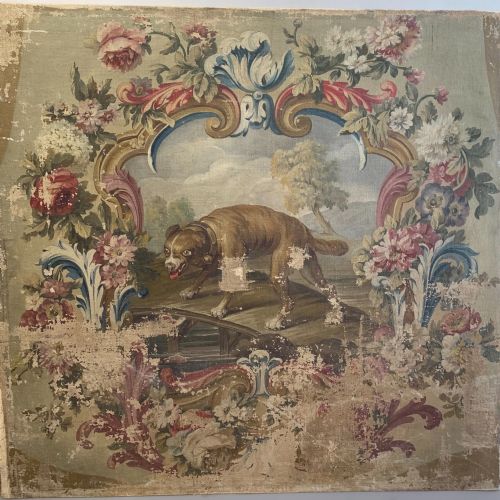
One recorded artwork serves as a cartoon for an Aubusson tapestry, carrying wool-weaving designs into paint.
What varies in quality
Quality rests in the precision of the brushwork and the stability of the canvas or paper support. Superior works demonstrate confident handling of light and pigment depth.
Condition of the surface paint layer and the integrity of the original backing or frame distinguish finer examples from standard decorative items.
William Mark Fisher·Melissa White
The Sage Green Painting Glossary
- Oil painting
- A work executed with pigments bound in a drying oil medium, typically applied to canvas. This technique allows for rich colour blending and textured surface applications.
- Watercolour
- A painting method where fine pigment powders are suspended in a water-based solution and applied to paper. It creates translucent washes of colour.
- Canvas
- A heavy woven fabric used as a surface for oil paintings, stretched tightly over a wooden frame. It provides a durable ground for historical artworks.
- Gouache
- An opaque water-based paint that produces a flat, matte finish, sometimes utilised alongside watercolour for heightened detail. It contains an added white pigment to increase opacity.
- Provenance
- The documented history of ownership surrounding an artwork or antique piece, establishing its authenticity and past locations. A clear record adds context to the item.
Sage Green Painting: Frequently Asked Questions
How old are these paintings?
The works listed span from the nineteenth century through to the mid-twentieth century, encompassing both Victorian and later artistic periods.
Dates are determined by stylistic evidence, artist signatures, and framing materials associated with specific decades.
Where should I hang a landscape?
These paintings suit traditional living spaces, studies, or hallways where natural light complements muted green and earth tones.
Consider pairing them with period furniture and neutral wall colours to let the artwork's palette stand out.
Are these paintings original?
The selection comprises original period works on canvas and paper, created by hand rather than being modern reproductions.
Each piece reflects the materials and techniques specific to its era of production.
How do I care for canvas art?
Keep paintings away from direct sunlight and damp environments to protect the canvas and pigment layers from degradation.
Dust the surface gently with a dry, soft cloth without applying moisture or chemical cleaning agents.