


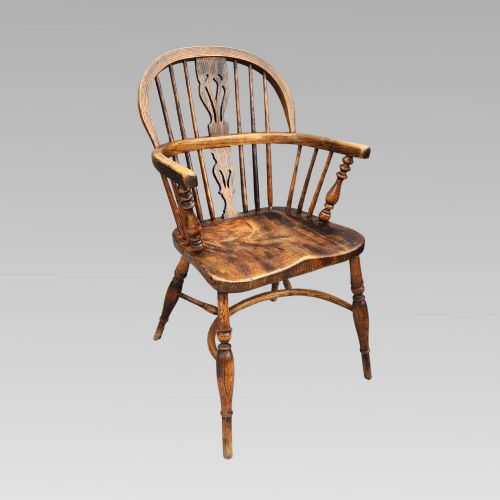
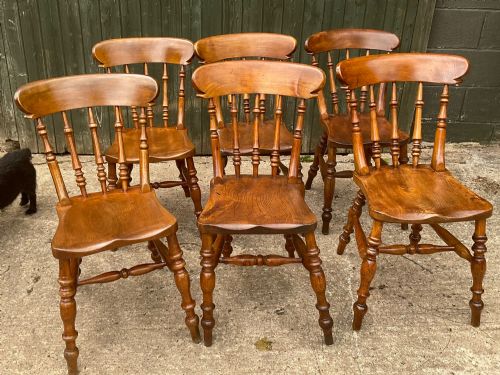

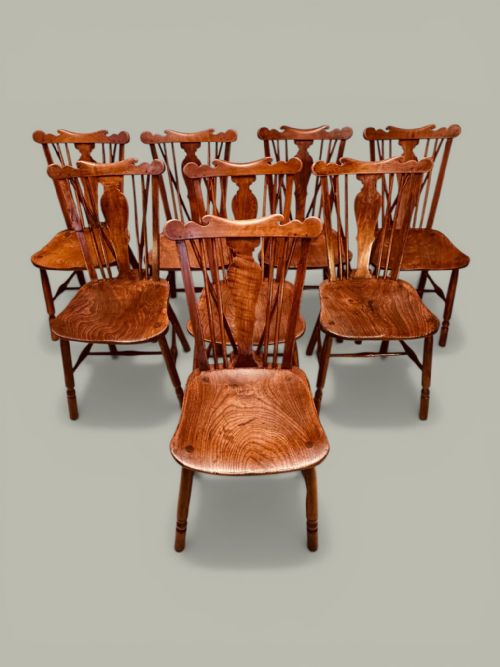


Saddle Seat Windsor Chair
A saddle seat windsor chair brings tactile warmth and vernacular strength to a room, offering ergonomic comfort forged by traditional rural carpenters.
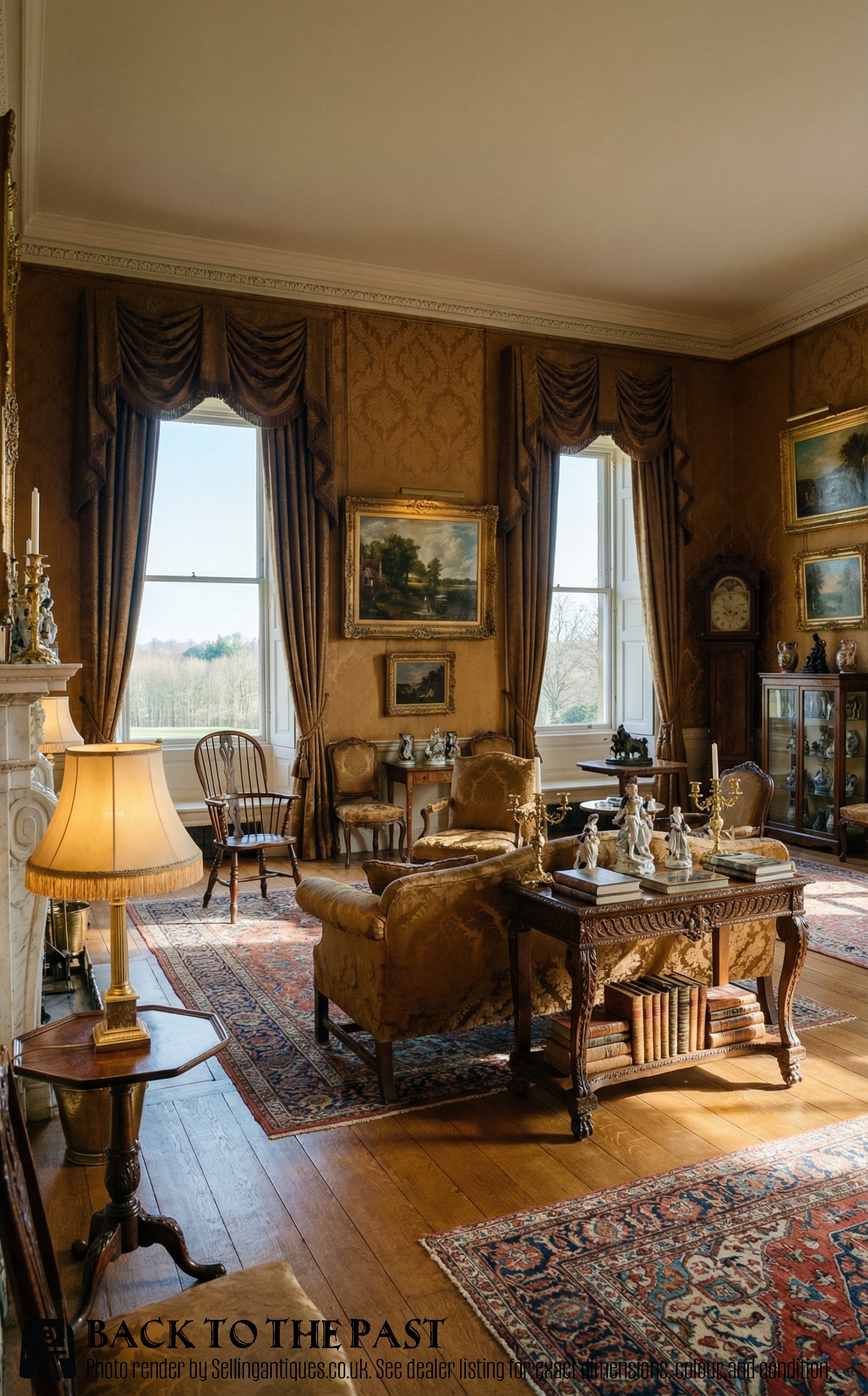
Saddle Seat Windsor Chair
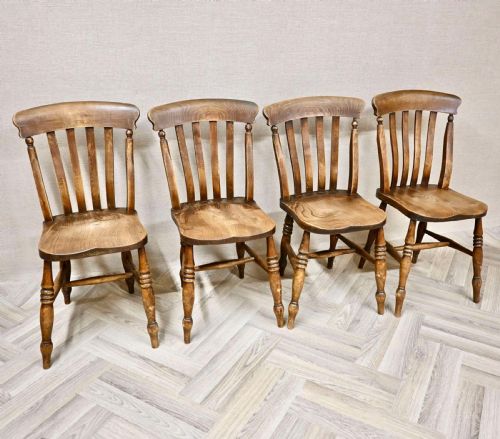
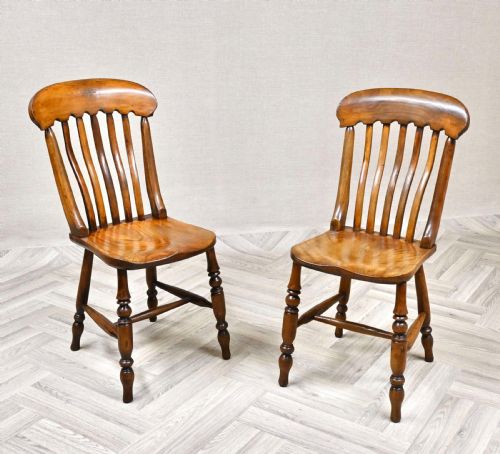
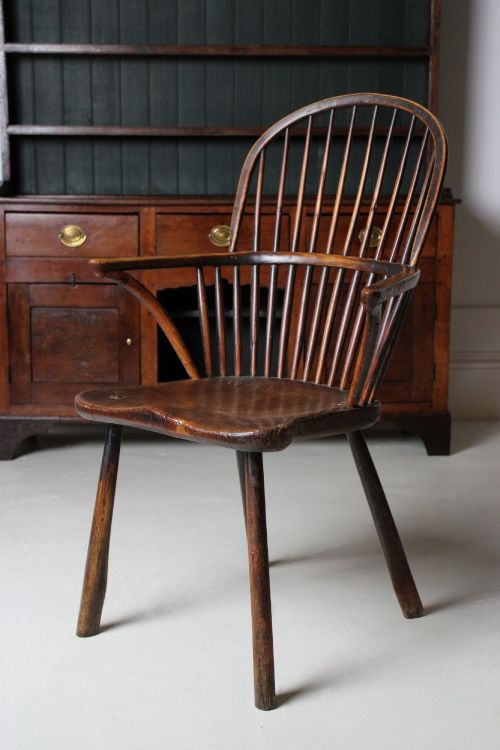
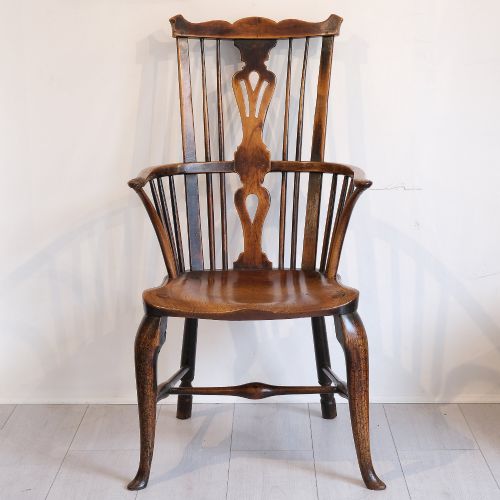
A saddle seat windsor chair is a quintessential vernacular seating form defined by its thick wooden seat, sculpted into a comfortable saddle contour, into which the legs and back spindles are wedged directly. These pieces emerge from English country traditions across the eighteenth and nineteenth centuries, taking forms such as armchairs, dining chairs, and desk chairs.
Buyers encountering this page will most frequently find nineteenth-century and Victorian examples, alongside occasional eighteenth-century Georgian specimens. These chairs appear in regional variations including West Country, Thames Valley, and vernacular country styles.
The typology encompasses low back, high back, comb back, lath back, and hoop back designs, often utilised in farmhouse kitchens, studies, and drawing rooms as robust seating.
How they were made
Makers constructed these chairs by combining contrasting native timbers, typically pairing a substantial elm seat with ash for the bending parts and spindles, or yew wood for finer grain and colour. Fruitwood, beech, oak, and general hardwood also appear in the construction of regional variants.
The saddle seat was laboriously adzed and hollowed from a single solid block of timber to fit the human form, while steam-bending techniques shaped the flexible back bows and hoops from green wood before drying.
Saddle Seat Windsor Chair Retail Price Guide 2026
Typical asking prices for saddle seat windsor chair among the pieces listed under this phrase on Sellingantiques today, from the lower quarter to the upper quarter. They describe what is for sale here now, not the wider market.
Available forms span armchairs, side chairs, dining chairs, and desk chairs originating from English country traditions.
What varies in quality
Quality in these chairs rests upon the depth and comfort of the saddle sculpting, the harmonious integration of multiple timber species, and the grace of the spindle turnings. Superior examples display bolder sculptural proportions, particularly in broad arms and crinoline stretchers.
Construction integrity determines longevity, visible in the tightness of wedged through-tenon joints and the careful retention of original surface patination across the elm seat and ash frame.
The Saddle Seat Windsor Chair Glossary
- Saddle seat
- A thick wooden seat base scooped and carved to resemble the contour of a saddle for ergonomic seating. This central feature defines the comfort and sculptural presence of the chair.
- Comb back
- A Windsor chair back design featuring a horizontal top rail supported by vertical spindles, resembling the teeth of a comb. This form often incorporates an extended headrest.
- Smokers bow
- A low-backed Windsor armchair featuring a continuous curved arm rail and spindle back, historically popular in taverns and offices. It is also known as a captain's chair.
- Crinoline stretcher
- An arched or bowed stretcher connecting the legs of a Windsor chair near the base to provide structural rigidity. It is frequently found on eighteenth-century vernacular pieces.
Saddle Seat Windsor Chair: Frequently Asked Questions
What is a saddle seat windsor chair?
A saddle seat windsor chair is a traditional wooden seating form characterised by a deeply scooped solid seat and an independent back constructed from vertical spindles inserted into the base.
These pieces were produced primarily by regional English vernacular makers using native timbers throughout the eighteenth and nineteenth centuries.
How do I date an antique windsor chair?
Dating relies on observing construction methods, timber choices, and stylistic evolution, such as the transition from eighteenth-century comb backs to Victorian hoop and lath backs.
Early pieces often display distinct regional turning characteristics and generous proportions, while later nineteenth-century examples utilise standardised industrial joinery and varied hardwood species.
Where were windsor chairs historically used?
These chairs served utilitarian roles in farmhouse kitchens, country cottages, and provincial workshops, offering durable and comfortable seating for daily domestic life.
Over time, refined yew wood and ash examples also found places in libraries, studies, and more formal parlours.
How do I care for a wooden windsor chair?
Living with these chairs requires maintaining stable indoor humidity levels to prevent the seasoned elm and ash timbers from drying out or splitting.
Applying occasional natural wax helps preserve the historic surface patination without compromising the original wood finish.