

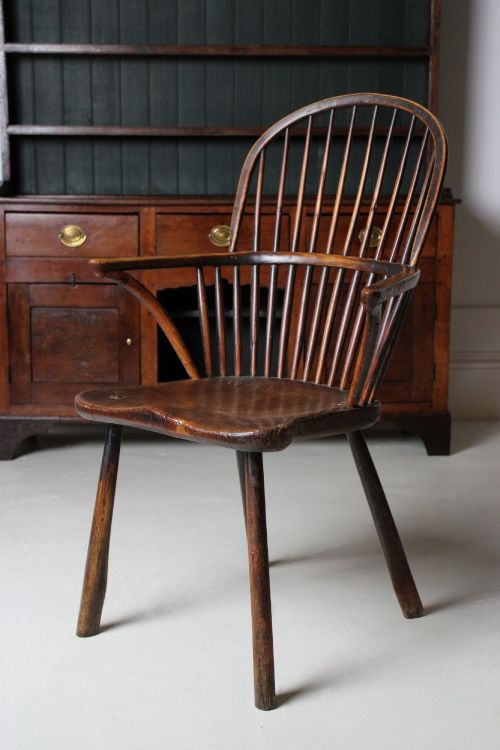
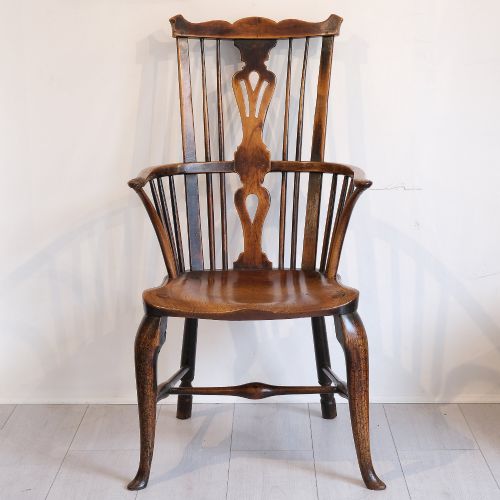
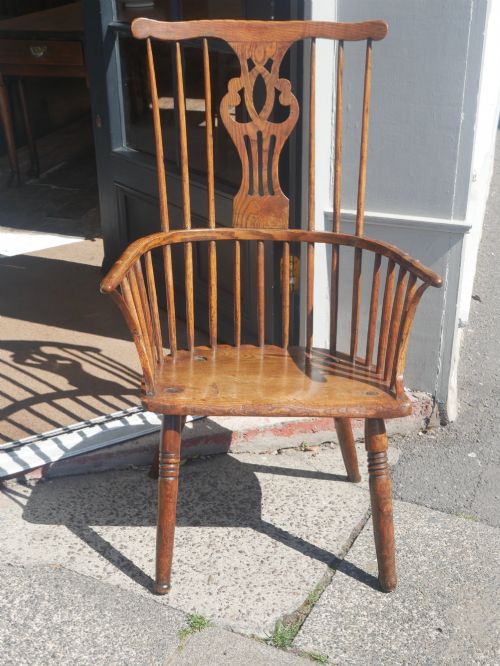
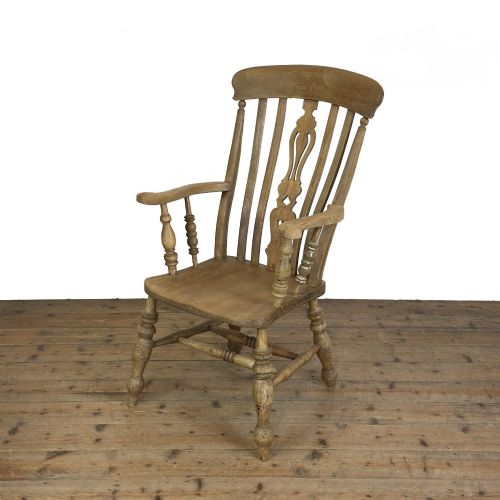
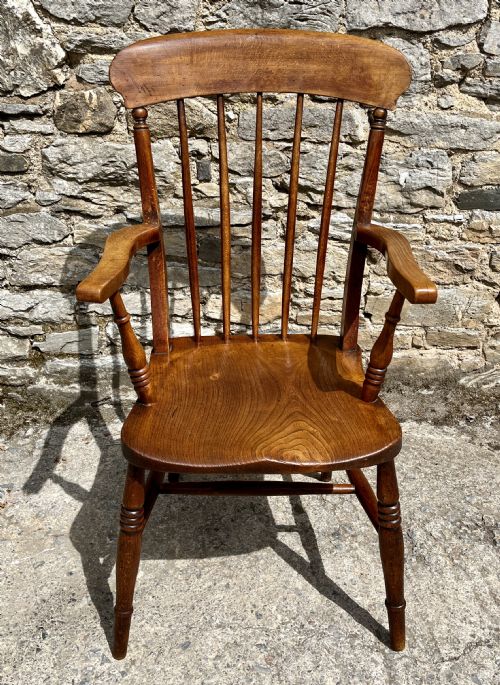


Comb Back Carver Chair
Comb back carver chair designs offer robust vernacular seating, built from native timbers to provide enduring comfort in rural homes.
Comb Back Carver Chair
A comb back carver chair represents a distinct evolution of the traditional Windsor form, featuring a high structural headpiece that resembles the teeth of a comb. These armchairs appear in periods ranging across the eighteenth and nineteenth centuries, spanning Georgian and Victorian eras.
The versions most commonly met on this page belong to English country traditions, displaying robust construction intended for domestic use. Makers built these dining chairs and armchairs with distinctive stick arms and supportive back structures.
Makers drew upon regional vernacular idioms, producing robust seating that served farmhouses and rural properties. These items survive today through sturdy construction in domestic hardwoods.
How they were made
Craftsmen built these chairs using native British timbers, most frequently combining ash for spindles and elm for solid carved seats. Additional structural members incorporate yew, oak, alder, and beech.
Woodturners shaped individual spindles and legs on a lathe before assembling the components into a rigid framework. This method utilised traditional green woodworking techniques to ensure lasting durability.
Listings span the eighteenth century, nineteenth century, and nineteen hundred, incorporating Georgian and Victorian periods.
What varies in quality
Quality rests upon the selection of timbers and the finesse of the turned spindles and arm supports. A well-proportioned Comb Back Carver Chair displays balanced proportions between the hoop, comb piece, and seat.
The comfort and structural integrity depend heavily on the thickness of the saddle seat and the tightness of the wedged joints. Wear patterns and patination on the native timbers reveal the extent of historical use.
The Comb Back Carver Chair Glossary
- Comb back
- A Windsor chair variation where the top of the bow passes through a horizontal crest rail resembling a comb. This feature provides extra head support.
- Carver
- A term for an armchair, traditionally placed at the head of a dining table. These chairs feature arms designed to accommodate heavier clothing.
- Vernacular
- Architecture and furniture made by local artisans using regional materials and traditional methods. These pieces prioritize function over high-style academic design.
- Saddle seat
- A wooden chair seat sculpted with hollows and rounded edges to resemble a riding saddle. This shaping improves seating comfort.
- Spindle
- A slender, turned wooden rod used vertically to form the backrest of a chair. Spindles distribute back pressure evenly across the frame.
Comb Back Carver Chair: Frequently Asked Questions
What is a comb back carver chair?
A comb back carver chair is a type of wooden armchair featuring a high backrest topped by a horizontal piece that looks like a comb. These pieces belong to the wider Windsor family of seating.
They were produced by regional makers across Britain during the eighteenth and nineteenth centuries using local hardwoods.
How were these chairs used historically?
These armchairs served as primary seating in farmhouses, cottages, and country homes. Their sturdy construction made them suitable for daily domestic tasks.
They often stood around dining tables or beside fireplaces where their high backs helped block draughts.
How do I identify an 18th century piece?
Eighteenth-century examples typically display deeper saddle seats, thicker ash undercarriages, and hand-turned spindles showing subtle irregularities. The patination on the exposed wood develops a deep lustre over generations of polishing.
Construction details like wedged leg tenons passing straight through the seat also point to earlier manufacturing traditions.
Which woods did makers use?
Makers relied on native British hardwoods selected for specific structural properties. Elm provided a tough, split-resistant material for carved seats.
Ash and beech supplied strong, flexible timber for turned legs, bows, and back spindles.
How should I care for timber chairs?
Keep wooden chairs away from direct heat sources and sudden humidity changes to prevent the timber from splitting. Regular applications of traditional beeswax help preserve the surface sheen.
Avoid chemical polishes that can degrade the historic finish and dry out the grain.