





Saddle Seat Dining Chairs
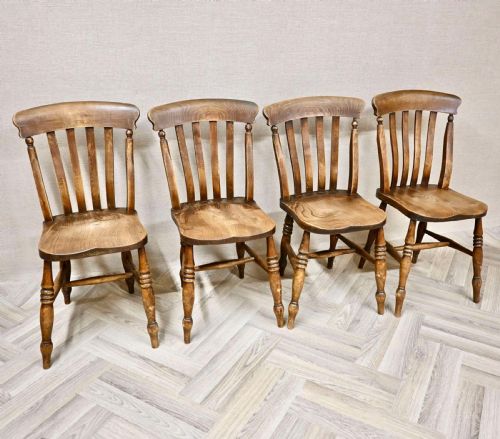
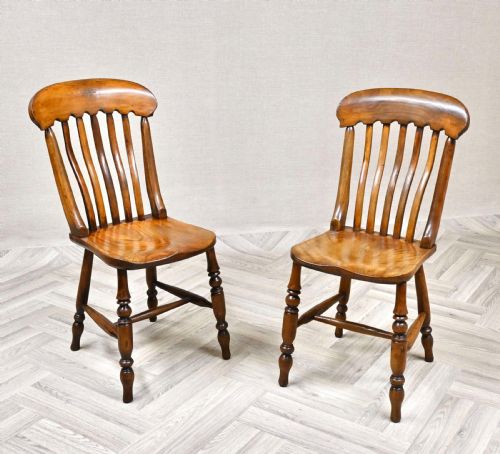
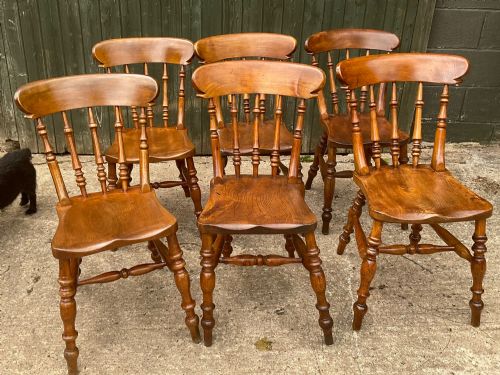
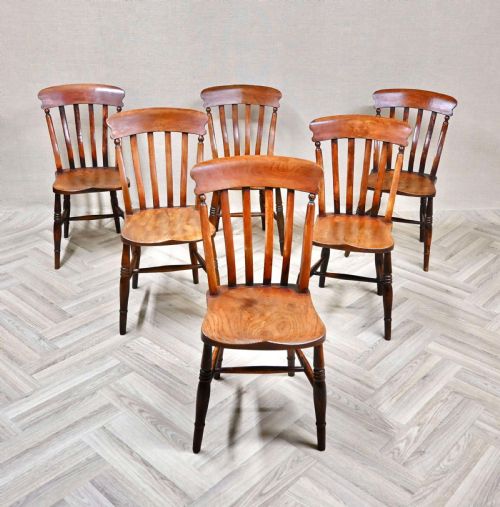
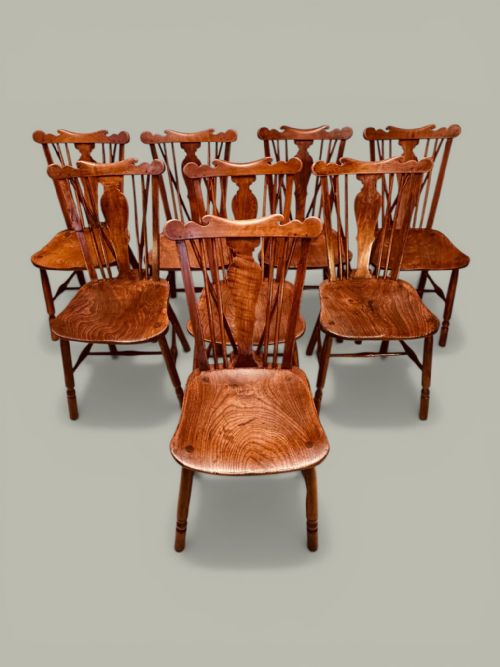
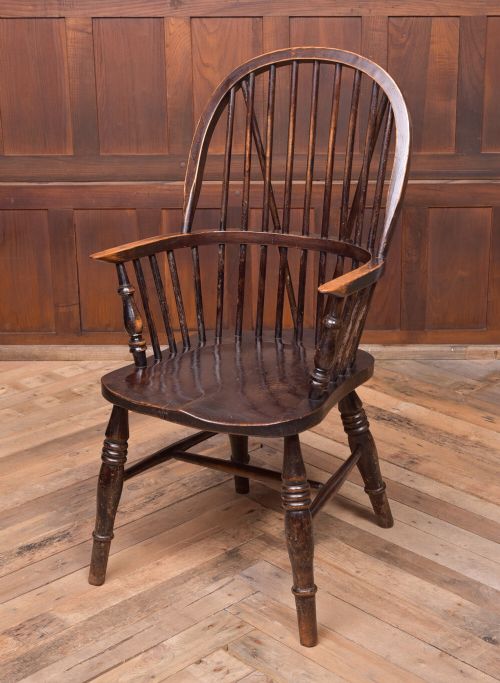
Saddle seat dining chairs are solid wood country seating built with sculpted seats for comfort, offering robust character for everyday dining.
Saddle Seat Dining Chairs
Saddle seat dining chairs encompass traditional Windsor forms rooted in English country vernacular, Victorian country, and Georgian country traditions. When searching this phrase, buyers encounter substantial dining chairs and armchairs shaped for daily domestic use.
The inventory on this page demonstrates forms including hoop back, lathback, comb back, layback, and wheel back designs. Sets range from pairs up to sets of eight, alongside single armchairs and kitchen chairs originating across the eighteenth, nineteenth, and early twentieth centuries.
How they were made
Maker construction relies heavily upon contrasting timbers, pairing elm seats with ash, beech, fruitwood, yew, or oak components. This combination utilises the strength of straight-grained woods for spindles and legs alongside the tough, splitting-resistant qualities of elm for the saddle seat itself.
Craftsmen shaped these solid wooden seats using adzes and scorps to create the characteristic sculpted depression that defines the type. Turned members and bentwood bows complete the traditional Windsor construction method seen across these pieces.
Many nineteenth-century kitchen chairs bear the honest dents and polished elbow marks of generations who sat down to supper without a care for posterity.
What varies in quality
Quality differences lie in the depth and comfort of the sculpted saddle seat, the crispness of the wood turnings, and the harmony of the timber grain. Finer examples display balanced proportions and thoughtful pairing of contrasting woods like ash and elm.
The integrity of the construction, from the tightness of the joints to the presence of original timber surfaces, separates standard utility seating from finer vernacular work. Larger sets of matched chairs also represent a higher tier of domestic provision.
Worksop
The Saddle Seat Dining Chairs Glossary
- Windsor chair
- A wooden chair built with a heavy solid timber seat into which all other components are directly fitted. The legs and back spindles are tenoned straight into the sculpted saddle seat.
- Hoop back
- A continuous bentwood bow forming the backrest and armrail of the chair in a single flowing curve. This design provides robust structural support and a clean silhouette.
- Comb back
- A chair back style featuring a low hoop topped by a high headpiece with upward-projecting spindles resembling the teeth of a comb. It offers an assertive profile typical of country vernacular seating.
- Lathback
- A backrest design incorporating flat wooden slats or laths secured vertically between the seat and the top rail. This provides solid lumbar support during dining.
- Wheel back
- A chair style featuring a pierced wooden splat carved in the shape of a spoked cartwheel. This decorative motif became popular during the Georgian and Victorian periods.
Saddle Seat Dining Chairs: Frequently Asked Questions
What defines a saddle seat dining chair?
Saddle seat dining chairs feature solid wooden seats hollowed out into a contour reminiscent of a horse saddle for comfort. They utilise traditional Windsor construction with turned legs and spindle backs.
These pieces draw on English country vernacular traditions, constructed from native timbers like elm, ash, and fruitwood to serve functional roles in kitchens and dining rooms.
How do I care for antique wooden chairs?
Maintain these chairs by keeping them away from direct heat sources and sudden humidity changes to prevent the timber from splitting. Regular dusting with a dry cloth preserves the aged finish.
Feed the dry wood periodically with traditional beeswax to nourish the surface without building up excessive layers that dull the grain.
Are these chairs suitable for daily use?
These chairs were originally built for heavy domestic service in kitchens and farmhouses, making them inherently robust. Their solid wood construction handles regular sitting well.
Check that the joints remain tight and the seat base is secure before putting vintage chairs into heavy rotation around a modern dining table.
How are different back styles distinguished?
Back styles vary according to the arrangement of the upper frame and vertical supports. Hoop backs use a continuous curved rail, while lathbacks incorporate flat wooden slats.
Other variations include wheel backs featuring a carved cartwheel splat and comb backs with upward-projecting headpieces, each reflecting regional preferences and period styles.