




Saddle Seat Armchair
Saddle seat armchairs are sturdy vernacular seating built for comfort, and you want one for the rich grain of the carved timber.
Saddle Seat Armchair
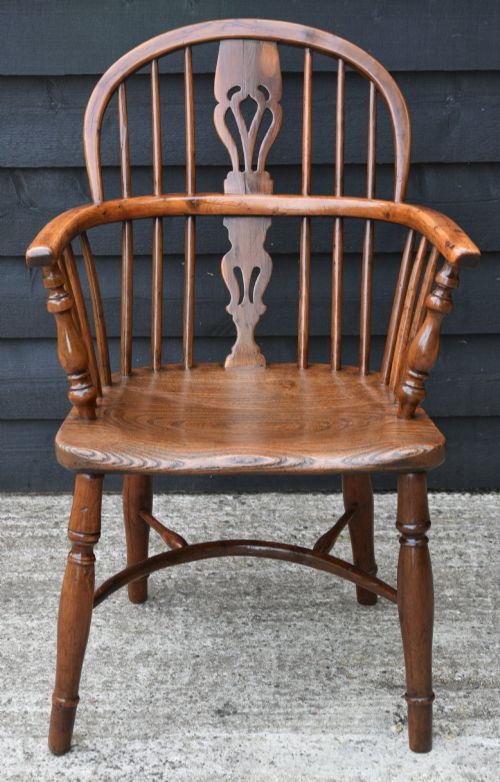
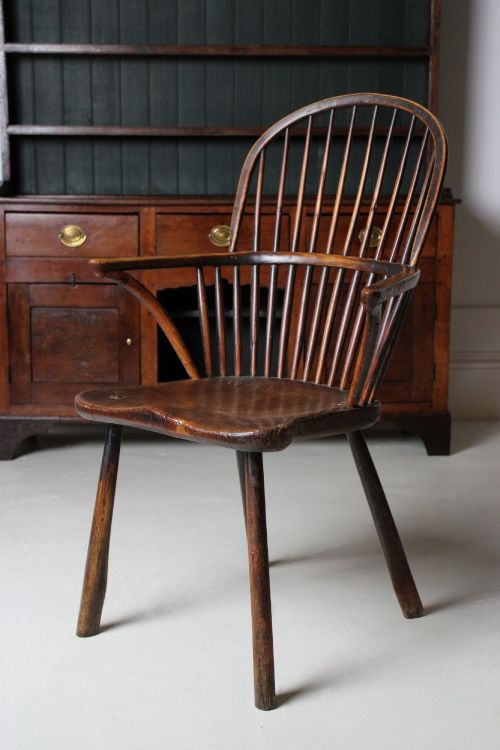
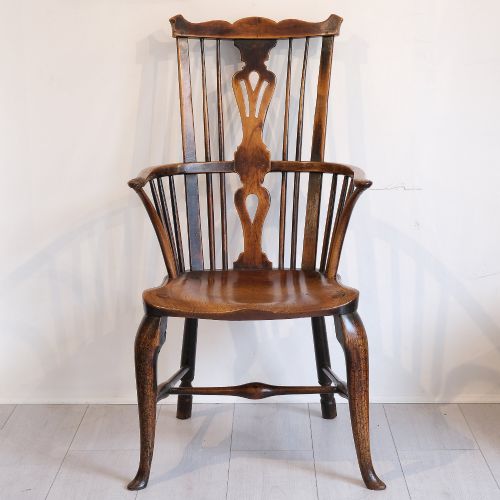
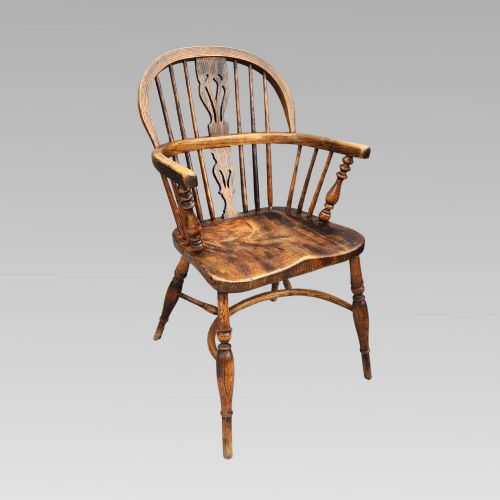
A saddle seat armchair is a substantial wooden seating form shaped for the body, frequently appearing on this page as an English country Windsor chair from the eighteenth and nineteenth centuries. These pieces span Georgian, Regency, and Victorian periods, taking forms such as high back, low back, stick back, comb back, and wheel back armchairs.
You will also encounter related regional iterations like the smokers bow, captain's chair, and desk chair variants. The primary framework relies on solid timber construction designed for everyday utility in farmhouses and domestic interiors.
Makers utilised local hardwoods to build these chairs, resulting in regional variations including Thames Valley and West Country origins. The defining characteristic across all examples remains the deeply saddled wooden seat base.
Materials and construction
Makers built saddle seat armchairs by combining multiple native timbers within a single frame, most commonly pairing elm seats with ash, beech, or fruitwood spindles and legs. Yew wood also appears frequently, prized for its distinctive grain pattern in high-status country chairs.
The defining saddle seat itself was laboriously scooped and hollowed from a solid block of elm to create a comfortable, contoured surface. Turned legs and spindles were then tenoned directly into the seat base, locked in place with wedges.
Saddle Seat Armchair Retail Price Guide 2026
Typical asking prices for saddle seat armchair among the pieces listed under this phrase on Sellingantiques today, from the lower quarter to the upper quarter. They describe what is for sale here now, not the wider market.
Elm was chosen for seats because its tangled grain made it practically impossible to split when hollowed into a saddle.
Distinctions in quality
Quality in a saddle seat armchair depends heavily on the choice and figuring of the timber, particularly the richness of the yew or the dramatic grain of the elm seat. Generous proportions, such as broad arms or extra-large frames, elevate certain examples above standard utilitarian seating.
The Saddle Seat Armchair Glossary
- Windsor chair
- A chair built with a solid wooden saddle seat into which the back and legs are dowelled directly. These pieces are strongly associated with English country vernacular traditions.
- Smokers bow
- A low-backed Windsor variant with a continuous curved arm rail, often utilised as a desk or captain's chair in Victorian interiors.
- Comb back
- A Windsor chair style featuring a high backrest topped by a horizontal crest rail that resembles a traditional hair comb. The vertical spindles rise straight through the seat.
- Stretcher
- The system of horizontal wooden rods connecting the legs of a chair to provide structural rigidity. In country chairs, these often form an H-shape or a bowed crinoline.
- Draught back
- A specialised Windsor back design featuring shaped wooden ears or wings intended to shield the sitter from cold air currents. This form appears in early nineteenth-century examples.
Saddle Seat Armchair: Frequently Asked Questions
What is a saddle seat armchair?
A saddle seat armchair is a traditional wooden seat featuring a deeply scooped, ergonomic seat base carved from solid timber. These chairs rely on vernacular construction methods where legs and back spindles are tenoned directly into the seat.
Most examples found here date from the eighteenth and nineteenth centuries, encompassing various regional English Windsor styles.
How do I identify a Windsor chair?
A Windsor chair is distinguished by its heavy solid wooden seat rather than a frame upholstered in fabric. The back and legs are separate turned or bentwood components fitted into bored holes in the seat.
Look for contrasting timbers, such as an elm seat paired with ash or yew spindles, which is a hallmark of traditional construction.
Where were these chairs used?
These armchairs served practical roles in farmhouses, country cottages, provincial offices, and domestic parlours throughout the Georgian and Victorian eras. Their robust build made them suitable for daily heavy use.
Variants like smokers bows and desk chairs were specifically adapted for reading, writing, or relaxing near a hearth.
How do I care for antique elm and yew?
Maintain antique timbers by keeping them away from direct heat sources and sudden humidity changes to prevent wood splitting. Regular dusting with a dry cloth and occasional application of appropriate wax will preserve the finish.
Avoid modern liquid polishes containing silicone, which can penetrate open grain and damage the historic patina.
How can I tell the age of an armchair?
Dating relies on stylistic clues like back design, turning profiles on the legs, and the species of wood utilised. Earlier eighteenth-century pieces often feature heavier proportions and Thames Valley characteristics, while Victorian examples show greater industrial standardisation.
Tool marks underneath the saddle seat also offer evidence of hand-carving methods used by vernacular makers.