


Sabre Leg Tea Table
A sabre leg tea table brings the crisp lines of the Regency period into a room with unmatched elegance.
Sabre Leg Tea Table
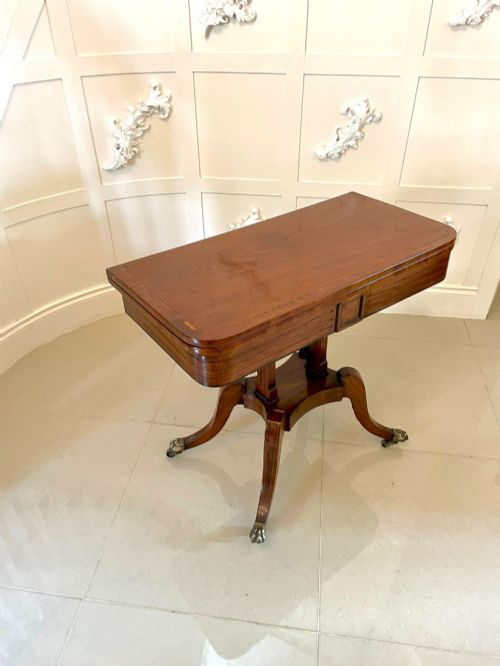
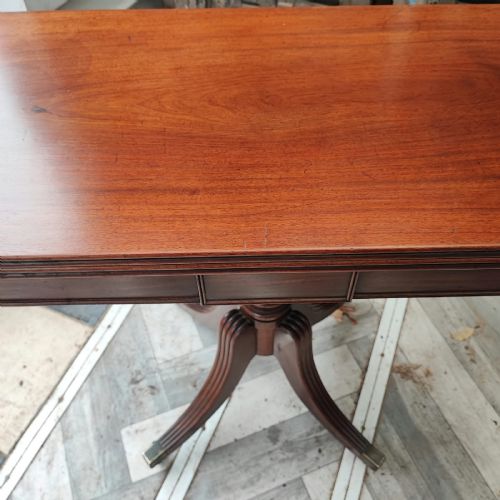
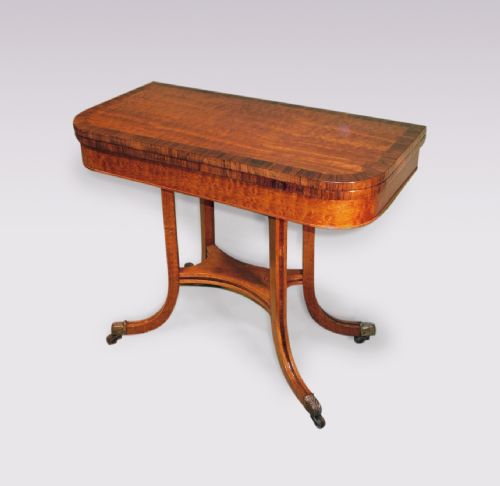
A sabre leg tea table is a flexible piece of furniture designed for entertaining, most frequently appearing in Regency mahogany and rosewood. These tables feature the distinctive outward-curving leg that defines the period style, often accompanied by fold-over tops used for tea or card games.
The evidence shows these tables emerging primarily from the Regency, Georgian, and nineteenth-century periods, with occasional later Sheraton Revival interpretations. Buyers will encounter various forms here, including dedicated tea tables, card tables, and occasional side tables sharing this characteristic leg architecture.
Makers and workshops of the era utilised rich timber grains, incorporating brass inlay and contrasting stringing to elevate the visual weight of the design. The form balances practical service with decorative refinement, suiting both period interiors and modern settings.
Materials and Construction
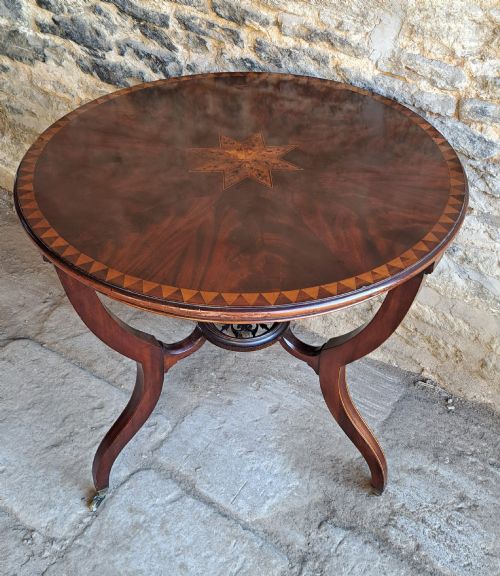
Cabinetmakers constructed these tables using solid mahogany and rosewood, frequently selecting figured veneers for the top surfaces to create striking grain patterns. Contrasting stringing in boxwood, ebony, and satinwood adds linear definition to the borders and apron.
Gilded brass mounts and intricate brass inlay appear across many examples, requiring precise hand-cutting into the dense hardwood base. The distinctive sabre legs curve outwards from the frame, demanding robust joinery to support the weight of the fold-over top.
Plum pudding mahogany offers a spotted grain so distinct it makes furniture enthusiasts peer closer at every tabletop they pass.
Assessing Quality and Craftsmanship
The choice of timber heavily influences the distinction between standard production and top-tier examples, particularly the selection of highly figured mahogany or richly grained rosewood veneers. Superior pieces display meticulous book-matching on the fold-over top, ensuring the grain mirrors symmetrically when opened.
The crispness of the brass inlay and the execution of the timber stringing demonstrate the maker's hand, where cleaner lines separate finer workshops from routine production. The graceful sweep of the sabre leg itself requires balanced proportions that anchor the table securely without appearing clumsy.
William Trotter·George Oakley
The Sabre Leg Tea Table Glossary
- Sabre leg
- A curving furniture leg that tapers towards the foot, resembling the blade of a cavalry sabre. This form became a defining characteristic of Regency and early nineteenth-century design.
- Fold-over top
- A hinged table surface that doubles in area when opened, commonly found on card and tea tables to conceal a baize-lined playing surface or provide extra space.
- Stringing
- A narrow strip of contrasting timber inlaid into the surface of a piece to create decorative borders and linear patterns. Cabinetmakers often used boxwood, ebony, or satinwood for this work.
- Plum pudding mahogany
- A desirable cut of mahogany exhibiting dense, circular grain patterns resembling the surface of a traditional Christmas pudding. It appears on higher-grade Georgian and Regency pieces.
- Brass inlay
- The technique of embedding thin strips or motifs of brass into the wood surface of furniture. It is characteristic of the Regency style seen across these listings.
Sabre Leg Tea Table: Frequently Asked Questions
What is a sabre leg tea table?
A sabre leg tea table is a nineteenth-century folding table supported by outward-curving legs that taper to the base. They were designed for domestic entertaining and tea drinking in formal rooms.
Most examples in the records date from the Regency and Georgian periods, constructed in mahogany or rosewood with decorative timber inlay.
How were these tables used?
These tables served primarily for serving tea or hosting card games, featuring a hinged top that folds flat when not in use. Placed against a wall as a console, they saved space until needed for guests.
The dual-purpose design made them central pieces in the reception rooms of nineteenth-century homes.
How do I identify a Regency table?
Regency tables are identified by their classical proportions, use of dark tropical hardwoods like rosewood and mahogany, and distinctive leg shapes. Brass inlay and stringing are also common decorative markers of the era.
They reflect the early nineteenth-century taste for Roman and Greek revival motifs translated into everyday furniture.
Are these tables sturdy enough for daily use?
These tables were built by skilled cabinetmakers using dense hardwoods designed to withstand active household use. The fold-over mechanisms and sabre leg structures provide stable support when properly maintained.
Placing them away from direct heat sources helps preserve the stability of the timber and the integrity of the original joints.