
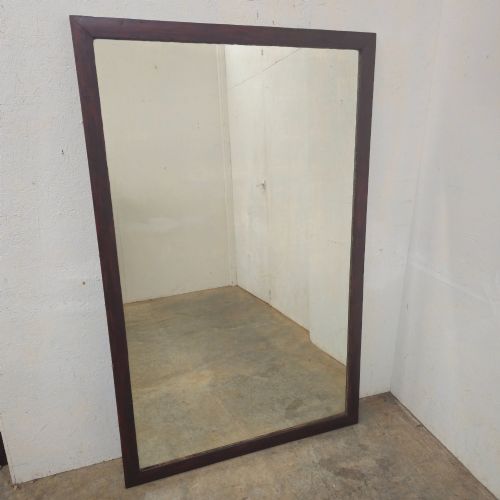
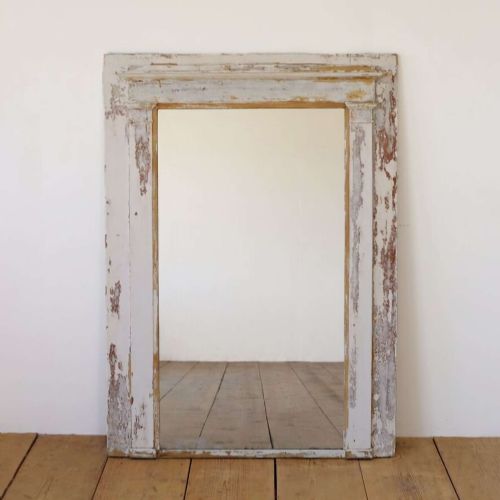

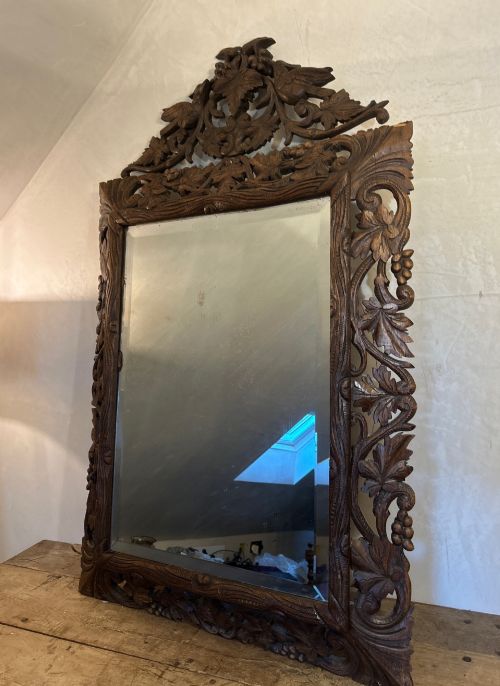
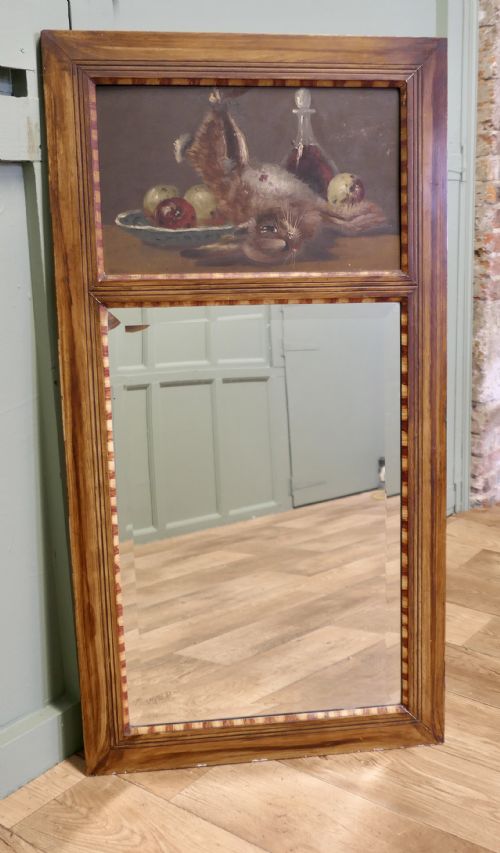




Rustic Wooden Mirror
A rustic wooden mirror brings natural grain and honest character into a room, grounding modern spaces with tactile warmth.
Rustic Wooden Mirror
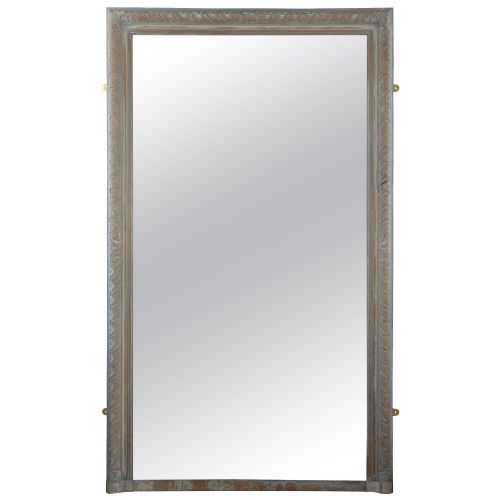
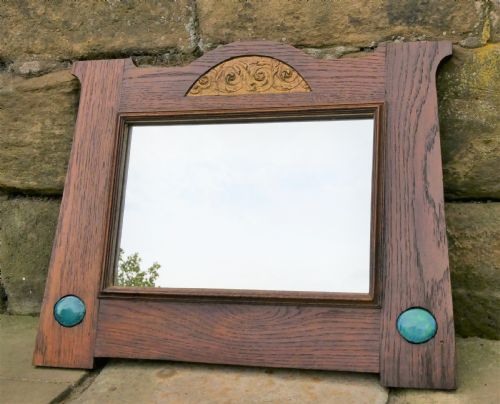
A rustic wooden mirror draws on regional traditions spanning the nineteenth and early twentieth centuries, including French Country, Edwardian, and Arts and Crafts examples. Buyers find styles ranging from simple pine and oak wall mirrors to deeply carved Black Forest and French Provincial overmantle pieces.
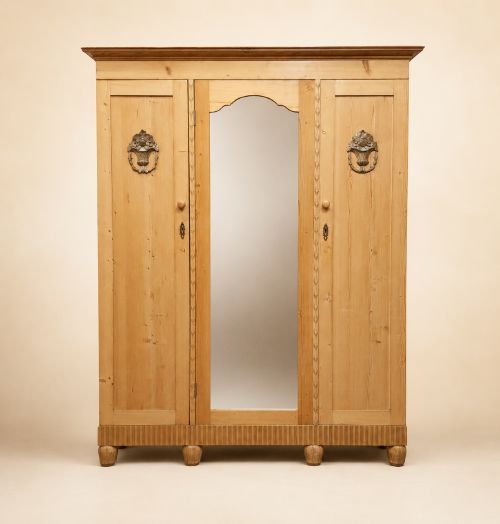
The selection on this page centres heavily on nineteenth-century pieces, supplemented by Edwardian designs and 1920s utility pieces. Wall mirrors dominate, alongside leaner mirrors and wardrobe frames, reflecting domestic needs from modest cloakrooms to grand hunting lodges.
Materials and construction methods
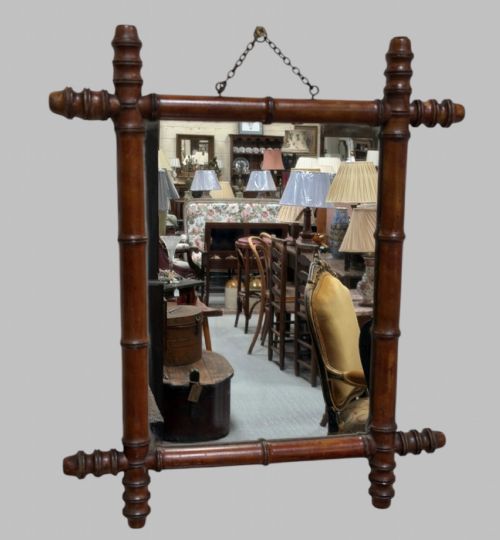
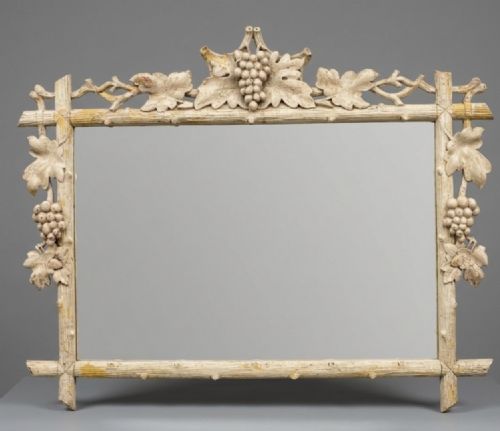
Frames rely on solid timbers such as oak, pine, and maple, shaped by hand using traditional joinery and deep carving. Many pieces integrate surface treatments like paint, gesso, or faux bamboo and faux bois effects to mimic organic forms.
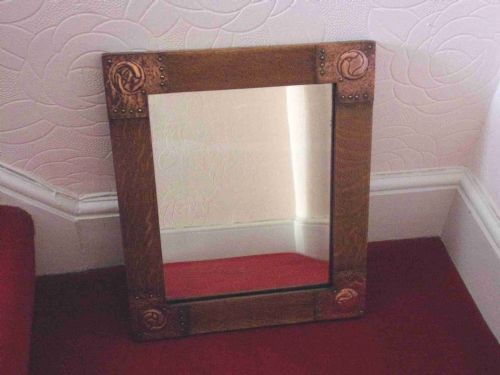
Metal elements appear on specific regional items, notably copper decorations utilised in Arts and Crafts designs. Glass plates are fitted directly into rebated timber frames, occasionally accompanied by subsidiary shelves or coat hooks.
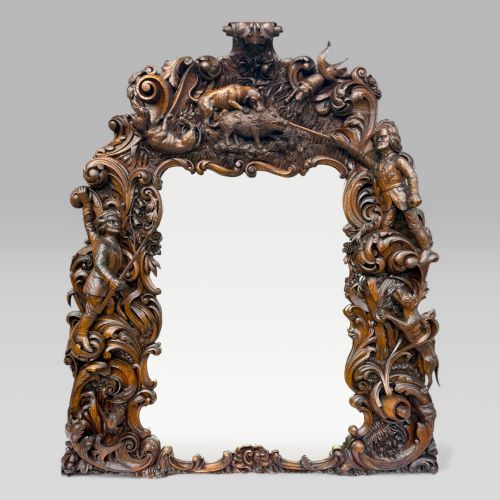
One Bavarian hunting lodge mirror carries the silent authority of royalty, having once belonged to the King of Bavaria.
Judging the quality of a rustic wooden mirror
Depth and crispness of hand-carving distinguish standard joinery from exceptional regional work, particularly in Black Forest and French Renaissance Revival examples. The integration of decorative motifs, such as Celtic knotwork or sculptural foliage, demonstrates the maker's skill.
Proportion and timber selection dictate overall presence, where dense grain patterns and well-balanced proportions elevate a domestic mirror to an architectural statement. The harmonious relationship between the timber frame and the original glass plate anchors the piece's integrity.
The Rustic Wooden Mirror Glossary
- Trumeau mirror
- A tall wall mirror incorporating a decorative panel above or below the glass plate. These French pieces often integrate painted or carved pastoral scenes.
- Overmantle mirror
- A wide mirror designed specifically to hang above a fireplace mantelpiece. They frequently feature grand proportions to reflect light across a principal room.
- Faux bamboo
- A decorative technique where solid wood is carved or turned to resemble natural bamboo stalks. This style gained popularity during the late nineteenth century.
- Gesso
- A plaster-based material applied to wooden frames as a smooth base for paint or gilding. It allows for intricate moulded details before finishing.
- Black Forest
- A style of deeply carved wooden furniture and decorative items originating from Switzerland and Germany. It is characterised by naturalistic motifs of animals and foliage.
Rustic Wooden Mirror: Frequently Asked Questions
How do I hang a heavy rustic wooden mirror?
Heavy mirrors require secure fixing directly into wall studs or solid masonry using rated brackets. Professional picture hangers provide the necessary load capacity for substantial oak frames.
Position the mirror at a height that balances the surrounding furniture while securely distributing the weight across multiple points.
Can these mirrors go in a bathroom?
Bathroom placement is possible if the room ventilation prevents sustained moisture accumulation against the wooden frame and silvered glass. Natural timbers respond to humidity changes, so stable environments preserve the finish.
Ensure painted or polished surfaces are maintained with appropriate waxes to create a barrier against occasional steam.
How do I clean an antique mirror plate?
Use a soft microfiber cloth and a mild, ammonia-free glass cleaner applied to the cloth rather than directly onto the glass. This prevents moisture seeping behind the plate and damaging the silver backing.
Avoid abrasive materials that might scratch aged glass or dislodge fragile paint and gesso on the frame.
What defines the Arts and Crafts style?
Arts and Crafts pieces emphasise honest construction, visible grain, and handcrafted details over mass-produced ornamentation. They often feature exposed joinery and hand-worked metal accents like copper.
This movement valued utility combined with simple, robust forms suited to everyday domestic life.