
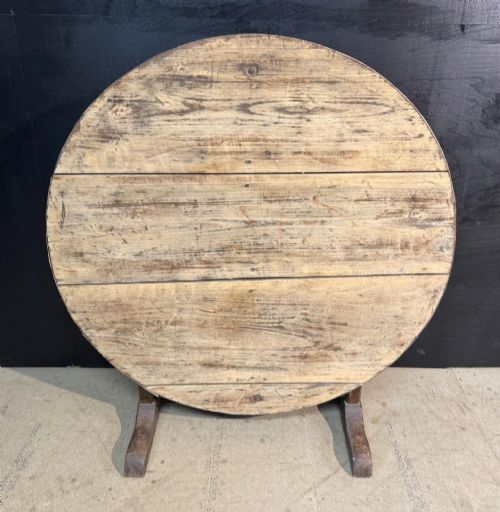
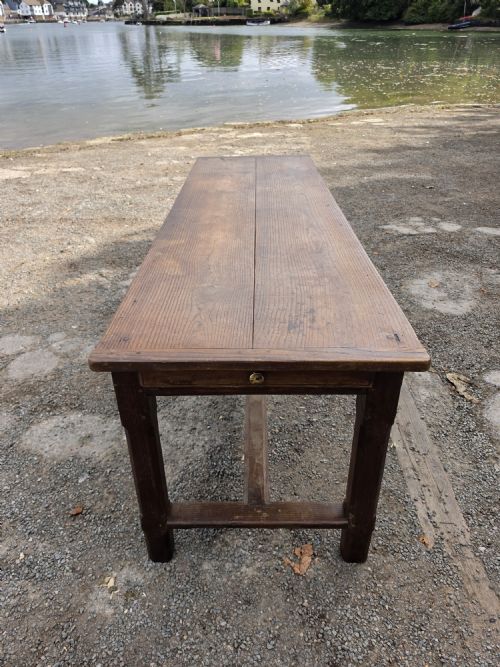
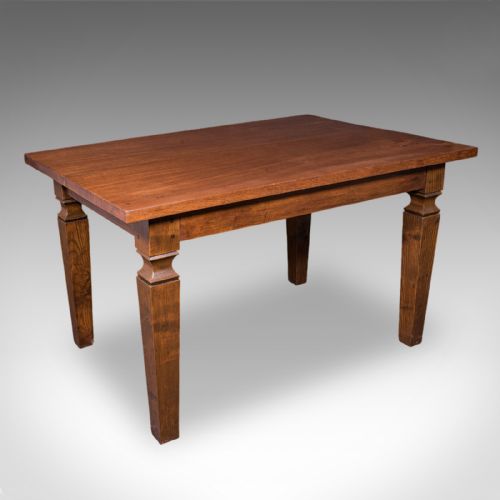
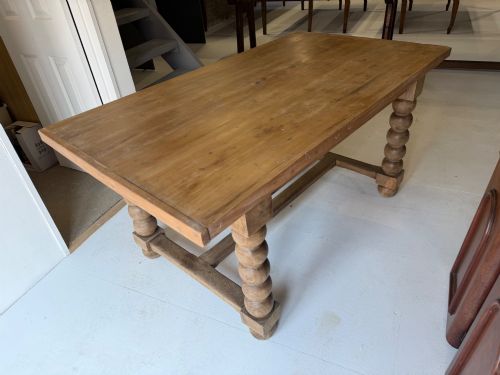
Rustic Wood Dining Table
A rustic wood dining table brings honest materiality and deep-grained character straight into the heart of the home.
Rustic Wood Dining Table
When you search for a rustic wood dining table, you find pieces built for everyday gathering rather than formal display. These tables span several centuries, with examples originating from French provincial workshops, English country houses, and Scandinavian farmsteads.
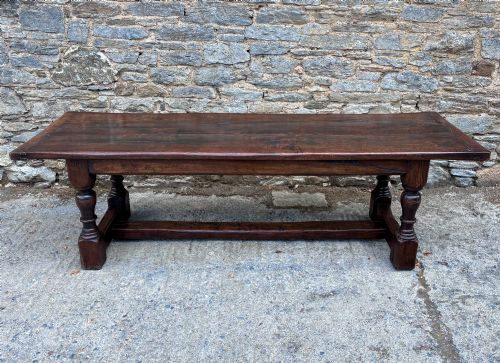
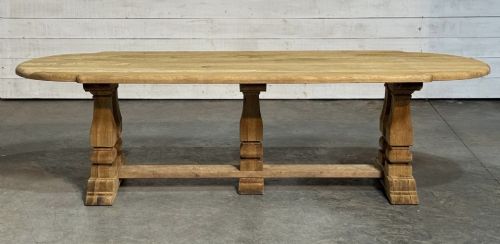
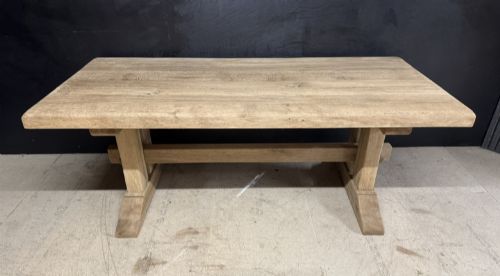
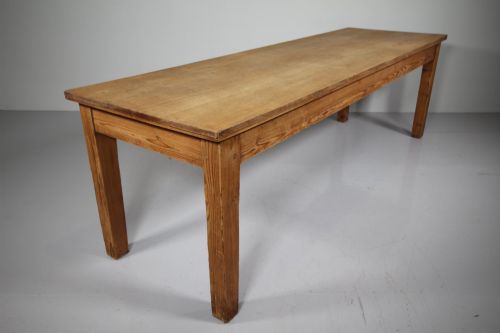
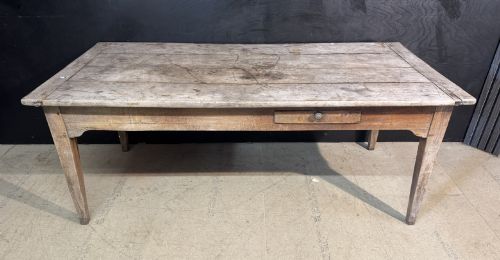
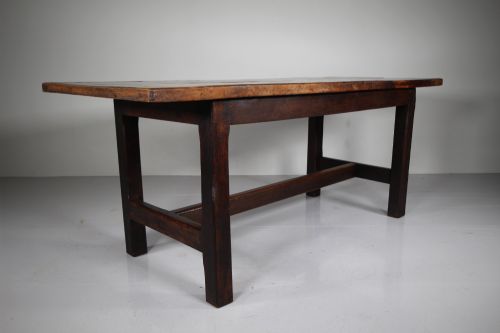
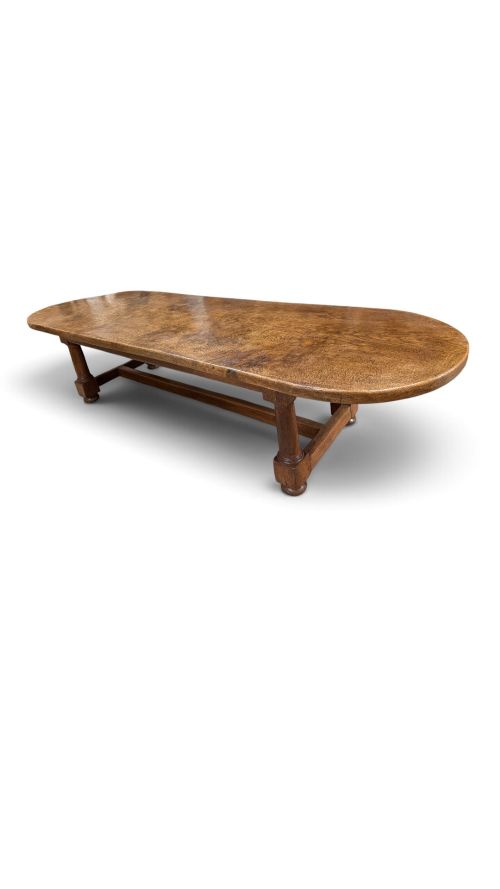
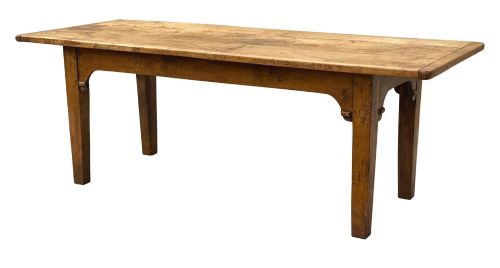
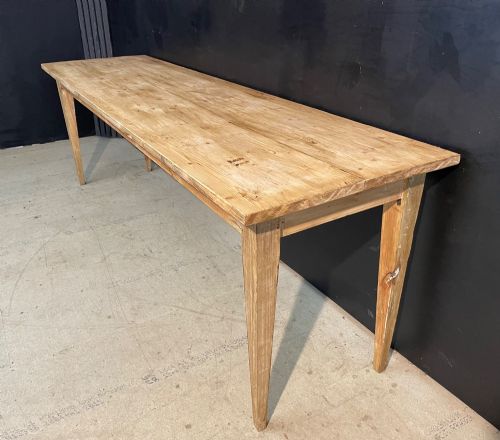
The versions you meet most frequently on this page are generous farmhouse and refectory forms designed to seat families and guests comfortably. They take their visual weight from thick timber tops and sturdy legs shaped by generations of practical use.
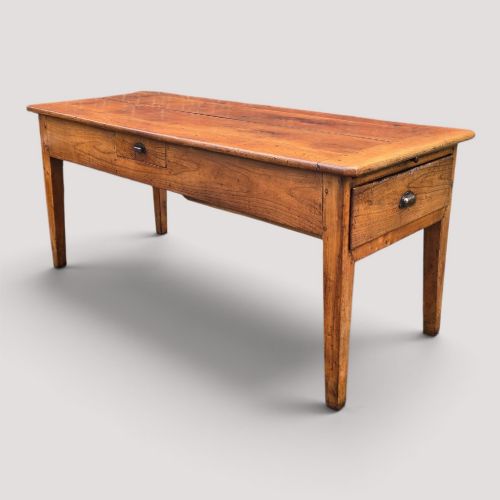
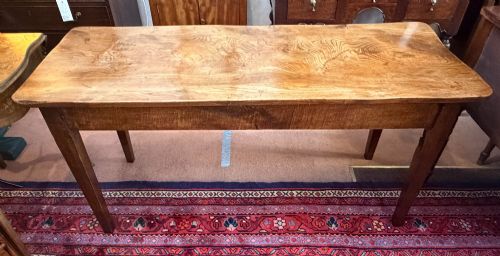
Makers constructed these boards to endure daily kitchen tasks, resulting in surfaces marked by patination and the honest wear of decades. Whether shaped from oak, pine, elm, or cherrywood, each table carries the distinct regional traditions of its carpenter.
How they were made
Carpenters built these tables using solid native hardwoods and softwoods like oak, pine, elm, cherrywood, and fruitwood. They selected timber for density and strength, often employing single plank or two-board construction for the table tops.
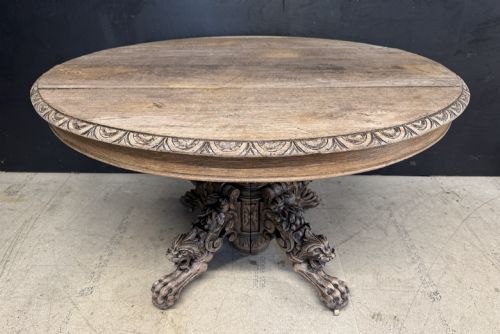
Joinery relied on traditional pegged mortise and tenon joints to secure the legs to the heavy underframes and stretchers. Turners shaped supports on lathes into bobbin, baluster, or barrel forms, while iron braces occasionally reinforced the structure.
Regional styles represented include French provincial, Swedish country, and traditional English farmhouse designs.
What varies in quality
Quality rests in the integrity of the timber selection and the restraint shown in the carpentry. Superior tables display balanced proportions where thick top planks match the robust stability of the stretcher base beneath.
The character of the surface patination separates exceptional examples from ordinary ones. Gradual wear through centuries of use creates a warm, tactile skin on the wood that mechanical finishing cannot replicate.
The Rustic Wood Dining Table Glossary
- Refectory table
- A long, narrow dining table originally used in monastic dining halls. These forms typically include sturdy end stretchers to support heavy timber tops.
- Gateleg table
- A table with hinged leaves supported by legs that swing outward like a gate. This construction allows the surface area to expand or fold down when space is limited.
- Plank top
- A table surface constructed from wide boards joined side by side. Early versions often utilised single boards split from large trunks.
- Stretcher
- A horizontal wooden bar connecting the legs of a table to provide structural rigidity. These elements run near the floor and frequently show wear from resting feet.
- Patina
- The surface sheen and colour developed by wood through age, light exposure, and regular polishing. It serves as a visual indicator of a piece's history.
- Turned legs
- Wooden supports shaped on a lathe into decorative profiles such as balusters or bobbins. Carpenters used these details to ornament plain framework.
Rustic Wood Dining Table: Frequently Asked Questions
How do I clean a rustic wood table?
Wipe the surface regularly using a slightly damp cloth to remove everyday dust and debris. Avoid harsh chemical sprays that strip the natural oils from the historic grain.
Apply a gentle beeswax periodically to nourish the timber and maintain the soft sheen developed over decades. Buff the wax thoroughly with a soft cloth to protect the wood against moisture marks.
Can I use an antique table daily?
These tables were originally engineered for heavy domestic work, making them well-suited for everyday family life. The dense hardwoods and solid joinery withstand regular dining and kitchen preparation without issue.
Use coasters and placemats to guard against excessive heat and moisture from serving dishes. Accepting minor new scuffs simply adds to the ongoing narrative of the timber.
What is a refectory table?
A refectory table is a long, rectangular dining form traditionally designed for communal dining in large halls. Their elongated proportions accommodate multiple seating positions along each side.
They are distinguished by substantial underframes featuring strong stretcher rails running close to the floor. These rails stabilize the heavy top boards against lateral movement.