
Rustic Timber Seating
These rustic timber seating pieces bring honest vernacular craft and enduring utility straight into your home.
Rustic Timber Seating
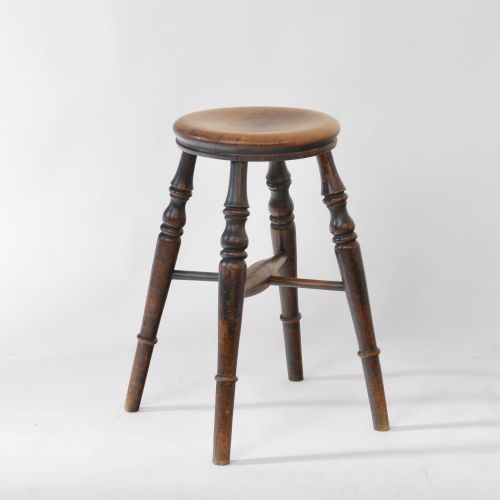
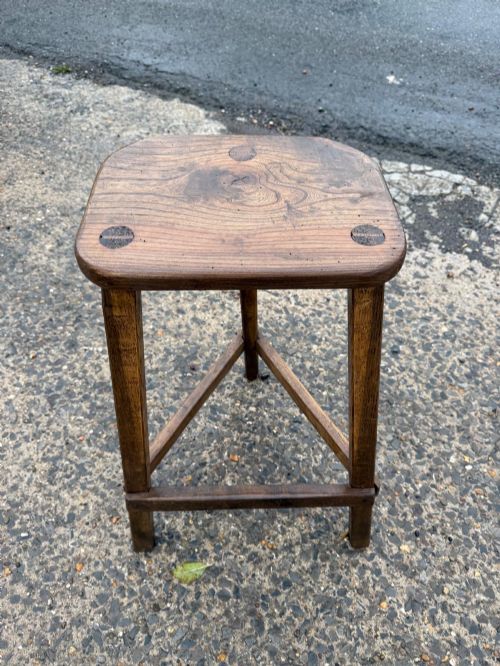
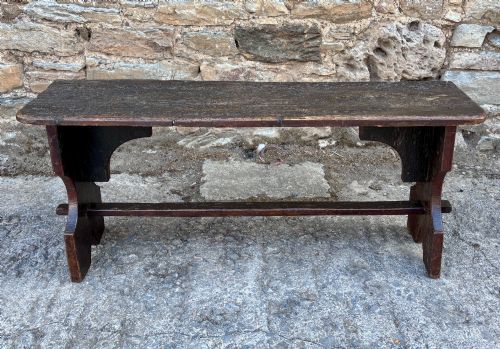
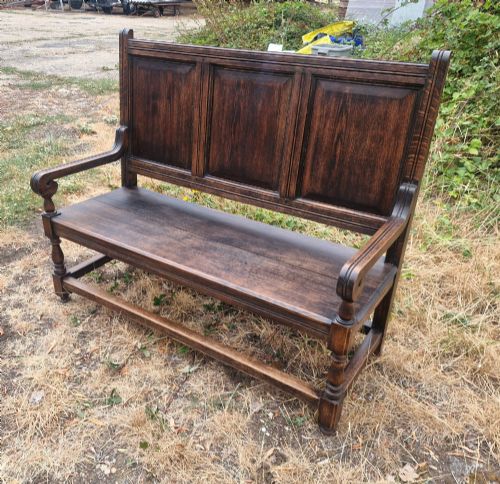
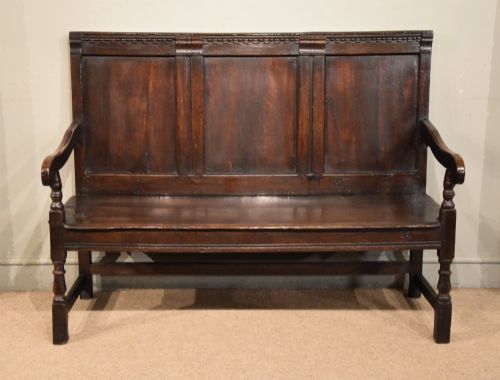
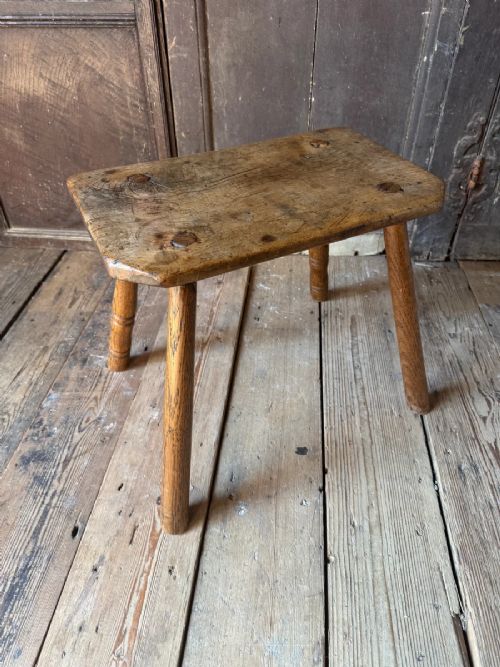
When buyers search for rustic timber seating, they look for honest, utilitarian forms shaped by local makers for everyday use. These pieces range from simple three-legged milking stools to high-backed settles and long hallway benches designed to withstand generations of domestic or agricultural life.
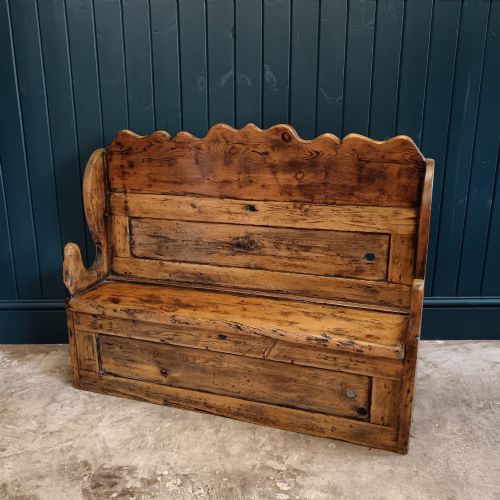
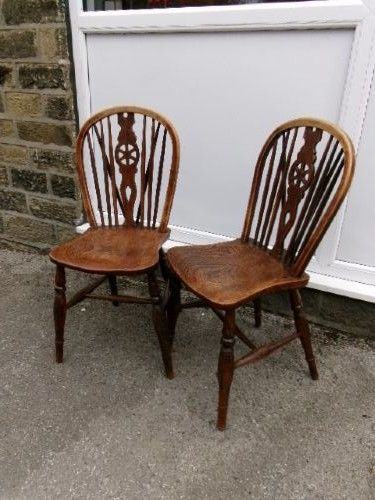
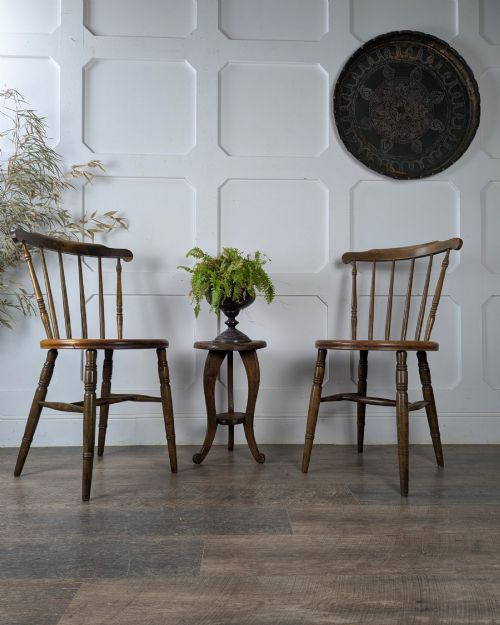
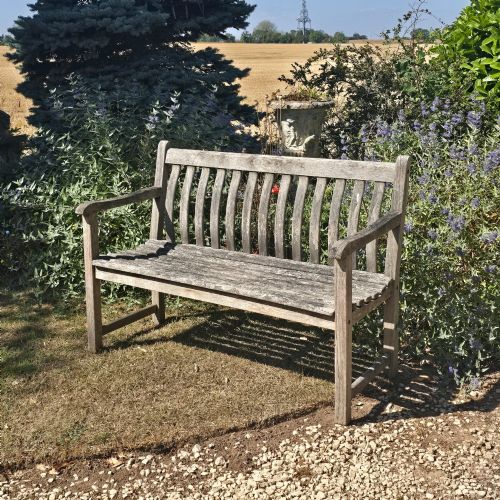
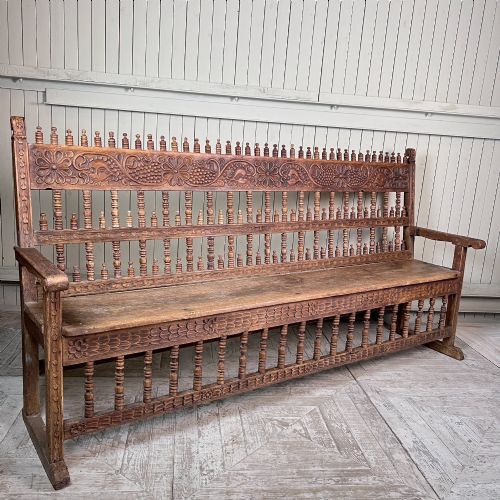
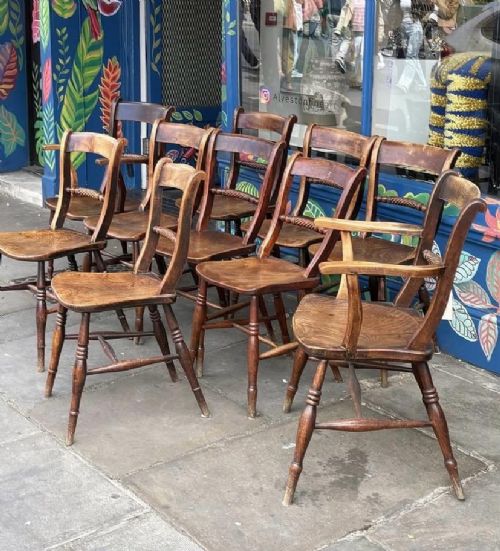
On this page, the most common pieces you will meet date from the nineteenth century, reflecting vernacular traditions across English, French, and Eastern European workshops. Forms include Windsor chairs, settles with integrated storage, tavern stools, and garden benches built from native woods.
The aesthetic prioritises function over embellishment, showing the direct influence of regional toolkits and available timber. Whether an elm kitchen chair or a pine settle, each item carries the clear marks of its practical origin.
Materials and construction methods
Makers relied on native hardwoods such as oak, elm, ash, beech, and pine, selecting each timber for its specific structural properties. Elm provided tough, splitting-resistant seats for stools and Windsor chairs, while straight-grained ash and beech formed resilient spindle backs and legs.
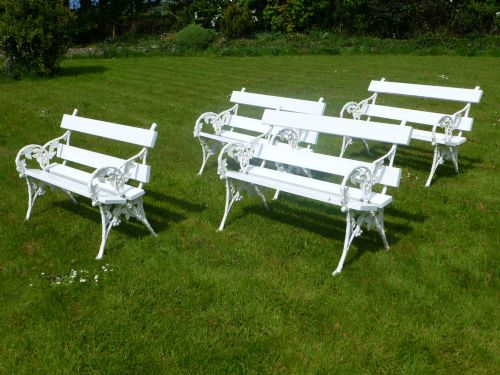
Construction techniques combined traditional joinery with practical local resourcefulness, utilising pegged mortise and tenon joints, dovetailed storage boxes, and bodged pole-lathe turned components. Iron fixings and cast iron frames appeared where extra strength or decorative casting was required, particularly in garden benches and industrial artisan seating.
Listings feature pieces spanning the eighteenth, nineteenth, and early twentieth centuries, utilising oak, elm, pine, ash, and cast iron.
Evaluating the standard of pieces
Quality in these pieces rests upon the integrity of the original construction and the survival of an honest surface patina. Master makers selected timber with consideration for grain movement, ensuring joints remained tight and proportions stayed balanced despite decades of heavy use.
The best examples retain their original paint, wax, or honey brown finishes without aggressive over-restoration or replaced structural timbers. Wear patterns that tell the history of use elevate a piece, whereas inappropriate modern interventions diminish its historical character.
Falkirk foundry
The Rustic Timber Seating Glossary
- Settle
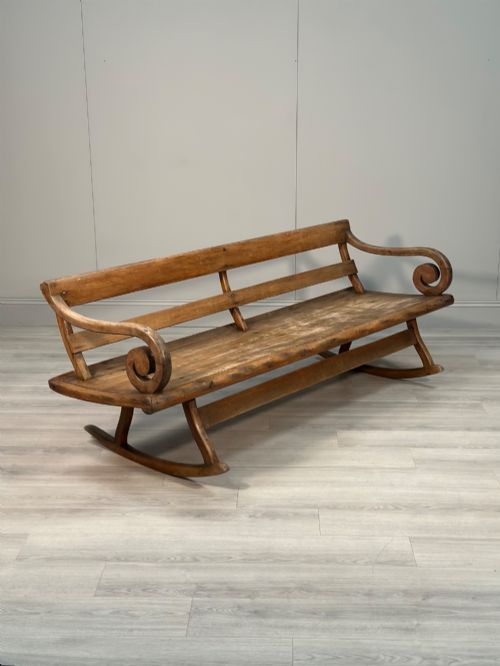
- A wooden bench with a high back, solid arms, and frequently a box seat for storage. These were traditionally placed near hearths to block drafts in older homes.
- Windsor
- A chair construction method where legs and back spindles are wedged directly into a solid carved wooden seat rather than a frame. This style evolved through various regional patterns including wheelbacks.
- Patina
- The surface sheen and colour developed over decades or centuries through handling, waxing, and exposure to light. It serves as a visual indicator of age and authenticity.
- Vernacular
- Everyday objects designed by local craftsmen using traditional methods and local materials rather than following high-style academic architectural patterns.
- Milking stool
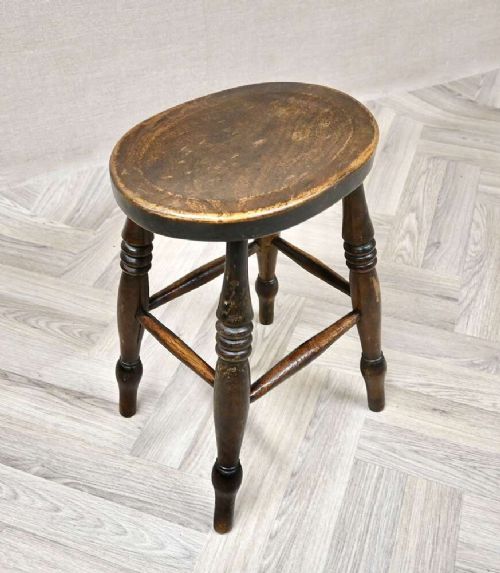
- A small, portable, typically three-legged seat designed for agricultural workers. The single or triple leg arrangement kept the stool stable on uneven earthen floors.
Rustic Timber Seating: Frequently Asked Questions
What is a settle bench?
A settle bench is a high-backed wooden seat designed to keep out drafts in older, unheated rooms. They often feature solid panelled construction and enclosed storage beneath the seat.
Historically positioned near the hearth, they served as both seating and a room divider in vernacular interiors.
How do I care for antique timber?
Keep wooden seats away from direct heat sources and sudden temperature shifts to prevent the timber from splitting or warping. Feed the surface periodically with traditional beeswax to maintain the patina.
Avoid modern liquid polishes that build up silicones and dull the historic finish over time.
What woods were used?
Makers utilised whatever native hardwoods grew locally, most commonly elm, oak, ash, beech, pine, and sycamore. Elm was favoured for solid carved seats because its interlocking grain resisted splitting.
Ash and beech provided strong, flexible spindles for stick-back chairs and stools.
How to date rustic furniture?
Dating relies on examining tool marks, construction methods, timber shrinkage, and wear patterns. Hand-sawn boards, pegged joints, and original surface finishes like early ochre or green paint offer key chronological clues.
Comparing the form to documented regional vernacular styles helps narrow down the period.