
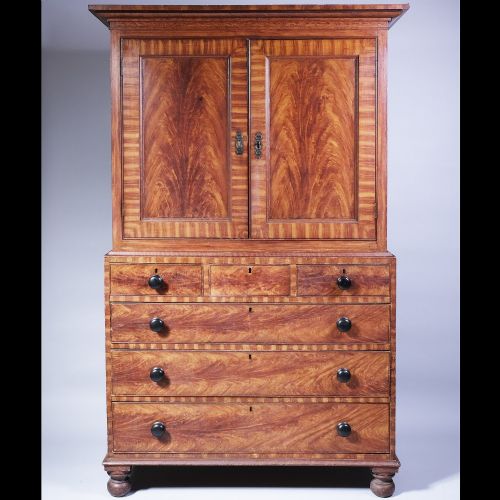
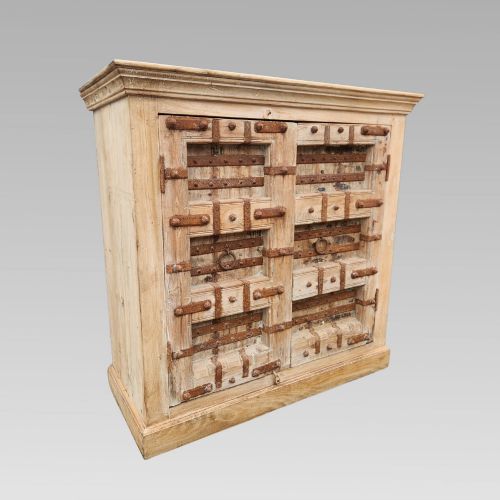
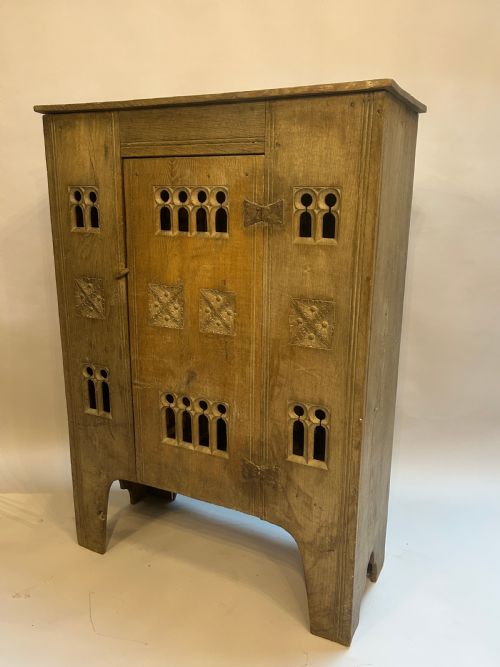
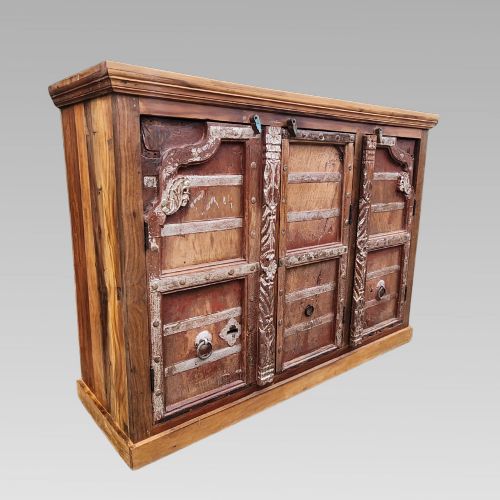
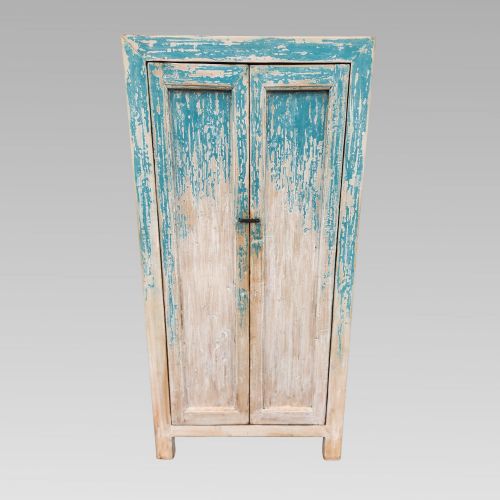
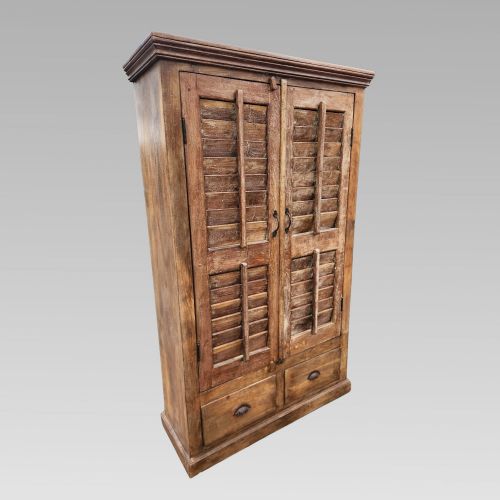
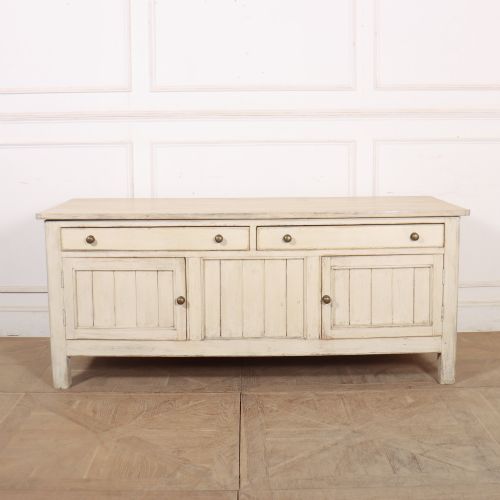


Rustic Timber Cabinet
A rustic timber cabinet brings heavy grain and painted surfaces into a room, offering practical storage with vernacular charm.
Rustic Timber Cabinet
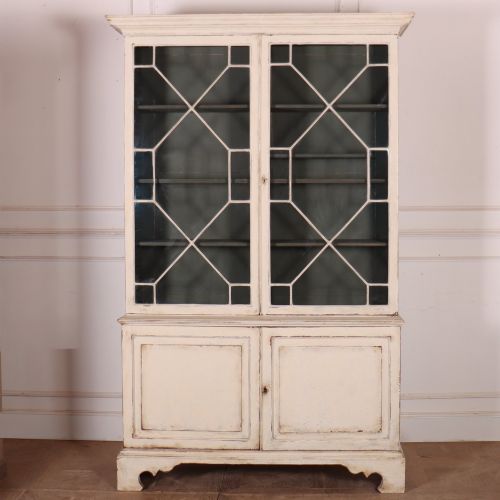
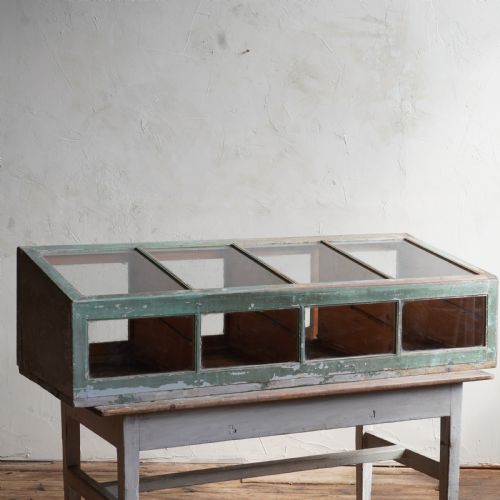
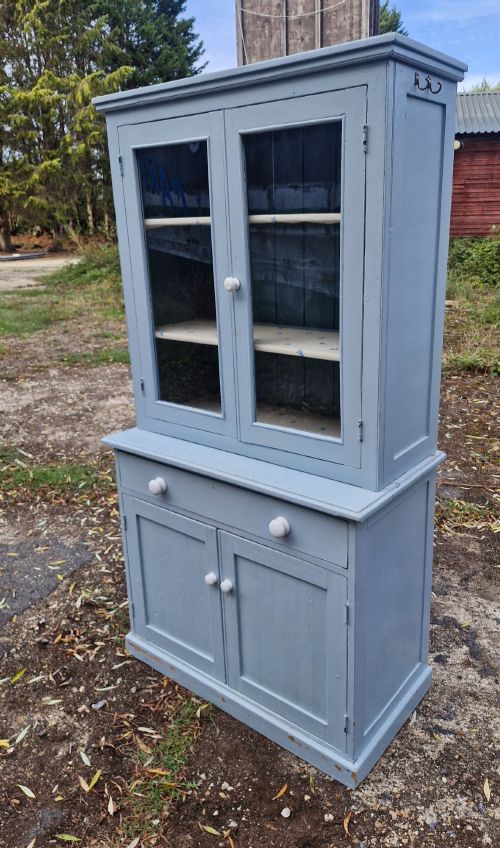
A rustic timber cabinet encompasses storage furniture built from solid woods such as pine, oak, chestnut, and teak, spanning the eighteenth and nineteenth centuries. When searching for a rustic timber cabinet, buyers encounter vernacular forms ranging from French armoires and Swedish kitchen cupboards to English housekeeper cupboards and Indian storage units.
The selection leans heavily toward utilitarian pieces meant for rural kitchens, farmhouses, and workshops rather than formal city parlours. Surviving examples often display traces of original paint, scumble finishes, or bleached patinas acquired over centuries of domestic use.
How they were made
Local joiners and provincial cabinetmakers constructed these pieces using solid boards of regional timber joined with pegged mortise and tenon joints. Carved panels, louvre doors, and exposed dovetails on drawers reflect traditional hand woodworking methods.
Surfaces were frequently finished with layers of lead paint, milk paint, or clear wax that settled into the grain over decades. Iron and brass hinges, latches, and pulls completed the construction, fastened directly to the heavy timber frames.
Bread safes retain tiny turned spindles designed specifically to let country loaves breathe while keeping the mice entirely on the outside.
What varies in quality
The degree of original surface treatment largely dictates the character of the piece, with untouched historic paintwork commanding greater interest than stripped or later painted timber. Intact period hardware and original backboards also elevate the integrity of the construction.
Proportion and scale distinguish standard utility pieces from more ambitious regional formats like two-part dressers or architectural armoires. The density and figure of the underlying timber - whether burr walnut, elm, or quarter-sawn oak - further separate simpler workshop items from finer provincial examples.
The Rustic Timber Cabinet Glossary
- Armoire
- A large upright cupboard or wardrobe with doors enclosing shelving or hanging space. Originating in France, these pieces often feature deep cornices and panelled doors.
- Housekeeper cupboard
- A large storage cabinet traditionally used in country houses for linens, dried goods, or china. They frequently appear as tall two-part units with panelled lower doors.
- Scumble paint
- A decorative painting technique where a translucent top glaze is manipulated with combs or rags over a lighter base colour to imitate grain. This finish appears commonly on nineteenth-century vernacular furniture.
- Panetiere
- A small ventilated bread safe of French origin featuring spindle turned galleries. Bakers used these wall-mounted or freestanding cabinets to keep loaves away from rodents.
- Corner cupboard
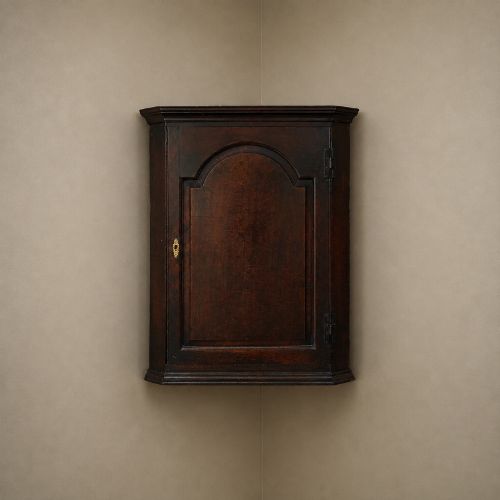
- A specialised cabinet designed to fit neatly into ninety-degree room angles. They are built as either hanging wall units or tall floor-standing corner pieces.
Rustic Timber Cabinet: Frequently Asked Questions
What is a rustic timber cabinet used for?
These cabinets serve as practical storage furniture for dinnerware, linens, books, and dry goods within domestic spaces.
Their deep shelves and enclosed compartments accommodate bulky household items while adding distinct historic character to modern interiors.
How do I date a rustic timber cabinet?
Dating relies on examining construction marks, timber species, hardware types, and overall form. Hand-cut dovetails, forged iron hinges, and pegged joints usually point to eighteenth or nineteenth-century origins.
Regional styles and painted finishes also offer strong clues to the decade and country of manufacture.
Are these cabinets made from solid wood?
Provincial furniture makers built these pieces using solid regional timber such as pine, oak, chestnut, fruitwood, and teak rather than veneered manufactured boards.
Solid construction accounts for the heavy weight and durability found across these historical storage forms.
How do I care for painted wooden furniture?
Preserving historic paint finishes requires maintaining stable room humidity and avoiding direct sunlight that can fade or crack aged pigments.
Dusting with a dry microfibre cloth and occasionally applying a light, natural wax helps protect exposed timber surfaces without harming the original patina.