
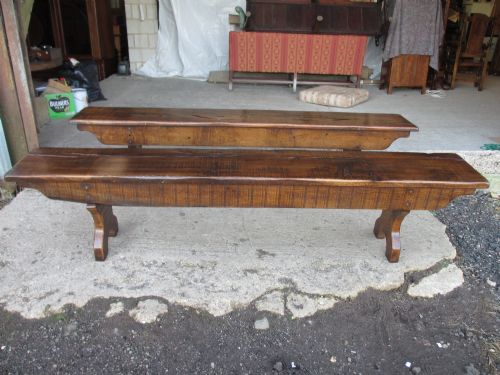
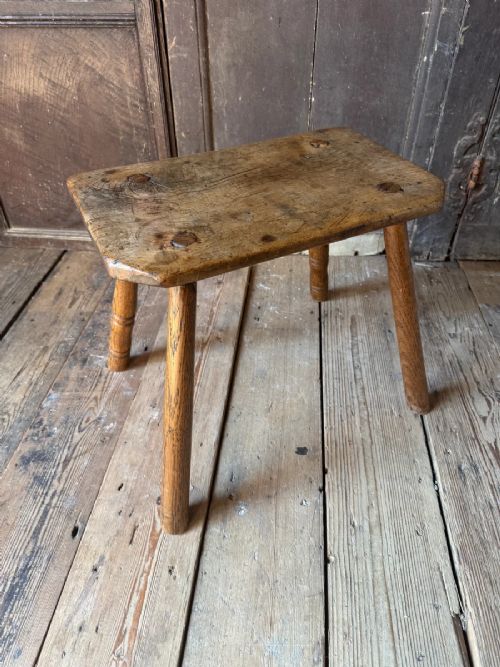
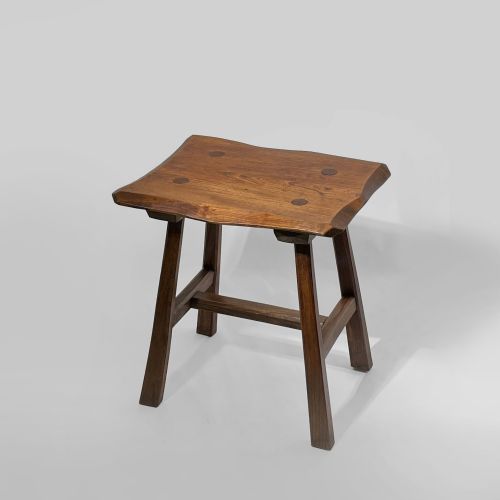
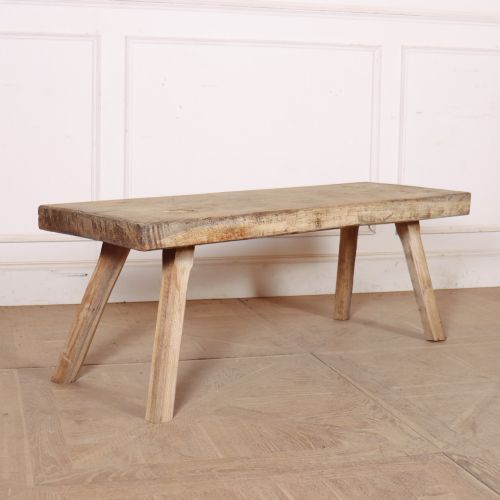


Rustic Timber Bench Table
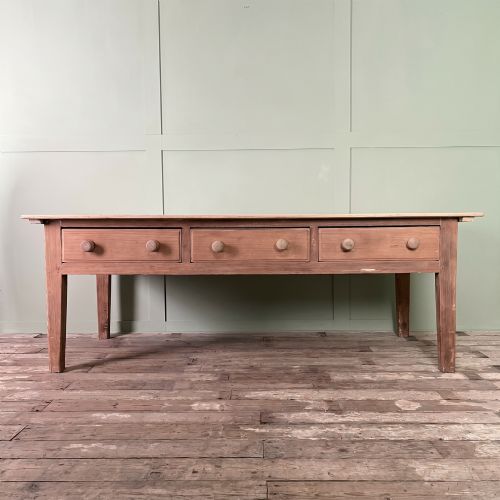
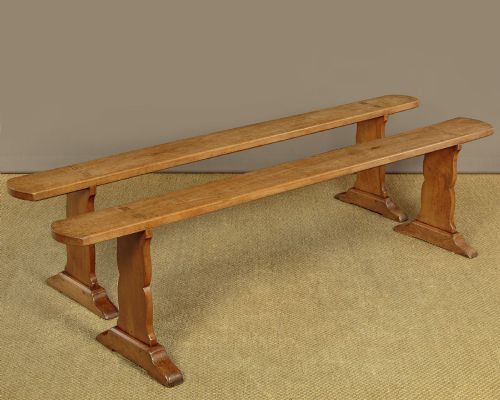
These rustic timber bench table pieces offer utilitarian charm and heavy timber construction, spanning centuries of country workshops and provincial homes.
Rustic Timber Bench Table
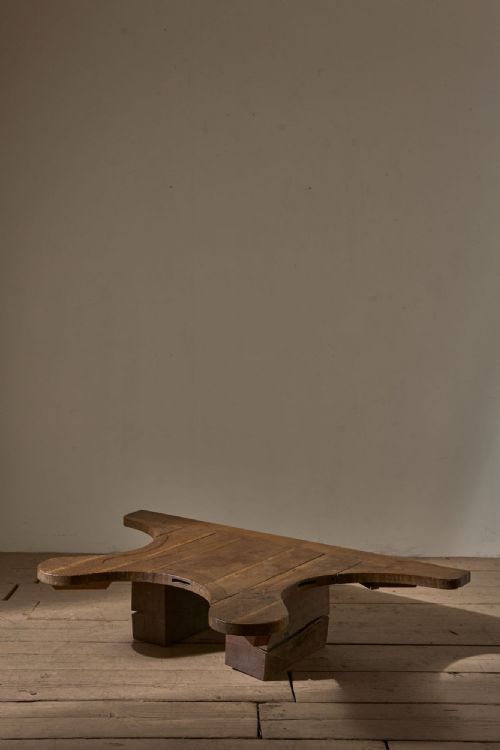
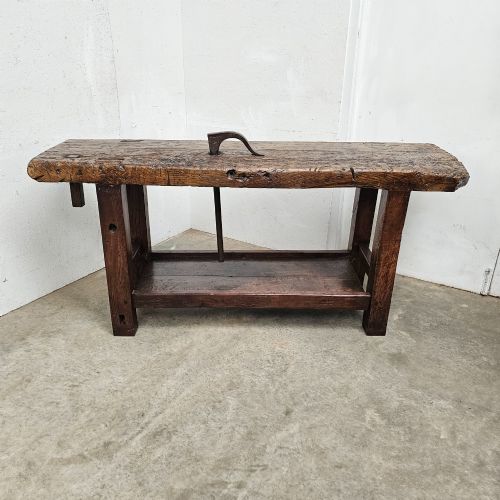
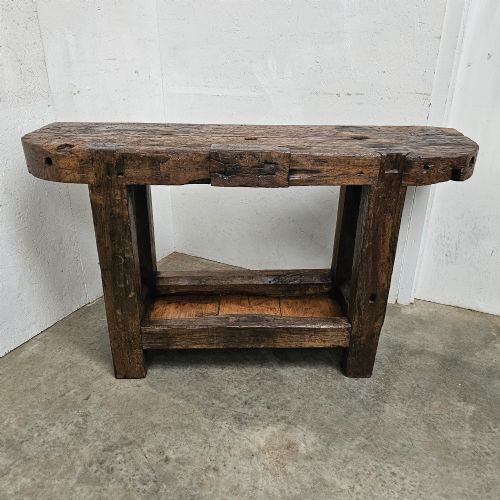
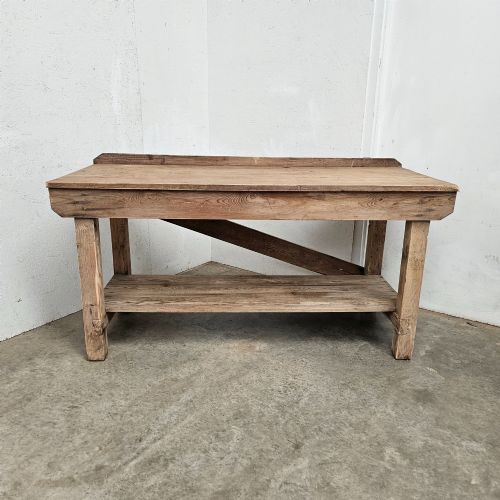
When buyers search for a rustic timber bench table, they encounter utilitarian forms shaped by workshop use, dairy preparation and country dining. The selection spans utilitarian workbenches, low coffee tables, trestle tables and long benches originating from French, English, Swedish and Asian domestic and working traditions.
The most common examples on this page are nineteenth century French artisans' workbenches and scrubbed sycamore and elm trestle tables, alongside Edwardian oak benches and pine potting tables. These objects transition easily into modern domestic spaces as functional coffee tables, low dining surfaces and hallway seating.
How they were made
Constructed primarily from sturdy domestic timbers including oak, elm, sycamore, ash, beech, pine and cherrywood, these surfaces rely on heavy planks and robust framing for daily labour. Artisans utilised traditional joinery, trestle supports and integrated vices or clamping bars to withstand heavy working pressures.
Surfaces frequently show the natural wear of manual toil, scrubbed finishes, and deep patination earned through decades of dairy work, butchery, crafting and kitchen preparation.
Listings feature timbers like oak, elm, sycamore, pine and beech across nineteenth-century and Edwardian French, English and Swedish forms.
What varies in quality
Quality rests in the integrity of the timber, the honesty of the working wear, and the balance of proportions. Superior examples retain original vices, clamping bars and untouched patination that reflect genuine trade use rather than fabricated ageing.
Construction methods also separate standard domestic pieces from heavy workshop furniture, where thick plank tops and robust trestle ends dictate the stability and longevity of the table.
Trussant and Cie
The Rustic Timber Bench Table Glossary
- Trestle table
- A table consisting of horizontal planks supported by two or more trestle frames. This form allows for maximum legroom and sturdy support.
- Workbench
- A heavy utilitarian table used by artisans, carpenters and craftspeople. These often include integrated vises, clamping bars and tool wells.
- Scrubbed
- A finish achieved by vigorous cleaning of wooden surfaces with water and soap, removing old grime to reveal the pale grain underneath.
- Patina
- The deep surface sheen and colour developed over decades through handling, waxing, use and exposure to light.
Rustic Timber Bench Table: Frequently Asked Questions
What is a rustic timber bench table used for today?
These pieces serve primarily as statement coffee tables, kitchen islands, hallway benches and low dining surfaces in contemporary homes. Their robust timber construction provides practical daily utility.
Buyers often place them in living rooms or kitchens where the worn patination adds character and historical depth to modern interiors.
How do I care for an antique wooden workbench?
Maintain the timber by applying natural beeswaxes sparingly to preserve the dry or scrubbed surface texture without adding unwanted gloss. Avoid placing them near direct heat sources to prevent the heavy planks from splitting.
Cleaning should be done with a soft, dry cloth rather than harsh liquid detergents that strip the historic patination.
Are these tables suitable for everyday kitchen use?
Many examples originated as dairy preparation tables, butchers blocks or artisans' workbenches designed precisely for heavy physical tasks. Their thick oak, sycamore or elm tops easily withstand regular domestic activity.
Sealing the wood may be necessary depending on the original finish if you plan to use the surface for food preparation.
How can I tell the period of a workbench?
Dating relies on construction marks, tool usage evidence, timber species and specific regional hardware designs like wooden vices or iron clamping bars. Nineteenth-century examples often display hand-sawn elements and distinct French or English workshop vernaculars.
Comparing the wear patterns and structural joints helps distinguish earlier eighteenth-century trestle forms from later Edwardian reproductions or adaptations.