

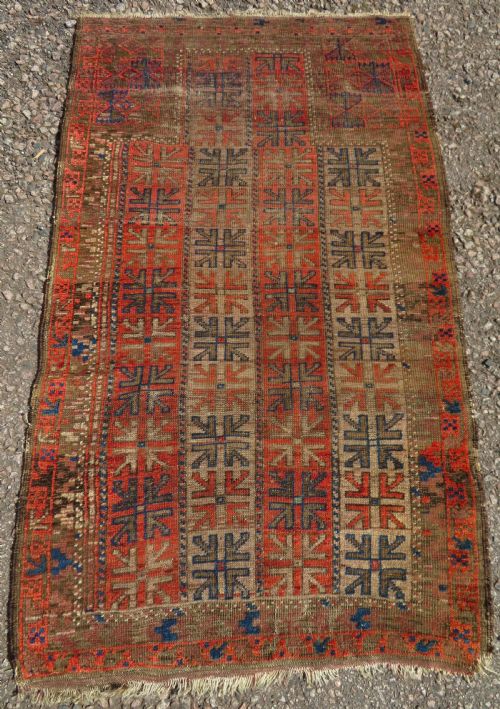


Rustic Persian Wool Rug
A rustic persian wool rug brings genuine tribal character into a room through honest wool and traditional nomadic design.
Rustic Persian Wool Rug
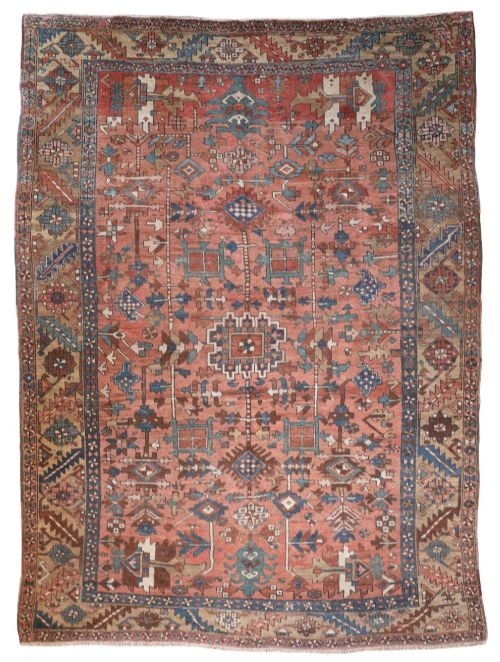
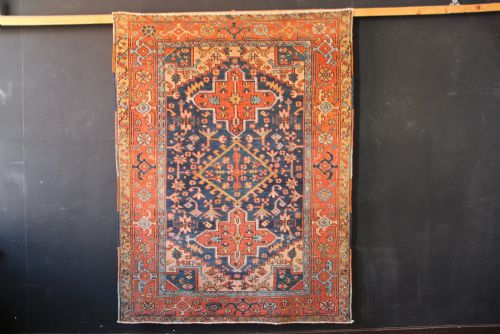
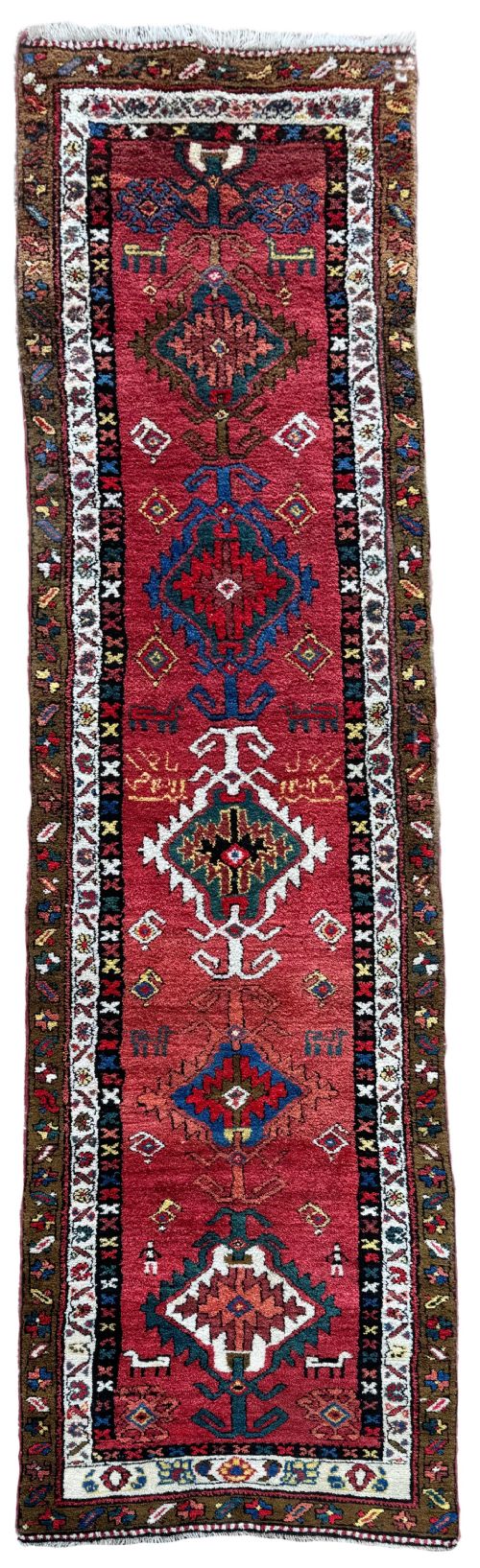
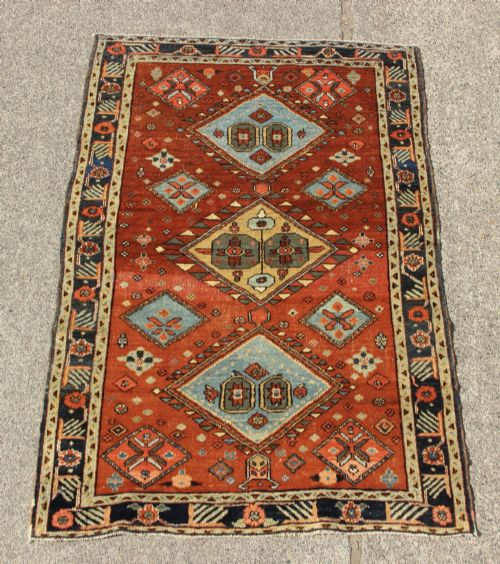
When you search for a rustic persian wool rug, you are looking at hand-woven floor coverings and cushions originating from Persian tribal groups, workshops, and villages. These pieces span from the mid-nineteenth century through the early twentieth century, taking the form of area rugs, long runners, and compact scatter sizes.
The most common versions on this page are Heriz rugs and carpets, alongside tribal Baluch, Shiraz, Kurdish, and Karaja pieces. They display geometric medallions, nomadic patterns, and village motifs woven in wool.
Makers range from settled village weavers in Heriz and Karaja to nomadic tribes such as the Baluch, Luri, and Quchan Kurds. Their output provides practical floor coverings and cushions shaped by regional traditions.
What varies in quality
The standard of a rustic persian wool rug depends heavily on the fineness of the knotting and the integrity of the wool used in the pile. Tighter structures and resilient hand-spun or camel wool materials hold their form better under heavy daily use.
Visual depth and the handling of natural dyes also set examples apart, with certain village and tribal pieces achieving a harmonious balance of tone. The distinction lies in the purity of the materials and the precision of the tribal design execution.
Rustic Persian Wool Rug Retail Price Guide 2026
Typical asking prices for rustic persian wool rug among the pieces listed under this phrase on Sellingantiques today, from the lower quarter to the upper quarter. They describe what is for sale here now, not the wider market.
Nomadic weavers occasionally repurposed storage container panels into small cushions, giving utility items a second life as household comforts.
The Rustic Persian Wool Rug Glossary
- Heriz
- A style of Persian carpet originating from the village of Heriz, known for bold geometric medallions and durable construction.
- Baluch
- A style associated with Baluch nomadic and village weavers, typically featuring darker palettes and geometric prayer designs.
- Warp
- The vertical foundation threads stretched tightly on the loom before knotting begins, often made of cotton in these rugs.
- Camel wool
- Natural undyed or lightly processed wool from camels, sometimes utilised in tribal rugs for its soft texture and durability.
- Bag face
- The decorative front panel of a nomadic storage bag, often repurposed and finished as a small cushion or collector piece.
Rustic Persian Wool Rug: Frequently Asked Questions
What is a rustic persian wool rug?
It is a hand-woven floor covering or cushion created by Persian village or tribal weavers using wool and traditional motifs.
These pieces include runners, small carpets, and scatter rugs dating from the nineteenth and early twentieth centuries.
How do I identify a Heriz rug?
Heriz rugs typically present bold, geometric central medallions and sturdy structures woven in village workshops.
They are distinguished from curved court designs by their rectilinear patterns and robust wool piles.
Where were Baluch rugs made?
Baluch rugs were produced by nomadic and semi-nomadic tribes inhabiting the borderlands of Persia and surrounding regions.
Weavers utilised dark wools and distinctive prayer or geometric formats suited to nomadic life.
How should I care for an old wool rug?
Vacuum gently without a rotating brush roll to protect the hand-spun wool pile and delicate foundation threads.
Keep the rug out of direct sunlight and rotate it periodically to ensure even wear across the surface.