
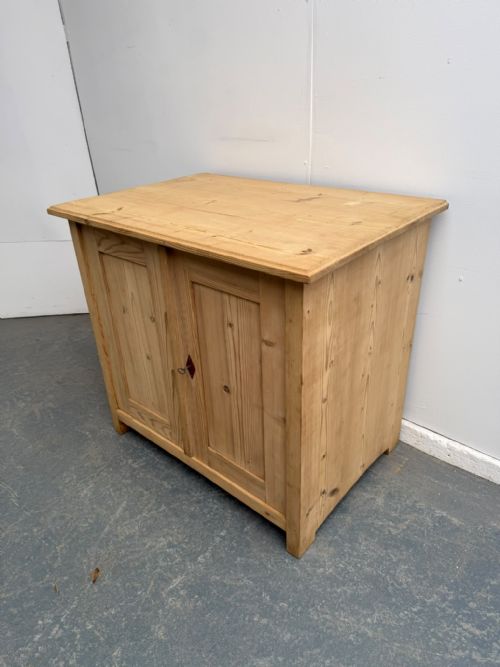
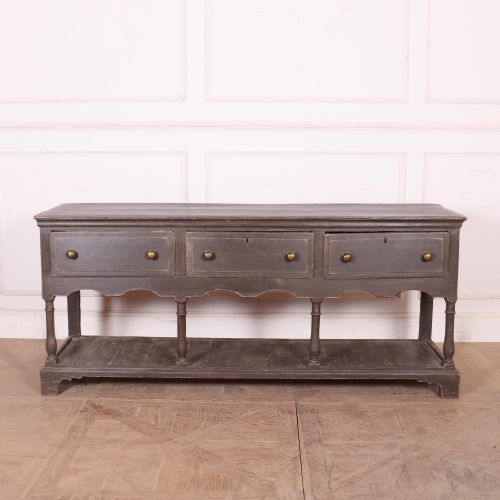
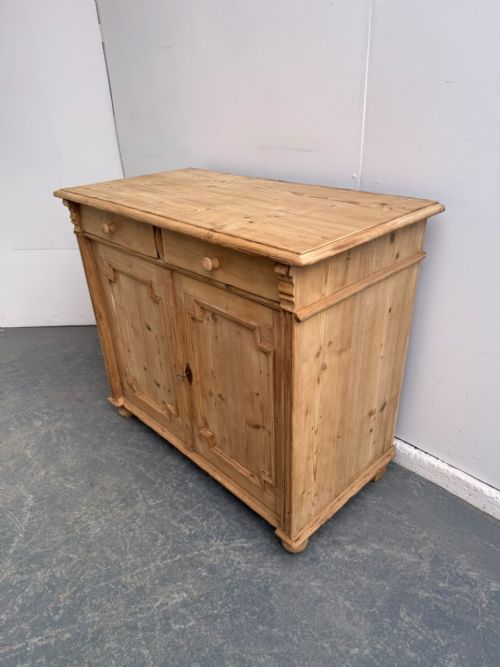
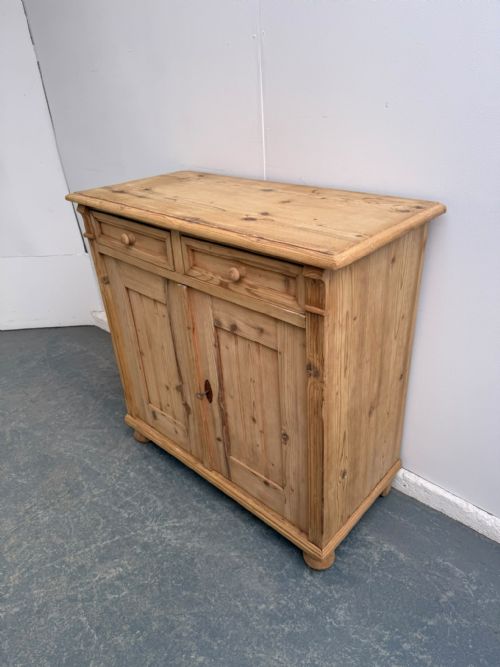
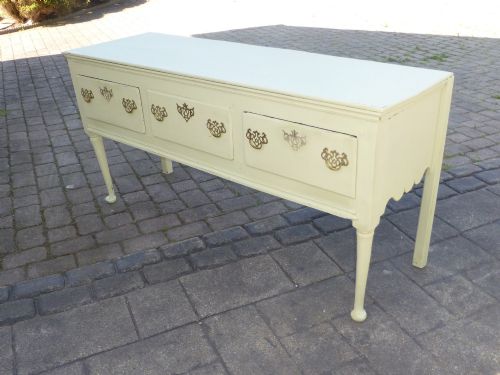
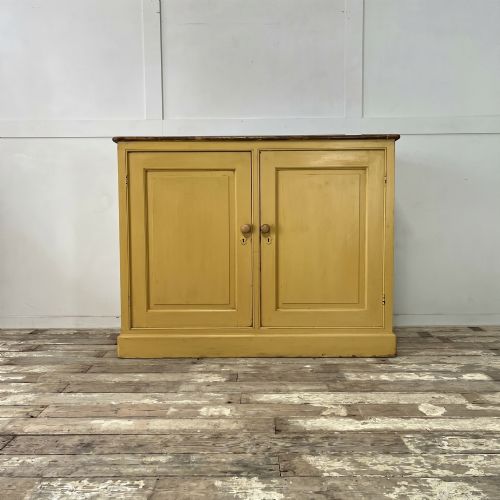
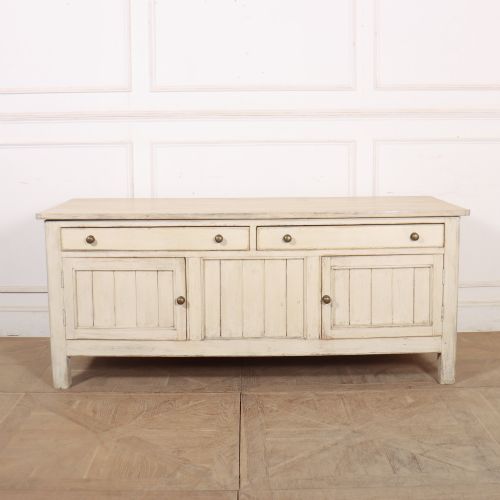
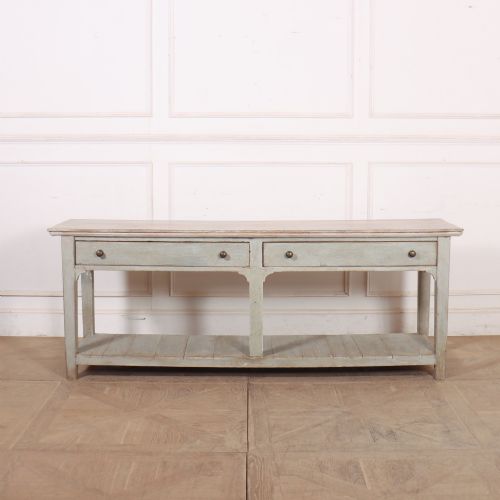
Rustic Painted Sideboard Base
A rustic painted sideboard base brings honest vernacular charm and practical storage to a kitchen or dining room.
Rustic Painted Sideboard Base
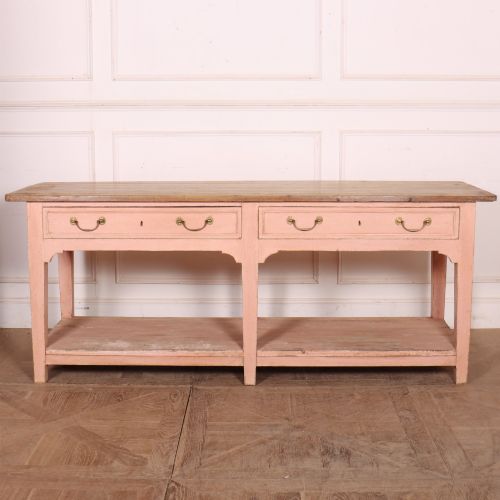
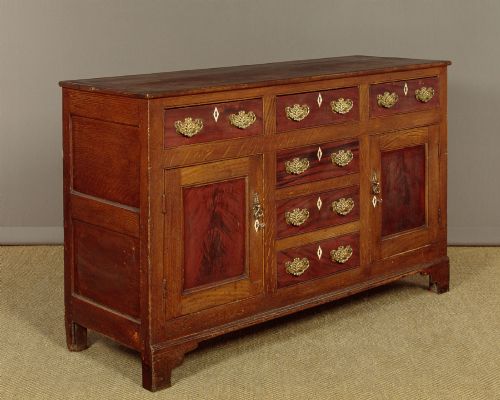
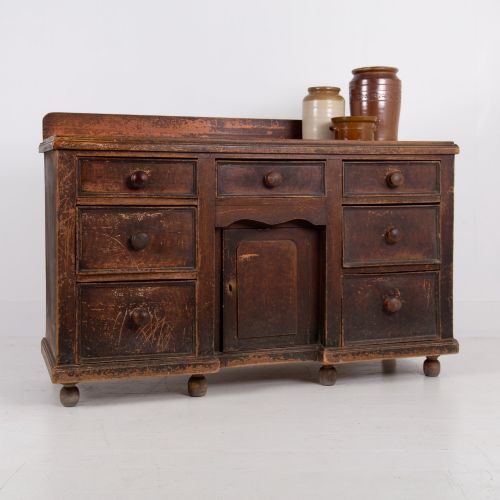
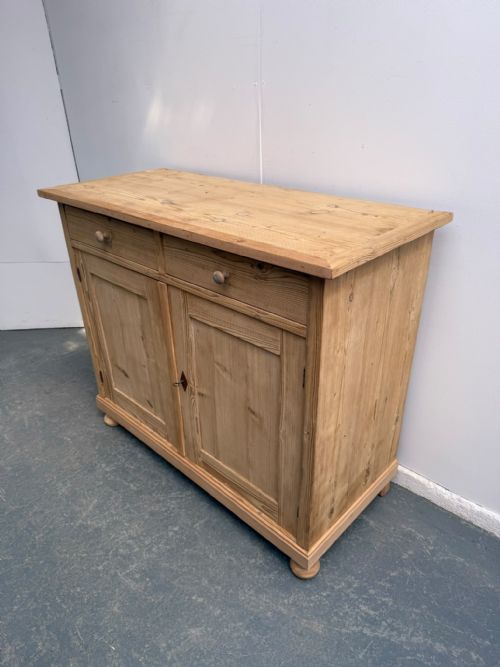
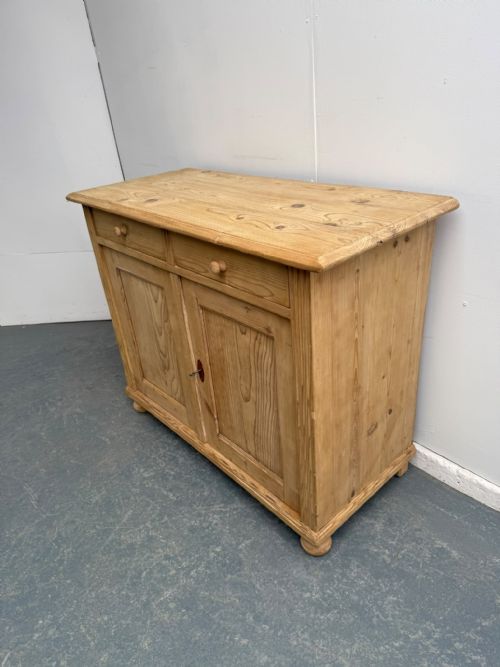
A rustic painted sideboard base is a sturdy low storage piece, often originating as a kitchen dresser bottom, potboard, or serving table. These practical items provide surface space and enclosed storage with cupboards or drawers.
The pieces appearing here span the eighteenth and nineteenth centuries, including Victorian and Georgian examples. English country houses, Scottish farmhouses, and Scandinavian workshops all contributed these utilitarian forms.
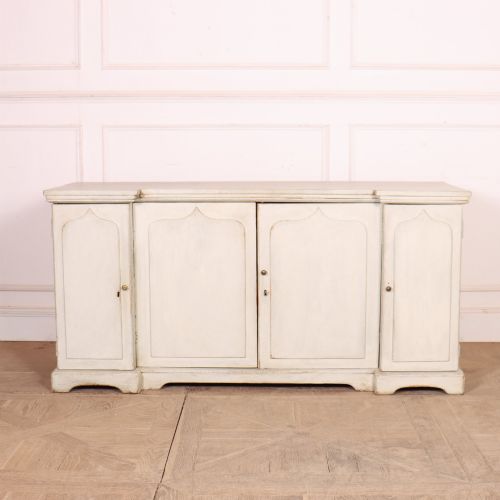
Pine and oak form the backbone of these listings, frequently finished in original paint or plain timber. Buyers will frequently encounter two-door cupboards, open potboards, and long serving tables built for heavy daily domestic use.
Materials and construction
Construction relies primarily on solid pine and oak planks assembled by regional joiners using traditional pegged mortise and tenon joints. Simple hand tools shaped the heavy timber frames to withstand decades of kitchen or larder work.
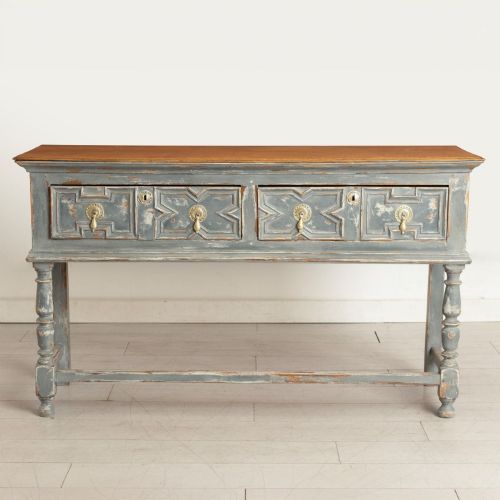
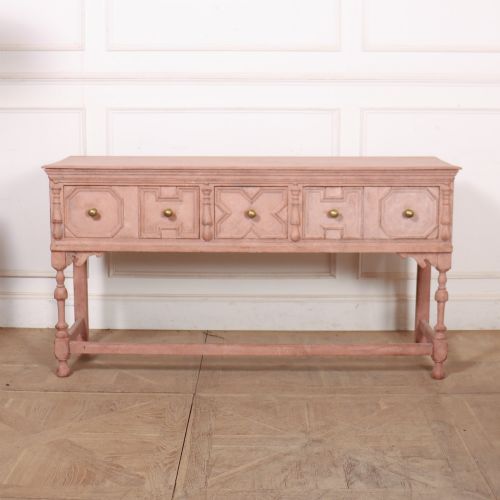
Surfaces frequently show layers of historic paint applied over bare wood, sometimes accompanied by brass or iron hardware. Potboards feature open lower shelves designed for displaying heavy crockery or storing dairy utensils.
Several nineteenth-century kitchen bases include dedicated bread slides for cooling loaves right beside the butter churn.
Judging quality and character
Quality rests in the originality of the painted surface and the integrity of the timber framing. Pieces retaining their early or original paint layers carry far more historic presence than later re-painted surfaces.
Proportion and scale also dictate desirability, from shallow hallway cupboards to monumental country house serving tables. Untouched vernacular joinery with minimal timber replacement commands the greatest appreciation among collectors.
The Rustic Painted Sideboard Base Glossary
- Potboard
- An open lower shelf built into the base of a dresser for storing pots and pans. This lower platform defines many traditional country kitchen pieces.
- Dresser base
- The lower half of a kitchen dresser, functioning independently as a sideboard or serving table. These items provide counter space above cupboards or drawers.
- Dog kennel
- A central recessed arched space flanked by cupboards or drawers beneath a sideboard top. Originally utilised for keeping working dogs warm in farmhouse kitchens.
- Bread slide
- A pull-out wooden shelf integrated into the cabinet framework. Bakers utilised these flat surfaces for kneading dough or cooling loaves.
- Breakfront
- A piece of furniture where the central section projects forward from the flanking outer sections. This architectural arrangement adds depth and shadow to larger sideboard designs.
Rustic Painted Sideboard Base: Frequently Asked Questions
What is a rustic painted sideboard base?
A rustic painted sideboard base is a heavy, utilitarian lower cabinet originating from historic kitchens and dining spaces. These items provide flat top surfaces paired with cupboards, drawers, or open potboards.
They serve as practical storage units that bring traditional vernacular style into modern interiors.
How were these pieces used historically?
Historically, these low cabinets stood in farmhouses, country houses, and dairies to hold heavy tableware, food stores, and kitchen utensils. Servants prepared meals on the wooden top surfaces and stored crocks on the lower potboards.
Over time, many functioned as serving tables during large household meals.
How do I live with a painted base?
Living with a painted wooden base requires embracing the knocks and scuffs accumulated over centuries of domestic use. The durable surfaces handle everyday placement of lamps, books, and decorative objects easily.
Keep them away from direct heat sources to protect the aged timber and historic paint layers.
How do I tell eighteenth-century pieces apart from Victorian ones?
Eighteenth-century examples often display pegged oak construction and deeper patination resulting from prolonged domestic handling. They tend to feature simpler, heavier framing rooted in Georgian country traditions.
Victorian pieces frequently utilise pine, standardised brass fittings, and painted finishes associated with nineteenth-century farmhouse utility.