





Georgian Style Sideboard Base
A georgian style sideboard base brings robust dining room storage and surface utility, rooted in timeless English country and revival forms.
Georgian Style Sideboard Base
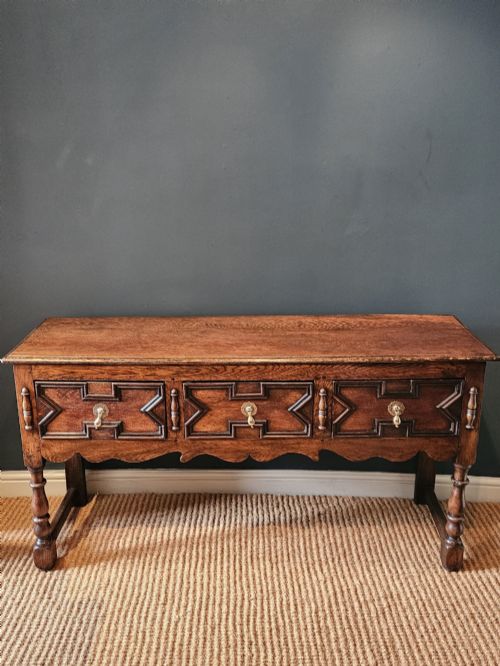
A georgian style sideboard base serves as a substantial low storage unit or serving table, typically equipped with multiple drawers and cupboards. These items originate across several centuries, with particular emphasis on 18th century originals, 19th century interpretations, and later Edwardian or 1900 revival iterations.
The form encompasses related functional types such as dresser bases, serving tables, and console tables. Oak and mahogany dominate the offerings, occasionally finished with paint or walnut crossbanding to suit traditional domestic interiors.
How they were made
Makers constructed these sturdy carcasses predominantly from solid timbers including oak, pine, and mahogany. Construction frequently utilised traditional joinery methods to support heavy serving surfaces and practical drawer configurations.
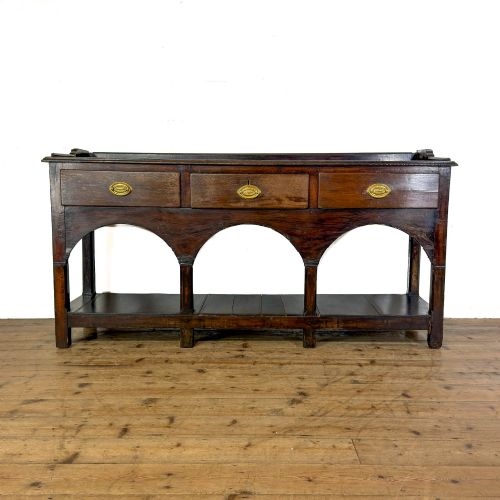
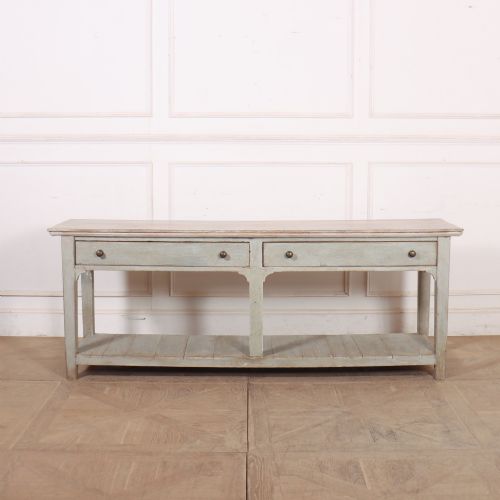
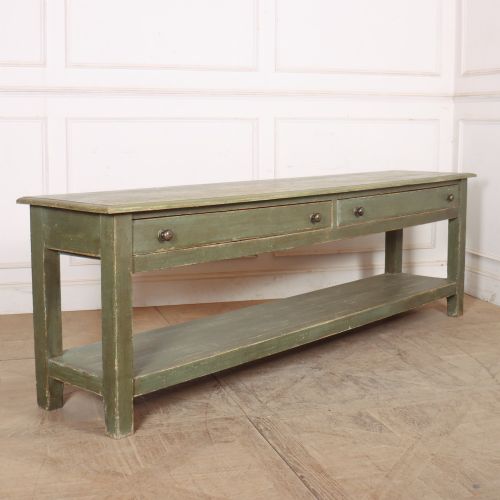
Potboard shelves originally kept heavy pottery safely away from hungry household spaniels.
What varies in quality
Distinction across the range rests on timber selection and the sophistication of decorative detailing. Pieces featuring rich walnut crossbanding, geometric mouldings, or fine inlaid work demonstrate higher levels of craftsmanship than plain utility variants.
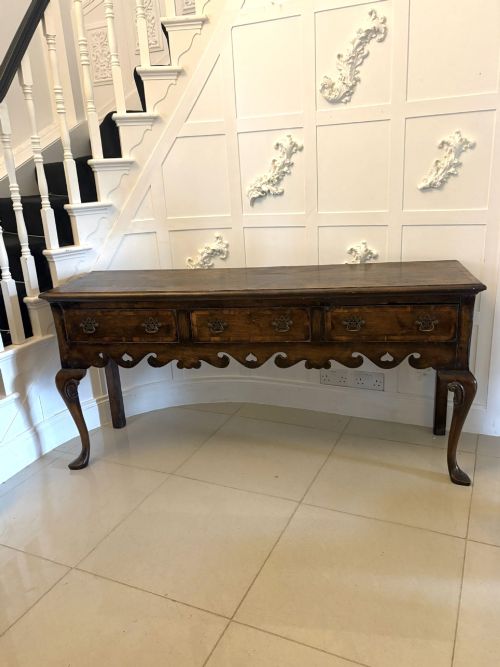
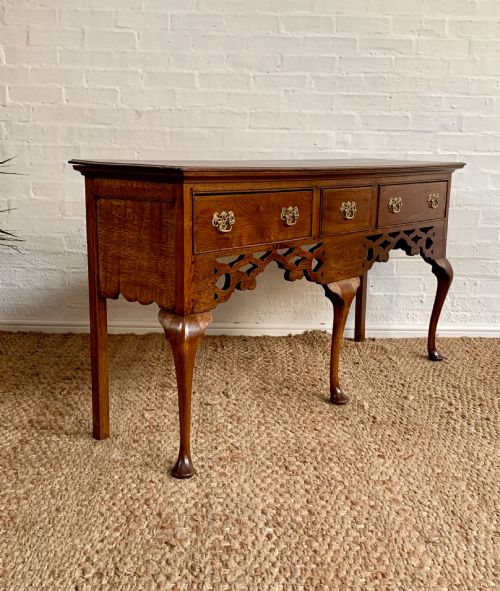
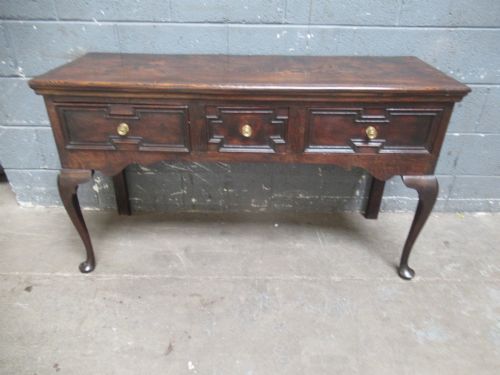
The integrity of the structural carcass and the crispness of carved elements, such as cabriole legs or bracket feet, separate standard regional pieces from finer cabinet work.
The Georgian Style Sideboard Base Glossary
- Dresser base
- A low freestanding kitchen or dining room sideboard fitted with drawers and occasionally a lower potboard shelf. It functions primarily for food preparation and storage.
- Potboard
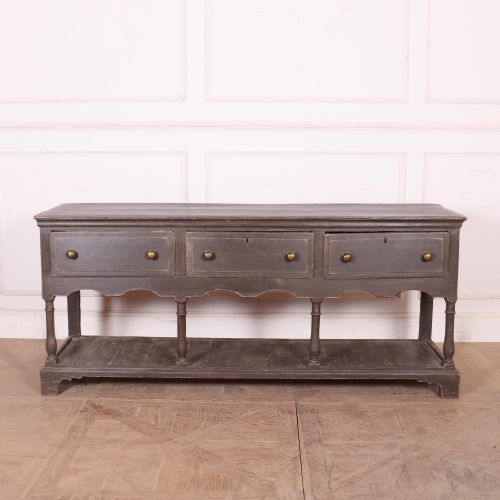
- An open slatted lower shelf incorporated into the base of a dresser for storing heavy kitchen pottery. It anchors the structural legs together.
- Crossbanding
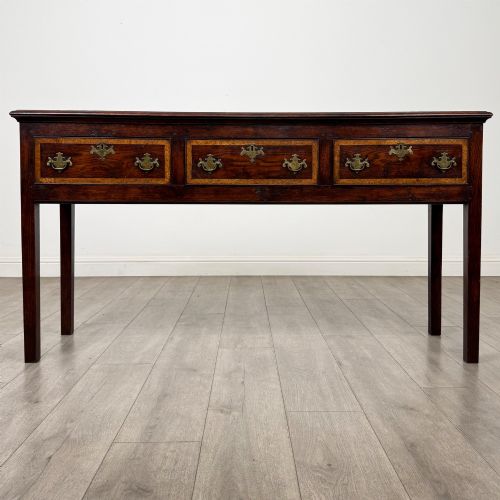
- A decorative border technique where thin strips of veneer are laid perpendicular to the surrounding grain. It creates a neat contrasting frame around drawer fronts.
- Breakfront
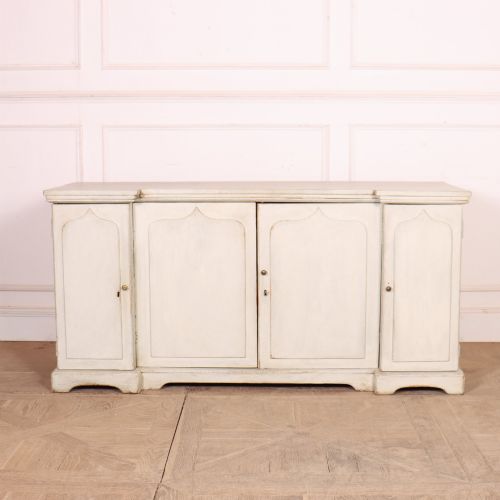
- A cabinet facade where the central section projects forward from the flanking wings. This architectural arrangement adds depth to large serving tables.
- Cabriole leg
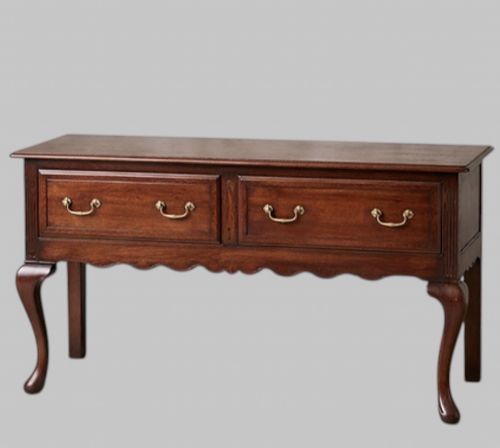
- A furniture leg featuring a double curve, swelling outward at the knee and tapering inward at the foot. It draws inspiration from classical design traditions.
Georgian Style Sideboard Base: Frequently Asked Questions
What is a dresser base?
A dresser base is a sturdy low cabinet featuring drawers and sometimes cupboards or an open lower shelf. It served historically as a primary surface for food preparation and serving in large country houses.
Today, these versatile items function effectively as sideboards in dining rooms or entrance halls, offering deep drawer storage and generous surface space for lamps or decorative objects.
How do I style a sideboard base?
Placing a sideboard base in a dining room creates an instant anchor for the room, providing a natural spot to display ceramics or silver. Pairing the low timber base with a wall mirror or artwork completes the traditional composition.
In living spaces, these units work well against plain walls where the rich grain of oak or mahogany can stand out. Keeping the surface uncluttered lets the proportions and hardware take focus.
Are these pieces solid oak?
Many examples are constructed from solid oak, particularly those following English country traditions and earlier revival periods. Other pieces utilise pine for internal framing or incorporate mahogany and walnut for formal reception rooms.
Examining the timber grain on the top surface and drawer linings reveals whether the piece relies on solid boards or veneered construction over secondary woods.
What is a potboard shelf?
A potboard shelf is an open platform situated near the floor between the legs of a dresser base. It was originally designed to hold heavy earthenware pots and mixing bowls off damp stone floors.
In modern homes, this low shelf provides an ideal place to stack large art books, wicker baskets, or ceramic collections, adding visual weight to the lower half of the furniture.