




White Painted Credenza
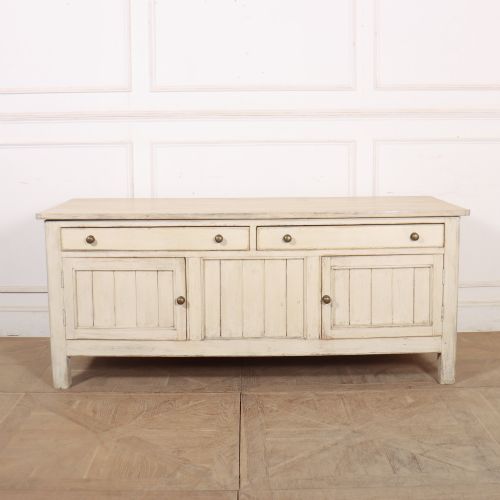
A white painted credenza brings light and layered surface texture to a room, offering substantial storage beneath a graceful silhouette.
White Painted Credenza
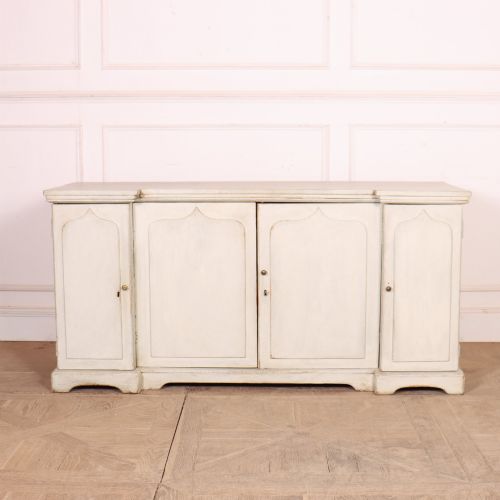
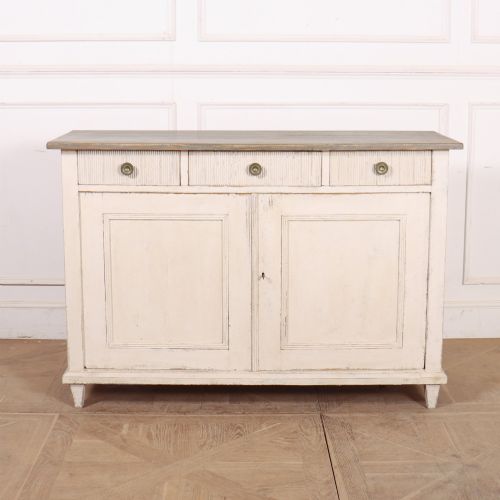
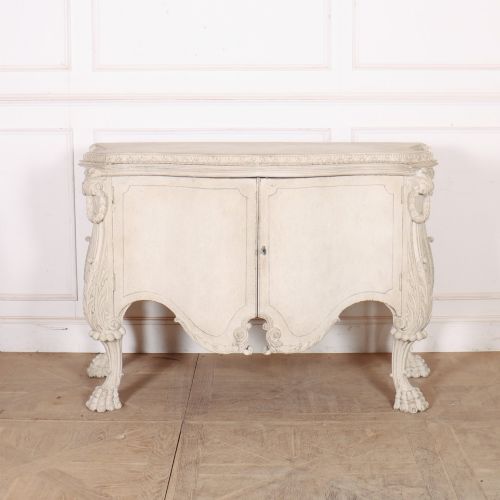
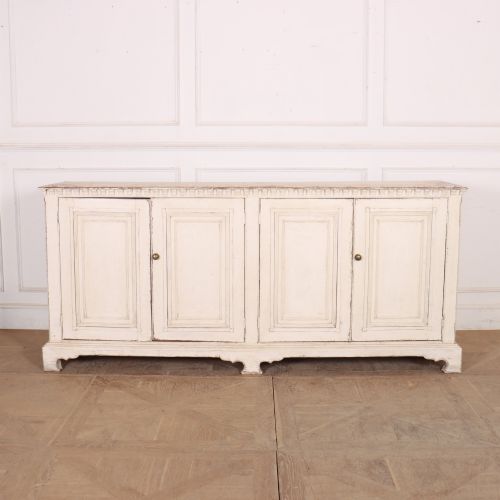
When you search for a white painted credenza, you encounter a variety of nineteenth-century sideboards, dressers, enfilades, and cabinets defined by painted wooden surfaces.
The most common examples on this page are nineteenth-century painted cupboards, dresser bases, and sideboards originating from English, Scandinavian, and continental workshops.
These pieces range from rustic English country dresser bases and Swedish pine cupboards to more ornate Italian neoclassical and French revival cabinets.
Materials and construction
Construction relies primarily on solid woods such as pine and general timber, fashioned into robust carcases with painted or hand-painted finishes.
Details often include decorative elements like glass panels, brass hardware, and majolica ceramic inserts integrated into the wooden structures.
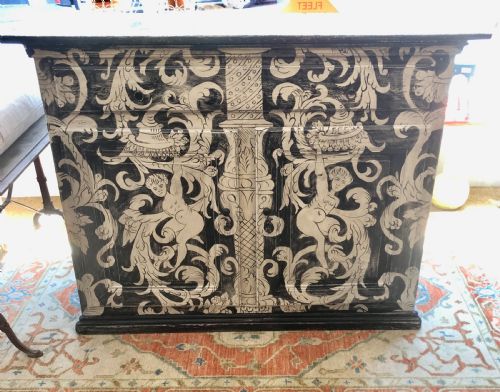
Several pieces feature hand-painted grotesque motifs, bringing a touch of whimsical renaissance theatre directly into the nineteenth-century parlour.
Judging quality and finish
Quality rests upon the integrity of the timber frame, the skill of the original or historic paint application, and the preservation of decorative elements like majolica panels.
Finer examples display harmonious proportions, authentic period hardware, and artistic hand-painting by named decorative artists rather than plain utility finishes.
Melissa White
The White Painted Credenza Glossary
- Credenza
- A sideboard or cabinet used for storage and serving, traditionally placed against a dining room wall. These nineteenth-century variants often feature painted wooden finishes.
- Dresser Base
- The lower section of a traditional kitchen or dining room dresser, featuring cupboards and drawers without the upper plate rack. Many examples survive as standalone sideboards.
- Enfilade
- A long cabinet or sideboard with a series of doors, typically three or more, designed for grand dining rooms. They provide extensive internal storage.
- Majolica
- Opaque tin-glazed earthenware decorated with brightly coloured metal oxides, sometimes set into nineteenth-century cabinet doors for decorative effect.
- Potboard
- An open slatted lower shelf on a dresser base, traditionally used for storing pots and pans. It forms a distinct architectural feature beneath the main cupboards.
White Painted Credenza: Frequently Asked Questions
Where should I place a credenza?
A credenza traditionally sits against a dining room wall for serving food and storing tableware, but works equally well in a hallway or living room.
Its low profile also makes it a suitable surface for displaying lamps, mirrors, or decorative objects without overwhelming the room.
How do I clean painted wood?
Dust the surface regularly with a soft, dry cloth to prevent the accumulation of grit that might scratch the historic paint layer.
Avoid harsh chemical cleaners or excessive moisture, using only a lightly dampened cloth if a deeper clean is necessary.
Are these pieces from the Victorian era?
Many of the listed pieces date from the nineteenth century, including the Victorian period, spanning decades like the 1860s, 1880s, and 1900.
Construction details and regional styles help distinguish pieces made across English, Swedish, and continental European workshops during this time.
What is the difference between a sideboard and a credenza?
While both terms describe low storage furniture used for dining and living spaces, credenza often implies a more decorative cabinet with doors across the front.
Sideboards frequently incorporate a combination of drawers and cupboards, though nineteenth-century terminology often overlaps depending on regional origin.