
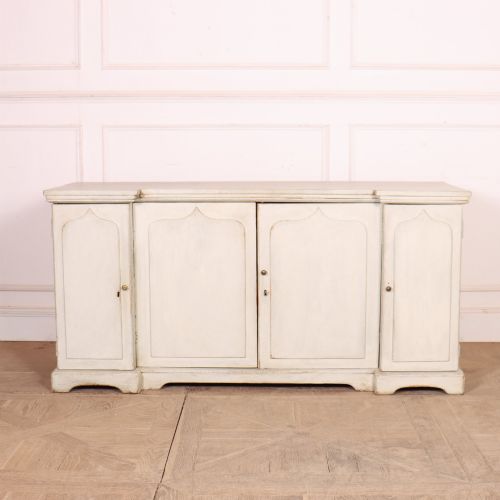
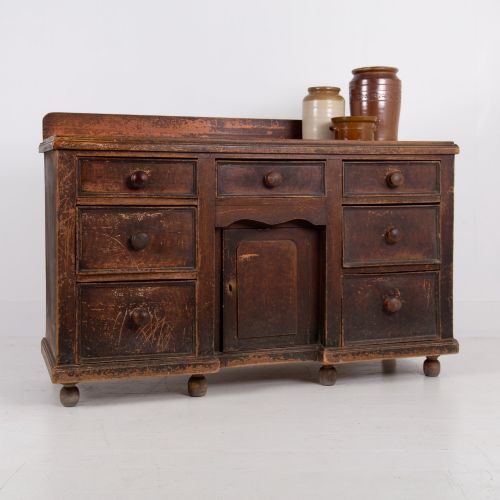
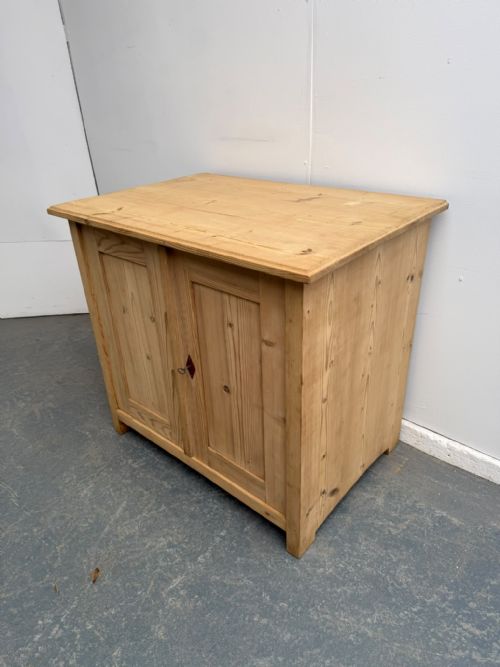
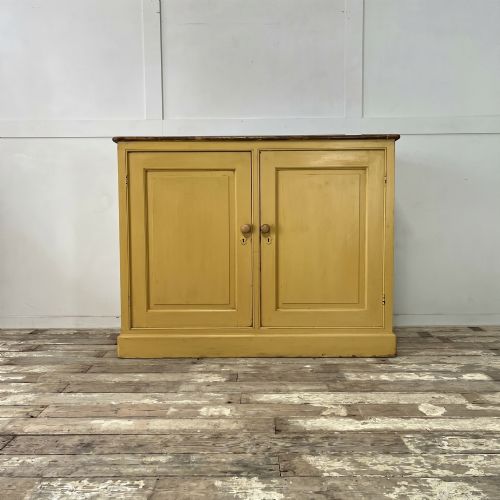
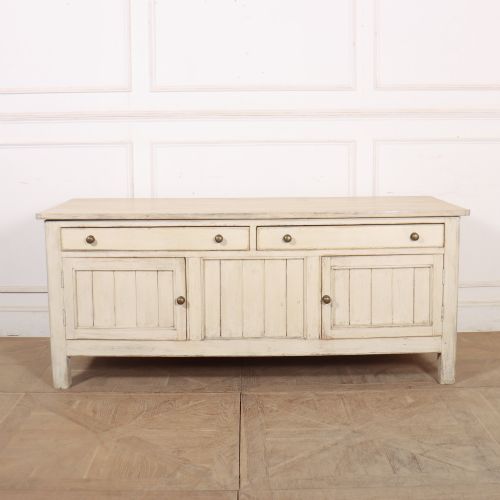


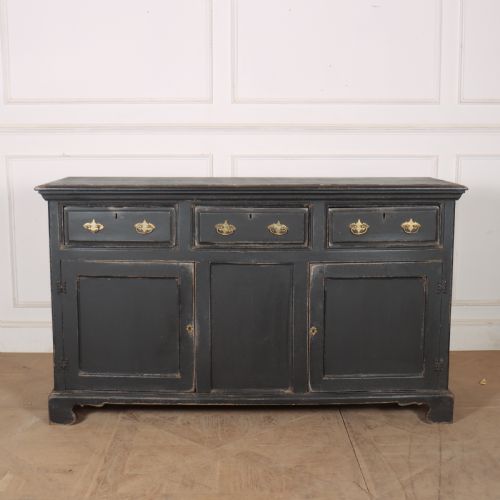
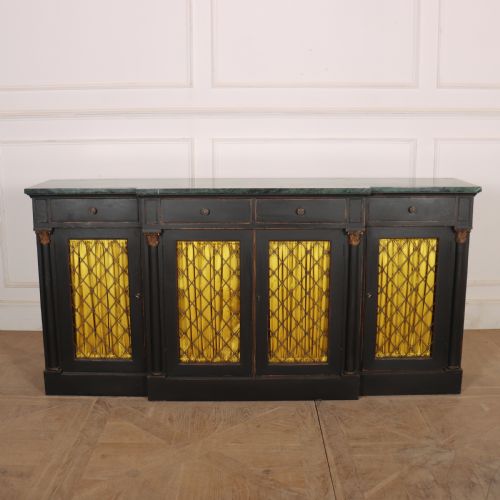


Painted Low Dresser Cupboard
A painted low dresser cupboard brings enduring rural character and practical storage to a room through solid timber construction and historic surface finishes.
Painted Low Dresser Cupboard
A painted low dresser cupboard is a substantial household storage piece designed with a low profile, combining surface display or workspace with enclosed base storage. The pieces meeting this search phrase range from eighteenth-century English country examples to nineteenth-century Victorian and Scottish regional variants.
Most items appearing here take the form of dresser bases, breakfront dresser bases, or wide storage and school cupboards. They originate from rural workshops and domestic kitchens, built primarily in pine and oak to serve heavy daily use.
The aesthetic relies heavily on original or historic paint surfaces applied to timber frames. These finishes distinguish utilitarian country furniture from formal dining room furniture through honest wear and regional colour choices.
How they were made
Construction relies on sturdy timbers such as pine and oak, joined to withstand decades of daily service in kitchens, dairies, and schoolrooms. Cabinetmakers utilised heavy boards for tops and bases, framing panelled doors and drawers with straightforward joinery.
Surfaces were finished with paint, often applied in multiple coats to protect the wood and brighten dark rooms. Iron and brass hardware such as hinges and pulls were fitted securely to functional doors and drawers.
Listings span the eighteenth and nineteenth centuries, featuring styles from Georgian and Regency to Victorian country and English rustic.
What varies in quality
The primary distinction lies in the integrity of the original paint surface and the proportion of the timber frame. Pieces retaining untouched historic paint display a depth of character that later surface treatments lack.
Proportion and scale also separate standard utility items from finer regional examples, such as breakfront bases or Scottish dairy pieces. Well-balanced cornices, sturdy feet, and unaltered interior shelving elevate the presence of a cupboard.
The Painted Low Dresser Cupboard Glossary
- Dresser base
- The lower section of a traditional kitchen dresser, featuring cupboards and drawers without the upper plate rack. It functions independently as a low sideboard or console.
- Breakfront
- A cabinet design where the central section projects forward from the flanking outer sections. This architectural form adds depth and shadow lines to larger dresser bases.
- Original paint
- The initial decorative or protective coating applied to the timber surface during its period of manufacture. Surviving layers show authentic weathering and craquelure.
- Pine
- A softwood commonly utilised in British country furniture for its accessibility and workability. It accepts paint finishes readily and forms the main body of many nineteenth-century cupboards.
Painted Low Dresser Cupboard: Frequently Asked Questions
What rooms suit a low dresser cupboard?
These low cupboards fit comfortably in kitchens, dining rooms, and hallways where height is restricted but surface space and storage remain essential. Their proportions allow them to sit beneath windows or anchor a long wall.
The deep base cabinets swallow tableware, linens, or general household items while the top surface holds lamps, books, or kitchen equipment.
How do I identify eighteenth-century pieces?
Eighteenth-century examples often display simpler joinery techniques, hand-planed timbers, and specific proportions tied to regional cabinetmaking traditions. The construction of internal drawers and backboards differs noticeably from later Victorian manufacturing methods.
Examining the nail types, tool marks, and timber shrinkage helps confirm the age of the piece alongside its historical style.
Why choose original paint?
Original paint finishes preserve the social history and visual charm of country furniture in a way stripped wood cannot replicate. The subtle patination tells a story of decades in working environments.
These historic surfaces offer tactile warmth and distinct colour tones that modern reproduction paints fail to mimic accurately.
How do Scottish and English pieces differ?
Scottish country furniture, such as dairy dressers, often incorporates distinct proportions, timber selections, and regional hardware conventions compared to English equivalents. Local workshops adapted standard forms to suit rural Scottish domestic needs.
These variations give regional pieces a unique character that collectors and interior designers look for.