
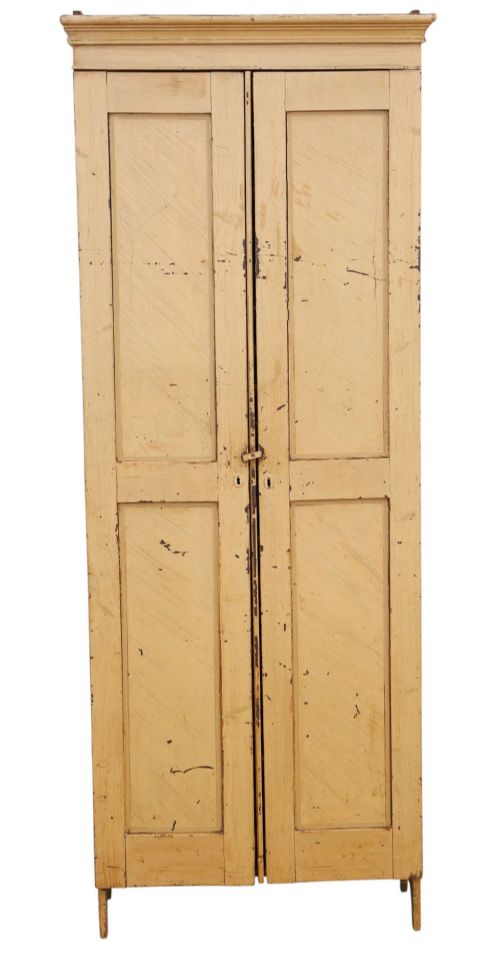
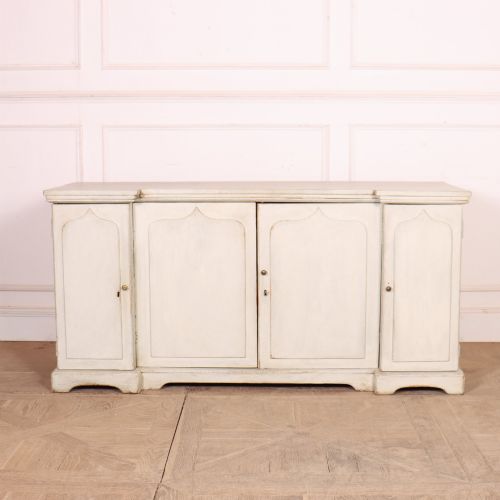
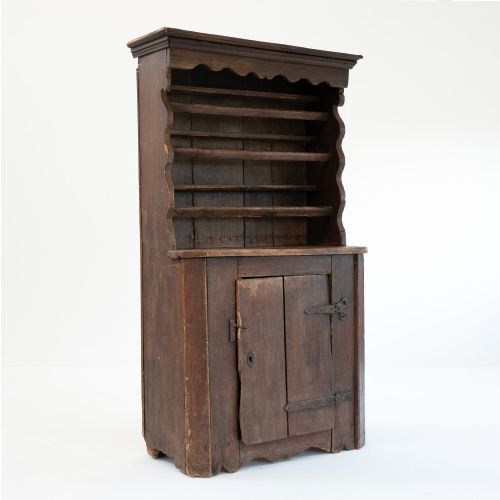
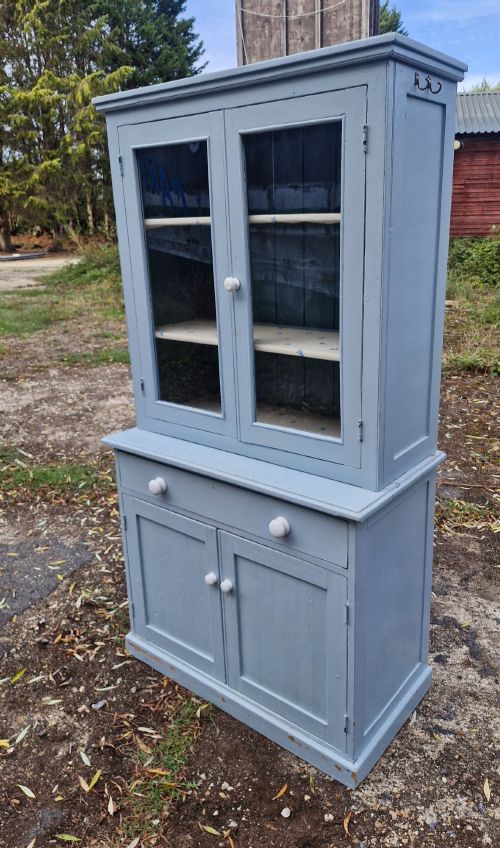
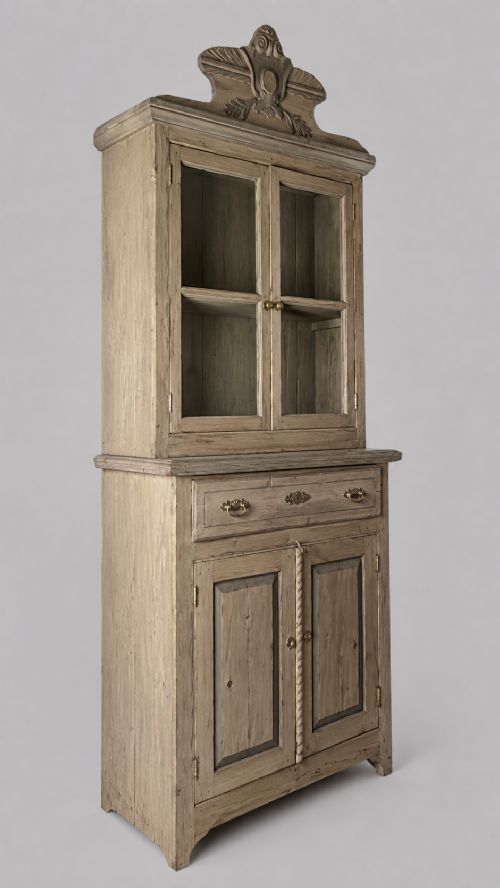
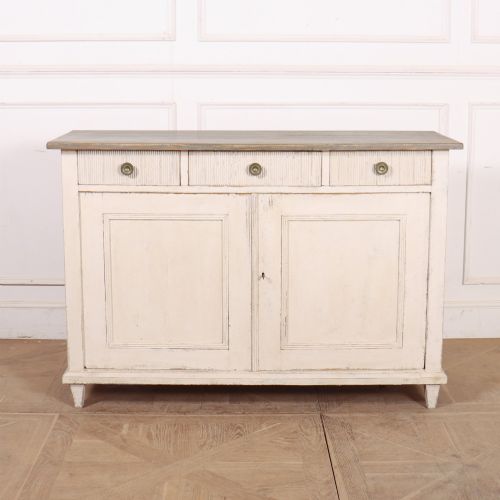
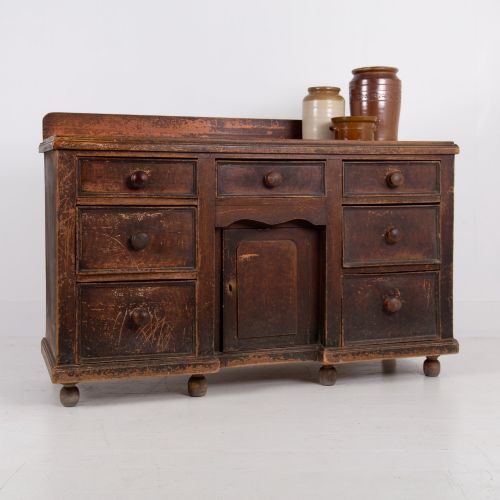
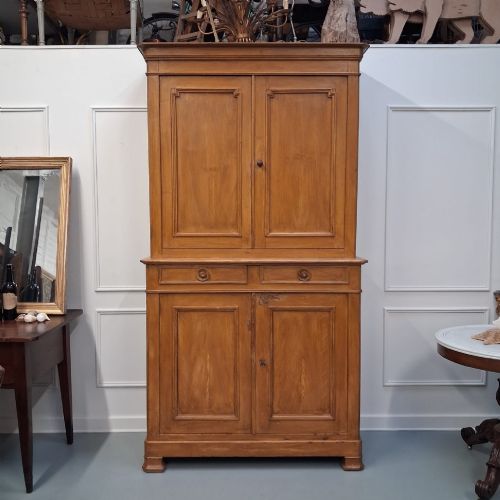
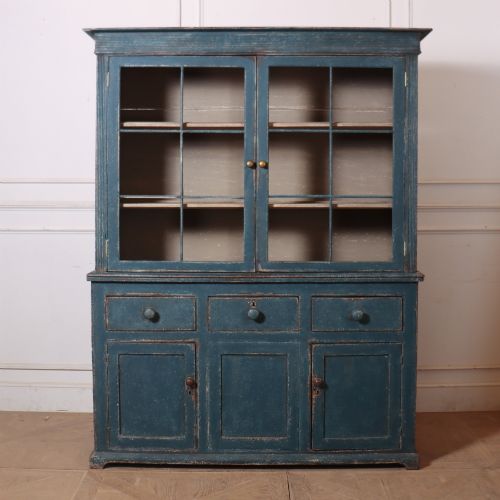
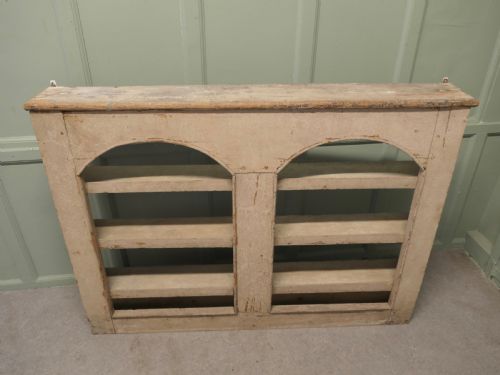
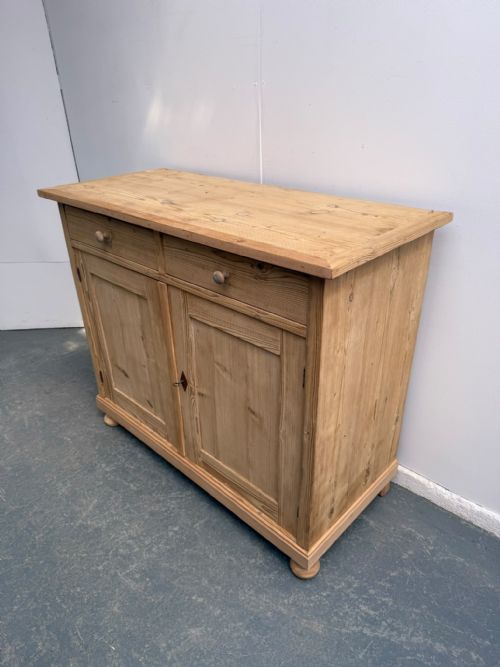
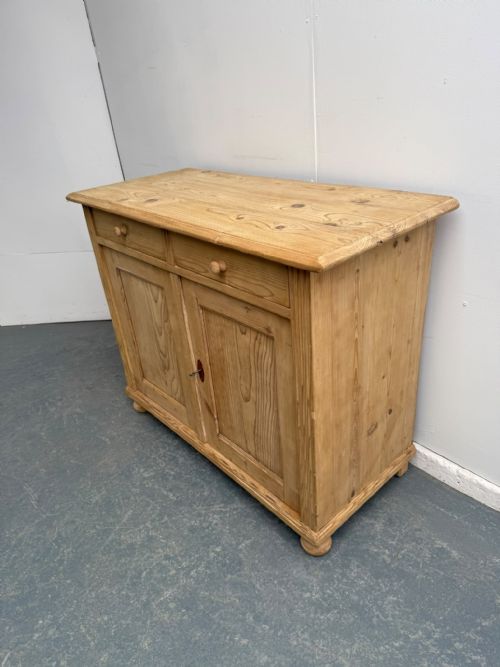
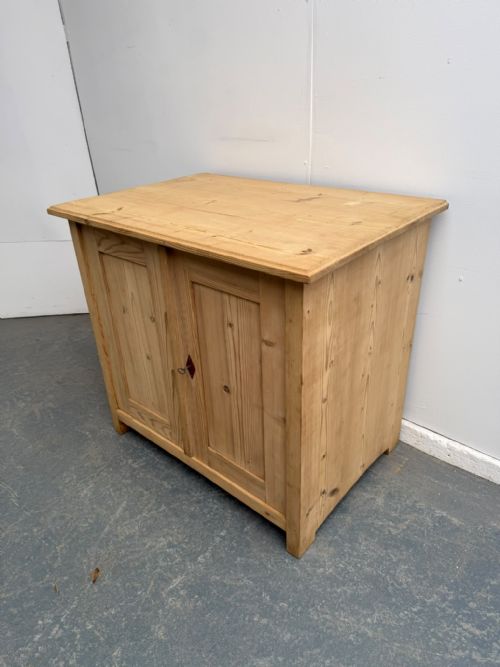
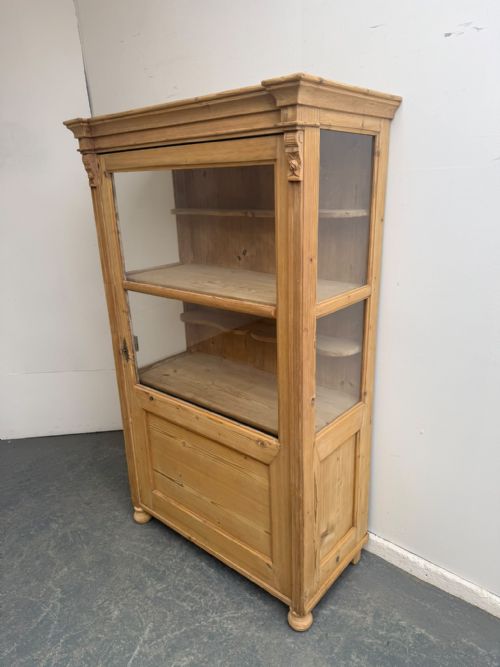
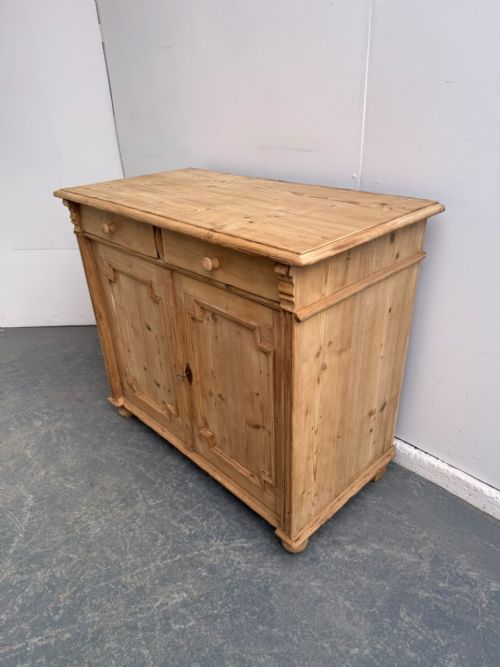
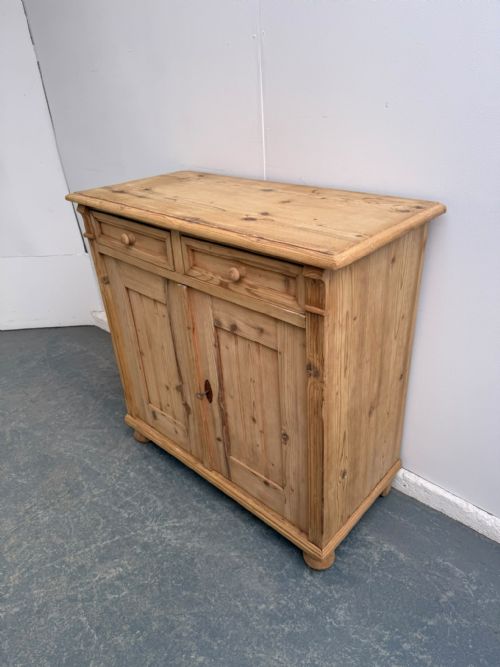
Rustic Painted Cupboard Dresser
A rustic painted cupboard dresser offers sturdy utility and surface colour, bringing regional character and practical storage to a kitchen or dining room.
Rustic Painted Cupboard Dresser
A rustic painted cupboard dresser combines utilitarian storage with layered surface colour, bringing practical domestic furniture into domestic spaces. These pieces span kitchen dressers, two-part cupboards, housekeeper's cupboards, and dresser bases designed for food preparation and tableware storage.
The selections on this page draw from the eighteenth century, the nineteenth century, and the early twentieth century. English, French, Scandinavian, Hungarian, and Irish pieces appear alongside regional variants from the West Country.
Construction relies heavily on pine and painted wood, often finished with iron or brass hardware and occasionally glass panels. Styles range from English Country and Georgian Country to Victorian, French Provincial, and Scandinavian Country.
Materials and construction methods
Makers utilised pine as the primary timber for carcasses, shelving, and internal partitions, building sturdy frameworks suited to heavy daily use in kitchens and pantries. Paint was applied directly to the wood, sometimes in multiple layers over generations, yielding rich patinas.
Hardware consists of iron and brass hinges, latches, and pulls that secure doors and drawers. Glass appears in upper glazed cabinet sections for displaying crockery, while two-part cupboards and dresser bases utilise pegged or joined construction to bear weight.
Listings feature pine and painted wood across the eighteenth and nineteenth centuries, including Victorian, Georgian, and Edwardian periods.
Quality variations in regional furniture
Survival of original surface paint distinguishes individual pieces, with scraped or untouched finishes carrying greater historical integrity than later overpainting. The thickness and stability of the pine timber determine the structural resilience of the carcass.
Joinery execution and proportion play a key role, separating simpler utilitarian workshop items from more balanced regional examples. Original hardware, intact glazing, and well-fitted doors contribute to the completeness of each cabinet.
The Rustic Painted Cupboard Dresser Glossary
- Dresser base
- A low sideboard or cabinet featuring drawers and cupboards beneath a flat top, designed for food preparation and storage.
- Housekeeper's cupboard
- A large tall storage cabinet traditionally used for linens and provisions in large country houses.
- Buffet à deux corps
- A tall two-part French cupboard featuring an upper cabinet set upon a larger lower sideboard base.
- Scraped paint
- A surface conservation term describing paintwork that has been carefully revealed down to an earlier historic layer.
- Folk art
- Decorative embellishments and regional styling applied by local makers rather than formal urban workshops.
Rustic Painted Cupboard Dresser: Frequently Asked Questions
What is a rustic painted cupboard dresser?
A rustic painted cupboard dresser is a functional wooden storage unit featuring integrated shelving, cupboards, or drawers combined with a painted finish. These pieces were built for everyday domestic use in kitchens, sculleries, and farmhouses.
Today they serve as practical storage furniture for dining rooms and kitchens, offering visible surface character and display space for ceramics.
How do I date a painted pine cupboard?
Dating relies on examining construction techniques, timber thickness, nail types, and the composition of the painted surface. Earlier eighteenth and nineteenth-century examples often display hand-planed boards and pegged joints.
Comparing the form to regional styles from England, France, or Scandinavia also helps narrow down the period of manufacture.
Where were these dressers made?
These pieces originated across various European regions, including English counties like the West Country, alongside French, Irish, Scandinavian, and Hungarian workshops. Each region developed distinct proportions, cornices, and paint palettes.
Local timber availability and domestic customs shaped the design of kitchen cupboards and dresser bases in each area.
How should I care for original paint?
Preserving original paint requires avoiding harsh chemical cleaners, modern solvents, and excessive moisture. Dusting gently with a dry cloth protects the historic surface layer from abrasion.
Maintaining stable indoor humidity prevents the underlying pine timber from expanding and causing the paint to flake.