
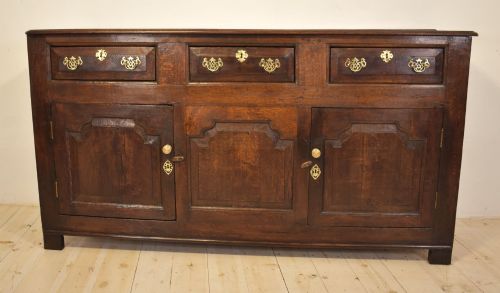
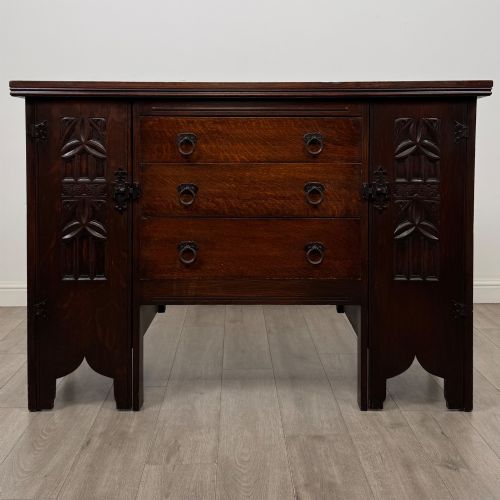

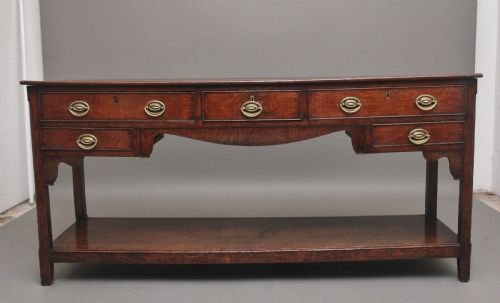


Rustic Oak Storage Sideboard
A rustic oak storage sideboard provides heavy timber presence and practical capacity, drawing on centuries of vernacular cabinet-making traditions from Britain and France.
Rustic Oak Storage Sideboard
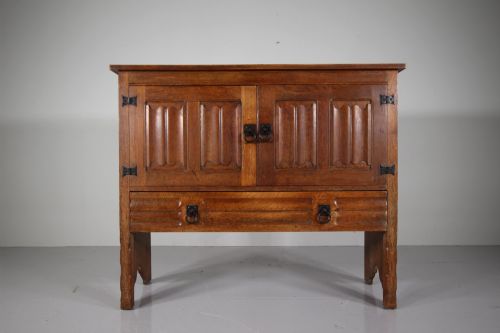
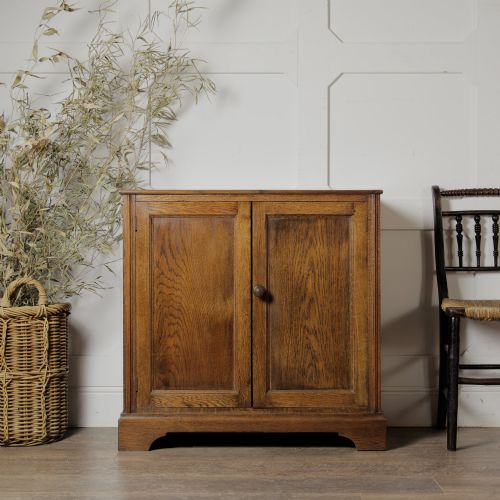
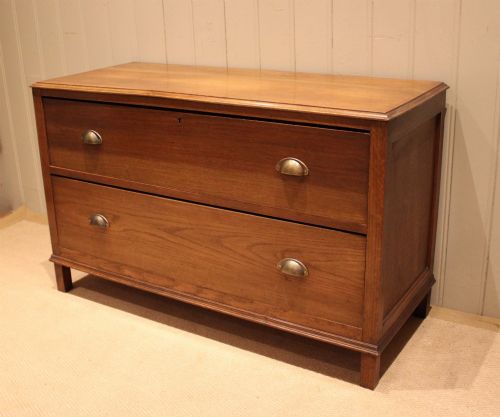
A rustic oak storage sideboard represents a sturdy class of domestic furniture designed for holding tableware, linen, and provisions, encompassing low dressers, cupboards, and buffet bases. When exploring a rustic oak storage sideboard, buyers encounter vernacular forms originating from the eighteenth and nineteenth centuries, alongside early twentieth-century interpretations.
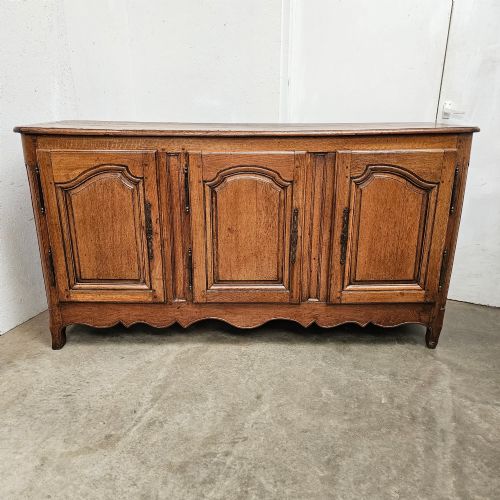
The selection ranges from English country dresser bases and Welsh vernacular dressers with open plate racks to French provincial enfilades and sacristy cabinets. Examples stretch across periods from the early eighteenth century through the Edwardian era and the nineteen-thirties, utilising solid timbers shaped by regional craft traditions.
The pieces often feature functional combinations of drawers and cupboards, sometimes incorporating pot boards or enclosed upper sections like court cupboards and lit-clos bed fronts. This category suits interiors requiring robust utility combined with historical texture, utilising durable woods and traditional joinery.
Assessing quality and craftsmanship
Quality rests upon the integrity of the timber selection, the weight of the solid oak boards, and the retention of original structural framing rather than heavy modern remediation. Superior pieces display harmonious proportions, crisp hand-cut joinery, and patination earned through long domestic use.
Lesser examples may suffer from unsympathetic timber replacement, aggressive stripping that removes historic surface character, or altered drawer configurations that diminish period authenticity. The relationship between the body and its hardware also dictates value, with original brass or iron fittings elevating the piece.
Materials documented across the inventory include solid oak, pine, chestnut, walnut, fruitwood, brass, iron, and wrought iron.
The Rustic Oak Storage Sideboard Glossary
- Dresser base
- The lower section of a Welsh dresser, functioning as a standalone sideboard with cupboards and drawers beneath a flat top.
- Enfilade
- A long French sideboard or buffet featuring multiple doors in a linear sequence, designed for dining room storage.
- Court cupboard
- A traditional English or Welsh enclosed cupboard featuring a recessed upper stage supported by pillars or corbels.
- Pot board
- An open lower shelf situated between the legs of a dresser base, historically used for storing heavy pots and pans.
- Lit-clos
- A closed box bed originating in regions such as Brittany, occasionally adapted into cabinetry and architectural panels.
Rustic Oak Storage Sideboard: Frequently Asked Questions
How do I style a rustic oak sideboard?
Position the piece against a plain wall in a dining room, hallway, or kitchen to let the heavy timber grain stand out without visual competition. Balance the low horizontal surface with upright ceramics, pewter, or a simple mirror hung above.
Allow the natural patination to anchor the room by pairing the dark or honey-toned wood with neutral plaster walls and textured linen textiles. Avoid overcrowding the top surface so the utilitarian heritage of the piece remains visible.
What is the difference between a dresser base and a sideboard?
A dresser base originally formed the lower half of a Welsh or English plate-rack dresser, often possessing a slightly deeper profile and a pot board below. Sideboards generally emerged later as dedicated dining room furniture designed primarily for serving food and storing silver.
Both forms offer substantial enclosed storage through drawers and cupboards, but dresser bases often carry a more vernacular, rustic country aesthetic. Sideboards from the Victorian and Edwardian eras frequently display more formal decorative carving and hardware.
How do I care for antique oak furniture?
Maintain the surface by applying natural beeswax sparingly with a soft cloth, buffing gently to preserve the historic sheen without creating a sticky buildup. Keep the timber away from direct heat sources and sudden humidity shifts to prevent splitting in the solid oak panels.
Dust regularly with a dry lint-free cloth rather than using liquid silicone polishes that can penetrate open grain and degrade the finish over time. Periodic waxing protects the dry wood and deepens the natural colour.
Where were these regional oak pieces made?
Makers constructed these items in rural workshops across the British Isles and provincial regions of France, including Brittany and various farming communities. Local joiners utilised native timber stocks available nearby, resulting in distinct regional vernacular styles.
English and Welsh pieces often prioritize heavy framing and pot boards, while French provincial buffets and enfilades feature distinct door panel configurations and fruitwood accents. These local manufacturing traditions gave each piece its characteristic geographic identity.