

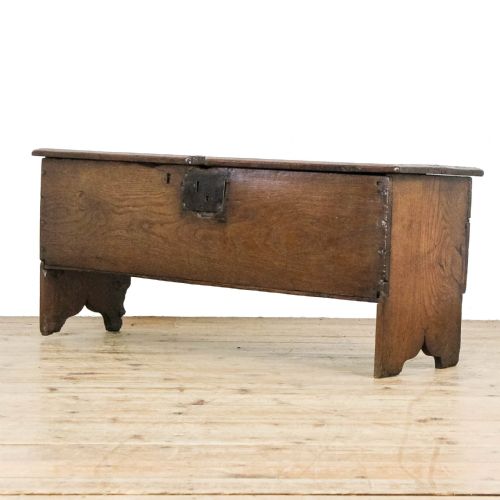


Rustic Oak Storage Bench
These rustic oak storage bench pieces are sturdy country seating with built-in compartments, combining traditional craftsmanship with practical household storage.
Rustic Oak Storage Bench
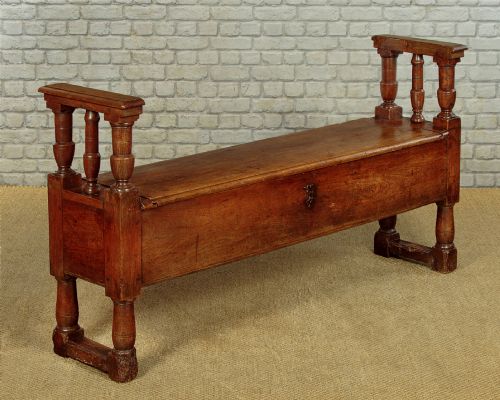
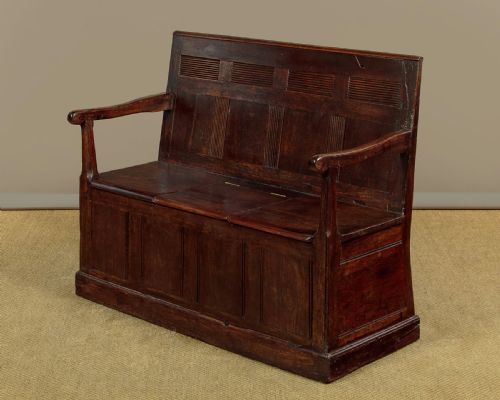
A rustic oak storage bench serves as both a seat and a secure chest, spanning forms such as box settles, blanket chests, and hall benches. When searching for a rustic oak storage bench, buyers encounter heavy traditional country furniture designed for domestic storage and seating.
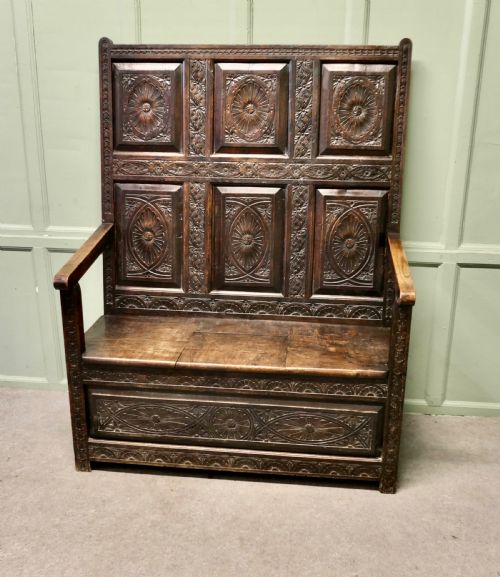
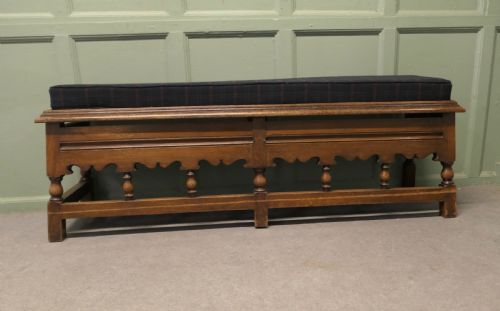
The selections on this page range across centuries, featuring 16th-century six-plank chests alongside 18th-century carved high-back box settles and later 1920s hall benches. English country and Georgian vernacular styles dominate these listings, showing solid oak construction and provincial character.
How they were made
These items rely on solid oak timber joined using traditional carpentry methods suited to heavy daily use. Iron and wrought iron hardware, including hinges and brackets, reinforce the structural joints of boxes and settles.
Makers utilised heavy panelled construction and hand-carving to ornament high backs and chests. Some later variations incorporate textiles such as tweed and wool for seating comfort.
Rustic Oak Storage Bench Retail Price Guide 2026
Typical asking prices for rustic oak storage bench among the pieces listed under this phrase on Sellingantiques today, from the lower quarter to the upper quarter. They describe what is for sale here now, not the wider market.
Some storage benches doubled as sword lockers, proving that even a place to sit could double as an armoury.
What varies in quality
Quality separates primitive utility pieces from finer vernacular items through the depth of timber selection and the execution of carved details. Early examples demonstrate skilled hand-panelling and structural integrity maintained over centuries.
The refinement of the woodwork, from plain six-plank boards to intricate high-back carvings, defines the upper tier of these storage benches. Secondary materials and hardware consistency also indicate the standard of period manufacture.
The Rustic Oak Storage Bench Glossary
- Box settle
- A high-backed wooden bench featuring a compartment beneath the seat for storage. This form kept draughts away from the seated person while securing household goods.
- Six-plank chest
- A primitive storage chest constructed from six principal boards joined at the edges. It represents an early form of domestic furniture found in domestic settings.
- Vernacular style
- Domestic furniture built by local craftsmen using regional traditions rather than metropolitan designs. It prioritises practical utility and local materials over high fashion.
- Sword chest
- A long, narrow wooden chest traditionally used for storing weapons. These pieces reflect specific historical domestic requirements.
Rustic Oak Storage Bench: Frequently Asked Questions
What is a box settle?
A box settle combines a high wooden back and enclosed seat compartment into a single piece of furniture. It provided seating by the hearth while keeping household items secure inside.
These pieces served central roles in traditional country interiors, offering draught protection and storage simultaneously.
How old are these oak benches?
The pieces span multiple centuries, ranging from Elizabethan six-plank chests dating back to the sixteenth century through to eighteenth-century box settles and twentieth-century hall seats.
Each period exhibits distinct construction methods and decorative styles that reflect the evolution of vernacular carpentry.
Where were blanket chests used?
Blanket chests were placed in bedrooms and hallways to store textiles, linens, and personal garments safely away from dust and pests. Their solid oak construction protected contents in unheated rooms.
Over time, many of these storage chests transitioned into multi-purpose hall furniture as domestic layouts changed.
How do I identify a vernacular style?
Vernacular furniture displays regional characteristics and straightforward construction techniques developed by local country makers. These items utilise locally sourced solid oak and plain functional joinery rather than court styles.
Examining the panel construction and hardware helps determine the provincial origin of the piece.