


Rustic Oak Display Rack
A rustic oak display rack serves as a practical timber tier for everyday pottery and plates, bringing honest country character to a kitchen wall.
Rustic Oak Display Rack
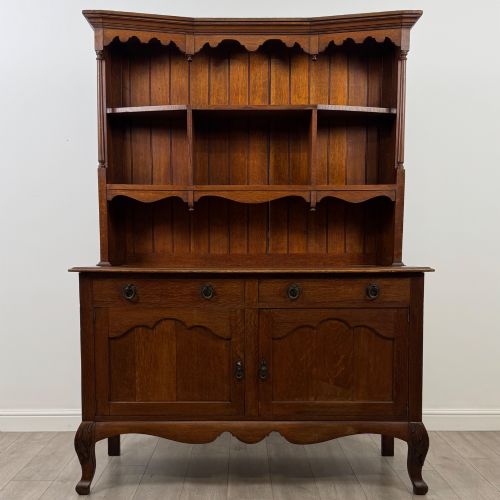
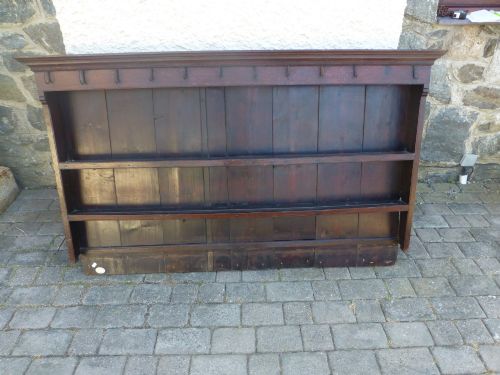
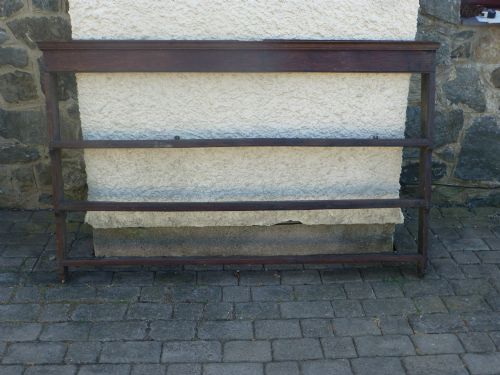
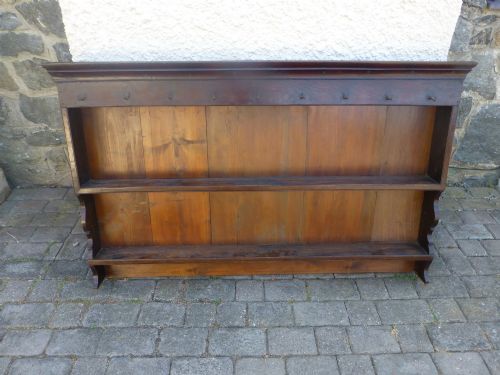
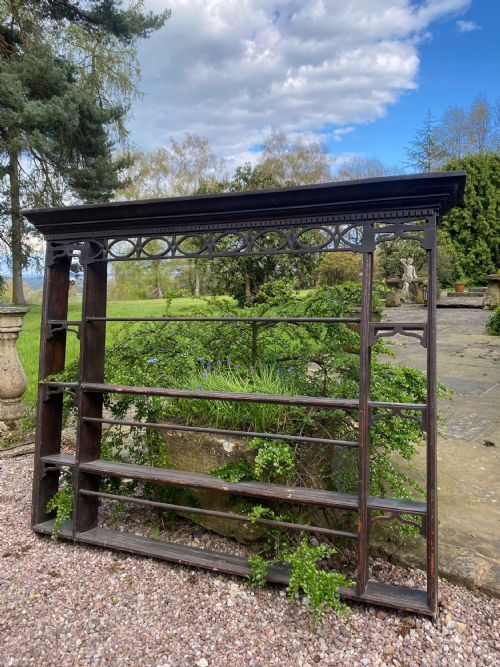
When you search for a rustic oak display rack, you encounter wall-mounted plate racks, hanging delft shelves, and the upper sections of Welsh dressers. These pieces originate primarily from Georgian and 19th-century country workshops, where timber storage was built for domestic utility.
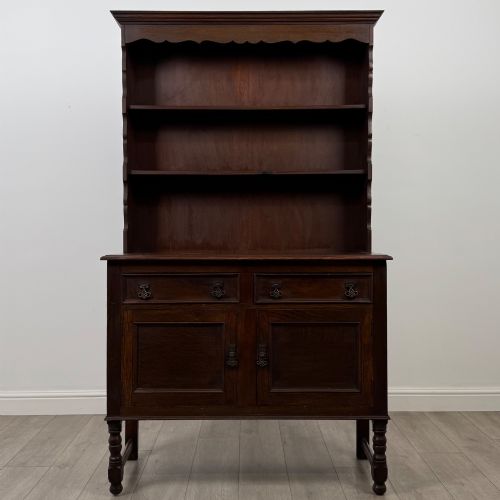
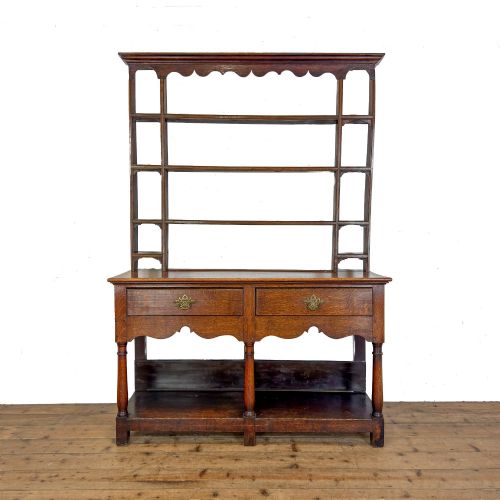
The version you are most likely to meet on this page is an 18th-century or 19th-century oak delft rack or plate rack, designed to display ceramic plates and platters safely against a kitchen wall. Many exist as standalone wall fixtures, whilst others form the upper tiers of two-part country dressers.
Makers shaped these racks from local timber to suit modest cottages and farmhouses across regions such as Wales and Snowdonia. The forms remain straightforward, prioritising open shelves and grooved plate rails over superfluous ornamentation.
Materials and Technique
Joiners built these racks predominantly using solid oak, often supported by secondary timbers like pine and augmented with iron or brass fixings for hanging and structural support. Workshops relied on traditional pegged joinery and hand-planed boards to construct shelves capable of bearing heavy earthenware.
Surface treatments remained simple, relying on natural wax finishes, stained oak, or centuries of accumulated patina rather than heavy varnishes. The timber was selected for strength and grain, ensuring the shelves held plates upright without warping under daily use.
Certain antique oak racks come with three pewter trefid spoons tucked safely away, proving that kitchen clutter is a tradition centuries in the making.
Gradations in Quality
Quality in these racks depends on the weight and selection of the oak, the integrity of the original joints, and the depth of the natural patina. Superior examples display crisp hand-planed mouldings and tight pegged construction that has survived centuries of domestic service.
Simpler regional pieces exhibit coarser carpentry and lighter pine backs, representing more utilitarian country manufacture. The survival of original hanging mechanisms and untouched surface finishes distinguishes pieces preserved in fine condition from heavily restored examples.
The Rustic Oak Display Rack Glossary
- Delft rack
- An open wall-mounted shelving unit designed specifically to display ceramic plates and platters upright against a wall. These shelves typically feature a narrow groove to prevent plates from slipping forward.
- Potboard dresser
- A traditional country dresser featuring a lower open shelf near the floor, historically used for storing heavy pots and pans beneath the main work surface.
- Welsh dresser
- A large kitchen storage piece combining base cupboards or drawers with an open plate rack superstructure. They frequently originate from 18th-century and 19th-century rural workshops.
- Trefid spoon
- An early dining spoon characterised by a broad, three-lobed flat handle terminal. These are occasionally found associated with early oak spoon racks.
- Breakfront
- A piece of furniture where the central section projects forward from the flanking sections. This configuration occasionally appears on drawer sections associated with dresser bases.
Rustic Oak Display Rack: Frequently Asked Questions
What is a rustic oak display rack used for?
These racks were built to hold ceramic plates, platters, and kitchen utensils securely in farmhouse kitchens. Today they serve the same practical purpose of open storage and wall display in contemporary homes.
Their open shelving design allows for the arrangement of decorative ceramics or everyday tableware within easy reach.
How do I hang a heavy oak plate rack?
Due to the dense weight of solid oak and stored ceramics, these racks require secure fixing directly into wall studs or masonry using appropriate heavy-duty brackets. Professional installation ensures the piece can safely bear the combined weight of the timber and porcelain.
Many antique racks retain their original structural hanging points, which should be inspected and reinforced before loading them with plates.
How can I tell an 18th-century rack from a later copy?
Eighteenth-century examples display authentic hand-tool marks, pegged mortise and tenon joints, and deep patination accumulated through generations of use. The oak timber often shows irregular grain and shrinkage consistent with early pit-sawing techniques.
Later reproductions typically feature uniform machine-sawn boards, modern fixings, and artificial distressing rather than genuine age-related wear.
Are these racks always wall-mounted?
Not all racks hang independently on walls, as many were originally built as the upper superstructure of two-part Welsh dressers. Some survive as detached upper sections separated from their original base cabinets over time.
Standalone hanging racks and upper dresser tiers both appear frequently across these listings.