


Rustic Metalware Vessel
A rustic metalware vessel brings weight and rich tone to a room, offering genuine utility shaped by hand centuries ago.
Rustic Metalware Vessel
When you search for a rustic metalware vessel, you encounter practical domestic items shaped in copper, brass, and tin across the eighteenth and nineteenth centuries. These pieces encompass kettles, coffee pots, jugs, pitchers, warming pans, flasks, table bowls, wine cisterns, and jardiniere forms.
The versions most frequently met on this page date from the Georgian and Victorian eras, alongside specific examples from the eighteenth and nineteenth centuries. English and Italian origins appear regularly, displaying utilitarian shapes designed for daily hearth and kitchen use.
Makers produced these containers to handle liquids and heat, resulting in robust bodies built from heavy gauge metal. Over time, surfaces have developed natural patinas that distinguish genuine age from modern reproductions.
How they were made
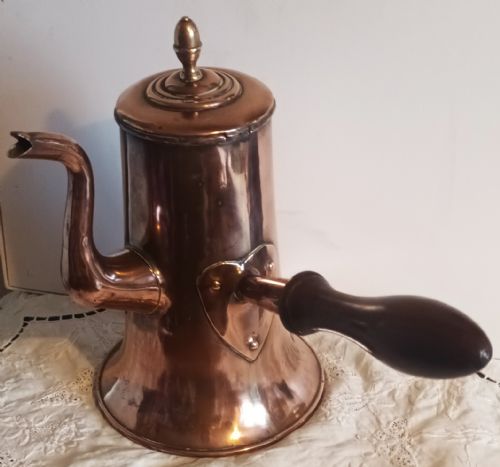
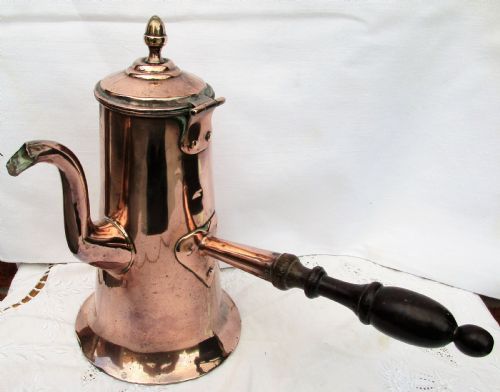
Smiths hammered sheets of copper and brass into hollow forms, joining seams with overlapping rivets or hard solder to hold boiling water and wine. Handles combined the primary metal with turned wood, such as oak, to insulate against heat.
Spouts and lids were shaped individually and attached to the main body, while surfaces received hand-polished finishes or retained the dark remnants of open hearth soot.
Listings span the eighteenth and nineteenth centuries, featuring materials like copper, brass, oak, and tin across forms such as kettles, jugs, and wine cisterns.
What varies in quality
Quality rests in the thickness of the metal sheet and the integrity of the original hammering marks left by the smith. Thicker copper walls retain their structural stiffness better over centuries of service.
Proportion and scale dictate desirability, from small Jersey cans to colossal lidded pitchers and large wine cisterns. Superior examples preserve their original detachable handles, heavy brass fittings, and uncompromised spout attachments.
The Rustic Metalware Vessel Glossary
- Wine cistern
- A large vessel used historically for chilling wine bottles in ice or water. These bowls often feature heavy gauge copper construction suitable for tabletop display.
- Warming flask
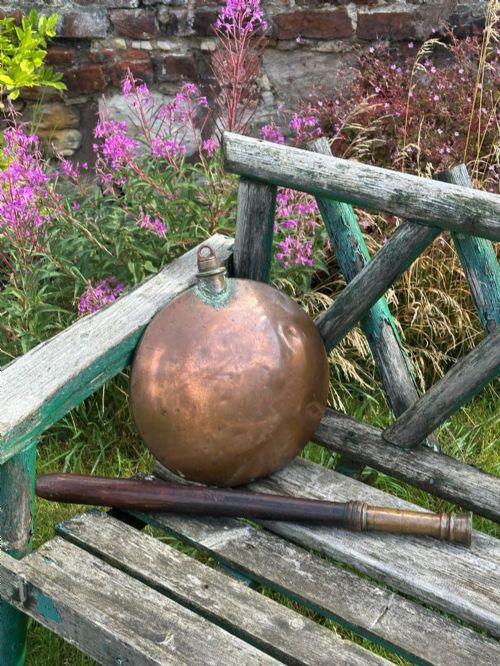
- A flat or moon-shaped container filled with hot water to warm beds or rooms. They frequently include secure caps and wooden handles for transport.
- Jersey can
- A distinctive tall cylindrical jug originating from the Channel Islands, used traditionally for measuring and pouring milk or cider. They display narrow necks and sturdy handles.
- Jardiniere
- An ornamental pot or cistern designed to hold potted plants or flowers. In metalware, these pieces utilise watertight copper bodies with decorative patination.
- George III
- The stylistic period spanning the reign of King George III from seventeen sixty to eighteen twenty. Pieces from this era exhibit classical proportions and traditional hand-beaten construction.
Rustic Metalware Vessel: Frequently Asked Questions
What were copper kettles used for?
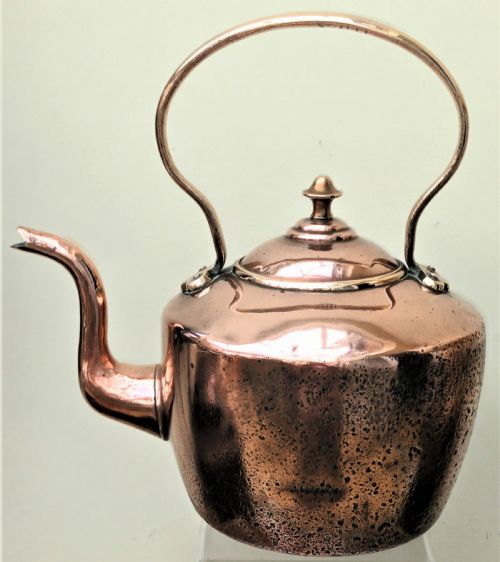
Copper kettles sat directly upon hearth coals or stove rings to heat water for daily household needs such as tea, washing, and cooking.
Their heavy metal construction allowed them to withstand intense open flames while distributing heat evenly across the base.
How do I date an old copper vessel?
Dating relies on observing construction methods, such as hand-cut dovetail seams, early rivet styles, and the specific shape of spouts and handles.
Period markers like Georgian or Victorian stylistic cues and materials such as unrefined copper or oak help narrow the decade of manufacture.
Can I use these vessels with water today?
Many of these containers retain their watertight structural integrity, though nineteenth-century pieces often serve better as decorative objects or planters.
If utilised for holding liquids, modern owners should inspect the interior lining and historical solder joints to ensure suitability.
How should I clean antique copper?
Preserving the dark patination accumulated over centuries is standard practice among collectors who value historical depth over bright shine.
Gentle dusting maintains the surface without stripping away the natural oxidation earned through years of kitchen service.