





19th Century Copper Jug
A 19th century copper jug brings practical utility and warmth of metal to a room, offering both decorative presence and historical utility.
19th Century Copper Jug
The 19th century copper jug category encompasses heavy measuring vessels, harvest jugs, and flagons alongside ceramic pieces featuring copper lustre glaze. You will encounter robust two gallon measures and large flagons alongside smaller cream jugs and harvest vessels.
The range spans Georgian and Victorian periods, with pieces originating from English makers and Middle Eastern workshops. Some examples show folk art traditions while others reflect standard measuring capacities from half gallon to three gallons.
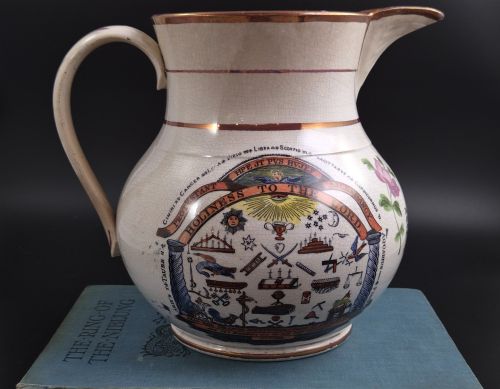
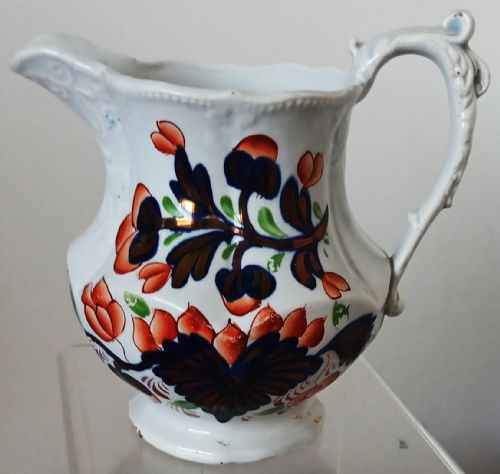
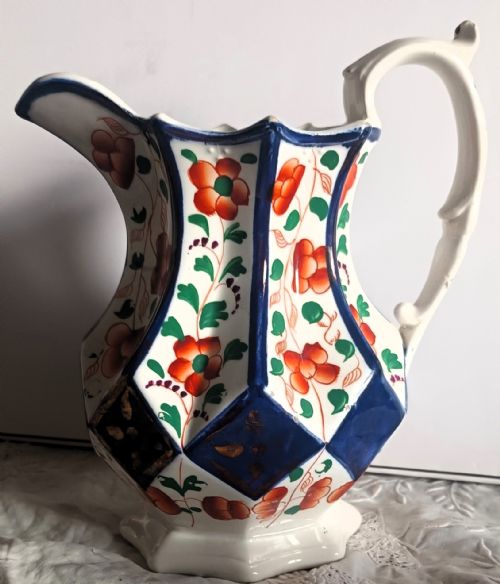
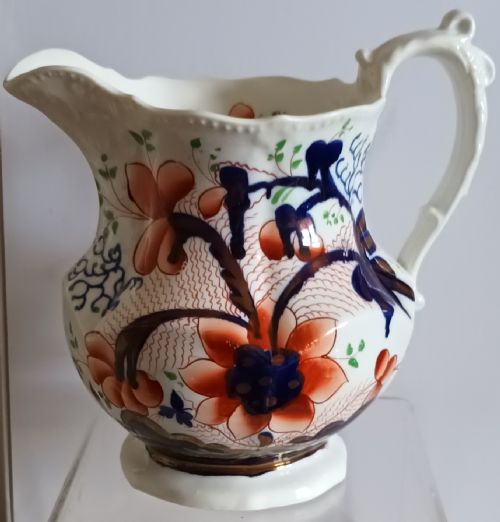
Ceramic alternatives in the selection utilise earthenware and ironstone decorated with metallic lustre glazes, polychrome finishes, and named patterns such as Bethesda, Grape, Drape, Harlech, Aberaeron, and Conwy.
Materials and construction methods
Metal pieces are constructed from sheet copper, often formed into heavy measuring vessels and harvest jugs designed for rigorous capacity use. Individual examples bear specific maker stamps or capacity marks associated with English standard measures.
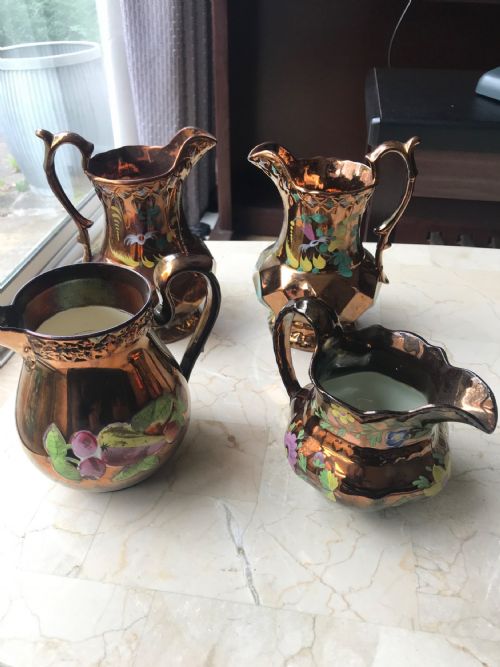
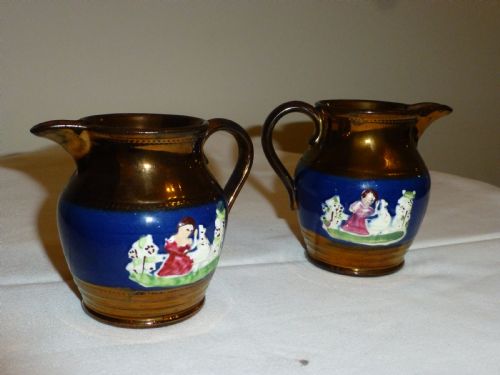
Ceramic versions employ earthenware, pottery, and ironstone bodies finished with copper lustre glaze, enamel, and polychrome hand decoration depicting fruit and commemorative subjects.
Listings feature both heavy copper measuring vessels and Staffordshire earthenware decorated with metallic lustre glazes.
Quality factors in metal and ceramic jugs
Quality in copper items rests upon the weight of the metal, the integrity of the seams, and the clarity of capacity stamps or maker inscriptions. Plain utilitarian measures depend upon honest wear and solid construction.
For lustre earthenware, quality is determined by the richness of the metallic glaze, the crispness of hand decoration such as fruit motifs, and the preservation of polychrome enamel details across named patterns.
S Hancock
The 19th Century Copper Jug Glossary
- Copper lustre glaze
- A pottery finish incorporating metallic oxides that produce a reflective, coppery sheen on earthenware bodies. This technique was widely utilised in Staffordshire production during the period.
- Harvest jug
- A large utilitarian vessel traditionally used for carrying ale or cider during agricultural work. These heavy pieces often display generous proportions and sturdy handles.
- Flagon
- A large drinking vessel or measure fitted with a handle and sometimes a lid. In metalwork, these often hold substantial liquid capacities like two or three gallons.
- Ironstone
- A dense, durable type of ceramic developed as a robust alternative to porcelain. It frequently forms the body for patterned domestic jugs from the era.
- Gaudy Welsh
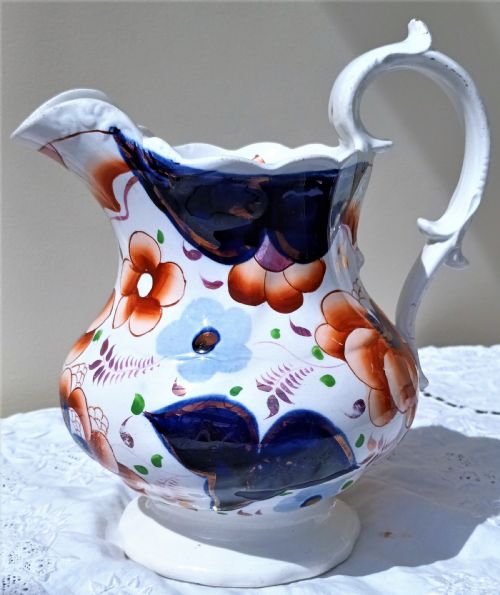
- A style of brightly coloured pottery featuring cobalt blue, copper lustre, and enamel highlights. Popular patterns include named regional designs like Harlech and Conwy.
19th Century Copper Jug: Frequently Asked Questions
What were copper measuring jugs used for?
These metal vessels served as standard capacity measures for liquids, ranging from half gallon sizes up to three gallon flagons. They functioned practically in trade, agriculture, and household provisioning.
Over time, many transitioned into decorative display items while retaining their substantial physical presence and historical function.
How do I identify Gaudy Welsh pottery jugs?
Gaudy Welsh pieces are characterised by robust pottery bodies decorated with rich cobalt blue, enamel colours, and metallic copper lustre accents. Look for traditional named patterns such as Harlech, Conwy, and Bethesda.
They typically date to the nineteenth century and offer a distinct, brightly coloured aesthetic compared to plain earthenware.
What is a copper harvest jug?
A harvest jug is a heavy metal vessel traditionally utilised for transporting drinks to workers during agricultural harvesting. Their sturdy construction made them resilient for outdoor labour.
Today, collectors prize these substantial pieces for their warm metallic patina and connection to rural working history.
Are lustre jugs made of copper?
Lustre jugs are ceramic pieces made from earthenware or ironstone rather than solid metal. They achieve their metallic appearance through a specialised glaze containing copper or other metallic oxides.
This technique creates a reflective surface that mimics polished metal while retaining a ceramic body.