
Rustic Low Coffee Table
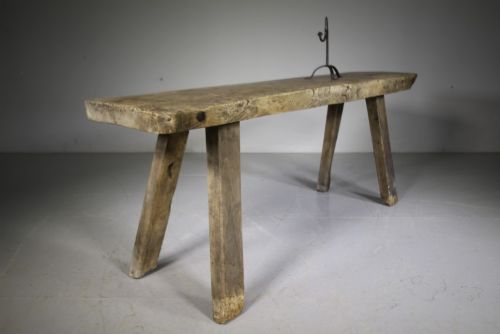
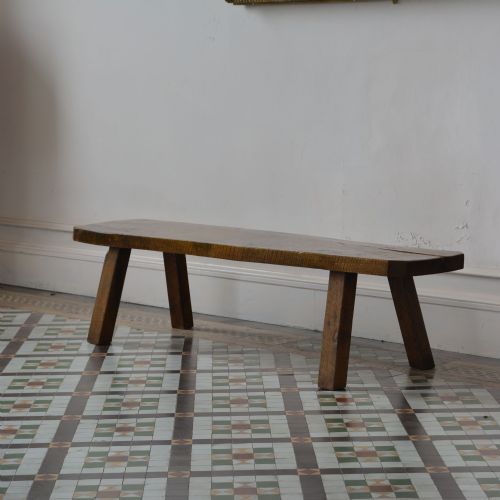
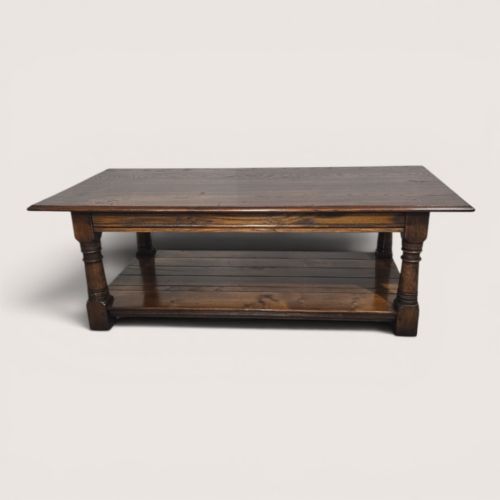
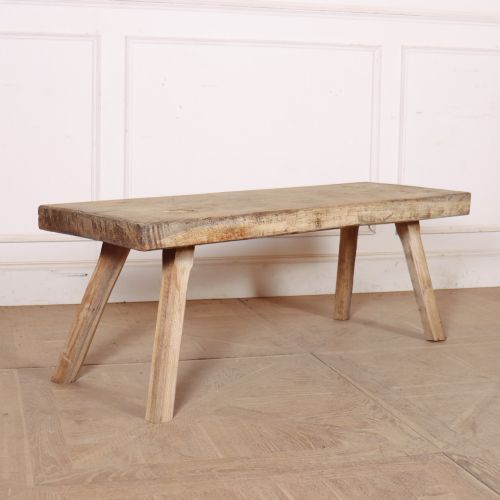
A rustic low coffee table brings solid timber grain and a practical grounded profile into a room, drawn from repurposed work benches, fruit presses and country furniture.
Rustic Low Coffee Table
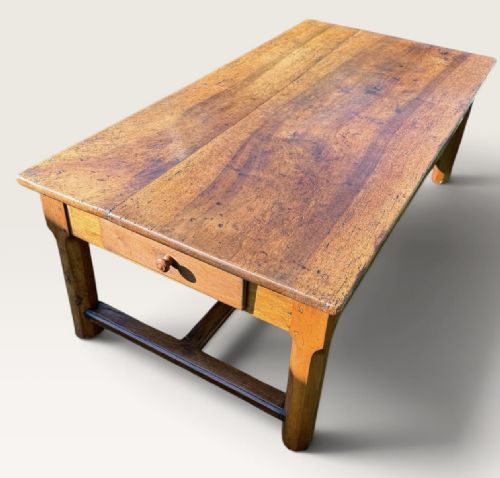
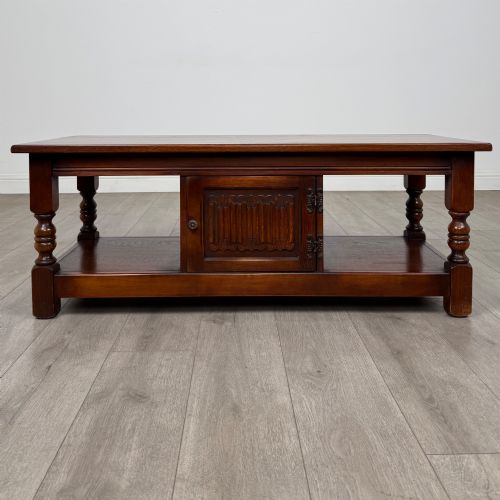
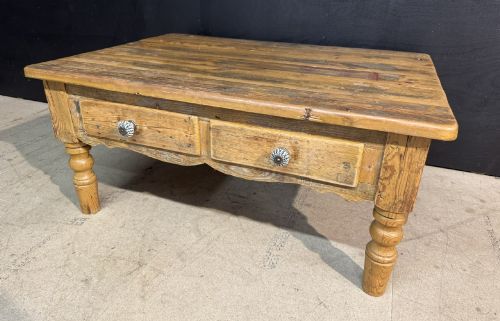
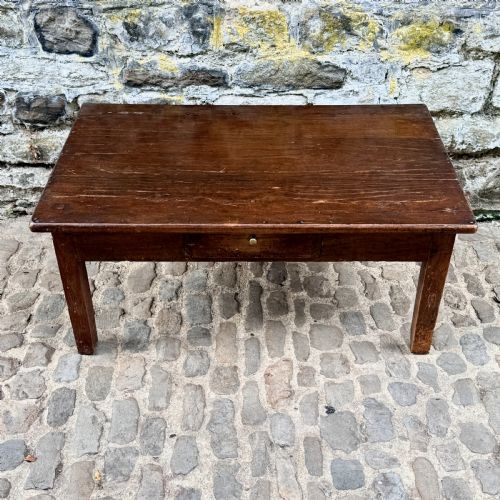
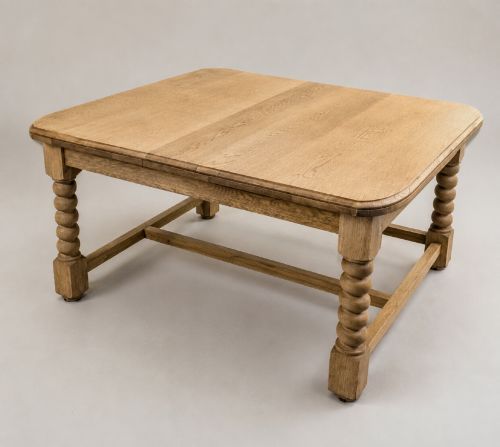
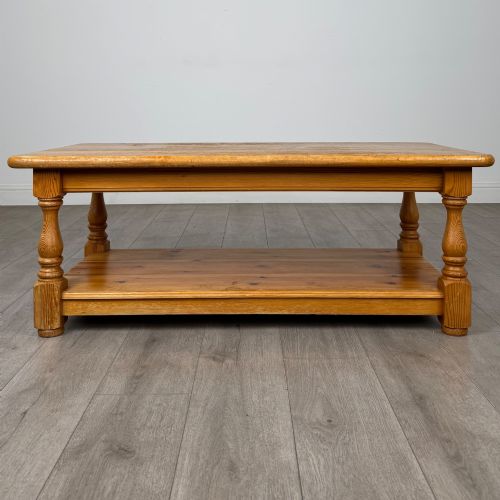
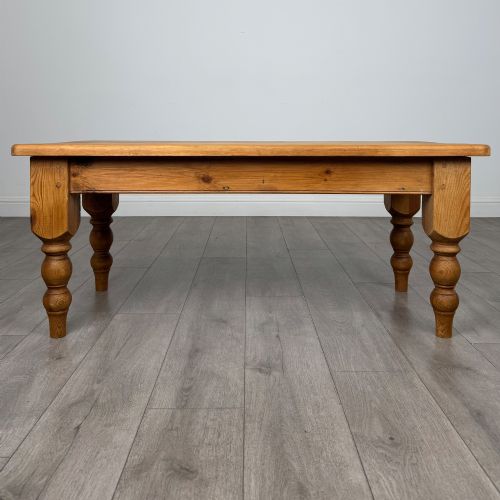
When you search for a rustic low coffee table, you encounter low-slung timber furniture drawn from utility items such as Hungarian pig benches, cheese press tables, jewellers' benches and farmhouse boards. These low surfaces are predominantly built from oak, pine, elm, walnut and chestnut, originating across England, France, Hungary, Austria and India.
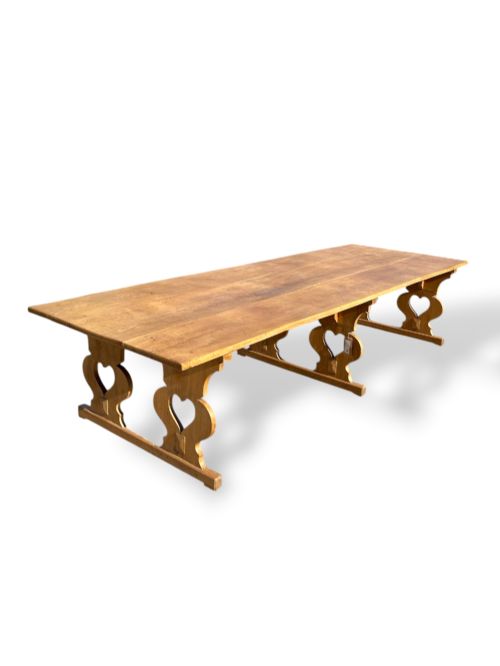
The selection here ranges from compact Edwardian pine tables and narrow Victorian oak boards to substantial eighteenth-century walnut trestle tables and nineteenth-century elm designs. Many pieces began life as work benches or low country tables before finding a second purpose in sitting rooms as coffee tables.
How they were made
Makers constructed these tables from sturdy native hardwoods and softwoods like oak, pine, elm, chestnut and walnut, often joined with thick plank tops and heavy turned or square legs. Wrought iron reinforcement appears on garden low tables, while structural pegged joints and trestle frames support the heavier eighteenth and nineteenth-century boards.
Surfaces show the marks of daily labour, from scrubbed pine and bleached oak to painted finishes and chestnut timber left with natural knots and grain variation. Workshops utilised simple hand tools to shape thick timber slabs into functional low furniture designed for heavy domestic or agricultural use.
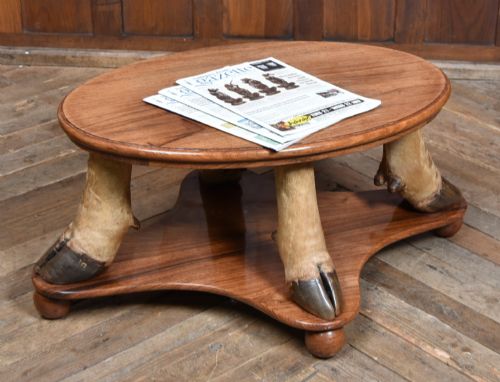
Forms range from narrow Hungarian pig benches and cheese press tables to Victorian taxidermy tables and garden ironwork.
What varies in quality
Quality rests in the integrity of the original timber and the honesty of the conversion from utility bench to domestic table. Tables that retain their original unplaned boards, deep patination and authentic structural wear stand apart from pieces with heavily altered heights or replaced elements.
Proportion and scale dictate the success of the piece, with narrow Hungarian pig benches and substantial eighteenth-century walnut trestles offering greater architectural presence than standard utility tables. The depth of the timber grain and the clarity of the period construction methods define the upper tier of the range.
The Rustic Low Coffee Table Glossary
- Pig bench
- A low, narrow timber bench traditionally used in agricultural settings, now sought after as a long, shallow coffee table. These narrow boards fit neatly in front of low sofas.
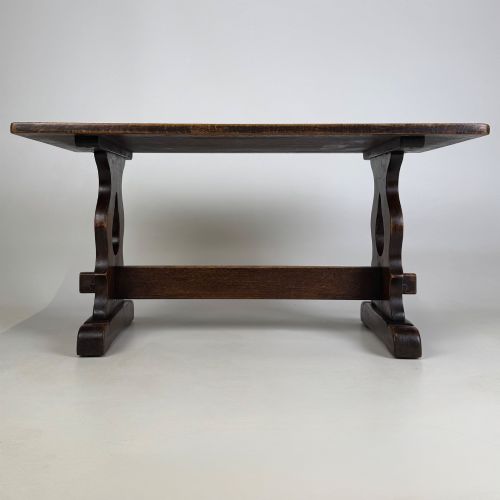
- Trestle table
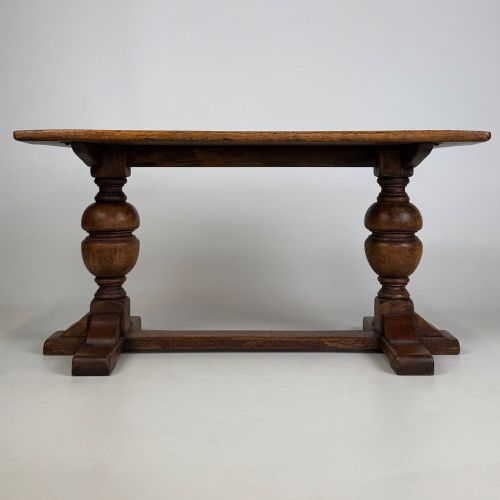
- A table structure where the top is supported by two or more upright frames connected by a horizontal beam. This form provides exceptional stability for heavy elm and walnut boards.
- Cheese press table
- A heavy utilitarian work table derived from dairy production, characterised by thick timber tops and robust framing. They offer deep patination and substantial proportions.
- Patina
- The surface sheen and colour developed by timber through decades of use, cleaning and exposure to light. Good patination shows the true age of the oak, pine or walnut.
- Turned leg
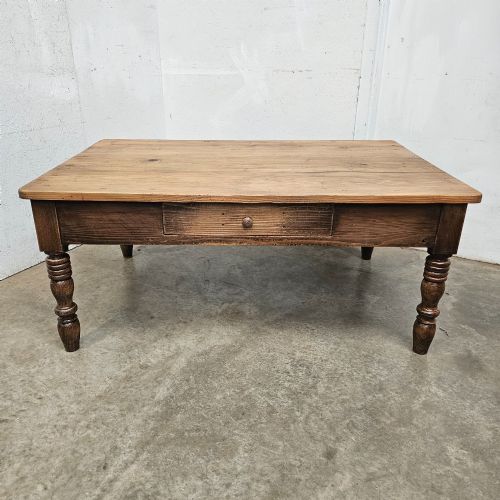
- A wooden leg shaped on a lathe to create cylindrical or decorative profile patterns. These legs appear frequently on nineteenth-century oak and pine low tables.
Rustic Low Coffee Table: Frequently Asked Questions
How do I style a low coffee table?
Keep the styling simple to let the timber grain and age of the wood take focus. Low proportions work best when paired with deep-seated upholstery and minimal accessories.
Allow the surface marks and knots of the pine or oak to remain visible beneath books or ceramics. The grounded height suits open-plan rooms where sightlines across the space matter.
Are these tables converted from old benches?
Many examples begin as utilitarian workshop or agricultural items such as pig benches, cheese presses and jewellers' benches. Artisans or past owners adapted these low pieces for domestic use.
The conversion preserves the original sturdy construction and heavy timber tops while lowering the overall height for seating areas.
How do I care for antique timber?
Protect the wood by using coasters and avoiding direct heat sources that can dry out old oak, pine or walnut. Regular dusting with a dry cloth maintains the surface.
Feed dry hardwoods occasionally with appropriate wax to preserve the natural finish. Avoid harsh chemical cleaners that strip the historic patination.
What woods are most common?
Oak and pine appear frequently across English and European listings, offering robust durability and distinct grain patterns. Elm and walnut provide richer, darker tones for earlier periods.
Chestnut and mixed hardwoods also feature in French and Hungarian pieces, each bringing specific weight and colour to the design.